Home Gym
Garmin fenix 9 Pro Review: A Titanium fenix That Asks a Lot More Than the fenix 8
An honest Garmin fenix 9 Pro (47mm) review covering the 3,000 nit AMOLED, titanium case, 18 day battery, stamina tools and whether it beats a cheaper fenix 8.

By Paul Kendrick, Cardio & Endurance Editor · Updated 10 November 2026
We may earn a commission from qualifying purchases made through links on this page, at no extra cost to you. This never affects our ratings.
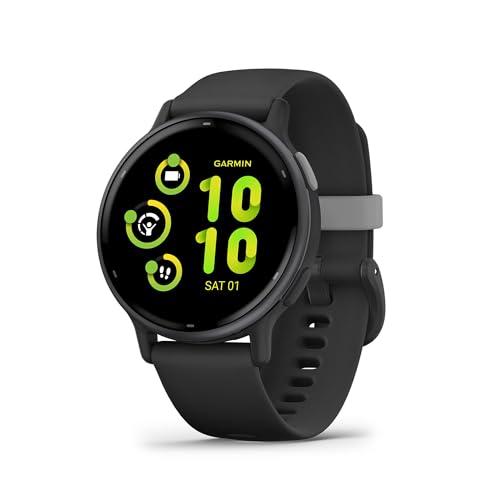
The vívoactive 5 launched in September 2023 and has been replaced by the vívoactive 6, which is exactly why it is interesting now. Amazon has it at around £148.89 at the time of writing (10 November 2026), against the £209.99 Garmin UK still lists it at, and our pick the vívoactive 6 sits at around £210. So the real question for most buyers is simple: is the older watch at roughly £149 the smarter buy?
For a lot of people, yes. You get the same idea in a slightly smaller package: a 1.2 inch AMOLED touchscreen, up to 11 days of battery in smartwatch mode, Garmin Pay, offline music, sleep coaching and Body Battery. What you give up is mostly storage and sport profiles, and neither watch has a barometric altimeter, so that gap does not even come into it.
How we review
This review is based on Garmin's published UK specifications and owner's manual, Garmin's launch announcement, and consistent themes across owner feedback and expert coverage. We have not run a long-term test of this specific unit, so we report what Garmin states and what owners repeatedly find, and we say which is which.
The vívoactive 5 suits someone who wants a Garmin for everyday fitness rather than racing: runs, rides, pool sessions, gym work, walks and a good look at sleep and recovery. It's also a sensible step up from a basic fitness band for anyone who wants GPS on the wrist and music without the phone. Trail runners, hikers and anyone chasing precise splits through a city should skip this tier altogether and look higher up our best Garmin watch guide.
The AMOLED screen is the reason to buy a vívoactive over Garmin's cheaper memory-in-pixel watches. At 30.4mm across and 390 x 390 pixels it is sharp, and you can switch on a large font option if you struggle to read small text mid-run. The case is 42.2mm wide and 11.1mm thick, made from fibre-reinforced polymer with an aluminium bezel, and Garmin puts it at 36g including the band. That's light enough to forget about overnight, which matters because the sleep tracking is half the appeal.
Battery figures from Garmin's UK spec sheet are up to 11 days in smartwatch mode, 5 days with the display always on, 21 hours of GPS-only tracking and 8 hours with all satellite systems and music running. Owners generally find the 11 day number is a best case. Three or four GPS workouts a week plus notifications puts you nearer a weekly charge, which is still far better than a nightly one.
| Display | 1.2 in (30.4 mm) AMOLED touchscreen, 390 x 390 |
|---|---|
| Lens | Corning Gorilla Glass 3 |
| Case size | 42.2 x 42.2 x 11.1 mm (single size) |
| Weight | 36 g with included band |
| Water rating | Swim, 5 ATM |
| Battery (smartwatch) | Up to 11 days, 5 days always-on |
| Battery (GPS) | Up to 21 hours GPS-only, 8 hours all systems with music |
| Memory | 4 GB |
| Sport apps | 30 plus built in |
| Satellites | GPS, GLONASS, Galileo (not multi-band) |
| Barometric altimeter | No |
| Payments | Garmin Pay |
Garmin says the watch carries more than 30 preloaded GPS and indoor sports apps, and the UK spec list shows that covers far more than the basics: strength, HIIT, indoor rowing, pool and open water swimming, a long list of racket sports, skiing and plenty of team sports. Strength sessions get automatic rep counting and an on-screen muscle map. If you're following a home strength routine or logging treadmill runs, there's a profile for it.
Wrist heart rate behaves as wrist heart rate always does. It's fine for steady runs and daily resting figures, and it lags during sharp intervals. Anyone training seriously by zones should pair it with a strap from our heart rate monitor guide; the watch broadcasts and accepts heart rate over ANT+ and Bluetooth.
The health side is where the vívoactive 5 earns its money. You get sleep score and sleep coaching, nap detection, HRV status overnight, Body Battery, all-day stress, Pulse Ox and a morning report. Intensity minutes tracking lines up directly with the NHS target of 150 minutes of moderate activity a week, which is the most useful number on the watch for most people. The wheelchair mode is a genuine feature, not a token one: it swaps steps for pushes, adds weight shift alerts and has workouts built for wheelchair users.
The missing barometric altimeter is the real weakness, and it is shared with the newer model. Elevation comes from GPS, so ascent on short, repeated hills is rough, and floors climbed simply isn't there. Garmin's owner's manual confirms the Swim, 5 ATM rating, so it is fine in the pool but a notch below Garmin's outdoor watches.
This is the decision most people reading this are actually making. Our vívoactive 6 review scores it 4.3 and calls it the Garmin most people should buy, and at around £210 it's still good value. But look at what the extra £60 or so actually pays for.
The 6 doubles the storage to 8GB and lifts the sport list from about 30 profiles to more than 80, and its satellite support adds BeiDou and QZSS. Screen type, 42mm size, 11 day smartwatch battery, 5 ATM rating, Garmin Pay and the overall health suite are broadly the same. Crucially, the two big omissions are identical: neither has a barometric altimeter and neither has multi-band GPS.
So the 6 is the better watch, but not by much for typical training. If 4GB holds your running playlists and your sports are on the 5's list, the older model at around £149 is the smarter buy. If you want a large offline music library, or you do something the 5 doesn't profile, pay the difference. Anyone who wants an altimeter, ECG or on-wrist calls should skip both and read the Venu 3 review instead.
Check price on AmazonYes, at around £149. It shares the AMOLED screen, 11 day smartwatch battery, Garmin Pay and sleep coaching that make the vivoactive 6 good, and costs roughly £60 less. The money buys you less music storage and a shorter sport list, which only matter if you carry a big offline library or do activities outside the 30 or so built-in profiles.
Garmin quotes up to 11 days in smartwatch mode, 5 days with the always-on display, up to 21 hours of GPS-only tracking and up to 8 hours with all satellite systems plus music playing. A few GPS workouts a week with notifications on will bring that down to roughly a weekly charge.
No. Garmin's sensor list covers GPS, GLONASS, Galileo, the Elevate wrist heart rate sensor, Pulse Ox, a compass, an accelerometer and an ambient light sensor, but no barometer. Elevation is worked out from GPS and there is no floors climbed count. The vivoactive 6 leaves it out too.
Yes. Garmin lists 4GB of memory and support for downloading playlists from Spotify, Amazon Music and Deezer (a subscription is needed), so you can run with Bluetooth headphones and no phone. The vivoactive 6 doubles that to 8GB.
It is rated Swim, 5 ATM, which Garmin's manual says withstands pressure equivalent to 50 metres depth. That covers pool swimming, open water swimming and the shower, but it is not a diving watch.
Buy the 6 if you want more than 4GB of music or a sport profile the 5 does not have. Buy the 5 if your training is running, cycling, swimming, walking and gym work, because it covers all of that, wears the same way and saves you around £60 at current prices.
An honest Garmin fenix 9 Pro (47mm) review covering the 3,000 nit AMOLED, titanium case, 18 day battery, stamina tools and whether it beats a cheaper fenix 8.
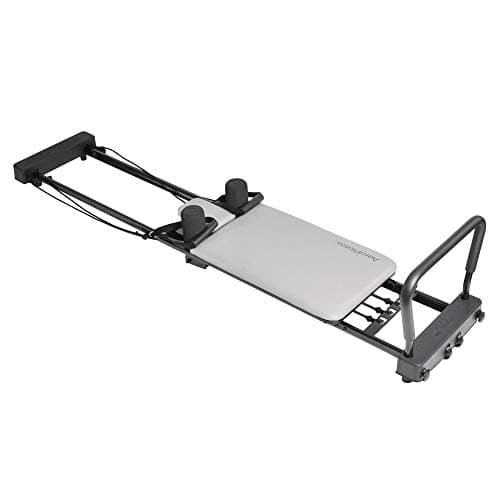
An honest AeroPilates Reformer 287 review: how this Aero Pilates reformer's three bungee cords, 300lb capacity and 216cm frame compare with spring reformers at a third of the price, and who should still buy one.
Barbell vs dumbbell: barbells win for maximum strength, dumbbells for space, safety alone and unilateral work. Research, costs and which to buy for home.
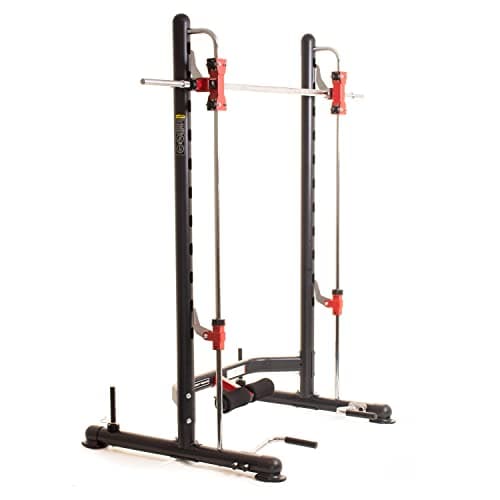
The best Smith machines for a UK home gym in 2026, from a compact Smith machine that fits a box room to full stations with cable stacks. Real dimensions, prices and who each one suits.
Best Exercise is a participant in the Amazon EU Associates Programme, an affiliate advertising programme designed to provide a means for sites to earn advertising fees by advertising and linking to Amazon.co.uk. As an Amazon Associate we earn from qualifying purchases. This comes at no extra cost to you and never influences our independent reviews or rankings.