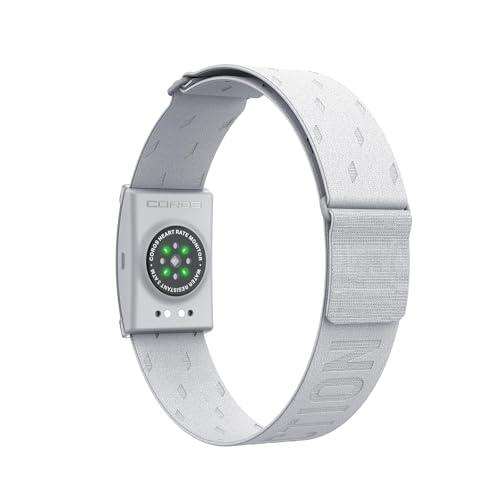
COROS Heart Rate Monitor Review: The £69 Armband That Beats Your Wrist
COROS Heart Rate Monitor review: a £69 upper arm optical sensor with 38 hour battery, auto wear detection and Bluetooth to 3 devices. Is it better than a chest strap?

By Paul Kendrick, Cardio & Endurance Editor · Updated 16 November 2026
We may earn a commission from qualifying purchases made through links on this page, at no extra cost to you. This never affects our ratings.
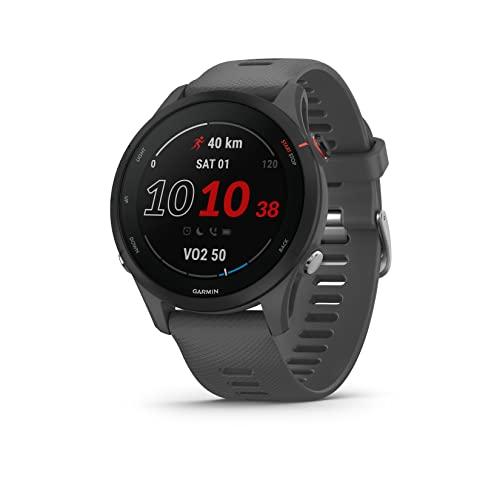
At £184.99 the Garmin Forerunner 255 is still the best-value triathlon-capable Garmin you can buy in late 2026, provided you can live without a touchscreen and Garmin's Training Readiness score. It has multi-band GPS, HRV status, a genuine triathlon mode with automatic transitions, and a quoted 14 days of battery, which beats the newer Forerunner 265 on endurance. The catch is availability: this is a 2022 model, and when we checked, Amazon UK showed only 8 left in stock, so the window for this price is closing.
How we review
This is a research-based review. We've built it from Garmin's published UK specifications, the current Amazon UK listing, and recurring themes in verified owner feedback. We haven't run our own long-term test of this unit, so we stick to what Garmin states and what owners report consistently, and we flag where a claim is Garmin's own number.
Triathletes on a budget, mostly, plus runners who train to a plan and care more about battery than a pretty screen. Garmin lists a dedicated triathlon multisport profile with automatic transitions, pool and open water swimming, and cycling profiles with smart trainer control over ANT+ and Bluetooth. That's the stuff that separates it from cheaper Forerunners like the Forerunner 55, which tracks swims and rides but skips multi-band GPS and HRV status.
If you mostly want sleep tracking and a nice watch face for the office, look elsewhere; the MIP screen looks dated next to AMOLED, and our best Garmin watch UK guide covers the Venu line for everyday wear.
Check price on AmazonThe 46mm case carries a 1.3 inch, 260 x 260 pixel memory-in-pixel display under Gorilla Glass 3. Garmin describes it as sunlight-visible and transflective, which is the useful part: it gets easier to read in bright light, not harder, and it's always showing the time without draining the battery. Indoors or at dusk you'll lean on the backlight, and colours look muted if you've used an AMOLED watch.
Everything runs through five buttons. Some people find that clunky for scrolling through long menus, but it's the right call mid-race when you're trying to hit a lap with cold fingers or swap from swim to bike. At 49g it's a couple of grams heavier than the 265, which you won't notice.
| Case size | 45.6 x 45.6 x 12.9 mm (255S is 41 mm) |
|---|---|
| Display | 1.3 in memory-in-pixel (MIP), 260 x 260, no touchscreen |
| Weight | 49 g |
| Battery, smartwatch mode | Up to 14 days |
| Battery, GPS-only | Up to 30 hours |
| Battery, all systems plus multi-band | Up to 16 hours |
| Positioning | Multi-band GNSS (GPS, GLONASS, Galileo, QZSS, BeiDou) with SatIQ |
| Water rating | 5 ATM |
| Multisport | Triathlon profile with auto transitions, pool and open water swim |
| Key metrics | HRV status, training status, training load, load ratio, running power |
| Payments | Garmin Pay |
| Storage | 4 GB (no music storage on the standard model) |
HRV status is the headline. The watch reads heart rate variability overnight and, after a few weeks of consistent wear, builds a baseline so it can tell you when you're trending below normal. That feeds into the morning report, which Amazon's listing and Garmin both describe as a summary of your sleep, HRV status and the day's suggested workout. Daily suggested workouts adapt after each run, and Garmin Coach offers free adaptive plans for 5K, 10K and half marathon.
What it doesn't have is Training Readiness. Garmin's Forerunner 255 spec page lists training status, training load, load ratio and HRV status, while the Forerunner 265 spec page adds Training Readiness on top. Is that a deal-breaker? For most people, no; the score is a convenience that bundles sleep, HRV, recovery time and load into one number, and the 255 already shows you each ingredient separately. You just have to do the sum yourself.
Garmin also lists wrist-based running power, race widget, recovery time and VO2 max on the 255, so the running analysis is far closer to the current range than the 2022 date suggests.
Multi-band GNSS with SatIQ is the same positioning approach Garmin uses on its newer running watches, and owners consistently report clean tracks in cities and under tree cover. SatIQ switches multi-band on only when the signal needs it, which protects battery.
Wrist heart rate is fine for steady running. A 2018 study of 199 healthy adults found a wrist optical monitor stayed within 10 bpm of an ECG chest strap 92 to 98% of the time, depending on activity. Hard intervals and cold mornings are where wrist sensors slip, and the 255 pairs with an ANT+ or Bluetooth chest strap in seconds; our best heart rate monitor guide covers the straps worth buying.
This is where the 255 beats its replacement. Garmin quotes up to 14 days in smartwatch mode and 30 hours GPS-only for the 46mm model, against 13 days and 20 hours for the Forerunner 265. Run all systems plus multi-band and the 255 drops to 16 hours, versus 14 on the 265. The MIP screen is always on by design, so unlike AMOLED watches you don't halve your battery to keep the time visible.
The 265 costs around £255, roughly £70 more, and the extra money buys three things: an AMOLED touchscreen at 416 x 416, Training Readiness, and 8GB with music storage as standard. The 255 hits back on battery and price. We've set the two side by side in our Forerunner 255 vs 265 comparison, but the short version is this: if you'd look at the screen all day and want phone-free music, pay for the 265; if you're a triathlete who wants the widest feature set for the least money, the 255 still wins.
If you're open to other brands, our Coros vs Garmin guide covers the rival that's built its name on battery life at this price. And if your budget stretches past the 265, the Forerunner 965 adds maps.
Check Forerunner 255 stock on AmazonYes, at around £185 it is. You get multi-band GPS, HRV status, a full triathlon mode and up to 14 days of battery, which is most of what serious runners and triathletes actually use. It's a 2022 watch and stock is thinning, so if the price climbs back towards the Forerunner 265 the 265 becomes the better buy.
No. Garmin's spec table for the 255 lists HRV status, training status, training load and load ratio, but Training Readiness only appears on the Forerunner 265's spec table, not the 255's. The 255's morning report still shows your sleep, HRV status and a suggested workout, so you get most of the same signal without the single combined score.
No. It runs entirely on five physical buttons, with a 1.3 inch memory-in-pixel display that's easy to read in direct sun. Plenty of runners prefer buttons anyway, because they work with gloves and wet fingers; if you want to swipe through menus, the Forerunner 265 adds an AMOLED touchscreen.
Garmin quotes up to 14 days in smartwatch mode and up to 30 hours with GPS only for the 46mm model. Switch on all systems plus multi-band and that drops to about 16 hours, which still covers most full-distance triathlon finishing times. The always-visible MIP screen costs almost nothing, which is why it outlasts the 265.
Size and battery. The 255 has a 46mm case, a 1.3 inch screen and weighs 49g; the 255S is 41mm with a 1.1 inch screen at 39g. Garmin quotes 14 days for the 255 and 12 for the 255S. Features are the same, so pick by wrist size.
Not the standard model reviewed here. Garmin sold a separate Forerunner 255 Music version with offline storage; the regular 255 can only control music playing on your phone. If phone-free running with headphones matters to you, check the listing carefully or look at the 265, which has music storage as standard.
COROS Heart Rate Monitor review: a £69 upper arm optical sensor with 38 hour battery, auto wear detection and Bluetooth to 3 devices. Is it better than a chest strap?
COROS vs Garmin for UK runners: PACE 4, PACE 4 Pro, APEX 4 and NOMAD against Forerunner, fenix and Instinct on battery, maps, apps, Garmin Pay and price.
Does Revitive work? What the trials show on leg blood flow and symptom relief, whether the NHS recommends it, who shouldn't use it and cheaper alternatives.
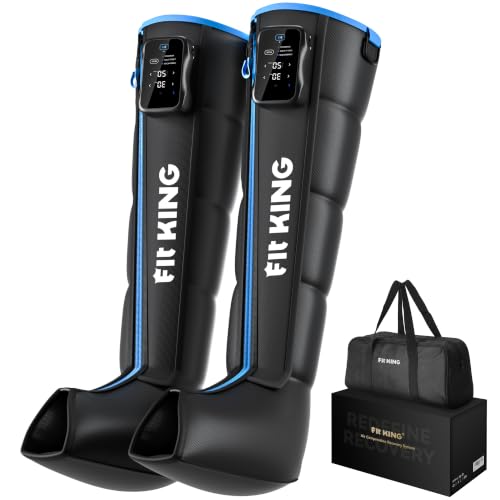
FIT KING cordless compression boots review: built-in controllers, Bluetooth sync, 50 to 150 mmHg and a 24 month warranty, weighed against a £699.99 price.
Best Exercise is a participant in the Amazon EU Associates Programme, an affiliate advertising programme designed to provide a means for sites to earn advertising fees by advertising and linking to Amazon.co.uk. As an Amazon Associate we earn from qualifying purchases. This comes at no extra cost to you and never influences our independent reviews or rankings.