Home Gym
Garmin Forerunner 55 vs 165: Which Entry-Level Garmin Should You Buy?
Garmin Forerunner 55 vs 165 compared on screen, battery, HRV status, Garmin Pay, music and UK price, with a clear verdict on which running watch to buy.

By Paul Kendrick, Cardio & Endurance Editor · Updated 16 November 2026
We may earn a commission from qualifying purchases made through links on this page, at no extra cost to you. This never affects our ratings.
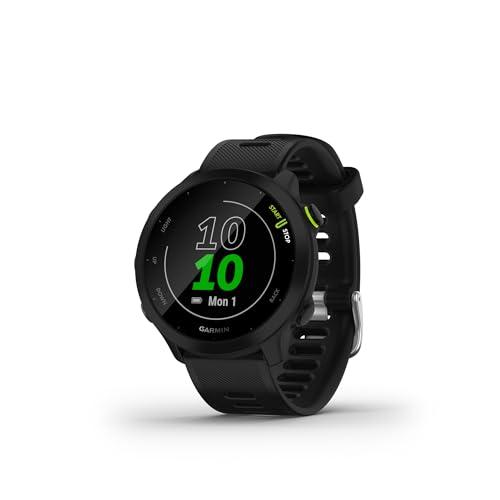
The Garmin Forerunner 55 is still worth buying in late 2026, but only for a specific runner: someone who wants dependable GPS pace and distance, wrist heart rate and a battery that lasts a fortnight, and who doesn't care about a pretty screen. At £113.79 on Amazon UK when we checked, it's about £36 under Garmin's own £149.99 list price and one of the cheapest ways into Garmin's running software. The catch is that it launched in June 2021, and the gap between it and the Forerunner 165 has become wide enough that many runners will be better served by saving a little longer.
How we review
This is a research-based review, not a hands-on test. We built it from Garmin's published UK specifications, Amazon UK product data, consistent owner feedback and independent research on wrist heart rate accuracy. We haven't worn this unit for a training block of our own, so we only report findings that hold up across sources, including the complaints. Price and stock were checked on 16 November 2026.
New runners, mostly. If you're working through a plan like our couch to 5K on a treadmill programme and want to graduate outdoors with real GPS data, the 55 covers that and then some. It also suits the runner who's had a phone strapped to their arm for years and just wants pace on the wrist without a daily charging habit.
It's the wrong pick if you train by HRV, run hilly routes and care about elevation gain, or want to leave your phone at home and still have music. Those features live further up Garmin's range, and we'll get to exactly where.
Check the Forerunner 55 price on Amazon UKGarmin's Forerunner 55 specification page lists more running features than you'd expect at this price. PacePro builds a pacing strategy for a chosen course or distance, so on race day the watch tells you the pace to hold for each section rather than one flat target. There's a race predictor, a finish time estimate, recovery time, VO2 max for running, interval and advanced workouts, and free Garmin Coach plans for 5K, 10K and half marathon that adjust as you go.
Daily suggested workouts are there too, though Garmin's own spec sheet marks them "limited" on this model. They're based on your training history and recovery, and they're perfectly useful for a beginner who doesn't know whether Tuesday should be easy or tempo. They just lack the HRV and sleep inputs that make the same feature smarter on newer watches.
For everyday wear, you get Body Battery, all-day stress, advanced sleep tracking, respiration rate and high or low heart rate alerts. Incident detection works during select activities and pings a contact through your phone. That last one is a genuine reason to choose a Garmin over a cheap fitness band if you run alone on quiet roads.
| Display | 1.04in transflective memory-in-pixel (MIP), 208 x 208 pixels, not touchscreen |
|---|---|
| Lens | Chemically strengthened glass |
| Case | 42 x 42 x 11.6mm, fits 126 to 203mm wrists |
| Weight | 37g |
| Battery, smartwatch mode | Up to 2 weeks |
| Battery, GPS mode | Up to 20 hours |
| Satellite systems | GPS, GLONASS and Galileo |
| Sensors | Garmin Elevate wrist heart rate, accelerometer |
| Water rating | 5 ATM |
| Running tools | PacePro, race predictor, recovery time, VO2 max, Garmin Coach plans |
| Music | Controls phone music only, no storage |
| Payments | None |
| Price | £113.79 on Amazon UK (Garmin list price £149.99) |
Here's where the age shows most. The 1.04in MIP display looks flat and a little washed out next to the 1.2in AMOLED on the Forerunner 165, and at 208 x 208 pixels it fits fewer data fields comfortably. Indoors under artificial light, it can look dim.
Outside, the story flips. Memory-in-pixel screens get easier to read the brighter the sun, which is the opposite of how a phone behaves, and they stay on permanently without hammering the battery. That's why the 55's quoted 20 hours of GPS is actually an hour more than the 165's 19. If you run mostly in daylight, the screen's weakness matters less than it looks in product photos.
There's no touchscreen at all. Five buttons do everything, which is fine mid-run with wet hands, though scrolling through menus and widgets is slower than swiping. Some runners genuinely prefer it; the Forerunner 165 keeps buttons alongside its touchscreen for the same reason.
The 55 uses the older Garmin Elevate optical sensor, not the Elevate V4 found on the 165. For steady easy runs, wrist heart rate from any decent sensor is generally close enough to train by. A Stanford-led study of seven wrist-worn devices across 60 volunteers found most measured heart rate adequately in the lab, while none estimated energy expenditure to within 20 percent, so treat the calorie figure as a loose guide rather than something to eat back.
Where wrist optical sensors struggle is short, sharp intervals, where the reading can lag a few seconds behind your effort. If you train strictly by heart rate zones, a chest strap paired over ANT+ or Bluetooth fixes that, and the 55 supports one.
GPS uses GPS, GLONASS and Galileo but not multi-band, which arrived on the Forerunner 255. On open roads and parks that's not a problem. Under heavy tree cover or between tall buildings, expect the occasional wobbly track and a pace reading that jumps around more than you'd like.
Four omissions stand out. There's no HRV status, the overnight heart rate variability trend that feeds Garmin's morning report and makes suggested workouts more responsive to a bad night's sleep. No barometric altimeter either, so hill climbing totals come from GPS and tend to be rough. Music is phone-only, and Garmin Pay is absent because there's no NFC chip.
One more detail on Garmin's own spec sheet deserves a mention: it lists security updates until "at least 2023-06-02". That date has passed. It doesn't mean the watch stops working, and it still syncs to Garmin Connect, but it does tell you the 55 is no longer where Garmin puts its development effort. Don't buy it expecting new features.
This is the real decision for most buyers. Our Forerunner 165 Music review covers that watch in detail, and we've written a full Forerunner 55 vs 165 comparison, but the short version is that the 165 fixes almost every weakness listed above: AMOLED touchscreen, HRV status, running power, a barometric altimeter and Garmin Pay, plus onboard music on the Music model.
The 55 wins on price and edges it on quoted GPS battery. If £114 is your ceiling, buy it without guilt. If you can stretch, the 165 is the better watch by a clear margin, and so is Garmin's newer budget model; our Forerunner 70 review explains why that one, at around £214, now makes more sense than either for a lot of beginners. Runners who already know they want multi-band GPS and a fuller training load picture should look at the Forerunner 255 instead.
See today's Forerunner 55 deal on Amazon UKAt around £114, yes, for a beginner or a runner who only wants accurate pace, distance and heart rate with a long battery. It's a 2021 watch, so you won't get an AMOLED screen, HRV status or a barometric altimeter. If any of those matter, spend the extra on a Forerunner 165 or the newer Forerunner 70.
Garmin quotes up to two weeks in smartwatch mode and up to 20 hours in GPS mode. That 20 hours is actually a touch more than the Forerunner 165's quoted 19, because the always-on MIP screen draws so little power.
No. You control it with five buttons around the case, and the 1.04in memory-in-pixel display is not touch sensitive. Plenty of runners prefer buttons, since they work with sweaty fingers and gloves, but navigating menus is slower than on a touchscreen.
It can control music playing on your phone, but it has no onboard storage for songs or playlists. If you want to run phone-free with Bluetooth headphones, the cheapest Garmin that stores music is the Forerunner 165 Music.
No. There's no NFC chip, so contactless payments aren't possible. Garmin Pay arrives on the Forerunner 165 and above.
The 165 adds a 1.2in AMOLED touchscreen, HRV status, running power, a barometric altimeter and Garmin Pay, plus onboard music on the Music version. The 55 keeps the buttons-only MIP display and a slightly longer quoted GPS battery, and costs roughly £50 to £90 less depending on the week and which 165 you compare.
Garmin Forerunner 55 vs 165 compared on screen, battery, HRV status, Garmin Pay, music and UK price, with a clear verdict on which running watch to buy.
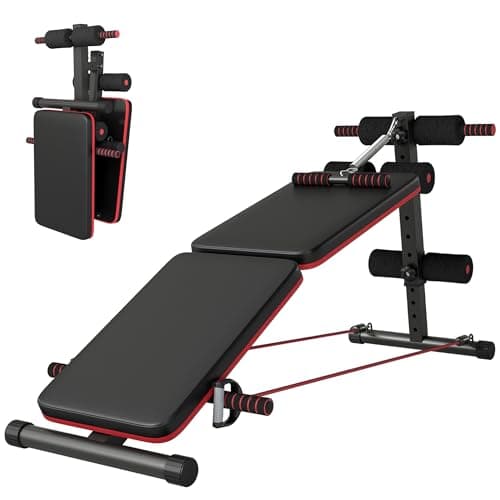
The best sit up benches in the UK for 2026, from a foldable sit up bench that hides under the bed to a 200kg-rated decline station. Weight limits, sizes and honest picks.
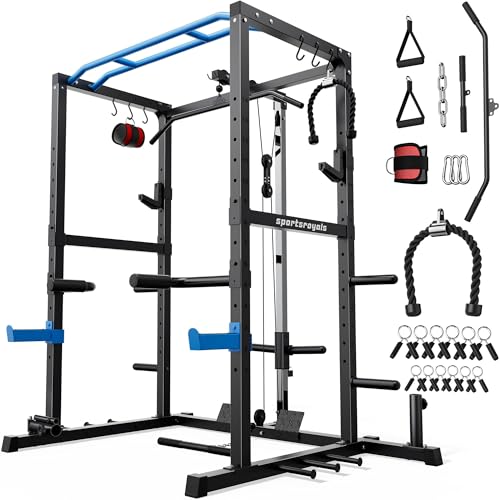
SPORTSROYALS power rack review: 50mm 1.5mm steel, 14 J-hook heights, a plate-loaded lat pulldown and low row, the 210cm height and who should skip it.
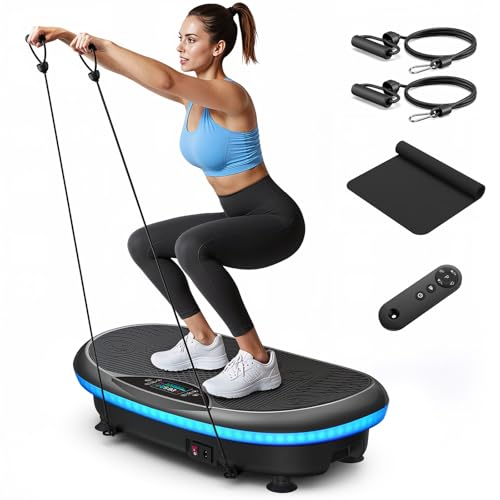
Our MERACH CV55 4D vibration plate review: three motors, 120 speeds, 200kg limit and Bluetooth for £180, plus what vibration training can really do.
Best Exercise is a participant in the Amazon EU Associates Programme, an affiliate advertising programme designed to provide a means for sites to earn advertising fees by advertising and linking to Amazon.co.uk. As an Amazon Associate we earn from qualifying purchases. This comes at no extra cost to you and never influences our independent reviews or rankings.