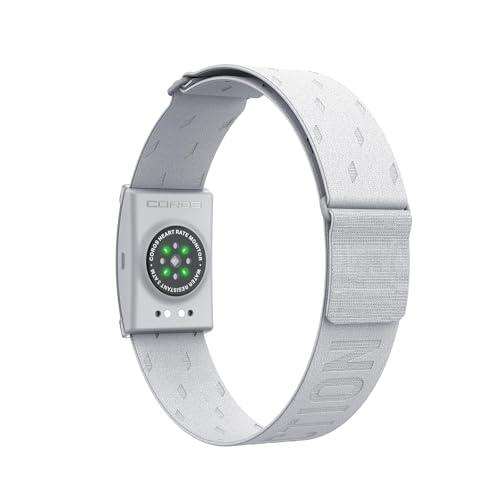
COROS Heart Rate Monitor Review: The £69 Armband That Beats Your Wrist
COROS Heart Rate Monitor review: a £69 upper arm optical sensor with 38 hour battery, auto wear detection and Bluetooth to 3 devices. Is it better than a chest strap?

By Paul Kendrick, Cardio & Endurance Editor · Updated 16 November 2026
Buy the Forerunner 265 unless you're on a hard budget of about £185 or you run ultras and want every hour of GPS battery you can get. The 265 costs roughly £70 more on Amazon UK right now, and for that you get a bright AMOLED touchscreen, music storage as standard and Garmin's Training Readiness score, none of which the base 255 has. The 255 is still a good watch with multi-band GPS and HRV status, but it launched in mid 2022, stock is drying up, and the price gap has narrowed to the point where the 265 is the better buy for almost everyone.
Every number below comes from Garmin's UK spec pages for the Forerunner 255 and the Forerunner 265, comparing the standard 46mm models. Prices are Amazon UK on 16 November 2026.
| Forerunner 255 (46mm) | Forerunner 265 (46mm) | |
|---|---|---|
| Amazon UK price | £184.99 (low stock) | about £255 |
| Display | Transflective MIP, 1.3 in, 260 x 260 | AMOLED, 1.3 in, 416 x 416, optional always-on |
| Touchscreen | No, buttons only | Yes, plus five buttons |
| Weight | 49 g | 47 g |
| Smartwatch battery | Up to 14 days | Up to 13 days |
| GPS-only battery | Up to 30 hours | Up to 20 hours |
| All-systems + multi-band | Up to 16 hours | Up to 14 hours |
| Music storage | Only on 255 Music | Yes, all models |
| Storage | 4 GB | 8 GB |
| Training Readiness | Not listed | Yes |
| Multi-band GPS | Yes | Yes |
| Lens / water rating | Gorilla Glass 3, 5 ATM | Gorilla Glass 3, 5 ATM |
| Launched | 2022 | 2023 |
The 42mm versions follow the same pattern: the 255S gets up to 12 days and 26 hours of GPS, while the 265S manages 15 days and 24 hours.
Check the Garmin Forerunner 265 price on AmazonStrip away the marketing and these are close siblings, with the 265 basically a 255 rebuilt around an AMOLED panel. That panel is why people upgrade.
The 255 uses a memory-in-pixel (MIP) display, which reflects ambient light rather than lighting itself. In bright sun it's perfectly readable and it sips power, but indoors and on grey British mornings it looks dim and a bit washed out, and at 260 x 260 pixels the text is noticeably softer. The 265's 416 x 416 AMOLED is far crisper, with deep blacks and colours that make maps of your training load and the morning report actually pleasant to read. It's also a touchscreen, so scrolling through widgets and menus is quicker than hammering buttons, though you can lock touch during runs and fall back on the five buttons.
There's a catch. By default the AMOLED sleeps until you raise your wrist; turn on always-on mode and battery life drops sharply, which is why plenty of 265 owners leave it on gesture wake. If you like a watch face that's always visible at a glance without a flick of the wrist, the MIP screen on the 255 does that for free.
On paper the smartwatch numbers barely differ: 14 days for the 255 against 13 for the 265. Where the gap opens up is GPS, with the 255 quoting 30 hours in GPS-only mode and the 265 quoting 20. With all satellite systems and multi-band switched on, Garmin claims 16 hours for the 255 and 14 for the 265.
For someone running four or five times a week, including a 90-minute long run, either watch needs charging about once a week, and the difference won't change your life. It matters if you do ultras, long hill days or Ironman-distance triathlons, where an extra ten hours of GPS-only tracking is the difference between finishing with a working watch and not.
Music eats into both. On the 265, GPS-only tracking with music drops to about 7 hours; on the 255 Music, all-systems tracking with music falls to about 6.5 hours, according to Garmin's own figures.
Both watches share most of Garmin's training platform: HRV status measured overnight, training status, recovery time, daily suggested workouts that adapt after each run, Garmin Coach plans for 5K to half marathon, and a morning report when you wake up.
The headline difference is Training Readiness. On the 265, it rolls sleep quality, recovery time, training load and HRV status into a single score that tells you whether today should be hard or easy. Garmin's UK spec sheet lists it for the 265 and not for the 255, and despite plenty of owners asking on Garmin's forums, we couldn't find a Garmin release note that brought it to the older watch. You can piece together a similar judgement on the 255 from HRV status and recovery time yourself; the 265 just does the arithmetic for you, and in practice a single number is what makes people actually back off on a bad day.
The 265 also has double the storage (8 GB against 4 GB), which matters mainly for music. Our Forerunner 265 review goes deeper on how Training Readiness behaves once it's calibrated.
Neither is heavy. The 46mm 255 weighs 49 g and the 46mm 265 weighs 47 g, so you won't feel the 2 g. Both use a fibre-reinforced polymer case with Gorilla Glass 3 and 22mm quick-release straps on the larger size, and both are rated to 5 ATM for swimming.
Case sizes differ slightly. The 255 measures 45.6mm across, the 265 is 46.1mm, and the small versions are 41mm (255S) and 41.7mm (265S). If you have a slim wrist, look at the S models of either watch; our Forerunner 265S review covers the smaller AMOLED option.
This trips people up. The Forerunner 255 came in four versions: 255, 255S, 255 Music and 255S Music, and only the Music models store songs. The 255 currently selling at £184.99 on Amazon UK (the slate grey 46mm, ASIN B0B46N7QQL) is the standard model with no music storage, so you'd need your phone on runs for audio.
Every Forerunner 265 has music storage built in and syncs offline playlists from Spotify, Deezer and Amazon Music (premium subscription required). If you run with headphones and without your phone, the honest comparison is the 265 against the 255 Music, and the 255 Music is now harder to find at a discount than the base model.
When we checked on 16 November 2026, the 46mm Forerunner 255 was £184.99 on Amazon UK with only 8 left in stock, and the 46mm Forerunner 265 was £255.48 and in stock. That's a £70 gap for a better screen, Training Readiness and music.
The 255 is the right buy if you want a proven multi-band GPS watch for as little as possible and don't care about music or the nicer screen. Don't pay much more than £185 for it, though, because once the price creeps towards £220 the 265 becomes the obvious choice. With stock this thin, the remaining units could sell out or rise in price at any point.
Check the Garmin Forerunner 255 price on AmazonThe 265 is no longer Garmin's newest mid-range Forerunner. The Forerunner 570 sits above it with an AMOLED screen, Training Readiness, a built-in speaker and microphone for calls and voice commands, and a choice of 42mm or 47mm cases. Garmin quotes up to 11 days of smartwatch battery for the 47mm, so it lasts less than either watch here.
It costs roughly £150 to £190 more than the 265, and the core training tools are much the same. Our Forerunner 570 review concludes that the 570 suits runners who want the speaker and the smaller case, while the 265 remains the value pick. If you're weighing Garmin against the other big running watch brand, our Coros vs Garmin comparison covers that, and the Forerunner 255 review goes deeper on the older watch.
Buy the Forerunner 265. The AMOLED touchscreen makes it nicer to live with every day, Training Readiness turns Garmin's data into a decision you'll actually follow, and music comes as standard; at about £70 more than the 255, it's the better value. Pick the 255 only if £185 is your ceiling, you want 30 hours of GPS-only battery, or you prefer a screen that's always readable in direct sun, and buy it soon, because a 2022 watch with 8 units left won't hang around.
For most runners, yes. At current Amazon UK prices the gap is about £70, and that buys a far sharper AMOLED touchscreen, built-in music storage and Training Readiness. The 255 only wins if you want the longest possible GPS battery or you'd rather not spend more than about £185.
Not according to Garmin. The current UK spec sheet lists Training Readiness for the 265 but not for the 255, and we couldn't find a Garmin release note that added it. The 255 still has HRV status, training status, recovery time and a morning report, so you get most of the ingredients without the single combined score.
The 255. Garmin quotes up to 14 days in smartwatch mode and 30 hours of GPS-only tracking for the 46mm 255, against 13 days and 20 hours for the 46mm 265. The gap is biggest on long GPS sessions, and it grows further if you switch the 265 to its always-on display mode.
Only the Forerunner 255 Music and 255S Music do. The standard 255 has no music storage, so you need your phone for audio. Every Forerunner 265 stores music and syncs playlists from Spotify, Deezer and Amazon Music with a premium subscription.
Garmin still lists it on its UK site, but it's a 2022 watch and stock is thinning. When we checked in November 2026, Amazon UK showed only 8 units of the grey 46mm model left. If you want one at a discount, don't wait long.
Buy the 265 unless you specifically want the 570's built-in speaker and microphone or its 42mm case with a brighter, sharper screen. The core training tools are much the same, and the 570 costs roughly £150 more.
COROS Heart Rate Monitor review: a £69 upper arm optical sensor with 38 hour battery, auto wear detection and Bluetooth to 3 devices. Is it better than a chest strap?
COROS vs Garmin for UK runners: PACE 4, PACE 4 Pro, APEX 4 and NOMAD against Forerunner, fenix and Instinct on battery, maps, apps, Garmin Pay and price.
Does Revitive work? What the trials show on leg blood flow and symptom relief, whether the NHS recommends it, who shouldn't use it and cheaper alternatives.
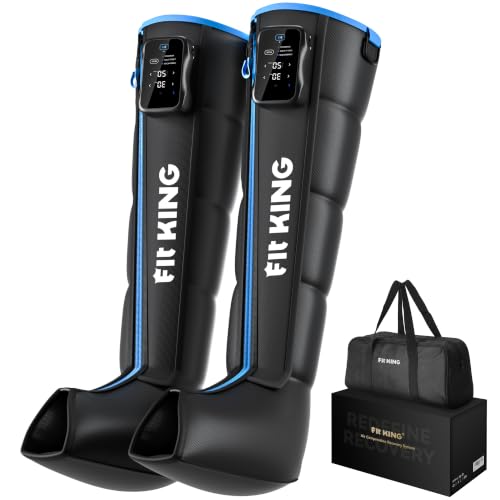
FIT KING cordless compression boots review: built-in controllers, Bluetooth sync, 50 to 150 mmHg and a 24 month warranty, weighed against a £699.99 price.
Best Exercise is a participant in the Amazon EU Associates Programme, an affiliate advertising programme designed to provide a means for sites to earn advertising fees by advertising and linking to Amazon.co.uk. As an Amazon Associate we earn from qualifying purchases. This comes at no extra cost to you and never influences our independent reviews or rankings.