Recovery
How to Clean an Ice Bath: Water Changes, Sanitiser and Maintenance
How often to change ice bath water, which sanitiser to use and how much, how to scrub inflatable and rigid tubs, and the signs your cold plunge water has gone bad.

By Mike Shilling, Recovery & Training Editor · Updated 31 October 2026
We may earn a commission from qualifying purchases made through links on this page, at no extra cost to you. This never affects our ratings.
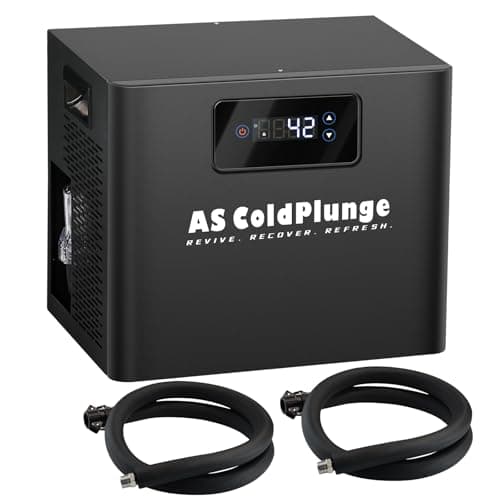
AS ColdPlunge
The AS ColdPlunge ice bath chiller is a £686.72 box that does one job: it keeps a cold plunge tub cold without you hauling bags of ice home. It's a 1/3 HP unit rated for up to 79 gallons (about 300 litres), with a built-in pump, a rinsable metal filter, insulated hoses and a touchscreen thermostat. For a daily plunger it makes sound financial sense. What holds the rating back is a listing that skips the numbers you'd want before spending nearly £700, and one headline claim that can't be right.
When we checked on 31 October 2026, Amazon UK listed it at £686.72 with "Usually dispatched within 6 to 7 days", so this isn't a next-day purchase.
How we review
We haven't tested this chiller ourselves. This review is based on the Amazon UK listing and its stated specifications, the patterns we see in owner feedback on small cold plunge chillers, our own heat and cost calculations (shown in full below), and comparison with the tubs we've already reviewed. Where the listing is vague or wrong, we say so rather than guess.
A chiller only makes sense once you've done the ice maths, so here it is. Heating or cooling water takes about 4.19 kJ per litre per degree. Melting ice soaks up roughly 334 kJ per kilo, plus a little more as that meltwater warms to the tub temperature.
Take a 300 litre tub that's drifted up to 18°C in a garage or utility room, and you want it at 8°C. That's 300 x 4.19 x 10 = about 12,570 kJ to remove. Each kilo of ice absorbs about 334 + (4.19 x 8) = roughly 368 kJ, so you need around 34kg of ice. Start from 15°C tap water instead and it's closer to 24kg. Either way, real-world losses through the tub walls and from your own body heat push the figure up, not down.
Now the cost. Assume bagged ice at about £1 a kilo to keep the sums simple (your local price will differ). Plunging five days a week at 25 to 35kg a time works out at roughly £500 to £750 a month. Even if you're thrifty and only partly re-chill, it's still well into three figures.
The chiller side looks very different. Pulling that same 12,570 kJ out is about 3.5 kWh of heat. Small chillers typically move more heat than they consume in electricity; if we assume a modest ratio of about 2 (our assumption, as AS ColdPlunge doesn't publish one), the initial pull-down costs roughly 1.75 kWh. At 25p per kWh, a round figure near recent UK capped rates, that's about 45p. After that, the unit only has to hold temperature, and in an insulated, covered tub that might be 1 to 4 kWh a day depending on where it lives. Call it £10 to £30 a month.
So the break-even point for a daily plunger arrives within the first month or two. If you plunge once or twice a week, mostly between November and March, it's a different story. UK tap water gets cold on its own in winter, a few kilos of ice tops it up, and £687 would buy a very long time of that. Our ice bath temperature guide explains why you don't need to chase near-freezing water anyway.
The headline claim is that the unit "cools up to 79 gallons of water to 12℉". Twelve degrees Fahrenheit is about minus 11°C. Water at that temperature is ice, so the statement can't be literal. The likeliest explanations are a translation slip or a description of how many degrees it can drop the water, not the temperature it reaches. We don't know which, and the listing doesn't give a minimum set point in Celsius.
That matters more than it sounds. If getting below 5°C is the reason you're buying, ask the seller for the real figure before you order. Don't read 12°F as a spec.
The listing also leaves out the electrical input in watts, the cooling capacity, a pull-down time and an IP (water ingress) rating. For a mains-powered unit that lives next to a tub of water, that last one is the gap we'd most like filled. Whatever you buy, plug it into an RCD-protected socket and keep it off wet ground.
The box includes the chiller with its integrated filter and pump, insulated hoses with pre-installed connectors, waterproof tape and instructions, which AS ColdPlunge says come with guided setup videos. The pump circulates water from your tub, through the filter and cooling coil, and back again. The touchscreen lets you set a temperature, and the unit cycles on and off to hold it.
The filter is a rinsable metal mesh, so there are no replacement cartridges to buy. That's a real saving over chillers that need a new cartridge every few weeks. It's a debris filter, though, and the listing mentions no UV lamp or ozone generator. Hair, skin oils and sweat will still build up, and you'll be changing water and keeping the lid on regardless.
The insulated hoses are a smart inclusion. Bare hoses running across a warm room lose some of the cold you're paying to make; wrapped hoses lose less. The listing doesn't give the hose length or the fitting diameter, so check that against your tub's ports.
| Compressor | 1/3 HP |
|---|---|
| Rated tub capacity | Up to 79 gallons (approx 300 litres) |
| Minimum temperature | Not clearly stated (listing says 12°F, see above) |
| Filter | Built-in rinsable metal filter, no cartridges |
| Pump | Integrated; extra submersible pump needed for a home bathtub |
| Hoses | Insulated, with pre-installed connectors |
| Controls | LED touchscreen thermostat |
| Dimensions | Approx 30 x 38 x 32 cm |
| Weight | Approx 16 kg |
| Power draw / IP rating | Not stated |
| Warranty | 1 year |
| Price checked | £686.72, dispatched in 6 to 7 days (31 October 2026) |
At around 16kg and the size of a large microwave, it's portable enough to move between a summer garden spot and a winter garage. You'll want it on a level surface with space around the vents, because a chiller dumps the heat it removes into the air around it. In a small, shut cupboard it'll work harder and cost more.
There isn't another standalone chiller on the site yet, so the honest comparison is which tubs it suits.
The Zennest 140 Gal XL has dual chiller ports and a proper circulation loop, which makes it the most chiller-friendly tub we've covered. It also holds about 530 litres, well over this unit's 300 litre rating. Pair the two and you'd be asking a small compressor to do a much bigger job, so expect slow cooling and long run times, especially in summer.
The Cold Pod 320L is a much better match on volume. You'd rarely fill it to the brim with a body going in, so the working volume sits close to this chiller's rating, and at £129.99 the pair comes to about £817. The catch is that The Cold Pod has no ports, so you'd be running hoses over the rim and taping them in place, which is exactly what that waterproof tape is for.
The Lay-Z-Spa Glacial Dip already has its own filter pump but no chiller. It's a sturdier frame-and-liner design, though you'd need to work out the plumbing yourself, and that's a job for a confident DIYer.
If you haven't bought a tub yet, our best ice bath UK guide covers the full range, and it's worth choosing one with ports if you think a chiller is coming later.
A chiller makes cold water convenient, so it's fair to ask what that cold does. The best summary we've found is a 2022 meta-analysis of 52 studies, which found cold-water immersion improved muscle power, soreness and perceived recovery 24 hours after high-intensity exercise compared with passive recovery. It didn't find a meaningful effect on recovering strength, and after eccentric work the benefit was limited to power.
On dose, an earlier meta-analysis found the soreness benefit was best with water at around 11 to 15°C for 11 to 15 minutes, and the overall effect was only slightly better than passive rest. That's useful for chiller owners, because 12°C is cheaper to hold than 4°C. Our guide on how long to stay in an ice bath goes further on timing.
There's one important caveat for lifters. In a 12-week study of 21 active men, those who took a 10-minute cold plunge after each strength session gained less strength and muscle mass than those who did an active cool-down. It's one small study, so treat it as a warning rather than a verdict, but if muscle growth is your goal, keep plunges away from lifting days or leave a gap of several hours. A chiller that's always ready makes it tempting to jump in straight after the gym, and that's the habit to avoid.
Check the AS ColdPlunge price on Amazonaround £687Buy it if you plunge four or more days a week, you own (or are about to buy) a tub of around 300 litres, and you're tired of ice runs. The running-cost gap is big enough that it pays back quickly, and the filter and insulated hoses mean fewer extra purchases.
Skip it if you plunge occasionally, mostly in winter, or own a 500 litre plus tub. Skip it too if you need a guaranteed temperature below 5°C and the seller can't confirm it. In those cases, ice and cold tap water are cheaper, or a larger chiller with full published specs is the safer spend.
If you plunge four or more times a week, yes. Re-chilling a 300 litre tub with ice can take 25 to 35kg a session by our maths, which adds up to hundreds of pounds a month, while a 1/3 HP chiller should cost somewhere around £10 to £30 a month in electricity. If you only plunge once or twice a week, or mostly in winter, ice or cold tap water is far cheaper.
The listing says it cools up to 79 gallons of water 'to 12°F', but 12°F is about minus 11°C, which would freeze the tub solid. It's most likely a translation error or a description of a temperature drop rather than a target. The listing doesn't state a minimum set point in Celsius, so ask the seller before buying if you want water below 5°C.
It's rated for up to 79 gallons, which is roughly 300 litres. That covers barrel tubs like The Cold Pod 320L when you leave headroom for your body, but it's undersized for 500 litre plus inflatables such as the Zennest 140 Gal XL.
The listing says you can if you add a submersible pump, which isn't in the list of what's included. A bathtub has no inlet and outlet ports, so the pump sits in the water and feeds the chiller. Budget for that extra part and keep the unit well away from splashes.
When we checked on 31 October 2026, Amazon UK showed it as 'Usually dispatched within 6 to 7 days', so allow a week or more before it arrives.
Only partly. The built-in metal filter traps debris and you rinse it rather than replacing cartridges, but the listing mentions no UV or ozone sanitiser. You'll still need to change the water regularly, shower before you get in and keep the tub covered.
How often to change ice bath water, which sanitiser to use and how much, how to scrub inflatable and rigid tubs, and the signs your cold plunge water has gone bad.
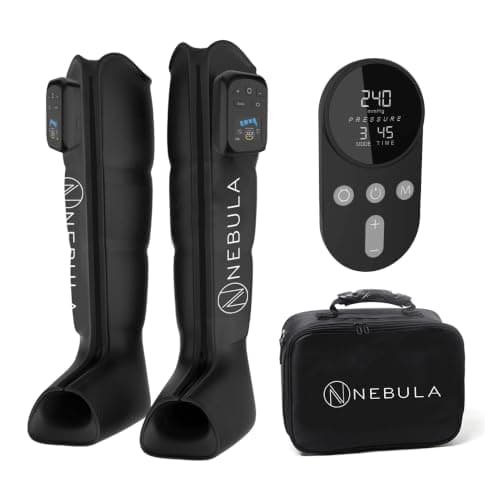
Nebula wireless compression boots review: cordless, USB-C, a 120 minute battery and foot to thigh coverage for £249.99, but no published pressure figure.
What a sauna hat is, why felted wool keeps your head cooler in a hot sauna, whether it helps you stay in longer, how to size, wet and wash one, and which to buy.
Sauna temperature explained: 70 to 100°C for Finnish saunas, 45 to 65°C for infrared, 40 to 45°C for steam rooms, plus beginner settings and safety.
Best Exercise is a participant in the Amazon EU Associates Programme, an affiliate advertising programme designed to provide a means for sites to earn advertising fees by advertising and linking to Amazon.co.uk. As an Amazon Associate we earn from qualifying purchases. This comes at no extra cost to you and never influences our independent reviews or rankings.