Exercise Bikes
Reebok FR30 Exercise Bike Review: A Proper Console, a Fair Price
Our Reebok FR30 exercise bike review: 32 levels of electronic magnetic resistance, a 9kg flywheel, Zwift and Kinomap support, 120kg limit and the trade-offs.

By Paul Kendrick, Cardio & Endurance Editor · Updated 6 November 2026
We may earn a commission from qualifying purchases made through links on this page, at no extra cost to you. This never affects our ratings.
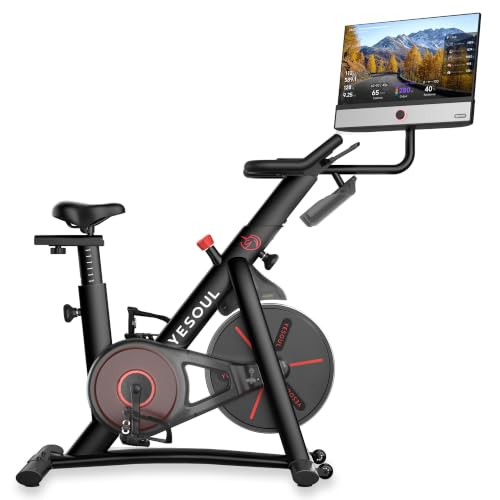
The YESOUL G1M Plus is a magnetic spin bike with a 21.5in 1080p screen bolted to the front, sold for £499.99 on Amazon UK at the time of writing. It's a decent buy for the money, but the screen is best understood as a monitor for your phone: you mirror an app across by cable and ride along to it. If you want a big-screen Peloton-style setup without a £45 monthly bill, it does that job well. If you want auto resistance, a high weight limit or software that just works out of the box, look elsewhere.
How we review
We haven't ridden the G1M Plus ourselves. This review draws on YESOUL's published UK specification page, the Amazon UK listing, retailer listings and our existing reviews of the Peloton and Renpho bikes it competes with. Where a spec isn't published (the flywheel weight is the obvious gap) we say so rather than guess.
This is the part most listings blur, so it's worth being precise. YESOUL's own specification page describes the 21.5in Full HD panel as a screen for mirroring your phone, with a note that Android phones need DisplayPort output over USB-C. The Amazon variant is literally labelled "G1M PLUS Screen Mirroring". There's also an HDMI input listed on the spec sheet, and YESOUL sells a separate "live streaming cable" for the bikes in this range.
So you're not buying a standalone Android tablet with apps preinstalled, the way a Peloton or an Echelon screen works. You plug in your phone (or a tablet or streaming stick via HDMI), and whatever's on it appears on the bike's screen. YESOUL lists the YESOUL Fitness app, Peloton, Zwift, Kinomap, Jacfit and YouTube as compatible, which in practice means anything your phone can run.
That approach has a real upside. Nothing on the screen goes obsolete when a manufacturer stops updating its software, and you aren't locked into one class library. The downside is friction: a cable to plug in each ride, a phone to keep charged, and touch controls that stay on the phone rather than the big screen. Some people will find that fiddly within a week. Others won't care, because they pick a class once and pedal for 40 minutes.
The screen rotates and tilts according to retailer listings, so you can turn it towards a mat for off-bike workouts. Audio comes from twin speakers, which Best Buy's US listing puts at 6W in total. That's laptop-level sound; most owners will want headphones or a Bluetooth speaker for a proper class.
YESOUL is clear that mirroring is free and doesn't need a membership. The YESOUL Fitness app itself is free to register, with a paid coaching tier for its full class library. YESOUL's US and Australian stores list that membership at roughly $13 to $14 a month; we couldn't confirm the current UK price, so check before you count on it.
If you plan to mirror Peloton, you'll be paying Peloton for its app rather than the All-Access membership, and our Is Peloton worth it? breakdown covers those tiers: App One at £12.99 a month or App+ at £28.99 a month at the time of writing. Zwift carries its own subscription too. None of this is compulsory, though, and the bike works fine with free YouTube rides, which is the cheapest big-screen setup you'll find.
One honest limitation: the G1M Plus uses a manual knob. YESOUL quotes 100 magnetic resistance levels, but no app can turn that knob for you, so Zwift won't stiffen the pedals on a climb and Peloton cues stay advisory. The spec sheet does list Bluetooth and 2.4GHz Wi-Fi for real-time data, but we couldn't verify which third-party apps read the bike's cadence or power directly.
The frame is steel, and YESOUL gives a net weight of 34kg, which matches the roughly 35kg on Amazon's listing. Assembled, the bike measures 129.5cm long, 53cm wide and 145cm tall, so it takes up about the same floor space as a standard spin bike, with the screen adding height rather than width. Built-in front wheels let you tip it and roll it, which helps if it lives in a spare room that doubles as an office.
YESOUL recommends it for riders from 145cm to 188cm, and the 69cm to 92cm seat range backs that up. Taller riders over about 6ft 2in should check their inseam before buying; our guide to exercise bike seat height explains how to work out what you need. The handlebars have armrests, and the pedals are described only as non-slip, so we'd assume toe cages rather than clip-in SPD cleats. We couldn't confirm that.
The flywheel is listed as cast iron with an aluminium ring, with no weight given. That's a common omission on Amazon-led brands, and it matters a little: heavier or rim-weighted flywheels feel smoother at low cadence. Magnetic resistance is the right choice at this price either way. There are no pads to wear and it's much quieter than friction, which is useful in flats.
The 120kg weight limit is the spec we'd question most. Plenty of bikes at £300 manage 136kg to 159kg, and the Peloton Bike is rated to 135kg. If you're anywhere near 120kg, buy something with headroom.
| Screen | 21.5in 1080p Full HD, mirroring via USB-C or HDMI |
|---|---|
| Resistance | Magnetic, 100 levels (manual knob) |
| Flywheel | Cast iron with aluminium ring (weight not published) |
| Max user weight | 120kg |
| Rider height | 145cm to 188cm |
| Seat height | 69cm to 92cm |
| Dimensions | 129.5 x 53 x 145cm |
| Bike weight | 34kg net |
| Connectivity | Bluetooth, 2.4GHz Wi-Fi |
| Audio | Dual speakers (6W total per retailer listing) |
| Power | Mains, 24V 2A adapter |
| Warranty | 1 year limited |
YESOUL's full figures are on its G1M Plus UK specification page.
Against the Peloton Bike, the maths is stark. Peloton charges £1,599 for the hardware and £45 a month for All-Access, so year one costs over £2,100. The G1M Plus plus a year of Peloton App+ comes to under £850. You lose the integrated touchscreen, leaderboard metrics pulled straight from the bike, and a sturdier frame. You keep most of the classes on a screen of exactly the same size.
The Peloton Bike+ at £2,299 adds a 23.8in swivel screen and auto resistance that follows the instructor. That second feature is the one thing the G1M Plus can't imitate at any price.
The more interesting rival is the Renpho AI Smart Bike, at a similar £499. Renpho has no screen at all, but it does have automatic resistance, Zwift smart-trainer control and a free app. So the choice is fairly clean: if you'll ride Zwift or want the bike to change resistance for you, buy the Renpho and use a tablet or TV. If you mostly watch classes or shows and like adjusting the knob yourself, the YESOUL's big screen is the better fit.
Our best smart exercise bike UK guide covers more Peloton alternatives across price bands, and exercise bike with screen explains when a built-in screen is worth paying for at all.
Only if you ride it, which is the real argument for a screen. The NHS recommends adults do at least 150 minutes of moderate activity or 75 minutes of vigorous activity a week, and it counts riding a bike as moderate, rising to vigorous when you ride fast or on hills (NHS physical activity guidelines). Five 30-minute rides at a steady effort hit that target.
The research on indoor cycling itself is encouraging but thin. A 2019 systematic review in Medicina pooled 13 studies (372 participants, mostly women) and found indoor cycling may improve aerobic capacity, blood pressure, lipid profile and body composition, with the best results on weight and blood pressure when combined with diet. The authors stress that few of the studies were randomised controlled trials, so treat the findings with caution (Chavarrias et al., 2019). For more on that, see whether exercise bikes are good for cardio.
Buy the G1M Plus if you want a large screen in front of you for classes, YouTube rides or Netflix, you're under 120kg, and you're comfortable plugging your phone in each session. It suits people who already pay for the Peloton app and want a bigger display than a tablet, or anyone who wants a big screen without committing to another subscription.
Skip it if you weigh over about 115kg, want Zwift to control the resistance, or expect a fully self-contained smart bike. The cable-and-phone setup will annoy people who wanted to switch on and ride. In those cases the Renpho, a sturdier spin bike plus a tablet holder, or a refurbished Peloton makes more sense.
See today's YESOUL G1M Plus priceNo. YESOUL says screen mirroring is included and doesn't need a membership, so you can put YouTube or any app on your phone up on the 21.5in screen for free. YESOUL's own coaching content has an optional paid tier (priced per region; we couldn't confirm the current UK figure), and if you mirror Peloton or Zwift you still pay those services directly.
Yes, by mirroring the Peloton app from your phone or tablet onto the bike's screen. You'll need a Peloton App subscription (App One or App+, not the All-Access hardware membership). The catch is that the G1M Plus has a manual resistance knob, so it won't follow Peloton's resistance cues for you, and Peloton's metrics won't read the bike's data directly.
YESOUL lists 120kg, with a recommended rider height of 145cm to 188cm and a seat height range of 69cm to 92cm. That's on the low side for a bike at this price; if you're heavier, a bike with a 150kg-plus rating is a safer buy.
The screen mirrors a phone over a cable rather than wirelessly. YESOUL notes Android phones need DisplayPort output over USB-C, and sells a separate streaming cable. Newer USB-C iPhones generally support video out, but we couldn't confirm which iPhone models or adapters YESOUL officially supports, so check with YESOUL before you rely on an older Lightning iPhone.
Not as a bike, but it's far cheaper. The Peloton Bike costs £1,599 plus £45 a month for All-Access. The G1M Plus is around £500 and has no compulsory fee. You give up Peloton's polished integrated software, its build quality and a higher weight limit, and you get most of the big-screen class experience for roughly a third of the hardware price.
Our Reebok FR30 exercise bike review: 32 levels of electronic magnetic resistance, a 9kg flywheel, Zwift and Kinomap support, 120kg limit and the trade-offs.
The best foldable exercise bike for UK homes, from budget mini pedallers to a 140kg-rated smart bike and a comfy recumbent. Folded sizes, weight limits and honest downsides.
An honest review of the 2026 Toputure Smart Exercise Bike at £199.99: 32-level electromagnetic resistance, app control, the sub-20dB claim and who it suits.
What makes an exercise bike noisy, which types are quietest for flats and upstairs rooms, how to stop vibration through the floor, and how to fix squeaks.
Best Exercise is a participant in the Amazon EU Associates Programme, an affiliate advertising programme designed to provide a means for sites to earn advertising fees by advertising and linking to Amazon.co.uk. As an Amazon Associate we earn from qualifying purchases. This comes at no extra cost to you and never influences our independent reviews or rankings.