Are Exercise Bikes Good for Cardio? An Expert Guide
By Paul Kendrick, Cardio & Endurance Editor · Updated 4 October 2026
Yes, exercise bikes are very good for cardio. They give you an effective, low-impact heart workout at home, burn a serious number of calories and cost far less than they used to, which is why they're one of the most popular pieces of cardio equipment in the UK. Whether a bike is the right choice for you depends on your goals, the type of exercise you enjoy and your current situation.
If you're thinking about buying a home exercise bike for cardio, or joining a gym to use one, this guide walks through the genuine advantages and disadvantages, explains how bikes compare for weight loss and belly fat, and finishes with our expert-recommended home bikes for every budget.
Are exercise bikes good for cardio?
Exercise bikes are extremely popular for cardio, and for good reason. They're affordable. Mini exercise bikes start from as little as £50, and even a good-quality full-size upright bike can cost as little as £200. If you'd rather start at the cheap end, we've ranked the best exercise bikes and mini bike machines under £100.
People love them because they're effortless to get a great workout from. There's no technique to learn: as soon as you climb on and start pedalling, you're getting a solid cardio session. It's a bit like the difference between jogging outdoors and running on a treadmill: much the same exercise, but with no distractions and no weather to stop you, so you can really put yourself through your paces.
Bikes also give you choice. You can pick an upright, a recumbent or a mini version, each with its own benefits for your body. In short, exercise bikes are absolutely a great form of cardio, and they will help you improve your fitness and lose weight.
Can I lose weight on an exercise bike?
You can lose weight on an exercise bike, and many people find it easier than running outdoors. It's an excellent choice if you want something low-impact, and a bike lets you push harder or ease off depending on your fitness and how tired you feel.
For a 185-pound person (just over 13 stone), a 30-minute session at a moderate pace burns on average around 294 calories. Compare that to other forms of exercise such as weightlifting (126 calories) or a step machine (252 calories). [1]
If you can commit to 30 minutes of cycling a day, that's roughly 2,100 calories burned across the week, about a full day's worth of food.
The advantages of exercise bikes for cardio
1. Economical: affordable and easy to buy online
The surge in home-exercise equipment has driven the price of exercise bikes down significantly. For less than £200 you can pick up a home bike packed with gym-quality features, a sturdy build and good overall quality. (See our expert recommendations further down this article.)
2. Effective: a great cardio workout every time
Exercise bikes are one of the most effective forms of cardio available. They burn plenty of calories and, thanks to their size and ease of use, they hold real advantages over other equipment. Compared with treadmills, they're far easier to store and typically much quieter.
3. Variety: upright, recumbent and mini versions
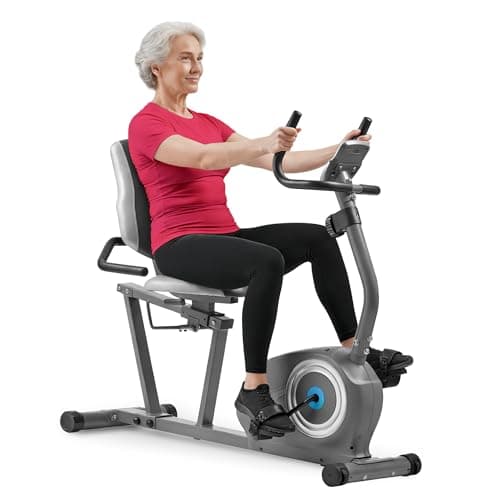
You have a few choices of exercise bike, specifically upright, recumbent and mini versions. All three can improve your cardio and fitness, and each has its own advantages around size and weight.
Our recommendation is an upright bike wherever possible, as it offers the biggest cardio and fitness benefit. Mini exercise bikes don't have quite the same impact, but they're perfect for the elderly or for anyone short on space for a full-size machine.
4. Low impact: kind to joints
If you're elderly, overweight, or you suffer from joint pain or injury, an exercise bike is a great way back into exercise. Unlike running on a treadmill, cycling has a much lower impact on your knees and joints, so you can burn calories without putting too much pressure on them or your back. That makes bikes ideal for people of all ages who want to get fit and lose weight.
5. Quiet: no waking the whole house
Exercise bikes are very quiet and have no motor like a treadmill does, so they're far more convenient if you have family members sleeping or want to work out early in the morning. They're also a lot easier to store than treadmills, another win for anyone with limited space.
The disadvantages of exercise bikes for cardio
1. Not always easy to move
Most exercise machines these days have a solid, sturdy build. That's great for stability, but not so handy if you want to move the bike around the house or pack it away when it's not in use. If portability matters, look for a model with built-in transport wheels or a folding frame.
2. There's a learning curve for some people
Contrary to popular belief, not everyone can simply hop on and ride like a pro. It takes a little practice to get comfortable, especially if you've never used a stationary bike before. The most common challenge is building the stamina to stay on for longer periods. If you can last more than 30 minutes without getting off, you're doing well. Some users also find it hard to stay comfortable on the seat for that long; if so, a mini exercise bike may suit you better.
3. Little variation in speed or intensity
As effective as bikes are, they do lack in a couple of areas. On a treadmill you can raise or lower the speed and the machine forces you to keep up. On an exercise bike the speed is entirely controlled by you. Resistance levels and uphill modes can make sessions harder, but because nothing pushes you, it's easier to slack off and not work as hard as you could.
Which kinds of exercise bike are good for cardio workouts?
There are two main types you'll come across: the upright exercise bike (what most people picture when they think of an exercise bike) and the mini exercise bike.
The mini exercise bike has no seat and no handles; it's essentially just the pedals. These are great for older users or anyone recovering from a serious illness or condition, and they're easier for people who struggle to sit on a bike for long periods or who have joint issues. However, they aren't as effective for cardio, because they remove some of the factors that come into play on an upright bike, most notably the core stability you need to stay balanced.
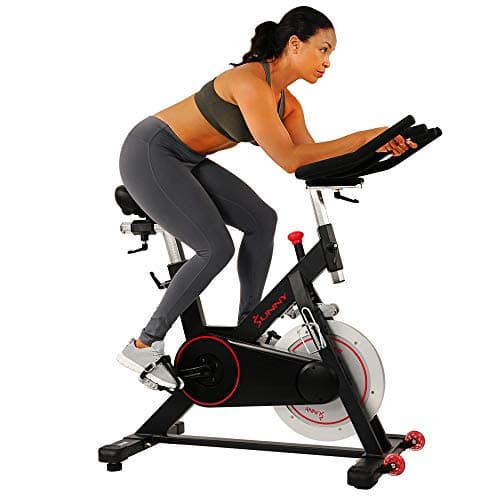
The best kind of exercise bike for cardio workouts is the upright stationary bike. There are plenty of home options across a wide range of budgets and features, and we've listed our favourites below.
Are exercise bikes good for losing belly fat?
Exercise bikes are great for cardio, and they can also help you shift stubborn belly fat, just not by targeting it directly.
To lose belly fat you need to be in a calorie deficit for a sustained period, meaning you burn more calories than you consume. There are two ways to do this:
Increase your energy output with exercise.
Reduce your calorie intake.
Exercise bikes are excellent for the first option and can burn a significant number of calories. With regular use and sensible calorie management, they're a great tool for losing belly fat and weight in general.
You can't spot-reduce fat
There's no way to lose fat from one specific part of your body, such as your stomach. The only way to lose belly fat is to lose body fat overall, by combining regular cardio with a calorie deficit.
Our expert recommendations for a home exercise bike
If you're in the market for a home exercise bike, you're in luck. Our experts have rounded up some of the best bikes available today across different budgets and needs. Take a look and see which fits you best.
Reebok GB50 Exercise Bike: our top choice
The Reebok GB50 is our top pick for a home cardio bike. It offers 32 electronic resistance levels for genuinely challenging programmes, so you can ramp your workouts up as your fitness improves.
A fluid 9 kg flywheel keeps the pedalling motion smooth and creates minimal joint stress, making longer, less abrasive rides comfortable. Everything is controlled via a 5.5-inch LCD console, with 32 resistance levels and preset workouts to build effective cardio sessions, plus integrated hand-pulse sensors that relay live heart-rate data.
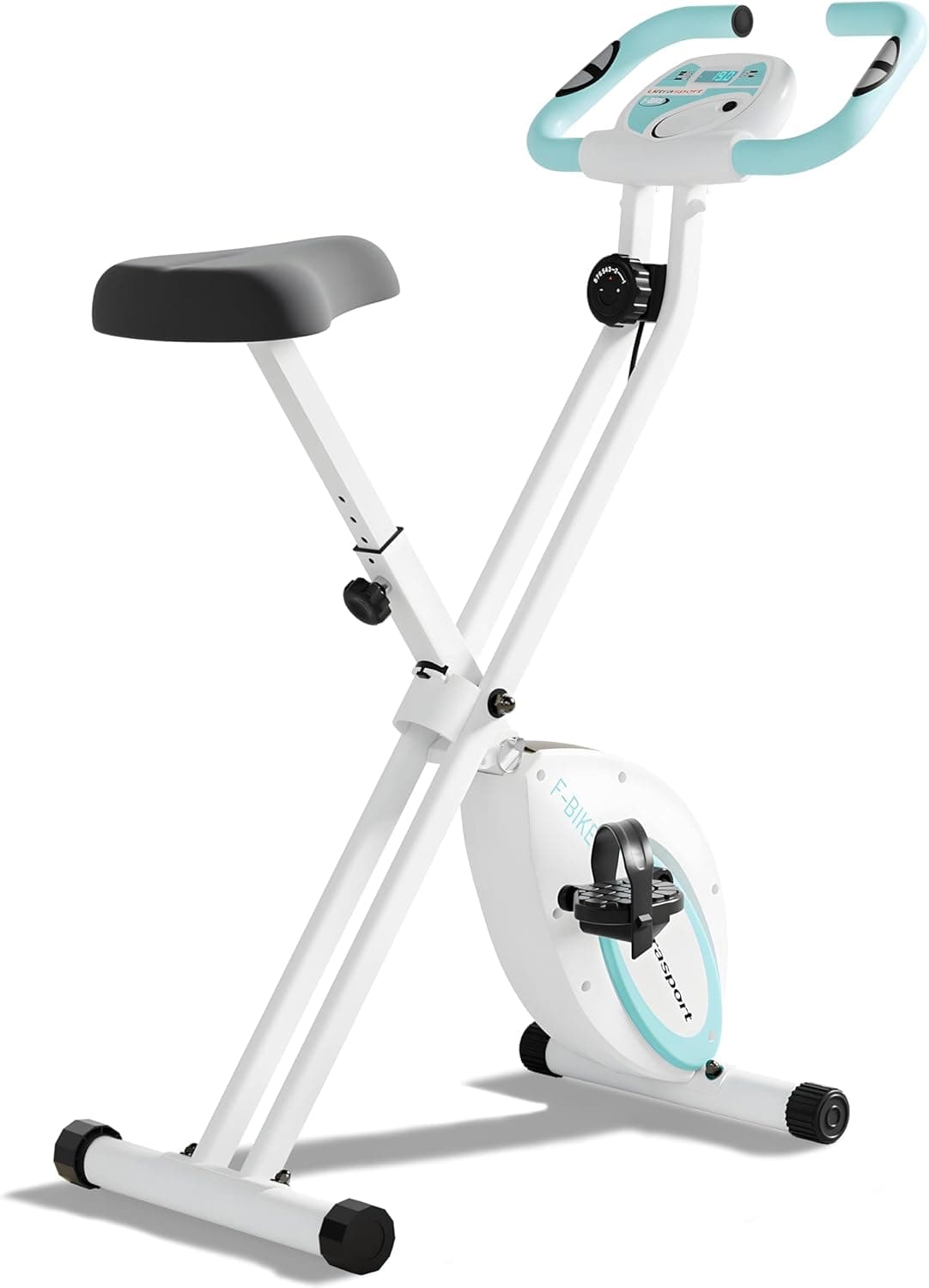
Folding Exercise Bike with 10-Level Magnetic Resistance: best for small spaces
This folding bike uses a magnetic wheel for smoother, quieter cycling, so there's no more worrying about waking the family or the neighbours. The LCD display gives you real-time updates on speed, distance, time, calories burned and heart rate, and there's an integrated tablet stand above it so you can watch your favourite series while you train.
Best of all, it folds down to save space, so there's no massive piece of kit sitting in the corner when you're not using it. The seat adjusts for a range of heights, and 10 levels of resistance mean a good workout whether you're a beginner or a pro.
The WINNOW is one of the lowest-priced quality exercise bikes available, and an ideal entry point if you're watching the budget. It's powered by an internal magnetically controlled flywheel that produces just 20 decibels of sound, so it's genuinely ultra-quiet.
A large, clear LCD display tracks your time, speed, distance and calories burned, and a built-in phone stand lets you watch TV or listen to music as you ride. The machine is well-built and sturdy, with transport wheels for easy moving and a comfortable seat for longer sessions. You get 8 resistance levels in total: warm-up and beginner (1-3), moderate fat-burning (4-6) and high resistance for strength and muscle building (7-8).
Exercise bikes are absolutely a great form of cardio. They're affordable, quiet, easy to use and gentle on your joints, and they burn enough calories to support real weight loss when paired with a sensible diet. For most people, an upright stationary bike is the best choice, and with quality home models now available for under £200, getting started has never been easier.
Yes. Exercise bikes deliver an effective, low-impact cardio workout that burns calories, improves heart health and builds fitness, all without the joint strain of running. A 13-stone person burns around 294 calories in a 30-minute moderate session.
Can you lose weight on an exercise bike?
You can. Regular cycling combined with a calorie deficit is an excellent way to lose weight. Thirty minutes a day adds up to roughly 2,100 calories burned across a week, about a full day's worth of food.
Are exercise bikes good for losing belly fat?
Indirectly, yes. You can't spot-reduce fat from your stomach, but exercise bikes burn enough calories to help you lose fat overall when paired with a sensible diet, which reduces belly fat over time.
What type of exercise bike is best for cardio?
An upright stationary bike is best for cardio because it engages your core and legs more than a mini pedal exerciser. Mini bikes are a good lower-intensity option for the elderly, those with joint issues or anyone short on space.
The best foldable exercise bike for UK homes, from budget mini pedallers to a 140kg-rated smart bike and a comfy recumbent. Folded sizes, weight limits and honest downsides.
Is Peloton worth it in the UK? We do the 1-year and 3-year maths on the Bike, Bike+, refurbished and rental options against a £400 bike with the app or Zwift.
Our Sunny SF-B1805 review: a 20kg flywheel, quiet magnetic resistance and a 136kg limit, but no console, no Bluetooth and a £460 UK price. Who should buy it?
An honest JLL recumbent exercise bike review covering the wide padded seat, 4kg flywheel, 8 magnetic levels, SunnyFit app, pulse sensors and who should buy it.
Best Exercise is a participant in the Amazon EU Associates Programme, an affiliate advertising programme designed to provide a means for sites to earn advertising fees by advertising and linking to Amazon.co.uk. As an Amazon Associate we earn from qualifying purchases. This comes at no extra cost to you and never influences our independent reviews or rankings.