Exercise Bikes
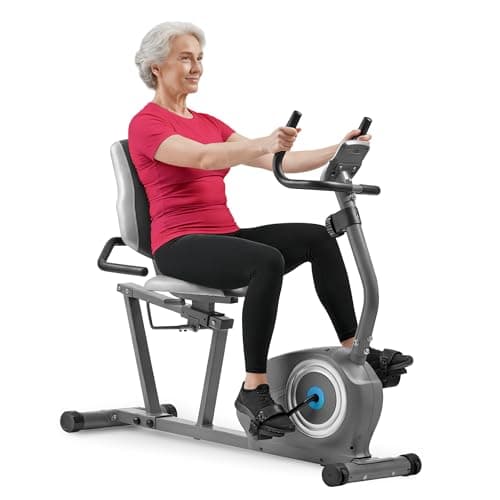
JLL Recumbent Exercise Bike Review: Comfortable, Quiet, a Little Light
An honest JLL recumbent exercise bike review covering the wide padded seat, 4kg flywheel, 8 magnetic levels, SunnyFit app, pulse sensors and who should buy it.

By Paul Kendrick, Cardio & Endurance Editor · Updated 10 August 2026
We may earn a commission from qualifying purchases made through links on this page, at no extra cost to you. This never affects our ratings.
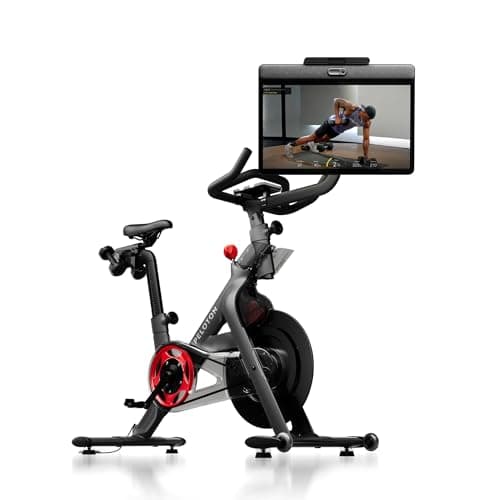
The Peloton Bike+ is the company's premium indoor cycle, sitting above the standard Bike at £2,299 versus roughly £1,200. That is a lot of money for what is, mechanically, the same magnetic-resistance belt-drive bike underneath. What you're buying is the screen, the software and a set of conveniences that either matter to you a great deal or barely register.
Having spent time understanding what actually separates the two models, the verdict is narrower than Peloton's marketing implies. The Bike+ is an excellent piece of hardware wrapped around the best instructor-led cycling content available anywhere. Whether the plus is worth £1,100 comes down to one question: will you get off the bike and use it for something else?
How we review
This review draws on Peloton's published specifications, the current Amazon UK listing and consistent themes across verified owner reviews and expert testing from established outlets. We have not run a multi-year endurance test on this exact unit, so we report repeated, corroborated findings rather than one-off opinions, and we flag where the picture is genuinely mixed.
Three things separate the Bike+ from the standard Bike, and they're worth understanding before you commit.
The 23.8 inch Full HD touchscreen rotates through 360 degrees. That's the headline, and it exists so you can swing the display towards a mat beside the bike for strength, yoga, Pilates or barre classes without buying a second screen. If you already own a tablet and a stand, you can replicate most of this for about £40, which is worth saying plainly.
Auto resistance is the feature that surprised us most. When an instructor calls for resistance 45 to 50, the bike moves there itself, and you keep your hands on the bars through an interval instead of fumbling for the dial. It's a small refinement that you notice every single session, and it's the upgrade owners mention most often when asked what they'd miss.
The Sonos-tuned speaker system with a rear-facing woofer is the third piece. Peloton classes are built on music, and the standard Bike's audio is adequate rather than good. On the Bike+ the sound has body to it, and a lot of people stop bothering with headphones.
This is where the Bike+ earns its place regardless of the screen. The belt drive is quiet enough that you can ride at six in the morning in a flat without a downstairs neighbour learning about it, and the magnetic resistance has no contact point to wear out or squeal. Resistance changes are instant and linear, which matters more than most people realise: on a friction bike the same knob position feels different when the pad is warm.
The frame is heavy and it doesn't move. Standing efforts produce no rock or flex, and the adjustable seat and handlebars cover riders from roughly 4ft 11in to 6ft 5in, up to about 135kg. The screen tilts as well as swivels, so you can get a sensible viewing angle in the drops. Peloton's own Bike+ product page carries the current specifications if you want to check dimensions against your space.
The seat is the usual complaint, and it's a fair one. Peloton's standard saddle is firm and narrow, and a lot of owners replace it within a few months or fit a gel cover. Budget for that, and for cycling shoes with Delta cleats if you don't already have a pair.
| Screen | 23.8 inch Full HD touchscreen, 360 degree swivel and tilt |
|---|---|
| Resistance | Magnetic, auto-follow or manual |
| Drive | Belt drive |
| Audio | Sonos-tuned speakers with rear-facing woofer |
| Camera | Movement-tracking camera for rep counting |
| Footprint | Approx 120cm x 60cm |
| Rider height range | Approx 4ft 11in to 6ft 5in |
| Max user weight | Approx 135kg / 297lb |
| Connectivity | Bluetooth 5.2, USB-C, three-speed fan |
| Membership | All-Access Membership, quoted at £45/month |
| Price | £2,299 at the time of writing |
You cannot evaluate a Peloton on hardware alone. Without the All-Access Membership the Bike+ drops to a couple of basic modes with no classes, no leaderboard and no history, which makes a £2,299 bike considerably less useful than a £400 spin bike with a tablet holder. At £45 a month, five years of ownership adds £2,700 on top of the purchase price.
The counterargument is that the membership covers your whole household and includes every class type, not just cycling. For a couple who both train, the per-person cost lands somewhere near a budget gym subscription, and nobody drives anywhere. That's a genuinely reasonable trade. For a single rider who only wants to cycle, the numbers get harder to defend, and the best smart exercise bike UK guide covers cheaper options that work with open apps.
We'd put it this way. If you intend to ride, and only ride, buy the standard Bike and put the £1,100 you save towards five years of membership. The classes are identical, the instructors are identical, and the mechanical ride quality is very close. Our Peloton Bike review covers that model in detail.
The Bike+ makes sense for someone who wants the bike to be their whole home gym. Swivel the screen, roll out a mat, and the strength, yoga and mobility content becomes something you'll actually use rather than something you know exists. Add the auto resistance and the better speakers and it becomes a genuinely different product, not just a more expensive one.
Whichever you pick, the cardiovascular case is solid. The British Heart Foundation recommends at least 150 minutes of moderate intensity activity a week, and the single biggest predictor of whether a home bike delivers that is whether you enjoy using it. Peloton's whole business is built on making that likely.
If you want to compare against the wider field before committing, our best spin bike UK guide and the exercise bikes hub cover everything from £300 upwards.
Only if you will genuinely use the swivel screen for off-bike classes and value auto resistance. Those two features are the real difference, along with better speakers and a slightly larger display. If you plan to ride and nothing else, the standard Bike gives you the same classes, the same instructors and the same ride quality for around £1,100 less.
The All-Access Membership is quoted at £45 a month on the current listing, and it covers everyone in your household. Without it the Bike+ is reduced to a handful of basic ride modes with no classes, no leaderboard and no metrics history, so treat the subscription as part of the purchase price rather than an optional extra.
Not properly. The Bike+ is a closed system built around Peloton's own content, and it does not broadcast power to third-party apps the way a standard smart trainer does. If open app compatibility matters to you, a turbo trainer or an FTMS-compatible smart bike is a far better fit.
During a class the instructor calls a resistance range and the bike sets it for you, so you can stay in position rather than reaching for the knob mid-effort. You can override it at any time with the manual dial. It sounds like a small thing and it is, but on interval work it genuinely removes friction.
The bike itself occupies roughly a 4ft by 2ft footprint, but Peloton recommends leaving clearance around it, and the swivel screen only earns its keep if you have floor space beside the bike for mat work. Budget for something closer to 3m by 2m if you intend to use the off-bike classes.
Yes, and the used market in the UK is reasonably healthy, but the buyer needs their own membership for the bike to do anything useful. That drags resale values down compared with a conventional spin bike, which anyone can use out of the box.
An honest JLL recumbent exercise bike review covering the wide padded seat, 4kg flywheel, 8 magnetic levels, SunnyFit app, pulse sensors and who should buy it.
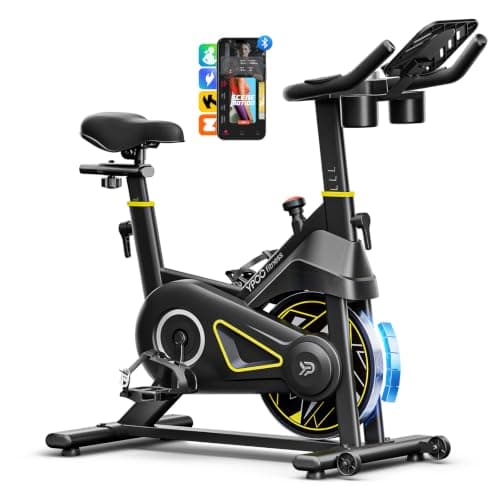
An honest YPOO X3 exercise bike review: magnetic belt drive, a free app with Kinomap and Zwift, a 136kg limit, and the marketing numbers worth ignoring.

Are exercise bikes good for cardio? Yes, they're an affordable, low-impact way to burn calories and improve fitness. Here are the pros, cons and best home bikes.
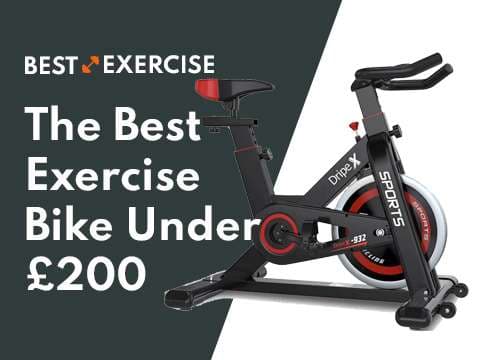
The best exercise bikes under £200 in the UK. Compare the Dripex, Mobiclinic, WINNOW and more on build, resistance and comfort to find your match.
Best Exercise is a participant in the Amazon EU Associates Programme, an affiliate advertising programme designed to provide a means for sites to earn advertising fees by advertising and linking to Amazon.co.uk. As an Amazon Associate we earn from qualifying purchases. This comes at no extra cost to you and never influences our independent reviews or rankings.