Exercise Bikes
Best Recumbent Exercise Bikes UK 2026: 5 Picks for Bad Knees and Backs
The best recumbent exercise bikes in the UK for 2026, from a £183 starter bike to a £1,399 Sole. Honest picks for sore knees, dodgy backs and long TV sessions.

By Paul Kendrick, Cardio & Endurance Editor · Updated 2 August 2026
We may earn a commission from qualifying purchases made through links on this page, at no extra cost to you. This never affects our ratings.
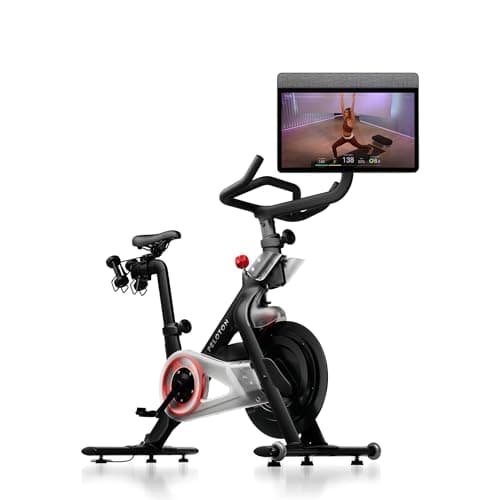
Peloton spent five years being either the future of home fitness or an overpriced clothes rail, depending on who you asked. Six years on from the peak of that argument the picture is duller and more useful: it's a well-built indoor bike with an excellent screen, wrapped in a subscription that some people find transformative and others quietly cancel by March.
The current Cross Training Series Bike lists at £1,599 on Amazon UK. That buys you a 59kg steel-framed bike, a 21.5in Full HD touchscreen that swivels through 360 degrees, and a manual resistance knob. What it does not buy you is access to the thing you're actually paying for, because the All-Access Membership sits on top at roughly £45 a month.
How we review
This review draws on Peloton's published UK specifications, the repeated themes in verified owner reviews, and testing coverage from established fitness outlets. We have not run our own multi-year endurance test of this exact unit, so we've stuck to findings that show up consistently rather than one-off experiences, and we've flagged where the Amazon listing and Peloton's own spec sheet disagree.
The Peloton makes sense for one specific person: someone who owns exercise equipment already, or has owned it, and stopped using it. If your problem is motivation rather than access, the class library and the live leaderboard solve something a cheaper bike doesn't. Instructors calling out cadence and resistance targets for forty-five minutes is the difference between a proper session and ten minutes of pedalling while scrolling.
If you're the sort of person who happily follows a written training plan alone in a garage, you're paying a premium for something you don't need. Our best spin bike UK guide covers bikes with better flywheels and no subscription for less money.
The frame is the least controversial part of the bike. At 59kg with a wide, low stance, it doesn't shift when you stand up and hammer, which is more than can be said for plenty of £600 spin bikes. Adjustment is straightforward: the seat moves fore, aft and up, the handlebars move vertically, and the fit range officially covers riders from 150cm to 196cm with a 135kg maximum.
The belt drive is quiet enough for a flat, and the resistance is smooth through its range with no notchy steps. What you don't get on the standard Bike is automatic resistance. The instructor calls a number, the number appears on screen, and you turn the knob yourself. Peloton reserves auto-follow for the Bike+, which is a fairly transparent bit of product laddering. Most riders stop noticing after two or three sessions.
One inconsistency worth flagging. The Amazon listing describes rear-facing stereo speakers delivering 16 watts, while Peloton's current UK specification page lists front-facing speakers at 10 watts total. That looks like older marketing copy carried over into the Amazon listing rather than two different products, but if audio matters to you, take the official Peloton spec page as the source of truth.
| Price | From £1,599 (0% finance over 12 months available) |
|---|---|
| Membership | All-Access required, around £45 per month |
| Screen | 21.5in Full HD touchscreen, 360 degree swivel |
| Resistance | Manual knob, magnetic |
| Dimensions | 137cm L x 59cm W x 154cm H |
| Bike weight | 59 kg |
| Max user weight | 135 kg |
| Rider height range | 150cm to 196cm |
| Warranty | 12 months on touchscreen, frame and most components |
| Entertainment | Streaming TV, film and sport apps supported |
This is where the money went, and it shows. A 21.5in Full HD panel is bigger and sharper than anything a rival bolts onto a bike at this price, and the 360-degree swivel is more useful than it sounds because it lets you step off and follow a strength or yoga class on a mat beside the bike without craning your neck. Peloton's library covers running, strength, yoga and Pilates as well as cycling, so the subscription stretches further than the hardware suggests.
The addition of streaming apps matters more than any spec change in recent years. Being able to put a football match on while riding an easy hour removes the single most common complaint about older Pelotons, which was paying £1,600 for a screen that only played one company's content.
The class experience itself holds up. Instructors are genuinely good at pacing a session, the metrics are clear without being cluttered, and the leaderboard works on people who respond to competition. If it doesn't work on you, none of it is worth £45 a month.
Own the bike for four years and you'll have spent roughly £2,160 on membership on top of £1,599 of hardware. That total, close to £3,760, is what the honest comparison should be against, and it reframes things considerably. A Keiser M3i at a fraction of the price with a magnetic resistance system that outlasts almost anything, paired with a £13-a-month training app, gets you a similar number of rides for a lot less.
The counterargument is adherence, and it's not a weak one. The best exercise bike is the one you use, and the British Heart Foundation puts the reward for hitting 150 minutes of moderate activity a week at up to a 35% lower risk of heart and circulatory disease. Membership covers everyone in the house, so two riders halve the effective cost per person.
One more thing to weigh: the resale value of a Peloton is tied to the company continuing to run the service. A Keiser is a bike whatever happens to Keiser.
Against the Schwinn 800IC and the rest of the connected-bike field, Peloton wins on screen and content and loses on pure hardware value. Bikes like the Echelon EX-5s undercut it substantially with a similar subscription model and a smaller display. If you want the class experience without the outlay, our best smart exercise bike UK guide covers the cheaper end of the same idea.
And if the appeal of the Peloton is really just structured indoor cardio without joint stress, a recumbent bike does that job for under £500 with nothing to subscribe to.
If you will ride three or more times a week and the instruction is what keeps you doing it, yes. The hardware is good rather than exceptional, but the class library and the leaderboard genuinely change adherence for a lot of people. If you're self-motivated and happy with a structured plan on your phone, a Keiser or Schwinn spin bike gives you better hardware for the same money and no subscription.
The standard Cross Training Series Bike starts at £1,599, with finance available at 0% over twelve months. The Bike+ sits above it at around £2,299. On top of the hardware you need an All-Access Membership, which runs at roughly £45 a month at the time of writing and covers everyone in your household.
For the full experience, yes. The All-Access Membership unlocks the class library, the leaderboard, the metrics and the programmes. Without it the bike still functions as a spin bike with a screen showing basic ride data, which is an expensive way to buy a flywheel. Budget for the subscription as part of the cost of ownership, not an optional extra.
No. The standard Bike uses a manual resistance knob, and instructor-recommended levels appear on screen for you to dial in yourself. Auto-follow resistance is a Bike+ feature. In practice most riders adapt to the knob within a couple of sessions, but if you want the bike to match the instructor without you touching anything, you need the more expensive model.
The bike itself measures 137cm long by 59cm wide by 154cm tall, and Peloton describe the footprint as about the size of a small yoga mat. Allow clearance around it for getting on and off and for the screen to swivel. At 59kg it stays put once positioned, and it has front transport wheels for short moves.
Yes on the current Cross Training Series hardware, which supports streaming TV, films and sport alongside the Peloton content. That's a meaningful change from earlier generations where the screen was effectively locked to Peloton's own library, and it takes away one of the longest-standing complaints about the platform.
The best recumbent exercise bikes in the UK for 2026, from a £183 starter bike to a £1,399 Sole. Honest picks for sore knees, dodgy backs and long TV sessions.
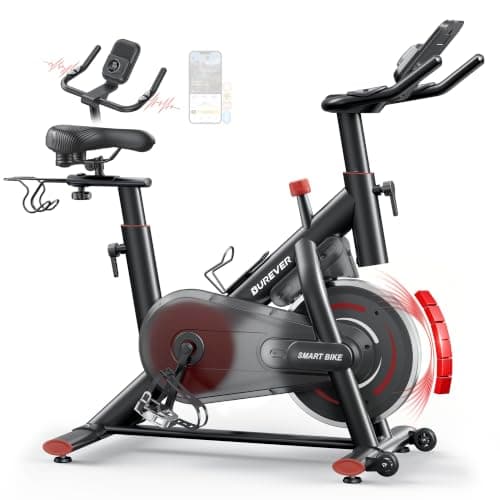
Our Burever exercise bike review: the touchscreen goal console, 0-100% magnetic resistance, 170kg limit, Zwift support without a power meter, and who should buy it.
Spin bike vs exercise bike compared on riding position, flywheel, resistance, comfort, noise and price, with a clear verdict on which suits your training.
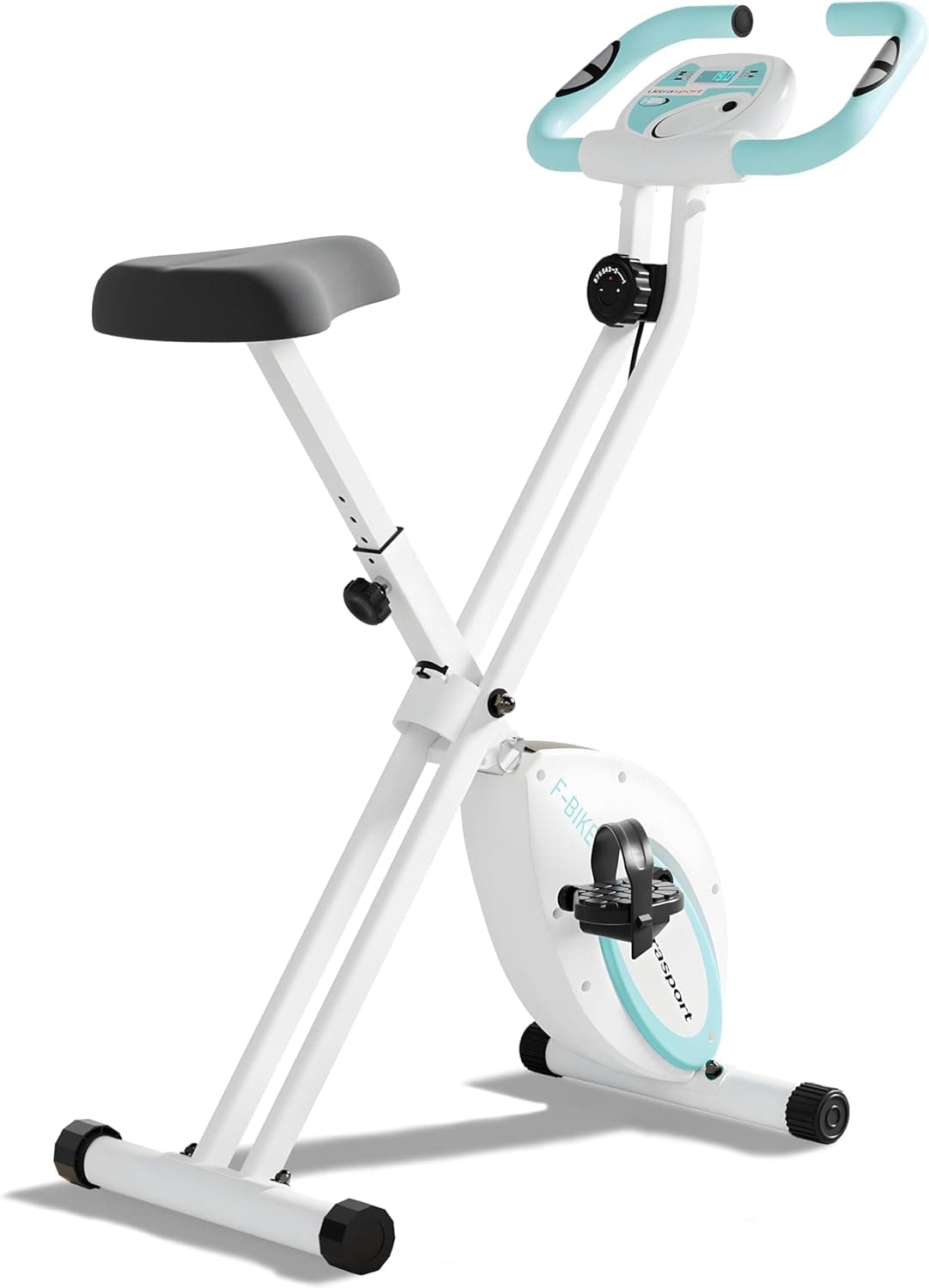
The best foldable exercise bike for UK homes, from budget mini pedallers to a 140kg-rated smart bike and a comfy recumbent. Folded sizes, weight limits and honest downsides.
Best Exercise is a participant in the Amazon EU Associates Programme, an affiliate advertising programme designed to provide a means for sites to earn advertising fees by advertising and linking to Amazon.co.uk. As an Amazon Associate we earn from qualifying purchases. This comes at no extra cost to you and never influences our independent reviews or rankings.