Recovery
Thumper Mini Pro Review: The Corded Massager Chiropractors Use
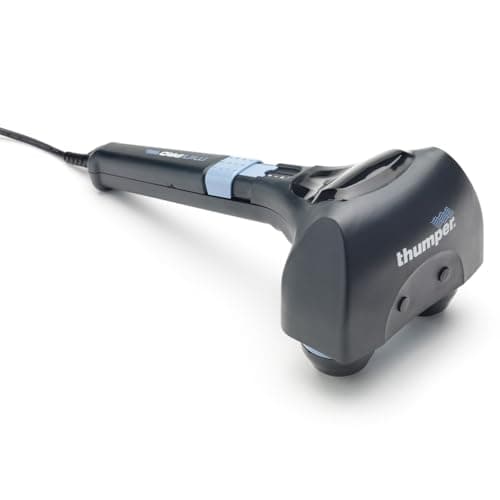
Our Thumper Mini Pro review: a corded, broad-head percussive massager with 6mm stroke and a long handle for your back. How it compares with massage guns.

By Mike Shilling, Recovery & Training Editor · Updated 9 October 2026
If you want one device that does everything and you own an iPhone, buy the Apple Watch: the Series 12 now has its own daily Readiness score, and you pay once rather than every year. Pick WHOOP if sleep and recovery are the whole point, you hate charging a watch every night, you'd rather not have a screen buzzing at you, or you use Android. That's the short answer, and for most people it lands on the watch.
The longer answer depends on which WHOOP membership and which Apple Watch you mean, because the gap between the cheapest and dearest of each is bigger than the gap between the brands.
How we compared them
This guide is built from WHOOP's published membership details, Apple's UK specification pages and store prices (checked on 9 October 2026), current Amazon UK listings, and peer-reviewed validation studies of both devices. We haven't run them side by side ourselves, so manufacturer battery and accuracy figures are treated as claims.
WHOOP sells memberships, not devices. There are three tiers. One covers strain, recovery and sleep and ships the WHOOP 5.0 band. Peak adds Healthspan (WHOOP Age and Pace of Aging), Health Monitor and Stress Monitor, also on the WHOOP 5.0. Life is the top tier and the only way to get the WHOOP MG band, which adds an ECG for atrial fibrillation screening and blood pressure insights that need a cuff to calibrate. Peak is £229 for 12 months on Amazon UK as we write. WHOOP's own UK site wouldn't load for us, so check One and Life prices there directly rather than trusting figures quoted elsewhere; UK pricing has moved since launch.
Apple's UK store lists three current watches. The SE 3 starts at £219, the Series 12 at £369 and the Ultra 4 at £650. The Series 11 and Ultra 3 have been replaced, though the Ultra 3 is still on sale through other retailers.
| Price model | WHOOP: annual membership, hardware included (Peak £229/yr on Amazon). Apple: one-off purchase (SE 3 £219, Series 12 from £369, Ultra 4 from £650) |
|---|---|
| Screen | WHOOP: none. Apple: always-on display on all three |
| Battery | WHOOP 5.0: 14 plus days claimed. SE 3: up to 18 hours. Series 12: up to 24 hours. Ultra 4: up to 50 hours |
| Daily recovery score | WHOOP: Recovery on every tier. Apple: Readiness app on Series 12 and Ultra 4, not listed for SE 3 |
| HRV | WHOOP: measured overnight for Recovery. Series 12 and Ultra 4: overnight and daytime, as often as every five minutes |
| Sleep | WHOOP: Sleep Performance and Sleep Coach. Apple: sleep stages, sleep score and sleep apnoea notifications on all three |
| GPS | WHOOP: none, uses your phone. Apple: built-in GPS on all models |
| ECG | WHOOP: MG band on Life tier only. Apple: Series 12 and Ultra 4, not SE 3 |
| Phone | WHOOP: iPhone or Android. Apple: iPhone 11 or later only |
This is the real fork in the road, more than any sensor. The WHOOP band has no display at all, so it can't tell you the time, show a text or nudge you to stand up. Some people find that freeing. It also makes the band light and soft enough that you forget it's there in bed, and a tracker you actually sleep in produces better recovery data than a clever one left on the bedside table.
An Apple Watch is a phone on your wrist. You get notifications, Apple Pay, a stopwatch, maps, music and a live heart rate during a run without pulling anything out of a pocket. If you'd use even two of those things daily, WHOOP will feel like a step backwards.
WHOOP Peak at £229 a year comes to £687 over three years, and the band stops being useful the day the membership lapses. A Series 12 bought at £369 costs nothing more to keep using, and an SE 3 at £219 is cheaper than a single year of Peak.
WHOOP's defence is that hardware upgrades come with the membership, which is fair. People who replace their watch every autumn won't see much difference in total spend. Everyone else will, and by year three it isn't close. We go through the maths in more detail in our WHOOP Peak review.
WHOOP claims 14 plus days from the 5.0, and you charge it by sliding a battery pack onto the band without taking it off, so it never leaves your wrist. Apple rates the SE 3 at up to 18 hours and the Series 12 at up to 24 hours, which in practice means charging every day, usually during a shower or breakfast so you can still wear it overnight. The Ultra 4 is the exception at up to 50 hours (84 in Low Power Mode), enough for a weekend.
If you've given up on sleep tracking before because the watch was always flat at bedtime, WHOOP solves that problem outright.
WHOOP built its entire product around one morning number. Recovery combines heart rate variability, resting heart rate, respiratory rate and sleep into a percentage, colour-coded so you know whether to push or back off, and Strain scores how hard the day was on a 0 to 21 scale. Sleep Coach then suggests a bedtime to hit a target recovery. It's the clearest version of this idea anyone sells.
Apple has been catching up, and the Series 12 closes most of the gap. Its new Readiness app gives a personal daily score, the Vitals app tracks overnight heart rate, respiratory rate, wrist temperature, blood oxygen and HRV, and there's a sleep score plus sleep apnoea notifications. The Training Load feature does a job similar to WHOOP's Strain. What Apple doesn't have is WHOOP's single-minded coaching around the number; the data's there, but it's one app among dozens.
Strength training is a weak spot for both. Wrist heart rate barely moves during a heavy set, so WHOOP can score a session of squats and deadlifts below a gentle jog, and Apple's effort figures have the same blind spot. Lifters should lean on the recovery reading and ignore the effort one. For why the sleep side matters more than most training tweaks, see our guide to sleep and muscle recovery.
Don't compare an HRV reading from one brand with the other. WHOOP reports RMSSD from your deepest sleep, while Apple Health has historically reported SDNN, a different calculation that produces different values. Both are fine for watching your own trend over weeks. Neither number means much next to a friend's.
The Series 12 measures HRV as often as every five minutes, day and night, which Apple pitches as a way to spot stress building before it shows up overnight. WHOOP's approach is narrower: one reading per night, taken when your body is at its most still, which is a sensible way to get a stable trend.
WHOOP has no GPS. It borrows your phone's location for runs and rides, so the phone has to come with you, and there's no screen to check pace mid-session. Every current Apple Watch has built-in GPS; the Series 12 uses precision L1 GPS, and the watch shows pace, heart rate zones, running power and cadence on your wrist. For runners and cyclists this one feature settles it. Anyone who wants proper training features beyond Apple's should also look at our best Garmin watch guide, since Garmins last days on a charge and work with Android.
Both devices have been tested against lab equipment, and the results are more similar than the marketing suggests.
For WHOOP, a validation study of the older WHOOP 2.0 found heart rate agreement with an ECG was well within acceptable limits, while overnight HRV error approached or exceeded the smallest change you'd want to detect (validation of WHOOP heart rate and HRV). On sleep, a systematic review comparing WHOOP, Fitbit and Garmin against polysomnography found WHOOP had the smallest error for total sleep time (about 1.4 minutes) but the largest for REM sleep, overestimating it by around 21 minutes (accuracy of Fitbit Charge 4, Garmin Vivosmart 4 and WHOOP vs polysomnography).
For Apple, a 2024 study of the Series 9 and Ultra 2 found resting heart rate was accurate to within a fraction of a beat on average, but HRV was underestimated by about 8ms against a Polar H10 chest strap, with a mean absolute error of 28.9% (Apple Watch Series 9 and Ultra 2 HRV validity). A 2026 living systematic review pooling 82 studies found Apple Watch heart rate had a tiny average bias, moderate accuracy for sleep and steps, and calorie estimates that were often well off (accuracy of Apple Watch measurements).
Two caveats. These studies used older hardware than the WHOOP 5.0 and Series 12, and Apple says the Series 12 has a new heart rate sensor; until independent tests catch up, that's a claim. The practical takeaway is that both are good at resting heart rate and total sleep, both are imprecise on a single night's HRV, and neither should replace a chest strap if you want exact numbers. Our best heart rate monitor guide covers the straps.
Neither is clearly more accurate across the board. Independent studies find both track heart rate well at rest, and both are weaker on HRV than a chest strap or ECG. WHOOP has a slight edge on sleep because you can wear it comfortably every night, and a device that stays on your wrist collects better data than one sitting on a charger.
The Series 12 and Ultra 4 now do. Apple's Readiness app gives a daily score built partly from heart rate variability, which it measures as often as every five minutes. The SE 3 doesn't list the Readiness app in its specs, so if a daily recovery number is the reason you're buying, the SE 3 isn't the Apple Watch to pick.
Yes, and plenty of people do: the WHOOP on one wrist or the bicep, the watch on the other. It's an expensive way to get the best of both, because you pay for the watch upfront and the WHOOP membership every year. If you go this route, a WHOOP One membership covers sleep, strain and recovery without paying for features the watch already has.
Yes. WHOOP works with both iPhone and Android phones. Every Apple Watch, including the SE 3, needs an iPhone 11 or later to set up and use, so Android owners can rule Apple out straight away.
WHOOP Peak costs £229 a year on Amazon, which is £687 over three years. An Apple Watch SE 3 is £219 once and a Series 12 starts at £369 on Apple's UK store. Over two years or more, any Apple Watch works out cheaper than WHOOP Peak unless you replace your watch every year.
Neither is good at it, because both lean on wrist heart rate, which tells you little about a heavy set of five. WHOOP's strain score in particular can rate a brutal lifting session below an easy jog. If you lift, the Apple Watch's logging, timers and screen are more useful in the gym, and you should read either device's recovery figure rather than its effort score.
Our Thumper Mini Pro review: a corded, broad-head percussive massager with 6mm stroke and a long handle for your back. How it compares with massage guns.
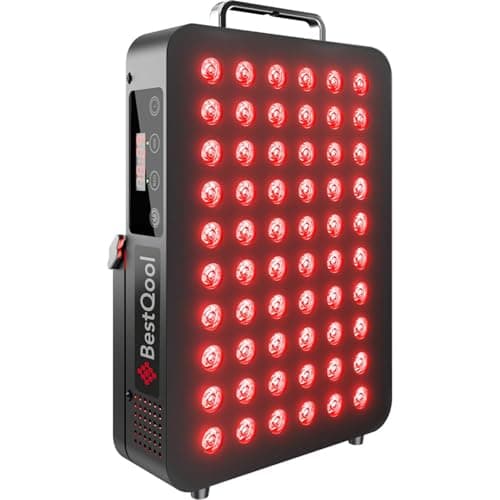
BestQool 105W red light therapy panel review: 660nm and 850nm, 95.6 mW/cm² at 3 inches, three modes, stand and hanging kit. Who it suits at £189.
Are massage chairs good for you? What randomised trials show for back pain, neck pain, stress and muscle soreness, who should avoid them, and how long and often to use one.
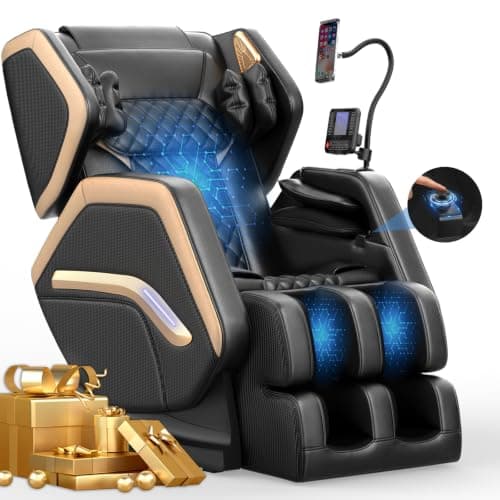
Our NAGLIFOR massage chair review: 14 fixed nodes, 8 airbags, back and calf heat, 165 degree zero gravity, Bluetooth and a 66cm door clearance, plus what fixed rollers miss.
Best Exercise is a participant in the Amazon EU Associates Programme, an affiliate advertising programme designed to provide a means for sites to earn advertising fees by advertising and linking to Amazon.co.uk. As an Amazon Associate we earn from qualifying purchases. This comes at no extra cost to you and never influences our independent reviews or rankings.