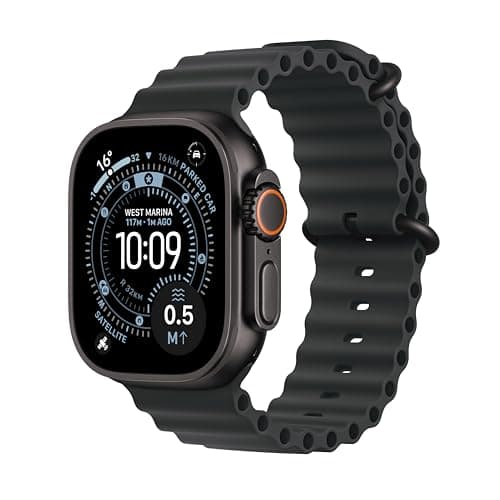
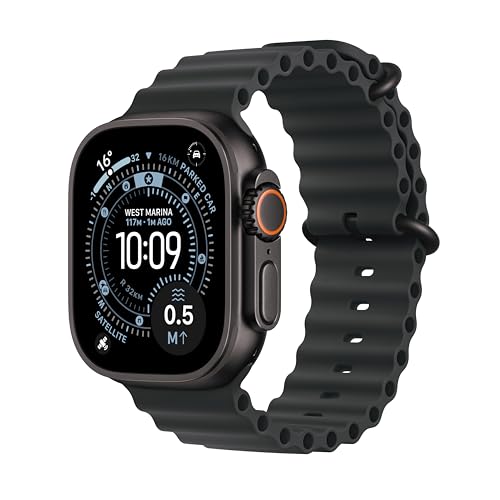
Apple has spent three generations quietly turning the Ultra from a diving watch with a fitness app into something a runner can take seriously. The Ultra 3 is where that lands. It has dual-frequency GPS, running power on the wrist, training load, a 3,000-nit display you can read in July sun, and the ability to text for help from a mountain with no phone signal at all. At £729 on Amazon UK it also costs more than a Forerunner 970 and roughly twice what a very good Suunto costs.
Whether that maths works depends almost entirely on one question, and it has nothing to do with sport: do you own an iPhone?
How we review
This review draws on Apple's published technical specifications and support documentation, the consistent findings across long-term testing from established running and wearables outlets, and recurring themes in verified owner feedback. We have not run our own six month endurance test of this exact unit, so we report what shows up repeatedly rather than one reviewer's impression. Specs and prices were correct at the time of writing.
What changed from the Ultra 2
The case is familiar: 49mm of Grade 5 titanium, flat sapphire crystal, around 62g on the wrist, the same customisable Action button. Look at the front, though, and the bezels have shrunk. Apple moved to a wide-angle OLED panel with LTPO3, which does two things worth caring about: the screen stays readable when you glance at it from a low angle mid-run, and the refresh rate can drop to 1Hz so the seconds hand still ticks on an always-on face without eating the battery (Apple).
Battery goes from 36 hours to 42, and fast charging now gets you to about 80 percent in three quarters of an hour. Cellular jumps to 5G. Satellite connectivity arrives properly, so Emergency SOS, Find My and Messages all work with no mobile network, free for two years from activation.
The health side picked up hypertension notifications and a sleep score. Neither is a diagnosis and Apple is careful to say so, but the hypertension feature is the more interesting of the two because it watches passively over 30 days rather than asking you to take a reading.
Apple Watch Ultra 3 key specifications
Case
49mm Grade 5 titanium, natural or black, about 62g
Display
Always-On Retina, wide-angle OLED with LTPO3, up to 3,000 nits
Glass
Flat sapphire crystal
Battery, normal use
Up to 42 hours
Battery, Low Power Mode
Up to 72 hours
Charging
Up to 80 percent in about 45 minutes
Positioning
Precision dual-frequency GPS
Connectivity
5G cellular, Bluetooth 5.3, Wi-Fi, satellite messaging
Water and dust
100m water resistance to ISO 22810:2010, IP6X, recreational diving to 40m
Health sensors
ECG, blood oxygen, hypertension notifications, sleep apnoea notifications, depth gauge, water temperature
The workout app has quietly become good. Dual-frequency GPS traces a city loop with no drift worth mentioning, running power comes off the wrist without a footpod, and heart rate zones, custom workouts, pacer and training load all live in the watch rather than in a subscription. Workout Buddy talks to you mid-session using Apple Intelligence from a nearby iPhone, which is either a genuinely nice touch or an intrusion depending on how you feel about a voice in your ear at kilometre eight.
Where Apple still trails Garmin is the layer above the session. Garmin will tell you your training status is unproductive and why, project a race time, nag you about acute load, then plan next week. Apple gives you the numbers and mostly leaves the interpretation to you or to a third-party app such as Athlytic or Training Peaks. For a lot of runners that is fine. For anyone following a structured block into a target race, it is a real gap.
Swimming and open water are strong, the depth gauge is a proper instrument rather than a gimmick, and the 100m rating covers everything short of technical diving (Apple).
Battery life, honestly
Forty-two hours sounds thin next to a Garmin quoting twelve days, and it is. What the number hides is how the watch is used: an Ultra 3 is doing continuous heart rate, notifications, a bright always-on display, calls, music and 5G, which is a different job from a watch that shows the time and counts steps.
In real weeks with four or five hours of GPS running, most people land on charging every second day. Low Power Mode stretches a workout to about 20 hours with full GPS and heart rate, which covers an ultra of the sort most people actually enter. The 45-minute fast charge matters more than the headline: plug it in while you make dinner and you never think about it.
If you want to go a fortnight between charges, buy something else. That is not a flaw so much as a different product category.
The health features worth having
Hypertension notifications are the standout. The watch analyses blood pressure responses passively over 30 days and flags patterns consistent with hypertension, which is useful precisely because high blood pressure has no symptoms until it causes something serious. It does not give you a blood pressure reading and it is not a substitute for a cuff. If it flags something, the sensible next step is the NHS guidance on high blood pressure and a GP appointment, not a forum thread.
Sleep apnoea notifications work on a similar principle over a similar window. The ECG app records a single-lead trace and looks for signs of atrial fibrillation, and the blood oxygen app works normally on UK watches, unlike the American ones caught by the Masimo patent ruling.
For the ordinary business of checking whether you are hitting the UK physical activity guidelines, the rings still do that better than any competing interface, mostly because the design refuses to let you ignore them.
Pros
3,000-nit wide-angle display is the best screen on any sports watch
Satellite messaging and Emergency SOS work with no phone signal at all
Dual-frequency GPS traces city routes accurately without a warm-up lap
80 percent charge in about 45 minutes makes the 42-hour battery liveable
Hypertension and sleep apnoea notifications watch passively over 30 days
100m rating, depth gauge and water temperature sensor are proper instruments
Cons
iPhone only, with no Android support of any kind
42 hours against twelve days from a comparable Garmin
Training analysis is shallow next to Garmin or Suunto unless you add an app
£729 buys a Forerunner 970 with change left over
Incremental over the Ultra 2 unless you want satellite and 5G
49mm and roughly 62g is a lot of watch on a slim wrist
Who should buy it
Buy the Ultra 3 if you carry an iPhone, want one device for training, work, calls and health, and your idea of a long day out is under twenty hours. It is the best all-round wearable money buys and nothing else comes close on display quality, off-grid safety or ecosystem.
Skip it if you use Android, if you race ultras, or if what you want is a training computer rather than a computer that trains. The Garmin Forerunner 970 costs less and analyses your running properly. The Garmin Fenix 8 laughs at the battery comparison. If you mainly want health tracking and a watch that looks like a watch, the Garmin Venu 4 does that for around half the money.
How long does the Apple Watch Ultra 3 battery actually last?
Apple quotes up to 42 hours of normal use and up to 72 hours in Low Power Mode, with up to 20 hours of workout tracking with full GPS and heart rate in Low Power Mode. In practice, a week with four or five hours of GPS running means charging roughly every other day. Fast charging softens that a lot: about 80 percent in 45 minutes, so twenty minutes while you shower covers a day.
Does the Apple Watch Ultra 3 work with Android?
No. It needs an iPhone to set up and to keep working, and that is the single biggest reason to buy something else. If you carry a Pixel or a Samsung, look at a Garmin, a Suunto or a COROS instead.
Is the Ultra 3 worth upgrading from the Ultra 2?
Only if you want the new connectivity. The Ultra 3 adds satellite messaging and Emergency SOS off-grid, 5G, a wide-angle display with slimmer bezels, faster charging and hypertension notifications, and it lifts battery life from 36 to 42 hours. The case, the sensors you use every day and the Action button are much the same. Coming from an Ultra 1, the jump is real.
Can the Apple Watch Ultra 3 measure blood oxygen in the UK?
Yes. The blood oxygen app works normally on UK units. The restriction that removed the feature applied to watches sold in the United States as a result of a patent dispute, and it never affected British stock.
Is it good enough for marathon training?
For a road marathon, yes. You get dual-frequency GPS, running power, heart rate zones, custom workouts and training load, and 42 hours of battery covers any marathon with room to spare. For a hundred miler or a multi-day ultra, a Garmin Fenix or a Suunto Vertical measures its battery in weeks rather than hours, and that gap is not close.
What is the difference between the Ultra 3 and the Apple Watch Series 11?
The Ultra is bigger, tougher and lasts about twice as long. You are paying for the titanium case, the 100m water rating with a proper depth gauge, the brighter display, the Action button and satellite connectivity. If you train indoors and want a smartwatch, the Series 11 does the health tracking for a lot less money.
What an air rowing machine is, how fan resistance and the damper really work, why gyms use them, the downsides (noise, size) and what to look for before you buy.
Average bicep curl weight in kg by training level, for dumbbell and barbell curls, men and women. Plus is 10kg, 12kg or 20kg good, and how to pick your weight.
Average deadlift weight in kg for men and women at 60 to 100kg bodyweight, from untrained to advanced, plus how to estimate your 1RM safely from a rep set.
What a curved treadmill is, how the self-powered slat belt works, what research says about calorie burn vs motorised treadmills, and whether one suits you.
Best Exercise is a participant in the Amazon EU Associates Programme, an affiliate advertising programme designed to provide a means for sites to earn advertising fees by advertising and linking to Amazon.co.uk. As an Amazon Associate we earn from qualifying purchases. This comes at no extra cost to you and never influences our independent reviews or rankings.