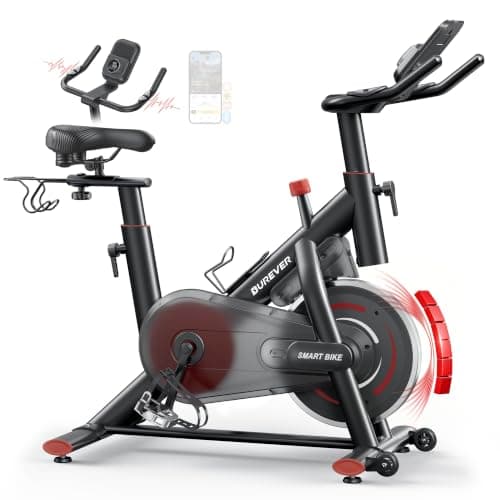
Exercise Bikes
Burever Exercise Bike Review: Touchscreen, 170kg Limit, Big Claims
Our Burever exercise bike review: the touchscreen goal console, 0-100% magnetic resistance, 170kg limit, Zwift support without a power meter, and who should buy it.

By Paul Kendrick, Cardio & Endurance Editor · Updated 14 October 2026
Buy a spin bike if you want hard training: intervals, standing climbs, studio-style classes and a ride that feels like a road bike. Buy an upright exercise bike if you mostly want steady, seated cardio with a comfier position and a console that runs programmes for you. Neither burns more calories by design. The harder bike to ride is whichever one you push harder, and that comes down to you rather than the machine.
That's the short answer. The longer one depends on your back, your budget, how much noise your downstairs neighbours will put up with and whether you've ever enjoyed a spin class.
Spin bikes (also sold as indoor cycling bikes or studio bikes) take their geometry from a road bike. The saddle is narrow, the handlebars sit low and forward, and you ride leaning over the front with your weight split between saddle, pedals and hands. That position lets you get out of the saddle and climb, which is a big part of how spin classes work.
The flywheel is the other giveaway. Most spin bikes carry a heavy one at the front, usually somewhere between 8kg and 20kg, and it keeps turning with real momentum once you've got it going. That's what gives a spin bike its smooth, weighted, "on the road" feel. The Sunny SF-B1805 uses a 20kg wheel, for example, while the Dripex runs a 35lb (roughly 16kg) one.
Resistance comes in two flavours. Felt-pad (friction) bikes press a pad onto the flywheel as you turn a knob; they're cheaper, the range is effectively infinite, but the pad wears and they're a bit louder. Magnetic bikes move magnets closer to the wheel without touching it, so they're quieter and need almost no maintenance. Most spin bikes sold in the UK now are magnetic, and that's the type we'd buy.
What you usually don't get on a cheaper spin bike is much of a console. Many show time, speed and an estimated calorie count, and some show nothing at all. You're expected to bring the workout yourself, or follow an app.
An upright exercise bike sits you more or less vertically, like riding a town bike with your back straight. The saddle is wider and more padded, the handlebars are higher and closer, and the frame is built around seated pedalling. You can't really stand up on one, and you shouldn't try.
Flywheels are lighter, often 3kg to 10kg, so the pedal stroke feels less carried along by momentum. At gentle resistance that's barely noticeable; push hard and some cheaper uprights start to feel a little notchy. The Viavito Satori is a good example of an upright done properly: a 9kg flywheel, 32 electronic resistance levels and a console that reads watts.
That console is the upright's real strength. Most have built-in programmes (hills, intervals, heart rate targets) and change resistance for you, so you can just get on and pedal. Plenty of them also fold or have a small footprint, which matters in a flat.
A recumbent bike is the third option. You sit back in a bucket seat with a backrest, legs out in front, so your back is fully supported and getting on and off is easy. It's the most comfortable of the three and the best fit for older riders, people coming back from injury or anyone who finds a normal saddle unbearable after 20 minutes. It's also the least suited to intense training. Our JLL recumbent review and best recumbent exercise bike guide cover that route in more detail.
| Spin bike | Upright exercise bike | Recumbent bike | |
|---|---|---|---|
| Riding position | Leaning forward, road-bike style | Sitting upright | Reclined, back supported |
| Flywheel | Heavy, typically 8kg to 20kg | Lighter, typically 3kg to 10kg | Light, often 3kg to 8kg |
| Resistance | Felt pad or magnetic, manual knob | Magnetic, often electronic levels | Magnetic, often electronic levels |
| Standing climbs | Yes | No | No |
| Comfort | Firm, narrow saddle | Wider padded saddle | Most comfortable, with backrest |
| Noise | Quiet if magnetic, louder with felt pads | Quiet | Quiet |
| Console | Basic or none on budget models | Programmes and preset workouts | Programmes and preset workouts |
| Typical UK price | Roughly £200 to £600, £1,000+ for connected bikes | Roughly £150 to £400 | Roughly £250 to £600 |
| Best for | Intervals, classes, cyclists, fitter riders | Steady cardio, beginners, small spaces | Bad backs, bad knees, older riders |
Prices are a rough guide based on what's on Amazon UK in October 2026; they move around a lot during sales.
Neither, on its own. Energy cost on a stationary bike comes from how much power you put through the pedals and for how long. The 2024 Adult Compendium of Physical Activities, the reference researchers use to estimate the energy cost of more than 1,100 activities, lists stationary cycling by intensity and power output in watts. It doesn't care whether the bike has a 20kg flywheel or a padded saddle. Ride at 150 watts on either and you'll burn about the same.
Where the spin bike earns its reputation is that it makes hard efforts easier to sustain. The heavy flywheel smooths out high cadence, you can stand to climb when your legs need a change, and a spin class keeps you honest. If that's how you'll train, a spin bike will probably get more work out of you.
The flip side gets ignored a lot. A bike you dread getting on burns nothing, and plenty of people find a spin saddle and forward lean miserable for anything beyond 30 minutes. If an upright means you'll ride five times a week instead of twice, it's the better buy for fat loss. The NHS recommends adults get at least 150 minutes of moderate or 75 minutes of vigorous activity a week, and consistency on any bike gets you there. Our guide on whether an exercise bike is good for losing weight goes into the numbers.
You'll get on with a spin bike if you:
For a well-priced magnetic example, the MERACH S29 Pro pairs a 10kg flywheel with a 159kg user limit at around £310, which is unusually high for the money. We rated it 4.1 out of 5. It has a short 12-month warranty and no listed Zwift support, so check those against what you need.
Check the MERACH S29 Pro price on AmazonWant more options? Our best spin bike UK guide compares the bikes we rate across every budget.
An upright makes more sense if you're new to exercise, mostly want 30 to 45 minutes of steady pedalling while you watch something, or have a stiff back that hates leaning forward. It also suits households where several people of different fitness levels will share one bike, because the programmes do the thinking and the riding position is easy for anyone to get used to.
The Viavito Satori is the upright we'd point most people towards at around £199. It reads watts, sends data over Bluetooth to Kinomap and Zwift, and the 32 resistance steps give you room to progress. The seat is the weak point, so budget for a gel cover if you're sensitive to that.
Check the Viavito Satori price on AmazonOur best exercise bike UK guide covers the wider field, including folding and budget models.
Most complaints about either type (sore knees, numb hands, an aching lower back) trace back to set-up rather than the bike itself. Saddle height is the big one: at the bottom of the pedal stroke your knee should keep a slight bend. Too low and your knees take the strain; too high and your hips rock side to side. Our exercise bike seat height guide walks through it step by step.
On a spin bike, start with the handlebars level with the saddle or a touch higher. Drop them only once you're comfortable, because a low, aggressive position looks the part but isn't worth a sore back.
A spin bike copies a road bike: you lean forward over low handlebars, the flywheel is heavy (often 10kg to 20kg) and you can stand up on the pedals. An upright exercise bike sits you more vertically on a wider saddle, usually has a lighter flywheel and a console with preset programmes. Both are stationary bikes; they're built for different kinds of riding.
Not in itself. Calories burned depend on how hard you pedal and for how long, which is why the Compendium of Physical Activities rates stationary cycling by power output rather than bike type. A spin bike makes hard intervals and standing climbs easier to do, so it suits people who'll train that way. If you'll ride more often on a comfier upright bike, that's the better weight loss tool for you.
Generally no, or not safely. Upright bikes have lighter flywheels and frames designed for seated pedalling, and the handlebars sit too close and too high to support you out of the saddle. If standing climbs are part of how you want to train, buy a spin bike.
They can be if the bike is badly set up. The forward lean puts more load through your lower back and wrists than an upright bike. Raising the handlebars, getting the saddle height right and keeping a slight bend in your elbows sorts out most discomfort. If you already have back pain, an upright or recumbent bike is the safer starting point.
Yes. A recumbent bike is an exercise bike with a bucket-style seat and backrest, with the pedals out in front of you rather than below. It's the most comfortable and supportive of the three, which makes it a good fit for older riders, bigger riders and anyone with joint or back issues, but it's the least suited to hard, high-cadence training.
Our Burever exercise bike review: the touchscreen goal console, 0-100% magnetic resistance, 170kg limit, Zwift support without a power meter, and who should buy it.
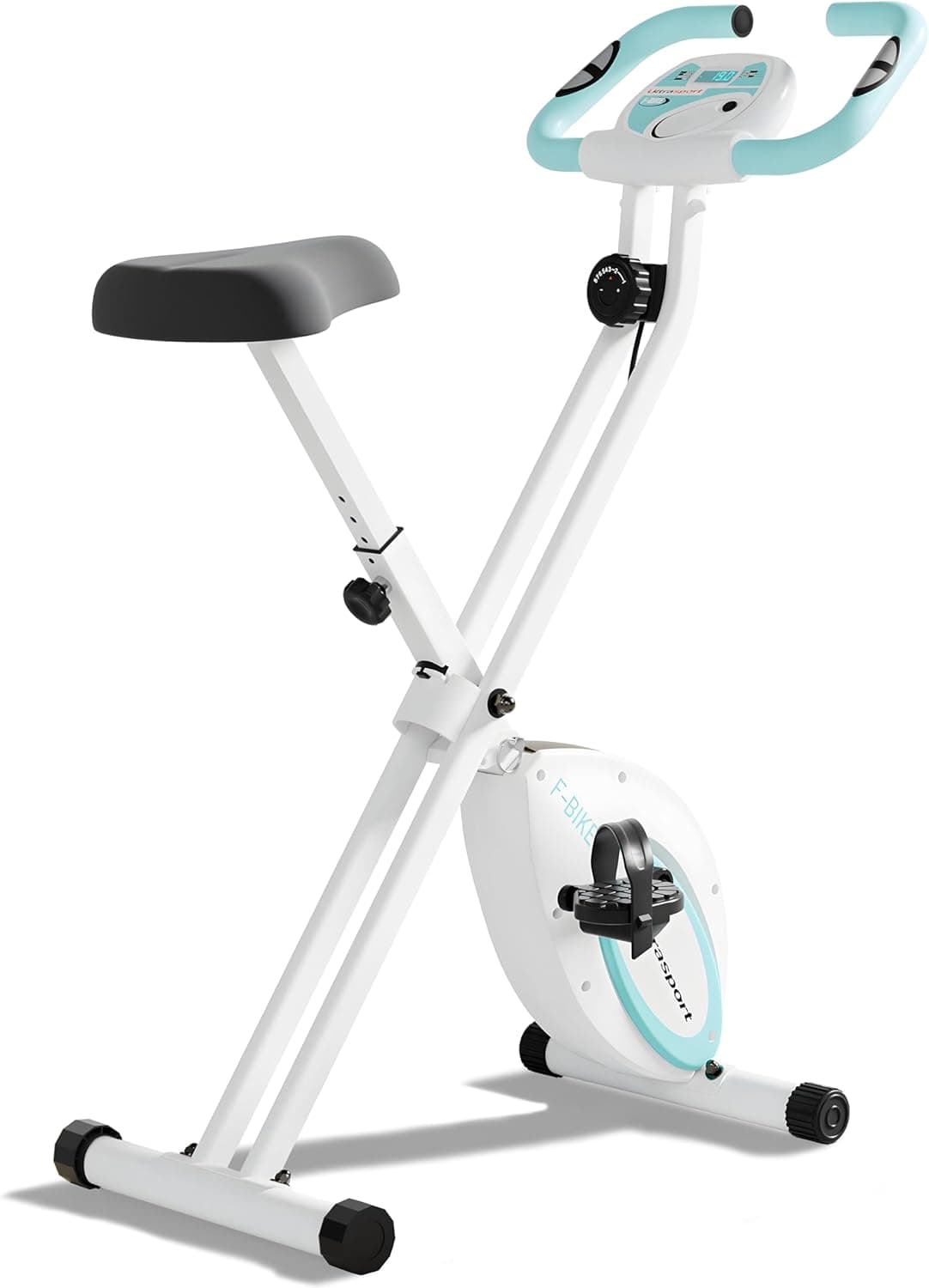
The best foldable exercise bike for UK homes, from budget mini pedallers to a 140kg-rated smart bike and a comfy recumbent. Folded sizes, weight limits and honest downsides.
Is Peloton worth it in the UK? We do the 1-year and 3-year maths on the Bike, Bike+, refurbished and rental options against a £400 bike with the app or Zwift.
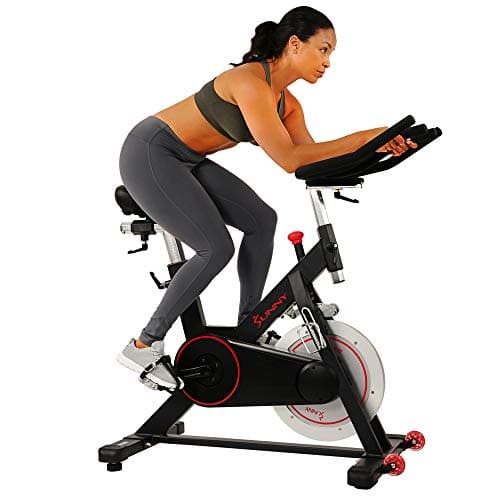
Our Sunny SF-B1805 review: a 20kg flywheel, quiet magnetic resistance and a 136kg limit, but no console, no Bluetooth and a £460 UK price. Who should buy it?
Best Exercise is a participant in the Amazon EU Associates Programme, an affiliate advertising programme designed to provide a means for sites to earn advertising fees by advertising and linking to Amazon.co.uk. As an Amazon Associate we earn from qualifying purchases. This comes at no extra cost to you and never influences our independent reviews or rankings.