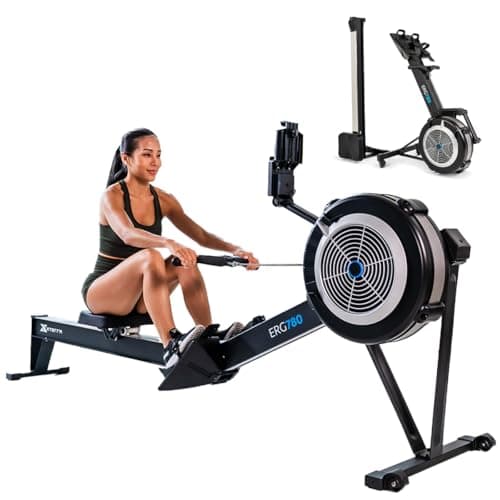
Rowing Machines
Xterra ERG780 Review: A Folding Air Rower at Half Concept2 Money
Our Xterra ERG780 air rower review covers the 10-level damper, Bluetooth FTMS app support, noise, monitor accuracy, folding storage and how it compares with a Concept2.

By Nadia Popescu, Strength & Conditioning Writer · Updated 26 June 2026

Wondering whether a rowing machine or a spin bike is the better buy? Both machines look and feel completely different in terms of function and ergonomics, yet they share a surprising amount in fitness benefits. To settle the rowing machine vs spin bike debate, our experts have weighed up the pros and cons of each across the questions that matter most.
We've tried to cover the biggest questions you might ask yourself before buying, including which is better for cardio, weight loss, strength gains and home use. Hopefully at least one of the considerations below makes your decision easier. Let's get stuck in.
Spin bikes are better for cardio than rowing machines. It's one of the few areas where the spin bike pulls clearly ahead, and it comes down to the range of movement they offer.
Think about it. On an average day you might only walk around four to five miles, climb a flight of stairs three or four times, and clock roughly 5,000 steps by the end of your commute. (source) That sounds like a lot, but if you work at a desk it will be far less, and walking is low effort, so the cardio benefit is modest.
Get on a spin bike, though, and everything changes. In the same time it takes to walk four miles during your working day, you could easily clock over 20 miles on a spin bike. That's because spin bikes let you "spin" continuously through 360 degrees, giving a greater, more sustained range of movement than a rowing machine.
Rowing machines are less cardio-intense by comparison. Each rep uses several large muscle groups to pull you through the stroke, but once you're underway you glide through much of the distance, so you're not working continuously to cover the same ground you would on a bike.
The winner: spin bike
For pure cardio conditioning, the spin bike's continuous, higher-intensity movement makes it the clear choice.
Spin bikes are slightly better for weight loss than rowing machines, though with a caveat. A big reason spin bikes burn so efficiently is intensity: a spin workout can be near non-stop pedalling with very little rest, your legs constantly working to push you through. They also force you to sit or stand upright and engage your core to stay balanced, which expends even more energy.
At a moderate pace, the calorie numbers for both machines are actually very close. A 150lb person burns approximately:
Rowing's strong showing comes from using several large muscle groups, all high-demand for burning calories, while you push hard through every stroke. That makes the rower an excellent machine for both toning and weight loss.
Where spin bikes edge ahead is in two unique benefits:
The winner: spin bike
The numbers are close, but the higher sustained intensity, especially in spin classes, gives the bike the edge for shedding fat.
Both machines are great for shedding fat, but they build the body in different ways. The high-intensity spin bike excels at burning calories, making it ideal for losing weight quickly. The rowing machine, on the other hand, is far more effective for building muscle mass.
That's down to how many large muscle groups a rowing stroke recruits. Your thighs engage with every push and pull as you row back and forth. Your hamstrings, glutes and core fire to keep you balanced and supported. And your back and arms work to pull the resistance through to the back of each stroke. It's an excellent workout for building strength and increasing lean muscle mass.
The winner: rowing machine
If your priority is strength and lean muscle, the full-body pulling motion of the rower wins comfortably.
Both machines can help you lose weight or build muscle, but which can be bought for less?
The best budget spin bike our team would recommend is the Naspaluro Home Spin Bike, which typically costs around £150-£200. There are cheaper options out there, but at the time of writing we've struggled to find any of good enough quality to recommend.
The best budget rowing machine we'd recommend is the XS Sports R310 Rower, a magnetic rower at around £199. We'd always suggest a magnetic or air rower to get the most from your workout. As with the bikes, cheaper rowers exist, but we're comparing like-for-like against the typical machines you'd find in a gym.
If you're leaning towards a rower, take a look at our definitive guide to the best budget rowing machines in the UK.
The winner: tie
At entry level, a quality spin bike and a quality rowing machine land in much the same price bracket of roughly £150-£200.
If you're buying for home, a few practical factors come into play. Here's how the two compare.
This one's close, but the rowing machine just clinches it. Spin bikes take up less floor space, but they're not easily stored, so they tend to sit in position around the clock. Most rowing machines fold, so they can be tucked away to save space when not in use.
We've tested plenty of home spin bikes and rowing machines, including some genuinely loud pieces of kit, though those were typically sub-£100 models we wouldn't recommend anyway. For any spin bike or rower over about £150, noise levels are similar. There's no clear winner here, but both are quiet enough not to wake the family or the neighbours.
Both rowers and bikes come with a decent set of features, including heart-rate monitors and live stats for speed, distance, time and calories burned. Again, no outright winner: both do a great job of keeping you committed and on track.
The winner: tie
For home use it's neck and neck. The rower wins on storage, but the two are level on noise and features.
So, which is better? Honestly, it depends. A slightly boring answer, we know, but it's the truth.
The spin bike came out narrowly on top across our questions, yet it may still not be the right machine for your circumstances. If your main goal is building muscle while burning fat as a by-product, the rowing machine is the better option, since spin bikes don't develop muscle to the same degree. For more on choosing a rower, see our guide to what type of rowing machine is best.
Equally, if you're all about losing weight as efficiently as possible, the spin bike is for you.
Hopefully this has given you a clearer picture of whether the rower or the spin bike is right for you. If you still have questions before taking the plunge, leave a comment.
A spin bike is slightly better for weight loss. Both burn a similar number of calories at a moderate pace (around 243 calories spinning versus 249 rowing for a 150lb person), but spin bikes are typically higher intensity, especially during spin classes that can burn 300-500 calories in 30 minutes.
The rowing machine is better for building muscle. Each stroke engages large muscle groups across your legs, glutes, core, back and arms, making it more effective than a spin bike for increasing lean muscle mass.
Spin bikes have a smaller floor footprint, but most rowing machines fold for storage, so a rower is usually easier to tuck away when you're not using it.
Our Xterra ERG780 air rower review covers the 10-level damper, Bluetooth FTMS app support, noise, monitor accuracy, folding storage and how it compares with a Concept2.
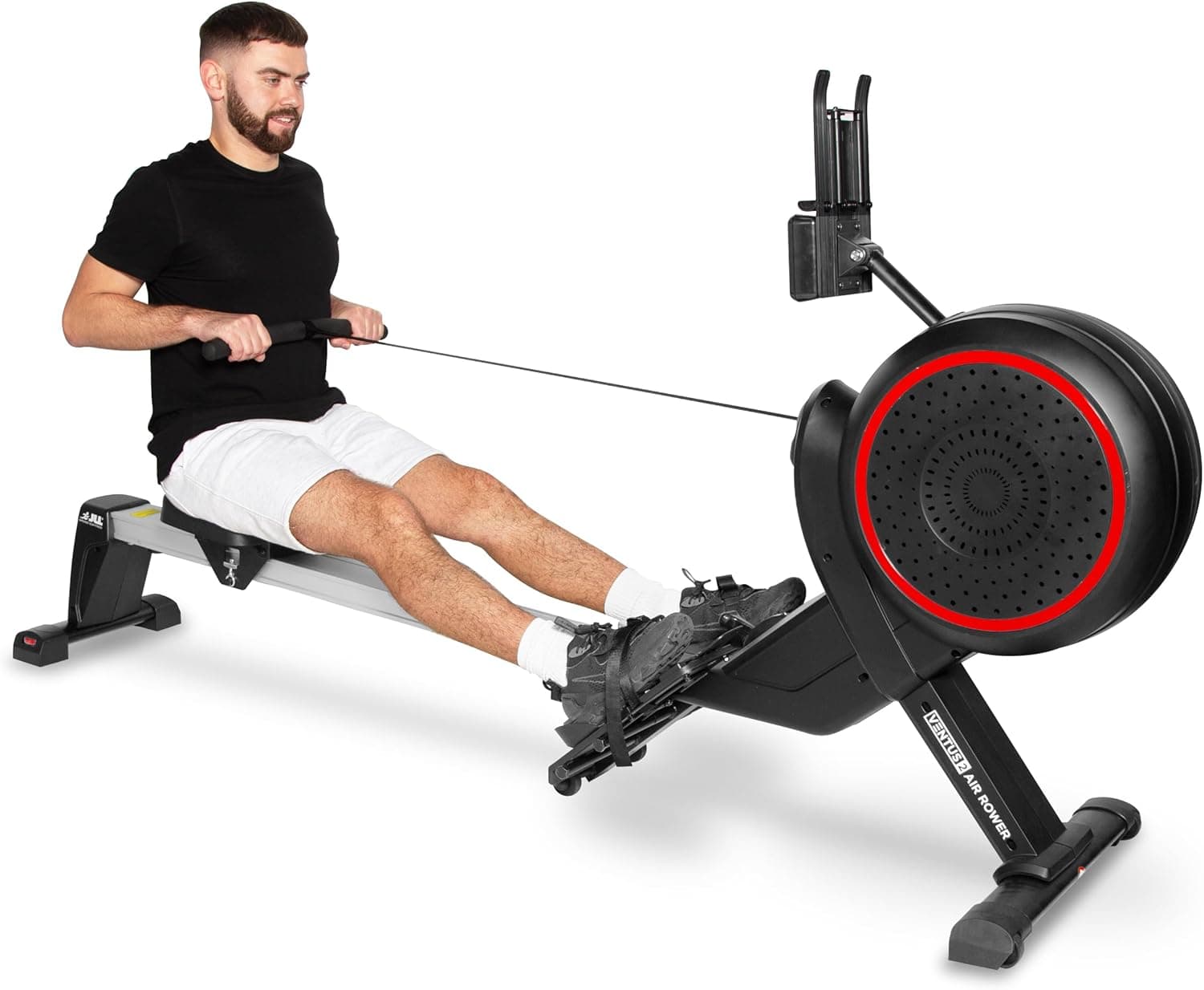
The best foldable rowing machines in the UK for 2026, compared on folded footprint, rail length and weight limit. Picks from JLL, DMASUN, YPOO, Viavito and MERACH for every budget.
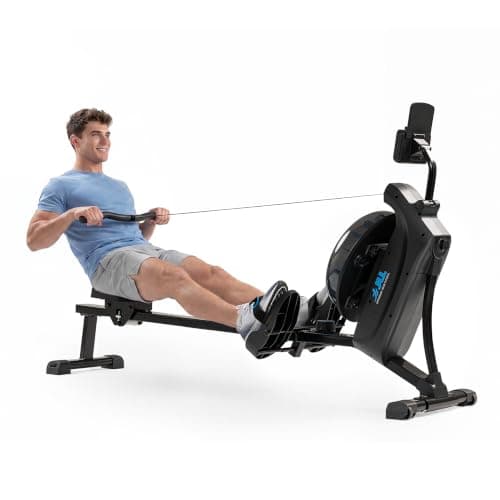
An honest JLL water rowing machine review of the dual resistance rower: the 60 degree tank, 16 magnetic levels, 130cm rail, 150kg capacity, SunnyFit app and who it suits.
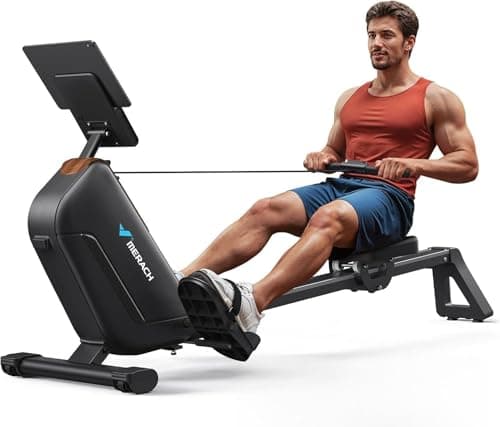
An honest MERACH R15 Pro review: 40kg peak electromagnetic resistance, 16 levels adjusted from the handlebar, a 130cm rail, 158kg capacity and who this £300 rower suits.
Best Exercise is a participant in the Amazon EU Associates Programme, an affiliate advertising programme designed to provide a means for sites to earn advertising fees by advertising and linking to Amazon.co.uk. As an Amazon Associate we earn from qualifying purchases. This comes at no extra cost to you and never influences our independent reviews or rankings.