Home Gym
How Much Is a Reformer Pilates Machine? UK Prices by Tier (2026)
How much is a reformer pilates machine? UK prices run from about £220 for a folding cord model to £3,500 for studio kit. Real prices by tier, Nov 2026.

By Jacob Chambers, Founder & Lead Reviewer · Updated 11 November 2026
We may earn a commission from qualifying purchases made through links on this page, at no extra cost to you. This never affects our ratings.
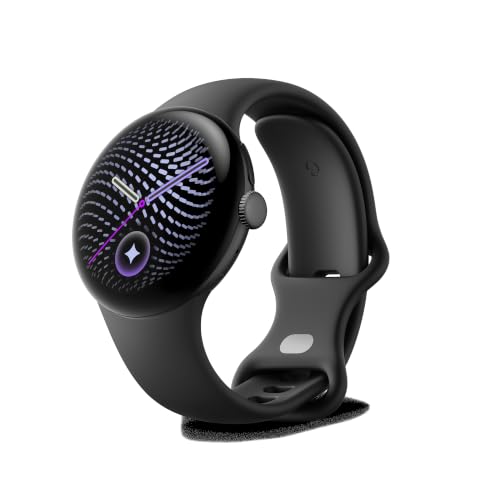
Buy the Pixel Watch 5 if you have an Android phone and want a proper smartwatch that also handles your training; skip it if you'd resent charging a watch every day and a half. That's the short version. Google's fifth watch pairs dual-frequency GPS, ECG and a 3,000 nit domed screen with a battery rated for 40 hours in the 45mm size, and at around £329 on Amazon UK at the time of writing it undercuts where Google's own store started it.
The catch hasn't changed since the first Pixel Watch. A Garmin Venu 4 runs for up to 12 days in smartwatch mode and a vivoactive 6 manages 11, so anyone coming from Garmin will find a day-and-a-half watch faintly absurd. What you get in exchange is Wear OS 7, Google Wallet, Maps, Gemini on your wrist and a health app that's become far more useful since Google folded Fitbit into it.
Check the Pixel Watch 5 (45mm) price on Amazonaround £329How we review
This review is based on Google's published UK specifications and product page (checked on 11 November 2026), the Amazon UK listing and peer-reviewed research on wrist-worn heart rate and sleep tracking. We haven't tested this watch ourselves. Battery, charging and accuracy figures are Google's claims unless we say otherwise, and where Google hasn't published a number we tell you instead of guessing.
Android owners who train three or four times a week and want their watch to do everything else too. If your week is a couple of gym sessions, a parkrun and a longer Sunday run, the Pixel Watch 5 covers all of it and then pays for your coffee afterwards.
It suits Fitbit upgraders especially well. Your history carries over because the Fitbit app is now the Google Health app, and the step up from a Fitbit Charge 6 or Versa 4 in screen, GPS and apps is large.
It's the wrong watch for iPhone owners, who can't pair it at all, and for anyone training for a marathon or longer who wants a week of battery and deep training metrics. Those people should read our Garmin vs Apple Watch comparison, because the same argument applies here with Google in Apple's seat.
Google has kept the pebble shape, a domed circle of Gorilla Glass 5 over a recycled aluminium case that's 12.3mm thick, according to Google's UK spec page. The 45mm weighs 36.7g without the band and the 41mm is 31g, which puts both among the lighter full smartwatches you can sleep in. Four colours are available: Matte Black, Polished Silver, Satin Pyrite and Champagne Gold.
The screen is the hardware highlight. Google's spec sheet lists a 320ppi LTPO AMOLED panel that peaks at 3,000 nits and drops to 1 nit and 1Hz for the always-on display, so reading pace in direct sun shouldn't be a problem. Google doesn't publish the screen diagonal on its UK spec page, which is odd.
Aluminium and Gorilla Glass 5 are a step below the sapphire and titanium you'll find on pricier sports watches; a domed display that stands proud of the case is exactly the part that meets door frames and barbells first. If you lift, budget for a case or accept the scuffs.
| Case | 45mm, 12.3mm thick, 100% recycled aluminium |
|---|---|
| Weight | 36.7g without band (41mm: 31.0g) |
| Display | 320ppi LTPO AMOLED, 1 to 60Hz, up to 3,000 nits, always-on |
| Glass | Custom 3D Corning Gorilla Glass 5 |
| Battery | 465mAh (41mm: 332mAh) |
| Battery life | Up to 40 hours always-on, up to 72 hours Battery Saver (41mm: 30 and 48 hours) |
| Charging | Quick Charge Dock: about 15 min to 50%, 30 min to 80%, 60 min to 100% |
| Chip | Qualcomm Snapdragon W5 Gen 2 with Cortex-M55 co-processor |
| Storage | 64GB |
| Software | Wear OS 7.0, three years of security updates |
| GPS | Dual-frequency: GPS, Galileo, Glonass, Beidou, QZSS |
| Sensors | Multi-path optical heart rate, ECG, SpO2, skin temperature, cEDA, altimeter, barometer, compass |
| Water resistance | 5 ATM and IP68 |
| Connectivity | Bluetooth 6.0, Wi-Fi, NFC, Ultra-Wideband (4G LTE on the LTE model) |
| Compatibility | Android 12.0 or newer; no iPhone support |
| Warranty | Two years |
On paper the GPS is as good as anything at this price. Dual-frequency positioning across five satellite systems is the same class of hardware Garmin reserves for its Forerunner 265 and above, and the vivoactive 6 doesn't have it. Google's product page calls it "the best GPS in a sports watch"; that's a marketing line we can't verify, and I'd treat it as one.
The workout builder is more interesting for gym users. Google says you can set exact reps, weights and rest timers for strength sessions and build warm-ups and intervals for running, cycling and HIIT, with spoken cues during the session. The Amazon listing counts more than 50 activity types.
Heart rate is where honesty is needed. Google's own footnote states that heart rate tracking on the Pixel Watch 5 is the same as on the Pixel Watch 4, so the "most accurate" claim on the page is a comparison with the Pixel Watch 2. Every wrist sensor shares a weakness, too. A 2025 validation study of five commercial wrist wearables against 12-lead ECG found accuracy dropped on all of them during rapid heart rate changes, and concluded they suit averages and trends better than second-by-second readings. The Pixel Watch wasn't in that study, although two Fitbit devices were and scored highest overall.
In practice that means steady runs and zone 2 work will read fine while hard intervals and kettlebell circuits may lag. If you train by heart rate zones and care about interval precision, pair a chest strap from our best heart rate monitor guide.
Fitbit as an app is gone. Everything now lives in Google Health, and the subscription is Google Health Premium. Google's product page describes weekly cardio goals and a daily readiness level that tell you whether to push or back off, plus a Morning Brief that puts readiness, your sleep recap and the weather on one screen when you wake.
The paid tier is Google Health Coach: personalised fitness plans built with Gemini, run coaching that adapts when you miss a session, and answers to questions about your own data. Google marks all of that as needing Premium. You get three months free with the watch, then it renews at £7.99 a month, which is £96 a year on top of the purchase price if you forget to cancel.
My view is that most people won't need it. The free tier gives you the workouts, GPS maps, sleep stages and heart rate history, and a structured plan from a book or a free app does the coaching job. Garmin still includes Body Battery and sleep coaching with no subscription, and that remains the strongest argument for a Venu 4 over this.
Google also lists blood pressure trend tracking, signs of insulin resistance and Breathing Emergency Detection. Read the small print before getting excited: the first two are described as general wellness features that don't give readings or screen for hypertension or diabetes, and the breathing feature is noted as CE marked for certain EU markets, with nothing we could find confirming UK availability. Don't buy the watch for any of them.
Google claims its most accurate sleep tracking yet, based on validating a new sleep staging algorithm against lab measurements. The watch produces a Sleep Score from time in each stage and breathing regularity, and a smart alarm picks a light-sleep moment inside your chosen wake-up window.
Treat the totals as useful and the stages as approximate. A 2025 meta-analysis of 24 studies comparing wrist sleep trackers with polysomnography found the devices differed significantly from lab results on total sleep time, sleep efficiency and time awake, and concluded they're still worthwhile for following general patterns. That fits how a sleep score works best: watch the trend across a fortnight and ignore any single night. Our guide to sleep and muscle recovery covers what to do with the number.
The practical problem is charging. A watch can't track sleep on its dock, and with roughly 40 hours per charge you'll need a daily top-up habit; Google's answer is the Quick Charge Dock, which it says adds 15 hours in 15 minutes. A shower and breakfast would cover it.
Forty hours is a real improvement for a Wear OS watch and still nowhere near a sports watch.
| Watch | Rated battery | Subscription for coaching |
|---|---|---|
| Pixel Watch 5 (45mm) | Up to 40 hours always-on, 72 hours Battery Saver | £7.99 a month |
| Pixel Watch 5 (41mm) | Up to 30 hours always-on, 48 hours Battery Saver | £7.99 a month |
| Garmin Venu 4 (45mm) | Up to 12 days, around 4 days always-on | None |
| Garmin vivoactive 6 | Up to 11 days | None |
| Fitbit Charge 6 | Up to 7 days | £7.99 a month |
Two caveats sit behind Google's numbers. Its footnote says actual battery life may be lower and that features reduce it, and it publishes no figure for continuous GPS tracking, so I can't tell you whether the watch survives a five-hour marathon with music playing. The charging speeds also assume a 30W adapter, which Google sells separately.
This is the half of the product where the Pixel Watch beats every Garmin. Wear OS 7 brings Google Wallet, Maps, the Play Store and raise-to-talk Gemini, and 64GB of storage is plenty for offline playlists. Ultra-Wideband and Bluetooth 6.0 are on board, and the LTE model can take calls with your phone left at home.
Gemini Intelligence features, including the proactive suggestions Google demos, need a compatible Android phone and are limited to select countries and languages. Safety features are stronger than most rivals: fall detection, car crash detection, a safety check timer for solo runs and loss of pulse detection. Google advertises satellite SOS as well but says it may not be available in all countries, so check before relying on it in the hills.
One disappointment is support length. Three years of security updates on a watch launched in August 2026 takes you to 2029, which is shorter than many people keep a watch.
See today's Pixel Watch 5 price on AmazonSmaller wrist or tighter budget: the Pixel Watch 5 in 41mm is around £299 at the time of writing with the same chip, sensors and GPS, and you give up roughly 10 hours of battery. The older Pixel Watch 4 isn't a saving right now, since its 41mm version sits at the same £299 on Amazon UK.
Battery first: the Garmin Venu 4 has ECG, a metal case and up to 12 days per charge, and it works with iPhones. The vivoactive 6 is the simpler Garmin, though it drops multi-band GPS and the barometric altimeter.
Just the health tracking: a Fitbit Charge 6 uses the same Google Health app for well under £100 and lasts a week. The Fitbit Versa 4 is harder to recommend now that this watch exists.
iPhone owner: none of the above solves the pairing problem. Start with Fitbit vs Apple Watch.
If you own an Android phone and want one watch for notifications, payments, gym sessions and a few runs a week, yes. It pairs dual-frequency GPS and ECG with a 3,000 nit screen for around £329 in the 45mm size. If battery life or serious training analysis matters most, a Garmin at the same price lasts five times longer between charges.
Google rates the 45mm model at up to 40 hours with the always-on display and up to 72 hours in Battery Saver mode. The 41mm model gets up to 30 hours and 48 hours. Those are Google's figures, and its own small print says real use can come in lower. Plan on charging every day and a half.
No. Google's spec page says it works with most phones running Android 12.0 or newer and needs a Google Account and the Pixel Watch app. There's no iPhone support at all, so iPhone owners should look at an Apple Watch or a Garmin instead.
No. The watch tracks heart rate, sleep, workouts and GPS routes without a subscription. Google Health Premium unlocks Google Health Coach, the Gemini-built coaching and personalised run plans. Google includes three months free with the watch, after which it renews at £7.99 a month unless you cancel.
For 5K to half marathon training it's well equipped: dual-frequency GPS across five satellite systems, custom interval workouts, audio cues and a daily readiness level. Marathon and ultra runners will hit the battery ceiling, and Google doesn't publish a GPS-only battery figure to plan a long race around.
Buy the 45mm unless your wrist is small. It costs about £30 more on Amazon UK at the time of writing and gets a 465mAh battery against 332mAh, which Google says is worth 10 extra hours. The 41mm is lighter at 31g against 36.7g without the band.
How much is a reformer pilates machine? UK prices run from about £220 for a folding cord model to £3,500 for studio kit. Real prices by tier, Nov 2026.
Why is reformer pilates so expensive? Classes cap at about 10 machines costing £2,450 each. UK class prices, the studio maths and four cheaper routes.
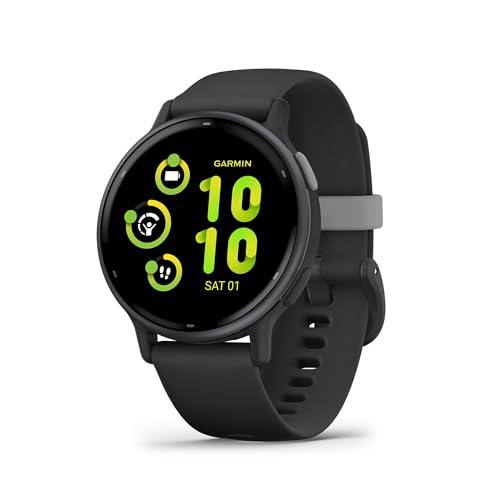
An honest Garmin vivoactive 5 review: 11 day battery, AMOLED screen, 4GB music and 30+ sport apps at around £149, plus how it compares with the vivoactive 6.
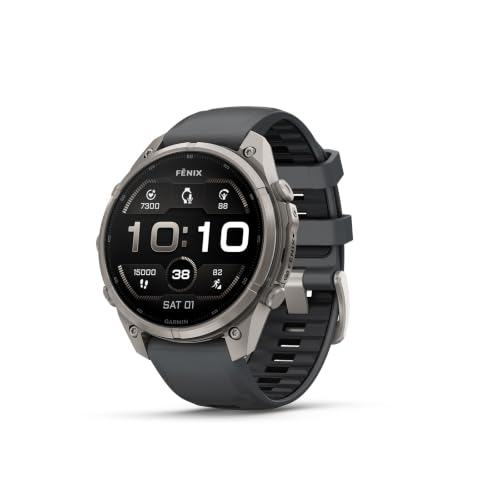
An honest Garmin fenix 9 Pro (47mm) review covering the 3,000 nit AMOLED, titanium case, 18 day battery, stamina tools and whether it beats a cheaper fenix 8.
Best Exercise is a participant in the Amazon EU Associates Programme, an affiliate advertising programme designed to provide a means for sites to earn advertising fees by advertising and linking to Amazon.co.uk. As an Amazon Associate we earn from qualifying purchases. This comes at no extra cost to you and never influences our independent reviews or rankings.