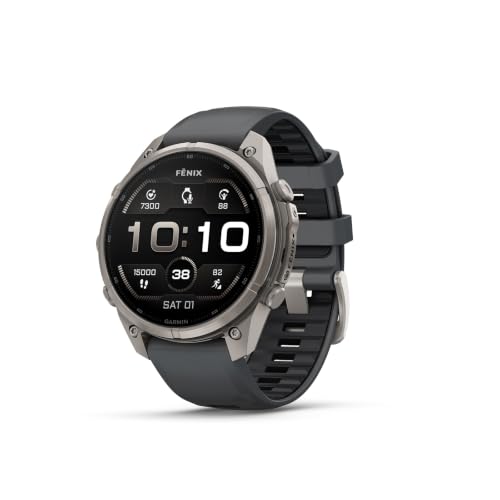
The fenix 9 Pro is Garmin's new top-end multisport watch, and the 47mm model sits at around £948 on Amazon UK, a pound or two under the £949.99 Garmin charges on its own store. That is a lot of money for a watch whose training software overlaps heavily with the fenix 8, so the question for this review is narrow: does the new hardware justify paying roughly £330 more than a fenix 8 from our fenix 8 review?
The short answer is that the fenix 9 Pro is the best-made fenix yet. Garmin has finally built the whole case from titanium, pushed the AMOLED to a claimed 3,000 nits, shaved the 47mm body down to 13.8mm and added two days of battery over the fenix 8. Whether any of that is worth the premium depends on how hard you are on a watch and how much time you spend outdoors in bright light.
How we review
This review is based on Garmin's published UK specifications for the fenix 9 Pro, the Amazon UK listing, our existing research on the fenix 8 and fenix 8 Pro, and independent research on wrist-worn sensor accuracy. We have not run our own long-term field test of this unit, and the watch is new enough that owner feedback is still thin, so we stick to what Garmin has published and flag clearly where a claim comes from the manufacturer.
This trips people up, so it is worth clearing before anything else. On the fenix 8 generation, the Pro badge meant LTE calling and inReach satellite messaging, which we covered in our fenix 8 Pro review. On the fenix 9, Garmin has moved those radios into a separately named fenix 9 Pro inReach, and the standard fenix 9 Pro reviewed here has neither. Its connectivity, per Garmin's spec sheet, is Bluetooth, ANT+ and Wi-Fi.
What Pro now buys is the build. There is a cheaper fenix 9 (listed at £859.99 for the 47mm on Garmin UK) with a fibre-reinforced polymer case and a titanium back, quoting up to 16 days of battery. The Pro swaps that for what Garmin calls the first all-titanium fenix case, adds the 3,000 nit screen and lifts the claimed battery to 18 days. If you want satellite SOS on your wrist, you need the inReach model, which costs more again and needs an active subscription.
Pros
All-titanium case with a titanium bezel and sapphire lens
1.4in AMOLED rated up to 3,000 nits, which Garmin says is more than twice as bright as the fenix 8
Up to 18 days smartwatch battery on the 47mm, two more than the fenix 8
13.8mm thick, a lot slimmer than the 16mm fenix 8 Pro
64GB of storage for maps and up to 7,000 songs
New stamina metrics, rucking profile and indoor rowing VO2 max
Cons
Around £948, roughly £330 more than a fenix 8 on Amazon
Training software is close to what the fenix 8 already offers
No LTE or satellite messaging unless you pay for the inReach model
Rowing VO2 max and FTP need a power meter equipped rower
Garmin's 32 hour normal GPS figure looks short against the fenix 8's quoted 47 hours, though the mode definitions differ
Build, screen and size
The case is where most of your money goes. Titanium is lighter than stainless steel for the same strength and does not corrode, and it is the reason the fenix 9 Pro feels like the premium model rather than a fenix 8 with a new firmware number. Garmin pairs it with a titanium bezel, a scratch-resistant sapphire lens and leakproof metal buttons, and says it is tested to US military standards for thermal, shock and water resistance. The 40 metre dive rating carries over, with single-gas scuba and apnea modes.
Weight is 78g with the silicone strap and 56g for the case alone, so the titanium has not made it a lightweight; it is a fraction heavier than the 77g fenix 8 Pro. The bigger change is thickness. At 13.8mm the 47mm fenix 9 Pro sits noticeably flatter than the 16mm fenix 8 Pro, which matters more than it sounds when you are sleeping in it or pulling a jacket cuff over it.
The 1.4in, 454 by 454 AMOLED is rated up to 3,000 nits. Garmin's own marketing claims it is more than twice as bright as the fenix 8, and on a summer fell run or a ski slope that is a real gain, because AMOLED watches in direct sun have always been the weak point against older memory-in-pixel screens. There is still an LED flashlight on the front, and the Amazon listing confirms a red safety light mode for running on unlit roads.
Garmin fenix 9 Pro (47mm) key specs
Display
1.4in AMOLED touchscreen, 454 x 454, up to 3,000 nits
Case size
47 x 47 x 13.8 mm
Weight
78 g with strap (case only 56 g)
Materials
Titanium case and bezel, sapphire crystal lens
Battery, smartwatch
Up to 18 days (24 days low power mode)
Battery, GPS
Up to 32 hours normal, 26 hours max accuracy, 87 hours max battery
Eighteen days in smartwatch mode is a strong figure for a 47mm AMOLED watch, and the 24 day low power mode gives you a useful fallback on a long trip. In GPS activities the numbers need more care. Garmin quotes up to 32 hours in its normal activity mode, 26 hours on max accuracy (multi-band) and up to 87 hours on max battery, with a separate expedition mode that runs to 18 days.
That 32 hour figure looks short next to the "up to 47 hours of GPS" we reported for the fenix 8. Garmin has relabelled its activity modes on this generation, so the two numbers may not describe the same settings, and we would not read it as a straight regression until owners have logged real runs. What is clear is that the 51mm version, with a claimed 31 days in smartwatch mode, is the one to buy if battery is your priority, and the Enduro 3 still exists for anyone who mainly cares about ultra distance endurance.
Training tools: what is actually new
The big software additions on the fenix 9 Pro are stamina related. Garmin now shows a stamina curve and stamina zones, which it describes as a way to visualise how your endurance is changing based on your fitness gains and training history. The point is to make the long-term trend easier to read over weeks and months, which suits anyone building toward a marathon, an ultra or a big hill day.
There is also Garmin Epic, which stitches several days of activities, photos and health stats into one multi-day story. It is aimed at hiking trips, bike tours and holidays rather than training, and how useful you find it will come down to whether you want a trip diary on your watch. The rest of the package is familiar: training readiness, training status, endurance and hill scores, HRV status, Garmin Coach plans, PacePro and ClimbPro, plus more than 100 activity profiles.
Two profiles are worth calling out for home gym users. Rucking now lets you set a target, build a custom workout and change pack weight mid-session. Indoor rowing gains VO2 max, FTP, power zones and lactate threshold estimates, but every one of those needs a rower that broadcasts power to the watch. Most budget magnetic and water rowers do not, so check before you assume the feature will work with what you own; our best rowing machine UK guide is a good place to compare models.
The sensors are as good as Garmin makes, but wrist-based estimates have limits that no amount of titanium fixes. A trail running study found the wrist sensor on a Garmin fenix 5 had a mean absolute percentage error of 13% against a chest strap, while a chest-strap-based watch came in at 2%, which is the clearest argument for pairing a heart rate strap for hard or technical sessions (Navalta et al., trail running heart rate validity). VO2 max estimates deserve the same caution: a validation study of five wrist-worn trackers found mean errors above 10% for most of them, with the best Garmin at 7.3% and still underestimating (Passler et al., wrist-worn VO2 max and energy expenditure). That research used older devices, so treat it as a reason to read stamina and VO2 max as trends rather than lab results, not as a verdict on this watch.
fenix 9 Pro vs fenix 8 and fenix 8 Pro
Against the fenix 8, the fenix 9 Pro wins on every hardware line: titanium instead of a polymer or steel build, a much brighter screen, a slimmer case, 64GB instead of 32GB and two more days in smartwatch mode. It loses badly on price. At about £620 the fenix 8 already has the AMOLED, the flashlight, the speaker and microphone, the 40 metre dive rating and almost all of the training stack. If you train mostly indoors and on roads, that £330 gap buys very little you will notice day to day.
Against the fenix 8 Pro, the trade is different. The older Pro has LTE and inReach satellite messaging, which the standard fenix 9 Pro does not, and Garmin listed it at £899.99. If an SOS link is why you are shopping at this price, the fenix 8 Pro or the new fenix 9 Pro inReach is the watch you want, not this one. If you never leave phone signal, the fenix 9 Pro gives you a better case and screen without the subscription.
Who should buy it
Buy the fenix 9 Pro if you want the toughest, brightest fenix and will wear it hard for years: mountain runners, skiers, divers and anyone who has scratched or dented a cheaper watch. The thinner titanium case and the brighter screen are genuine improvements, and the 18 day battery means you will rarely think about charging.
Skip it if you mainly run, cycle or train in a gym. The Forerunner 970 and the fenix 8 cover the same training data for a lot less, and our best Garmin watch UK guide maps the whole range by budget.
Does the fenix 9 Pro have LTE and satellite messaging?
Not the standard fenix 9 Pro. Garmin has changed its naming for this generation: Pro now means the titanium case and the brighter 3,000 nit screen, and the LTE and inReach satellite hardware lives in a separate model called the fenix 9 Pro inReach, which costs more. The 47mm watch reviewed here connects over Bluetooth, ANT+ and Wi-Fi only, so check the full product name before you buy.
How long does the fenix 9 Pro 47mm battery last?
Garmin quotes up to 18 days in smartwatch mode and up to 24 days in its low power watch mode. In GPS activities it lists up to 32 hours in the normal activity mode, 26 hours on max accuracy and up to 87 hours on max battery. The 51mm version stretches smartwatch mode to a claimed 31 days.
Is the fenix 9 Pro worth it over the fenix 8?
Only if the hardware matters to you. The fenix 9 Pro gets a full titanium case, a screen Garmin says is more than twice as bright, a thinner 13.8mm body, double the storage at 64GB and two extra days of battery. The training platform underneath is very similar, and the fenix 8 sells for roughly £620 on Amazon against about £948 here. Most runners and gym users will not feel £330 of difference.
What is the difference between the fenix 9 and fenix 9 Pro?
On Garmin's UK spec sheets, the plain fenix 9 47mm uses a fibre-reinforced polymer case with a titanium rear cover and quotes up to 16 days of smartwatch battery, while the fenix 9 Pro moves to an all-titanium case, a 3,000 nit display and up to 18 days. Garmin lists the fenix 9 47mm at £859.99 and the fenix 9 Pro 47mm at £949.99 on its own store.
Can the fenix 9 Pro measure VO2 max on a rowing machine?
Yes, but only with the right rower. Garmin's indoor rowing VO2 max, FTP and power zones all require a power meter equipped rowing machine that broadcasts power to the watch. On a basic magnetic or water rower without power output, you still get heart rate, time and stroke data but not the new rowing fitness metrics.
Should I buy the 47mm or 51mm fenix 9 Pro?
The 51mm model costs around £1,029 on Amazon and buys a bigger 1.5in screen and Garmin's claimed 31 days of smartwatch battery, against 18 days on the 47mm. It is also 15.8mm thick and noticeably heavier. If you mostly train in the gym and wear the watch to sleep, the 47mm is the more comfortable choice.
An honest AeroPilates Reformer 287 review: how this Aero Pilates reformer's three bungee cords, 300lb capacity and 216cm frame compare with spring reformers at a third of the price, and who should still buy one.
Barbell vs dumbbell: barbells win for maximum strength, dumbbells for space, safety alone and unilateral work. Research, costs and which to buy for home.
The best Smith machines for a UK home gym in 2026, from a compact Smith machine that fits a box room to full stations with cable stacks. Real dimensions, prices and who each one suits.
How to use the ab crunch machine properly: seat height, pad position, tempo and load. Muscles worked, how it compares to cable crunches, and home options.
Best Exercise is a participant in the Amazon EU Associates Programme, an affiliate advertising programme designed to provide a means for sites to earn advertising fees by advertising and linking to Amazon.co.uk. As an Amazon Associate we earn from qualifying purchases. This comes at no extra cost to you and never influences our independent reviews or rankings.