Recovery
Can Red Light Therapy Cause Cancer? What the Research Says
Can red light therapy cause cancer? Why red and near infrared LEDs aren't UV, what studies say about existing tumours, who should check with a GP first.

By Mike Shilling, Recovery & Training Editor · Updated 5 November 2026
Is a sauna good for a cold? Partly. Regular sauna use over months may mean you catch fewer colds in the first place, but sitting in a sauna once you're already ill won't cure anything or shorten the cold. If you've got a mild head cold with symptoms above the neck (a runny or blocked nose, sneezing, a slightly sore throat) and no fever, a short, cooler session may feel soothing and, in a steam room especially, can ease congestion for some people. Skip it entirely if you have a temperature, flu symptoms, a chesty cough or you're already dehydrated, because heat stress on top of a fever is the last thing your body needs.
Below is what the research actually shows, how to do a sauna safely if you decide to go, and when it's time to stop self-treating and speak to your GP.
The honest summary is that the evidence is thin, small and mostly old. That doesn't make it worthless, but it does mean you should treat any big promises about saunas "boosting immunity" with suspicion.
The study everyone points to is an Austrian trial from 1990 (Ernst et al., Annals of Medicine). Researchers put 25 volunteers on a regular sauna routine and compared them with 25 people who didn't sauna, tracking colds for six months. The sauna group had significantly fewer colds, and in the last three months their rate was roughly half that of the controls.
Two catches. The colds people did get lasted just as long and felt just as bad in both groups, so the sauna didn't make illness milder. And 50 people is a tiny sample; the authors themselves concluded that saunas "probably" reduce colds and that more studies were needed. Thirty-plus years later, a 2018 systematic review of regular dry sauna bathing still described the evidence for immune benefits as scant (Hussain and Cohen, Evidence-Based Complementary and Alternative Medicine).
So a sauna habit is a reasonable thing to keep up through winter if you enjoy it. Just don't expect it to replace handwashing.
This is where the evidence is weakest. The same 2018 review found only one trial that tested sauna heat on people with an active cold: 157 adults in Germany breathed either hot 90°C sauna air or cool 24°C air through a face mask while sitting in a sauna. The hot-air group reported slightly lower symptom scores on day 2, but the difference had vanished by days 3, 5 and 7, and the reviewers judged the effect negligible. Use of cold medication was lower on day 1 (3% versus 15%) and the same afterwards.
In plain terms: a sauna might make you feel a bit better for a day. It won't kill the virus, and you'll still be ill for roughly as long. The NHS says most colds improve within 1 to 2 weeks whatever you do (NHS: common cold).
There's no formal medical rule for sauna use with a cold, but the common-sense check many coaches use for exercise works well here too. If your symptoms are all above the neck and you feel more or less yourself, a gentle session is a personal choice. If they've spread below the neck, stay out.
Skip the sauna if you have any of these
A high temperature or feeling hot and shivery. Body aches, exhaustion or other flu-like symptoms. A chesty cough, wheezing, shortness of breath or chest pain. Vomiting, diarrhoea or any sign you're not keeping fluids down. Dizziness when you stand up. Heat adds strain to a body that's already running hot, and the NHS lists dizziness, headache and feeling sick as early signs of heat exhaustion (NHS: heat exhaustion and heatstroke).
People with heart conditions, low blood pressure, pregnancy or a weakened immune system should check with a GP before using a sauna at any time, and particularly when unwell.
If you've passed the above-the-neck test and want the warmth, change your usual routine. Being ill lowers your tolerance, and the goal is comfort, not a heat challenge.
For congestion, steam wins. The NHS suggests breathing in steam to ease a blocked nose, and its example is simply sitting in a bathroom with a hot shower running. A steam room is a bigger, hotter version of that, typically around 40 to 45°C with humidity close to 100%.
A traditional dry sauna has low humidity, often 10 to 20%, unless you throw water on the stones (löyly), which gives a short burst of moist heat. Some people find very dry, hot air irritates an already sore throat or nose. If stuffiness is your main complaint, a steam room or a hot shower is the gentler option. Our sauna vs steam room comparison goes into the differences in more detail.
One warning carried straight from the NHS page: children shouldn't breathe steam from a bowl of hot water because of the scalding risk.
Infrared saunas heat your body more directly and run cooler, usually 45 to 65°C, compared with 70 to 100°C in a traditional sauna. That lower air temperature can feel easier to tolerate when you're under the weather, and many people find it less harsh on the airways than a hot Finnish room.
The trade-off is that infrared cabins and tents are dry, so you get none of the steam benefit for a blocked nose. There's no research comparing the two types for colds specifically. Pick whichever you tolerate better, keep the session short, and read our infrared vs traditional sauna guide if you're deciding which kind to buy.
This is the part people forget. You're infectious from a few days before symptoms start until they've gone, usually 1 to 2 weeks, and cold viruses can survive on hands and surfaces for 24 hours, according to the NHS. A gym or spa sauna is a small, enclosed room with shared benches, door handles and ladles, often with people sitting shoulder to shoulder.
If you have a cold, the considerate choice is to give the communal sauna a miss until you're better. If you do go, sit on your own towel, don't share towels or water bottles, wash your hands before and after, and catch any sneezes in a tissue you bin straight away. Our sauna etiquette guide covers the wider rules for UK gyms and spas.
Having your own sauna solves the hygiene problem completely and lets you control the temperature and session length. A portable steam sauna is the cheapest way to get moist heat at home, and that's the type most relevant to congestion. We've researched the SereneLife portable steam sauna, a budget tent with a 4-litre steamer that you sit in with your head outside, which keeps the heat milder on your airways.
Check SereneLife price on AmazonIf you'd rather have dry infrared heat, the CONLONS infrared sauna tent is roomier than most portable tents. For cabins, blankets and everything in between, see our round-up of the best home saunas in the UK and the wider recovery hub.
A cold normally sorts itself out, and antibiotics won't help because it's viral. The NHS advises asking your GP for help if:
If any of those apply, the sauna can wait. Rest, fluids and a pharmacist's advice will do more for you this week than heat will.
No. Colds are caused by viruses and there's no good evidence that heat clears the infection any faster. The best trial of hot air for cold symptoms, 157 people breathing 90°C sauna air through a mask, found a small drop in symptoms on day 2 only, and a later systematic review rated it negligible. Most colds clear up on their own in 1 to 2 weeks.
If it's a mild head cold with no fever and you feel broadly fine, a short, cooler session is unlikely to do harm and the warmth may feel soothing. Skip it if you have a temperature, body aches, a chesty cough, flu-like symptoms or you're struggling to drink enough. Feeling worse in the heat is your cue to get out.
Steam is the better bet for congestion. The NHS suggests breathing in steam, for example sitting in a bathroom with a hot shower running, to help ease a blocked nose. A dry sauna has very low humidity unless you ladle water on the stones, so it does less for stuffiness.
It might help a bit. A small 1990 Austrian trial of 50 volunteers found the regular sauna group had significantly fewer colds over six months, roughly half as many in the last three months. Colds didn't last any shorter or feel milder, though, and the study is too small to settle the question on its own.
Ideally not. You're infectious from a few days before symptoms start until they've gone, and cold viruses can survive on hands and surfaces for up to 24 hours. A shared sauna means shared benches, door handles and air in a small room. If you want the warmth, a hot shower or a home sauna keeps your germs to yourself.
Keep it short: 5 to 10 minutes at a lower temperature than usual is plenty, and one round rather than several. Drink water before and after, and get out straight away if you feel dizzy, light-headed or your head starts pounding.
Can red light therapy cause cancer? Why red and near infrared LEDs aren't UV, what studies say about existing tumours, who should check with a GP first.
A UK guide to indoor saunas: infrared vs traditional cabins, how much space you need, 13A plug vs hard-wired heaters, ventilation, flooring and running costs.
Should your eyes be open or closed during red light therapy? Keep them shut and wear goggles. Why, what the eye research shows, and who should check first.
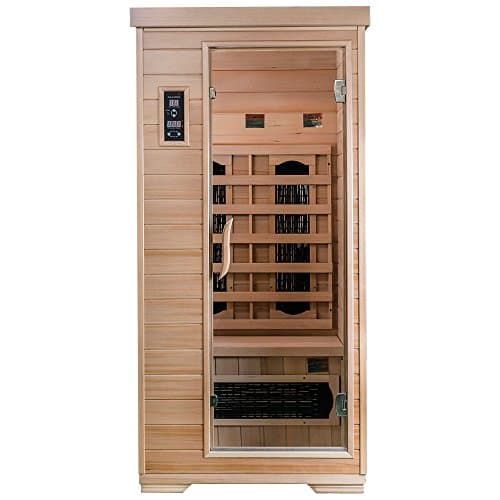
SaunaMed 1 person hemlock infrared sauna review: 1.4kW on a 13A plug, 65°C max, 90cm footprint, real running costs and how it compares with cheaper options.
Best Exercise is a participant in the Amazon EU Associates Programme, an affiliate advertising programme designed to provide a means for sites to earn advertising fees by advertising and linking to Amazon.co.uk. As an Amazon Associate we earn from qualifying purchases. This comes at no extra cost to you and never influences our independent reviews or rankings.