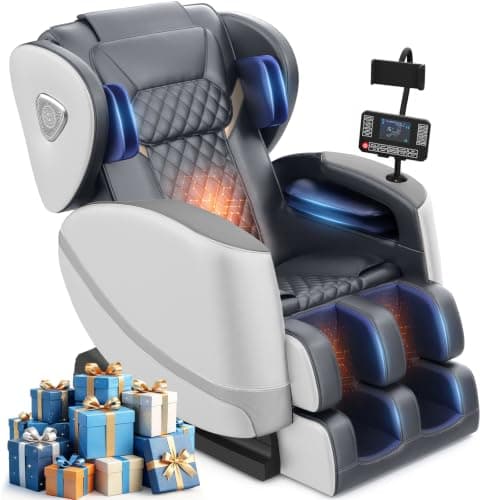
Recovery
FURNIMAT Zero Gravity Massage Chair Review: Fixed Nodes for £470
Our FURNIMAT massage chair review of the £470 zero gravity model: 14 fixed nodes, 8 airbags, heat and 165 degree recline, plus a footrest that suits shorter users.

By Mike Shilling, Recovery & Training Editor · Updated 14 October 2026
If you want the health effects the research actually describes, a traditional sauna is the better choice, because almost every long-term study of sauna use, including the big Finnish cohort data on heart health, used hot Finnish rooms at 80°C or more. If you want a heat habit you'll actually keep at home, infrared usually wins: it's cheaper, plugs into a normal socket, and the gentler 45°C to 65°C air means you can sit in it for 30 minutes without feeling cooked. Neither one detoxes you or melts fat.
That's the short answer. The rest of this guide covers how each one heats you, what the evidence supports and doesn't, and what each option costs to put in a UK home.
| Traditional (Finnish) sauna | Infrared sauna | |
|---|---|---|
| How it heats | A stove (wood or electric) heats the air and rocks; the hot air heats you | Panels emit infrared radiation that warms your skin directly |
| Air temperature | Roughly 80°C to 100°C | Roughly 45°C to 65°C |
| Humidity | Low, rising in bursts when you throw water on the stones (löyly) | Low and constant |
| Typical session | 10 to 20 minutes, repeated 2 or 3 times | 20 to 40 minutes, one sitting |
| Time to a full sweat | A few minutes | Often 10 to 15 minutes |
| Long-term evidence | Large Finnish cohort studies over 15 to 20+ years | Small trials, mostly short-term or in patients |
| Home options | Timber cabin, barrel or garden sauna with a stove | Tent, blanket or small timber cabin |
| Home cost | Usually several thousand pounds installed | Around £200 to £260 for a tent, roughly £900 for a cabin |
| Power | Electric stoves often 4.5kW to 9kW, dedicated circuit | Usually 1kW to 2kW on a 13A plug |
A traditional sauna works by heating air. The stove gets the room to somewhere between 80°C and 100°C, and that air transfers heat to your skin. Throw a ladle of water on the stones and the humidity spikes for a minute, which is why that burst of steam feels so much hotter than the thermometer reading suggests.
An infrared sauna skips most of the air and aims radiation at you instead. The panels warm your skin and the layers just beneath it, so the room can stay at 45°C to 65°C and you still end up sweating hard. Manufacturers like to say this heat goes "deep into the muscles". A 2025 study tested that by inserting temperature probes into the thighs of 10 adults during a 45 minute far infrared session: the muscle closest to the skin warmed by about 3°C, the deepest probe at 3.4cm by only about 1°C, and core temperature didn't change at all (muscle temperature during far infrared sauna). The authors' conclusion was that commercial infrared saunas provide mostly superficial heating.
That doesn't make infrared feeble. Run one hot enough and it does load your body properly; our infrared sauna benefits guide covers a 2026 study at 65°C where core temperature and heart rate climbed substantially. The difference is that a Finnish room gets you there in a fraction of the time.
The first thing most people notice in a Finnish sauna is that breathing feels hot. Your face and ears take the brunt of it, and 12 to 15 minutes is plenty for a first round. Then you get out, cool down (a cold shower or a jump in the lake if you're actually in Finland), and go back in. That in-and-out rhythm is a big part of the experience.
Infrared feels more like sitting in strong sunshine; the air is comfortable to breathe, and the heat builds on your skin rather than hitting you in the face. You'll sweat more slowly, so sessions stretch to 30 or 40 minutes. Plenty of people who can't stand a Finnish sauna get on fine with infrared, and that matters more than it sounds. The heat habit you'll stick to three times a week beats the one you avoid.
This is where the two part ways most clearly.
The strongest sauna data comes from the Kuopio Ischaemic Heart Disease (KIHD) study in eastern Finland, led by Jari Laukkanen. In one analysis of 1,688 men and women aged 53 to 74, followed for a median of 15 years, people who used a sauna four to seven times a week had a much lower risk of dying from cardiovascular disease than those who went once a week, even after adjusting for physical activity, income and established risk factors (sauna bathing and cardiovascular mortality in men and women). The risk fell steadily as frequency went up, with no obvious threshold. It's observational, so people who sauna a lot may differ in ways the researchers couldn't measure, but it's consistent with the earlier KIHD work in men.
Every one of those participants was using a traditional Finnish sauna. None of it tells you what an infrared tent at 55°C does over 15 years, because nobody has studied that.
Infrared does have its own evidence; it's just smaller and narrower. Japan has used a form of infrared sauna called Waon therapy in heart failure patients for years. A systematic review of sauna use in heart failure found only infrared trials met its criteria; across seven studies, 15 minutes at 60°C, five times a week for two to four weeks, improved some markers of cardiac function, though it didn't shift blood pressure and the strength of evidence ranged from moderate to insufficient (sauna bathing and heart failure meta-analysis). Those are patients in supervised clinical settings, not healthy people at home. For recovery from training, the infrared trials are small and mixed, which we break down in should you use a sauna after a workout.
So the honest scorecard: traditional saunas have decades of population data and a plausible link to heart health. Infrared has promising short-term clinical results and a stack of marketing claims that run well ahead of them.
Here's where infrared earns its popularity in the UK.
A proper Finnish sauna at home means a timber room, a stove and, for electric heaters, usually a dedicated circuit, since common domestic heaters run from about 4.5kW to 9kW. Wood-fired garden and barrel saunas avoid the wiring but bring a flue, a chimney and the faff of lighting a fire. Either way, expect several thousand pounds once it's built, plus 30 to 45 minutes of preheating before every session.
Infrared splits into three formats:
Running costs for a portable unit are small. A 1,000W tent for 30 minutes uses half a kilowatt hour, so even at 25p a unit it's around 13p a session. Our best home sauna UK guide does that sum for cabins too.
If you want an infrared tent where your whole body, head included, sits inside the heat, the CONLONS is the one we'd point most people towards. It runs to about 60°C, which is warm for a tent, and our CONLONS infrared sauna tent review covers its build and safety gaps.
Check price on Amazon£215.99Taller users or anyone wanting more legroom should look at the Smartmak instead; it costs more but gives you a roomier frame, as our Smartmak portable infrared sauna review explains.
Check price on Amazon£253.49Lower air temperature doesn't make infrared risk-free. Both types raise your heart rate, drop your blood pressure as vessels in the skin open up, and drain fluid through sweat, which is why dizziness on standing up is the classic sauna problem whichever kind you're in.
The rules carry over:
One practical difference: infrared tents and blankets are cheap electrical heating products used next to sweaty skin. Check the cable before each use, keep the controller dry, and never fall asleep in one.
Pick a traditional sauna if you have access to one at a gym, spa or leisure centre, you like intense heat, and you're interested in the cardiovascular associations from the Finnish research. If you can get to a Finnish sauna three or four times a week, that's the option with the strongest evidence behind it.
Pick infrared if you want heat at home without spending thousands or rewiring anything, you find 85°C air unpleasant, or you mainly want a wind-down and soreness tool after training. Just buy it for what it does well rather than for mortality statistics it was never tested against.
If you're also deciding between dry heat and wet heat, our sauna vs steam room comparison covers that. And if you plan to pair heat with cold water, read up on contrast therapy before you start alternating. More heat, cold and massage options sit in the recovery hub.
Not on the evidence. The large studies linking regular sauna use to lower cardiovascular mortality all used traditional Finnish saunas at around 80°C or hotter. Infrared saunas are gentler, cheaper to put in a house and easier to sit in for longer, so they win on practicality. If you have access to both, the traditional sauna is the better-studied choice.
Usually more in a traditional sauna per minute, because the air is far hotter. Infrared users often sweat just as much in total, but it takes longer to get going, typically 10 to 15 minutes before a proper sweat starts, so sessions run longer to compensate.
A traditional sauna session is normally 10 to 20 minutes per round, often repeated two or three times with a cool-down between. Infrared sessions run longer, usually 20 to 40 minutes in one go, because the air is 45°C to 65°C rather than 80°C to 100°C.
Less than the marketing suggests. A 2025 study put temperature probes into the thigh muscles of people sitting in a far infrared sauna for 45 minutes. Muscle temperature rose by about 3°C near the surface but only about 1°C at 3.4cm deep, and the researchers concluded the heating was mostly superficial.
Yes, by a wide margin. Portable infrared tents draw roughly 1,000W to 1,500W and plug into a normal socket, so a 30 minute session costs pennies. An electric Finnish sauna heater is commonly 4.5kW to 9kW, needs a long preheat and usually a dedicated circuit fitted by an electrician.
Anyone pregnant, with a heart condition, very low blood pressure or on blood pressure medication should speak to their GP before using either kind. Never drink alcohol before or during a session, and skip it if you're ill, dehydrated or have just eaten a big meal.
Our FURNIMAT massage chair review of the £470 zero gravity model: 14 fixed nodes, 8 airbags, heat and 165 degree recline, plus a footrest that suits shorter users.
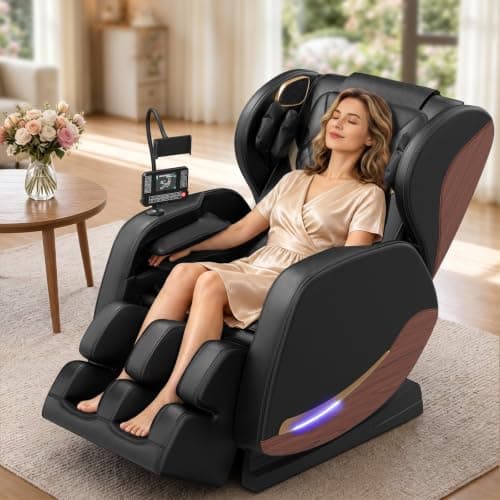
Our yewglen massage chair review: 14 fixed rollers, 8 airbags, back and leg heat, 165 degree recline and a 175cm height cap, compared with rival budget chairs.
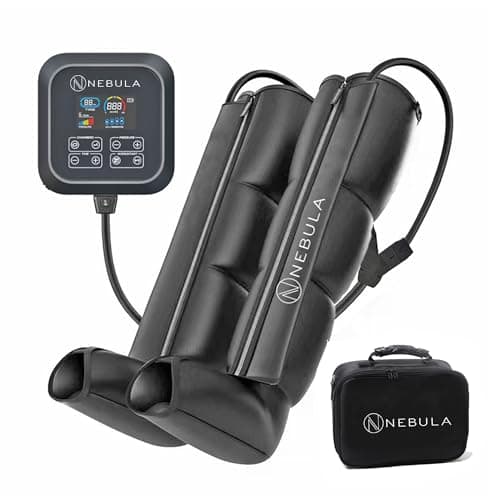
Our Nebula compression boots review: 6 modes, 30 to 260 mmHg, a 90 minute timer and mains power for £229.99. How they compare with Normatec 3 and FIT KING.
WHOOP vs Apple Watch compared for UK buyers: WHOOP 5.0 and MG memberships against the Apple Watch Series 12, SE 3 and Ultra 4. Battery, recovery, HRV, sleep, GPS, accuracy research and the real cost over three years.
Best Exercise is a participant in the Amazon EU Associates Programme, an affiliate advertising programme designed to provide a means for sites to earn advertising fees by advertising and linking to Amazon.co.uk. As an Amazon Associate we earn from qualifying purchases. This comes at no extra cost to you and never influences our independent reviews or rankings.