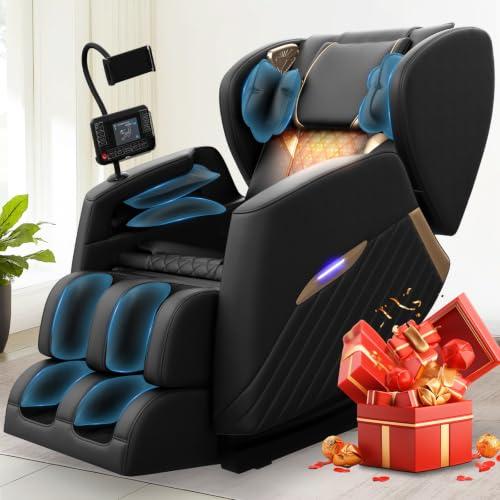
Recovery
Srfzluxy Massage Chair Review: 14 Fixed Rollers and Zero Gravity for £440
Our Srfzluxy massage chair review: 14 fixed rollers, 8 airbags, lower back heat and a 105 to 165 degree recline for £439.99, plus what the listing leaves out.

By Mike Shilling, Recovery & Training Editor · Updated 23 November 2026
Most massage guns come with four to six heads, and most owners use one of them. That's a shame, because each shape does a different job, and picking the wrong head is the most common reason a massage gun feels either useless or painful. A ball suits a quad; a bullet on the same muscle feels like being prodded with a broom handle. Below is every common massage gun attachment, what it's for, where to use it and (just as important) where not to, plus a quick muscle-by-muscle table at the end.
If you're new to the devices themselves, our guide on how to use a massage gun covers speed, pressure and technique. This page is purely about the heads.
The one-line answer
Start with the large ball on every big muscle. Swap to the flat head for dense or bony-edged areas, the fork for the muscles beside the spine, and the cushion for anywhere sensitive. Save the bullet and thumb for short bursts on a single tender spot.
A massage gun delivers the same stroke whatever's on the end. What the attachment changes is the contact area, and that decides how concentrated the force is. Shrink the head from a golf ball to a fingertip and the pressure on that patch of tissue rises sharply, even though the motor hasn't changed at all. Softer materials absorb some of each stroke, too, which is why a foam cushion feels gentle on the same speed setting that makes a metal head feel brutal.
So the logic is simple: big, soft heads for big or sensitive areas, small, hard heads for small, specific spots, and always the lightest option that does the job.
The round ball is the default for good reason. It's broad, forgiving and rolls over the contours of a muscle rather than digging in, so it works on quads, hamstrings, glutes, calves, lats, pecs and the upper back. Larger balls spread the load further and suit the biggest muscle groups; smaller ones are a touch more focused.
Avoid: bony areas like the shin, kneecap or collarbone, where there's no muscle to absorb the impact.
A flat disc, sometimes slightly domed, that spreads force evenly across its face. It's the all-rounder for denser muscle and areas where bone sits close beneath the skin, so the chest, the front of the shoulder, the outer thigh and the broad upper back all suit it. Several brands call it the "standard" head.
Avoid: working the edge of the disc into the tissue; keep the face flat to the skin or it behaves like a much smaller head.
A narrow, pointed tip that funnels the whole stroke into a fingertip-sized patch. It's for a specific tender point: a knot deep in the glute, the arch of the foot, the fleshy part of the forearm or the palm. Our guide to muscle knots explains why chasing every sore spot isn't always the right move.
Avoid: the spine, the neck, joints, bone, and anywhere with nerves or blood vessels near the surface, such as the inner elbow, armpit, groin and the back of the knee. Use the lowest speed and keep each burst to around 10 to 15 seconds. This is the head that causes most of the bruising people complain about.
Two prongs with a gap between them. The gap is the whole point: you run the fork down your back so the spine sits in the channel and each prong lands on the erector muscles either side. It also works on the Achilles area from behind (prongs either side of the tendon, never on it) and along the neck muscles at the back, on a low speed.
Avoid: putting either prong on the spine itself. The fork straddles the spine; it never sits on it.
A soft, larger head, often made of softer foam or with an air-filled chamber, designed to take the sting out of each stroke. It's the one for bony or sensitive areas, for older users, for anyone new to percussion, and for the back of the neck and the tops of the shoulders. Therabody calls its version the dampener; Hyperice and many budget brands call theirs the cushion.
Avoid: expecting deep work from it. On a big, dense glute it'll feel pleasant but won't do much.
Shaped like a thumb pad, this mimics the pressure a massage therapist applies with their thumb. It's more focused than the flat head and less aggressive than the bullet, so it suits trigger points in the traps, the lower back muscles (not the spine), the glutes and the soles of the feet.
Avoid: the same places as the bullet. Short bursts only.
A flattened blade shape that comes in two flavours of use. Run the thin edge across a muscle to "scrape" along the length of the fibres, or use the broader side to work into the space between muscles. It's handy on the IT band area at the side of the thigh, the hamstrings, the shoulder blades and the calves. Therabody's Theragun Pro ships with a wedge, as does the Hypervolt 3.
Avoid: jamming the thin edge into bone or the outer knee; keep it on muscle and keep it moving.
The newest category. A heated head warms the contact surface while it percusses, and a cold head (sold separately by Therabody as a "Plus" attachment) does the reverse. Therabody says its Heated Percussive Plus head on the Theragun Mini Plus reaches up to 55°C across three settings, and the Hypervolt 3 includes a heated head in the box that charges separately over USB-C.
Heat is a comfort aid, and it makes cold, stiff tissue more pleasant to work on before training or on a winter morning. It isn't a treatment in its own right. Cold heads are a gentler, more portable version of an ice pack after a session.
Avoid: heat on a fresh injury or swelling, on numb skin, and for anyone with reduced sensation (such as some people with diabetes or neuropathy), because you may not feel it getting too hot. Don't park a heated head on one spot.
What the head is made of changes the feel nearly as much as the shape.
Open-cell foam heads, found on some very cheap guns, soak up sweat and are hard to clean properly. If you share a gun or use it after training, closed-cell foam, plastic or metal is the better bet.
This is where people waste money. Theragun, Hyperice and budget brands each use their own fitting, and they don't cross over. A Theragun head won't fit a Hypervolt, and the cheap multi-packs sold as "universal" usually fit only a particular style of generic gun.
Compatibility can break within a brand, too:
The rule is to buy the head from the device maker, or from a third party that names your exact model and generation. "Fits most massage guns" is not a compatibility list.
| Area | Best head | Alternative | Time per area |
|---|---|---|---|
| Quads | Large ball | Flat | 60 to 120 seconds |
| Hamstrings | Large ball | Wedge | 60 to 120 seconds |
| Glutes | Large ball | Thumb or bullet on one spot (10 to 15 seconds) | 60 to 120 seconds |
| Calves | Ball | Flat or wedge | 60 to 90 seconds |
| Outer thigh (IT band area) | Flat | Wedge, low speed | 30 to 60 seconds |
| Feet (soles) | Bullet or thumb | Small ball | 20 to 30 seconds |
| Muscles beside the spine | Fork | Ball, off the spine | 60 seconds |
| Upper back and shoulder blades | Flat | Ball or wedge | 60 to 90 seconds |
| Traps and back of neck | Cushion or dampener | Flat, lowest speed | 30 to 60 seconds |
| Chest | Flat | Ball | 30 to 60 seconds |
| Lats | Ball | Flat | 60 seconds |
| Forearms | Bullet or thumb, low speed | Small ball | 30 seconds |
| Biceps and triceps | Ball | Flat | 30 to 60 seconds |
These times assume the head is moving the whole time, gliding slowly along the muscle. Smaller and harder heads need less time, not more.
Thirty seconds to two minutes per muscle group covers almost every situation. Before training, keep it short (30 to 60 seconds on a low speed) so it loosens things up without taking the edge off your strength. After training or on a rest day, you can work more slowly, up to two minutes on a big muscle group.
The evidence for that kind of short session is reasonable, if not yet definitive. A study using a Hypervolt found a five-minute percussive treatment on the calf muscles improved ankle range of motion without reducing strength, and a 2023 systematic review of 13 studies concluded that massage gun use can acutely improve strength, power and flexibility and reduce musculoskeletal pain, while noting that every included study had methodological limitations. None of the research tells you which head works best, so the guidance here is about comfort and safety, not a proven performance edge.
Whichever attachment you pick, keep it off:
If you're pregnant, take blood thinners, or have a condition such as osteoporosis, neuropathy or a history of clots, check with your GP or a physiotherapist first. For back and leg nerve pain specifically, read our piece on whether a massage gun helps sciatica before reaching for the bullet.
Probably not. A ball, a flat head, a fork and a cushion cover nearly everything; the bullet and thumb are nice for the odd stubborn spot. If your gun came with those four, extra heads are a want rather than a need. The exception is heat: if you train early on cold mornings or carry tension in your neck and shoulders, a heated head is the one add-on we think makes a noticeable difference to how often people actually use the gun.
If you're choosing a gun partly on its attachments, the Theragun Elite comes with five (dampener, ball, thumb, cone and standard), which covers the essentials, and the RENPHO includes a ball, flat, bullet, fork and air cushion at a fraction of the price.
Check the Theragun Elite price on AmazonFor a wider comparison, our best massage gun UK guide ranks the current options, and the recovery hub covers foam rollers, compression and other tools.
The large ball. It spreads the force over a wide area, suits every big muscle group (quads, hamstrings, glutes, calves, lats) and is the hardest head to hurt yourself with. If you only ever use one head, make it the ball, and reach for the others only when you have a specific reason.
For the muscles either side of your spine, use the fork (sometimes called the U or spinal head) so each prong sits on the muscle and the gap sits over the spine. For the broad muscles of the upper back and the lats, the ball or flat head is fine. Never run any head directly down the bony ridge of the spine.
No. Theragun, Hyperice and budget brands all use their own fittings, and they are not cross-compatible. Even within one brand, generations can differ: Hyperice says its Hypervolt Applicator Set fits the Hypervolt 1 and 2 lines but not the Hypervolt 3 line. Always check the compatibility list on the attachment before buying.
The bullet (or cone) concentrates all the force into a fingertip-sized point, so it is for small, specific spots: a tender point in the glute, the arch of the foot, the meaty part of the forearm. Use it on the lowest speed for short bursts of around 10 to 15 seconds, and keep it well away from bone, joints, the spine and the neck.
Around 30 to 120 seconds per muscle group, keeping the head moving the whole time. Smaller, more pointed heads need less time, so a bullet or thumb session on one spot should stay under 30 seconds. Two minutes on any single area is plenty.
Only on the muscles at the back and the top of the shoulders, with the soft cushion head on the lowest speed. Never use it on the front or sides of the neck, where the carotid and vertebral arteries run. A 2025 case report linked a vertebral artery dissection and stroke to an electric massager used on the neck, which is a good reason to stay well clear.
Our Srfzluxy massage chair review: 14 fixed rollers, 8 airbags, lower back heat and a 105 to 165 degree recline for £439.99, plus what the listing leaves out.
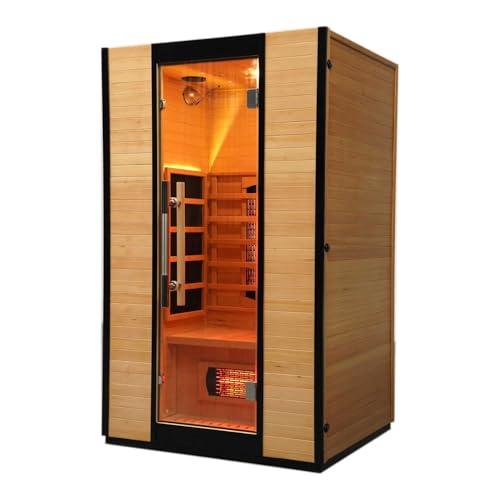
Vidalux Platinum 2 person full spectrum sauna review: 2,300W on a plug socket, 65°C max, hemlock cabin, running costs and why Amazon's £2,195 needs checking.
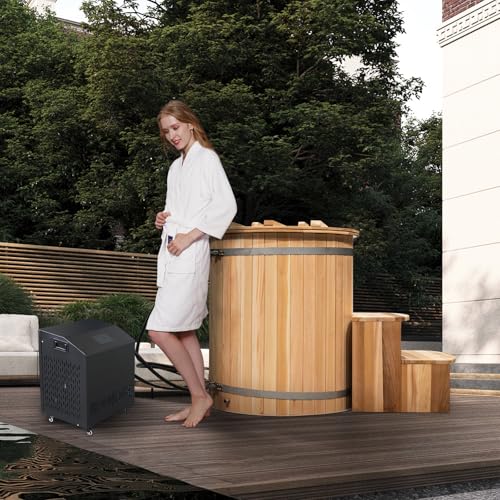
Our Smartmak red cedar cold plunge review: 1HP chiller, 3 to 42°C, WiFi and ozone/UV, plus running costs, floor load, power and a 4 to 5 week wait.
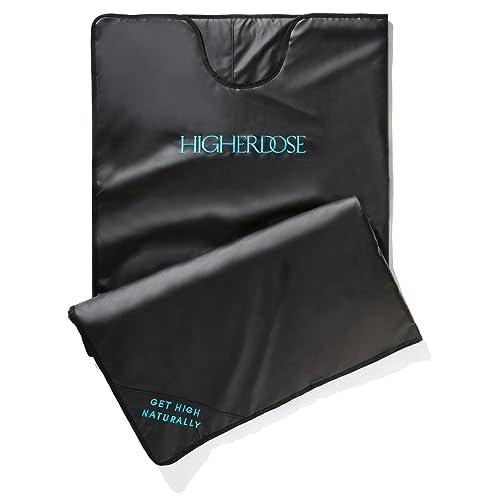
Our HigherDOSE sauna blanket review: heat, size, build and the detox claims checked against the evidence, plus why £1,246 on Amazon UK is hard to defend.
Best Exercise is a participant in the Amazon EU Associates Programme, an affiliate advertising programme designed to provide a means for sites to earn advertising fees by advertising and linking to Amazon.co.uk. As an Amazon Associate we earn from qualifying purchases. This comes at no extra cost to you and never influences our independent reviews or rankings.