Home Gym
Leg Machines at the Gym: Every Machine Named and Explained
Every common leg machine at the gym named and explained: what each one trains, a beginner leg machine workout, and which leg machines make sense for a home gym.

By Paul Kendrick, Cardio & Endurance Editor · Updated 27 October 2026
Buy an Apple Watch if you have an iPhone and want a real smartwatch: apps, Apple Pay, the widest health feature list and no subscription for the core data. Buy a Fitbit if you're on Android, you want close to a week between charges, or your budget stops under £100. That's the whole decision for most people, and the iPhone question settles it before anything else does.
Everything below is the detail behind that answer, model by model, so you can see where the line falls for you.
How we compared them
This guide uses Apple's UK comparison page and store prices, Google's UK Store spec pages and Google Health Premium page (all checked on 27 October 2026), current Amazon UK prices and published validation studies. We haven't worn these watches side by side, so battery and accuracy figures from Apple and Google are treated as manufacturer claims.
Apple's UK store lists three watches: the SE 3 from £219, the Series 12 from £369 and the Ultra 4 from £749. Apple's own Apple Watch comparison page has the full feature breakdown.
On the Fitbit side we're sticking to the three models we've reviewed in depth. The Inspire 3 is a slim band at around £60 on Amazon. The Charge 6 adds built-in GPS and an ECG app for around £105 (Google's own store charges £139.99, so Amazon is the cheaper route). The Versa 4 is the watch-shaped one at around £179.
So the price overlap is tiny. The dearest Fitbit here costs less than the cheapest Apple Watch, which tells you the two brands aren't really chasing the same buyer.
| Fitbit (Inspire 3, Charge 6, Versa 4) | Apple Watch (SE 3, Series 12, Ultra 4) | |
|---|---|---|
| Price | Around £60 to £179 on Amazon UK | £219 to £749 on Apple's UK store |
| Phone | iPhone (iOS 16.4+) or Android (11+) | iPhone 11 or later only |
| Battery (claimed) | Inspire 3 up to 10 days, Charge 6 up to 7 days, Versa 4 6+ days | SE 3 18 hours, Series 12 24 hours, Ultra 4 50 hours |
| GPS | Built in on Charge 6 and Versa 4; Inspire 3 uses your phone | Built in on all; L1 on Series 12, dual-frequency L1 + L5 on Ultra 4 |
| ECG | Charge 6 only | Series 12 and Ultra 4, not SE 3 |
| Blood oxygen | SpO2 on all three | Series 12 and Ultra 4, not SE 3 |
| Payments | Google Wallet on Charge 6 and Versa 4 | Apple Pay on all |
| Third-party apps | None | Full App Store |
| Subscription | Google Health Premium from £7.99/month for Readiness and coaching | None needed for core data; Fitness+ optional at £9.99/month |
Google rates the Charge 6 at up to seven days and the Versa 4 at 6+ days. Both drop to roughly three or four days if you switch on the always-on display or log GPS runs most days, which is still a long way ahead of Apple. The Inspire 3 goes furthest at up to 10 days because it has no GPS radio to feed.
Apple rates the SE 3 at 18 hours and the Series 12 at 24 hours. Low Power Mode stretches those to 32 and 38 hours, but in real life you're charging every day. Fast charging makes that easier than it sounds: Apple says 15 minutes on the puck gives the Series 12 up to 12 hours, so a top-up during breakfast keeps sleep tracking going overnight. The Ultra 4, at up to 50 hours (84 in Low Power Mode), is the only Apple Watch that survives a weekend.
If you've abandoned sleep tracking before because the watch was always flat at bedtime, that's a strong vote for Fitbit.
The upfront cost favours Fitbit heavily. A Charge 6 at around £105 costs less than half an SE 3, and it brings GPS, an ECG app and Google Wallet with it.
The running cost is where Fitbit claws some of that back for Google. The Fitbit app is now the Google Health app, and Google sells Google Health Premium from £7.99 a month on its Google Health Premium page, with three months included when you buy a new Fitbit. Premium unlocks the Daily Readiness score, the detailed stress breakdown, most guided content and Google's Gemini-based coaching. The free tier still covers steps, heart rate, sleep stages, GPS workouts and Active Zone Minutes, and plenty of owners never pay.
Apple doesn't gate any of its tracking. Sleep score, Vitals, the ECG app, cardio fitness and (on the Series 12 and Ultra 4) the new Recovery features come with the watch. Apple Fitness+ costs £9.99 a month after the trial, but that's a library of guided workouts, not a key to your own data.
Do the sums before you decide. A Charge 6 plus two years of Premium at £7.99 a month comes to about £275 after the free three months, which is more than an SE 3 bought outright. Skip Premium and the Fitbit stays far cheaper.
Most of the independent research uses older models, so treat it as a guide to how each brand's sensors behave rather than a verdict on this year's hardware.
The best-known head-to-head is a Stanford study of seven wrist devices, including an Apple Watch and a Fitbit Surge, tested against chest-strap telemetry and indirect calorimetry (Shcherbina et al., 2017). The Apple Watch had the lowest overall error for both heart rate and energy expenditure. The more useful finding for anyone buying either brand: no device estimated calories to within 20%, so don't plan meals around the number on your wrist.
A 2021 free-living study had people wear a Fitbit Charge 2, Fitbit Alta and Apple Watch 2 for 24 hours (Bai et al., 2021). Both the Charge 2 and the Apple Watch gave reasonable heart rate estimates, with error across the monitors ranging from 4% to 16%, and all three counted steps fairly accurately. Accuracy was better at rest than during harder activity, which is true of every optical wrist sensor.
The practical upshot is that you won't notice a meaningful accuracy difference day to day. If you train by heart rate zones and want precise numbers, pair either brand with a chest strap.
The Charge 6 and Versa 4 have built-in GPS plus GLONASS, so you can leave the phone at home and still get pace, distance and a route map afterwards. Our Charge 6 review notes it can take 20 to 40 seconds to lock on, and neither Fitbit shows a map or breadcrumb trail while you run. The Inspire 3 has no GPS chip; it borrows your phone's location.
Every Apple Watch has GPS. The Series 12 uses precision L1 GPS and the Ultra 4 adds the L5 band for better tracks among tall buildings and trees. You also get live pace, heart rate zones and custom workouts on a screen big enough to read mid-run, and the SE 3 has 64GB of storage for offline music and podcasts. The Versa 4 has no music storage at all.
For casual runners either brand works. Anyone training for a half or full marathon should look past both; Garmin's watches last days on a charge and work with Android or iPhone, and our best Garmin watch guide covers which one to pick.
This is Apple's biggest lead. The Apple Watch runs a full App Store, answers calls, replies to messages, works with Apple Pay everywhere contactless is accepted, and handles Siri requests on the wrist.
Fitbit went the other way. Google removed third-party apps and Wi-Fi from the Versa 4 compared with the Versa 3, so you get Google Wallet, Google Maps directions, notifications and Bluetooth calls, and that's roughly it. The Charge 6 and Inspire 3 are trackers first; they show notifications, but nobody buys them to reply to messages.
If you'd use a smartwatch for more than fitness, there's no real contest here.
Apple's list is longer, especially on the Series 12. It has the ECG app, blood oxygen, irregular rhythm notifications, hypertension notifications, sleep apnoea notifications, sleep score and the Vitals app tracking overnight heart rate, respiratory rate, wrist temperature, blood oxygen and HRV. The SE 3 keeps sleep score, sleep apnoea notifications and wrist temperature but drops ECG, blood oxygen and hypertension notifications.
Fitbit has always been strong on sleep, and its Sleep Score and sleep stages are free. The Charge 6 has an ECG app and an EDA Scan app for stress, and all three Fitbits track SpO2. The Versa 4 doesn't have ECG, which is an odd gap given the cheaper Charge 6 does.
Android users can skip half this list, since no Apple Watch will pair with their phone. If you're torn between a screenless band and an Apple Watch instead, our WHOOP vs Apple Watch comparison covers that choice.
For an iPhone owner with £219 to spend, the Apple Watch SE 3 is the better product: it's a full smartwatch, it needs no subscription, and Apple's health features are broader. For everyone else, and for anyone who resents charging a watch every day, the Fitbit Charge 6 is the one to buy. It costs well under half as much, tracks the things most people actually look at, and runs for most of a week.
Check the Fitbit Charge 6 price on Amazonaround £105 Check the Apple Watch SE 3 price on Amazonaround £196Prices on Amazon UK move often, so check the current figure before you buy.
If you own an iPhone and want a proper smartwatch, the Apple Watch is better: more apps, Apple Pay, a bigger health feature list and no subscription needed for the core data. Fitbit is better if you use Android, want a week of battery, or want to spend under £100. For pure step, sleep and heart rate tracking on a budget, the Fitbit Charge 6 is the smarter buy.
Yes. Fitbit devices set up through the Google Health app, which Google says runs on iOS 16.4 or later and Android 11 or later. You'll need a Google account. The Apple Watch is the one with the restriction: the Series 12, SE 3 and Ultra 4 all need an iPhone 11 or later, and none of them work with Android.
No, but some features are paywalled. Steps, heart rate, sleep stages, GPS workouts and Active Zone Minutes are free in the Google Health app. Google Health Premium, from £7.99 a month on the Google Store, adds the Daily Readiness score, deeper sleep and stress analysis and Gemini-based coaching. New Fitbits come with three months free.
Fitbit, by a wide margin. Google rates the Charge 6 at up to 7 days, the Versa 4 at 6+ days and the Inspire 3 at up to 10 days. Apple rates the SE 3 at 18 hours and the Series 12 at 24 hours, so you'll charge those daily. Only the Ultra 4, at up to 50 hours, gets past two days.
For heart rate the gap is small. A Stanford study of seven wrist devices found the Apple Watch had the lowest overall heart rate and calorie error, but that 2017 paper tested an early Apple Watch against a Fitbit Surge, so it says little about today's models. Both brands track resting heart rate and steps reasonably well, and both are poor at calories.
Every common leg machine at the gym named and explained: what each one trains, a beginner leg machine workout, and which leg machines make sense for a home gym.
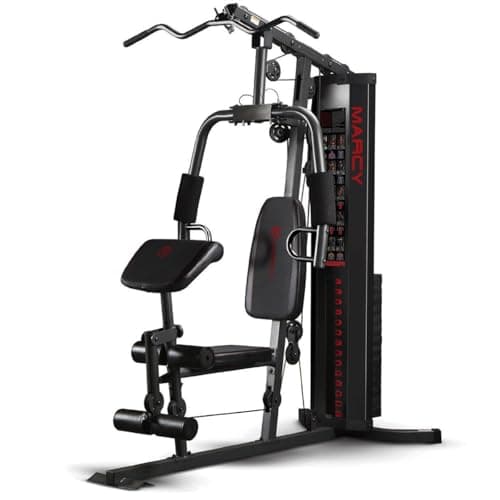
Our Marcy HG3000 multi gym review: the 68kg stack versus the 90kg claim, pec dec, preacher pad, leg extension, 210cm height, £599 price and who it suits.
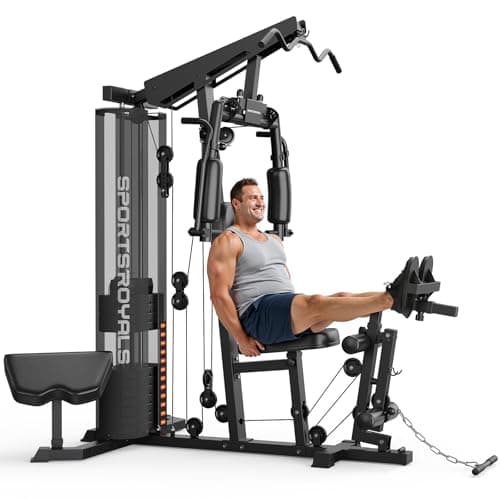
SPORTSROYALS home gym review: the 68kg stack, leg press and chest fly stations, 191 x 131cm footprint, 142kg build, £759.99 price and who it suits in the UK.
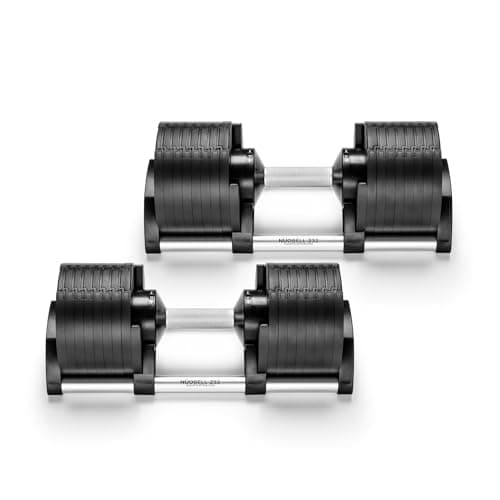
The best adjustable dumbbells in the UK for 2026, from quick-dial sets to heavy 40kg and 50kg options. Budget to premium picks researched and ranked.
Best Exercise is a participant in the Amazon EU Associates Programme, an affiliate advertising programme designed to provide a means for sites to earn advertising fees by advertising and linking to Amazon.co.uk. As an Amazon Associate we earn from qualifying purchases. This comes at no extra cost to you and never influences our independent reviews or rankings.