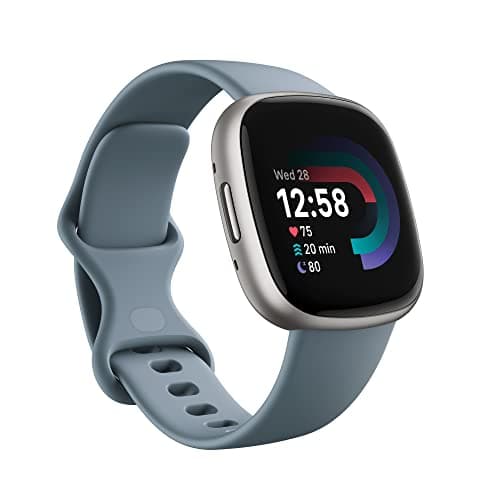
The Fitbit Versa 4 is a good fitness watch that used to be a better smartwatch. For £179 on Amazon UK you get built-in GPS, a bright AMOLED screen, Google Wallet, Google Maps directions and a battery Google rates at 6+ days, in a case that weighs under 38g and is easy to sleep in. What you don't get is what the Versa 3 had: third-party apps and Wi-Fi are gone, and there's still no music storage. If you mostly want steps, sleep, heart rate and the odd GPS run on a proper screen, it's a solid buy. If you want a wrist computer, it isn't.
Google launched the Versa 4 in 2022 and hasn't replaced it, which tells you something about where it sits. The Pixel Watch is Google's flagship now; the Versa 4 is the cheaper, longer-lasting option for people who care more about fitness data than apps. Judged on those terms we'd score it a fair 4.0, held back by software Google took away rather than hardware that falls short.
How we review
This is a research-based review. We compiled Google's official Versa 4 specifications, the Amazon UK listing and consistent patterns in verified owner feedback. We haven't run our own long-term test of this unit, so we report repeated findings, good and bad, rather than one-off claims.
At £179 it sits between the Charge 6 band and Garmin's mid-range watches, which is a crowded spot.
These come from Google's official Versa 4 tech specs page rather than the Amazon bullets, which are thinner. One detail stands out on that page: Google lists Wi-Fi as "deactivated, cannot be turned on", so the radio is physically there and switched off for good.
6+ days; 12 min fast charge for a day; 2 hr full charge
Water resistance
50 m
Smart features
Bluetooth calls, notifications, Google Maps, Google Wallet (NFC), Alexa
Exercise modes
40+
Music storage
None
Phone compatibility
iOS 16.4+ or Android 11+, Google account required
Design and screen
Fitbit's biggest fix on the Versa 4 is a small one: the physical button is back. The Versa 3 and Sense used a capacitive groove on the side that you squeezed and hoped, and plenty of owners found it registered presses they didn't make or missed ones they did. A real button that clicks makes starting a workout with sweaty fingers far less irritating, and it's the change owners mention most warmly.
The rest is familiar. It's a squircle with an aluminium case, thin at 11.2mm and light enough that you stop noticing it, which matters because the sleep data only works if you wear it every night. The AMOLED panel is bright and sharp for a watch at this price, and Google includes small and large bands in the box (130 to 180mm and 165 to 220mm wrists). Side bezels are chunky by 2026 standards, and nobody will mistake it for a premium watch, but it's comfortable, and comfort wins arguments on a fitness device.
Tracking and performance
Built-in GPS means you can leave the phone at home for a run or ride and still get pace and distance live on the wrist. Owners report the same thing they say about the Charge 6: it can take a while to lock on, so wait for the signal before you set off. There's no on-watch map or route breadcrumb, and the GPS is single-band, so dense city streets and tree cover will wobble your trace more than a multi-band Garmin's. For parkrun and canal-path rides, it's fine.
Heart rate comes from Fitbit's multi-path optical sensor. For steady cardio, resting heart rate and sleep it's dependable; for sprints and heavy lifting, like every wrist sensor, it lags. If interval accuracy matters, pair a chest strap from our best heart rate monitor UK guide, and use our heart rate zone training guide to make the numbers useful.
Treat the calorie figure with suspicion. A systematic review of 67 Fitbit accuracy studies found steps were the most trustworthy metric and energy expenditure was unlikely to be accurate in any testing condition. That's an old review of older models, and it applies to every brand's wrist estimate rather than Fitbit alone, but it's a good reason to use the Versa 4 for trends, not for counting dinner.
Sleep tracking is Fitbit's strongest suit and still the reason many people buy one. You get light, deep and REM stages, a nightly Sleep Score, SpO2 and skin temperature variation, plus Daily Readiness, which uses HRV, sleep and recent activity to suggest whether to train hard or back off. Active Zone Minutes also map neatly onto the NHS target of 150 minutes of moderate activity a week, which is exactly the kind of goal this watch suits.
Battery life
Google quotes 6+ days. In normal use, with the always-on display off and a few GPS workouts a week, owners generally get close to that; switch always-on on and you'll be charging every three or four days, and daily GPS sessions pull it down further. Fast charging is a real help: 12 minutes on the cable gives a day's use, so a quick top-up while you shower covers most mornings. It beats any Pixel Watch or Apple Watch comfortably and loses to Garmin, whose vivoactive 6 runs around 11 days.
The app, the subscription and what Google removed
This is where the score drops. Fitbit has moved everything into the Google Health app, which needs a Google account; standalone Fitbit logins no longer exist. The free tier covers steps, heart rate, sleep stages, GPS workouts, Active Zone Minutes and irregular rhythm notifications. The Daily Readiness score, the detailed Stress Management breakdown, most guided workouts and the new Gemini-based coaching sit behind Google Health Premium, and Google currently advertises three months free with a new Versa 4. Budget for the subscription if you want the watch at its best.
Then there are the subtractions. Compared with the Versa 3:
Third-party apps are gone. No App Gallery, so no Strava, Spotify controls or Uber.
Wi-Fi is switched off permanently, so syncing and updates go over Bluetooth through your phone.
Google Assistant never arrived; Alexa is the only voice assistant.
Google Maps and Google Wallet do work, and they're the best reasons to choose this over a cheaper band. Turn-by-turn directions on a 40mm screen are far easier to follow than on the Charge 6, though Maps runs off your phone, so it won't help on a phone-free run. Bluetooth calls also work through the built-in speaker and microphone when your phone is nearby.
Music is the other gap. There's no storage at all, so if you want to run with headphones and no phone, look elsewhere.
Pros
Physical button finally replaces the unreliable haptic groove
Built-in GPS + GLONASS at £179
Light 37.64 g case and thin profile suit 24/7 and overnight wear
Bright AMOLED screen, much easier to read than a band
Google Maps directions and Google Wallet contactless payments
Excellent sleep tracking with SpO2, HRV and skin temperature
6+ day battery with 12-minute fast charge for a day's use
Cons
No third-party apps and Wi-Fi permanently disabled, both downgrades from the Versa 3
No music storage
Best coaching and Readiness locked behind Google Health Premium
Single-band GPS, slow to lock and no on-watch maps
No ECG app, which the cheaper Charge 6 has
Hardware from 2022 with no clear successor
Versa 4 vs the alternatives
Fitbit Charge 6 (around £85). Same core sensors, same GPS, same Google Wallet, half the price and it adds an ECG. You give up the big screen, calls and the altimeter. If you rarely read notifications, the Charge 6 is the better value.
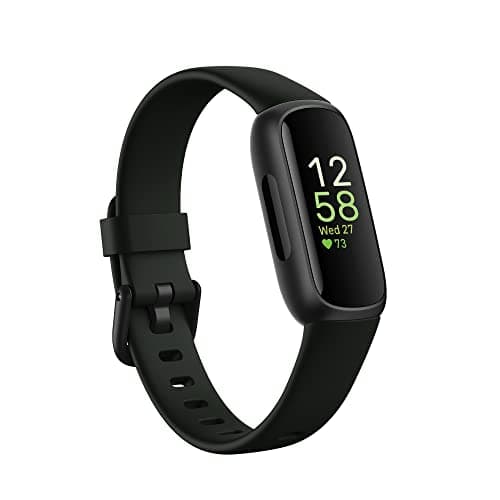
Fitbit Inspire 3. The cheapest way into Fitbit's sleep and heart tracking, with no GPS and a small screen. Choose it if you want a basic, long-lasting band and nothing more.
Garmin vivoactive 6 (around £252). About £70 more buys 8GB of music storage, roughly 11 days of battery, more sport profiles and Garmin Connect without a subscription. For anyone who runs or trains regularly, it's the better watch.
Garmin Venu 3 (around £327). A bigger step up with calls, better sleep coaching and a gorgeous screen, at nearly double the Versa 4's price.
Amazfit Balance 3 (around £370). Dual-band GPS, free offline maps and sapphire glass. Much more watch, at twice the money, with the weaker Zepp app.
If you're on Android and want a full smartwatch with apps, Google's own Pixel Watch is the obvious alternative, at a much higher price and with shorter battery life.
Who should buy it
Buy the Versa 4 if you want a screen big enough to read, sleep and health data you'll actually look at, contactless payments and occasional GPS walks or runs, and you're happy inside Google's ecosystem. It suits gym-goers, walkers and people building a habit more than anyone chasing race times.
Skip it if you want offline music, apps, serious training analytics or a device you'll keep for five years. Google's security update promise for the Versa 4 runs for at least two years after it's last sold on its store, which is reassuring for now but not a long horizon.
At around £179 it's still a sensible buy if you want a square, screen-first fitness watch with built-in GPS, sleep tracking and Google Wallet. It isn't a good buy if you want apps, offline music or a watch that will feel current for years, because the hardware dates from 2022 and Google's attention has moved to the Pixel Watch.
Can you download apps on the Fitbit Versa 4?
No. Unlike the Versa 3, the Versa 4 doesn't support third-party apps from the Fitbit App Gallery. You get Fitbit's own apps plus Google Maps, Google Wallet and Alexa, and a selection of clock faces, but nothing like Spotify control apps, Strava or Uber on the wrist.
Does the Fitbit Versa 4 store music?
No. There's no onboard music storage and no Spotify or Deezer app, so you'll need your phone or a separate player for music on runs. If phone-free music matters, the Garmin vivoactive 6 has 8GB of storage at a higher price.
How long does the Fitbit Versa 4 battery last?
Google quotes 6+ days. That holds up with the always-on display switched off and a few GPS workouts a week. Turn on always-on mode or use GPS daily and expect closer to three or four days. Fast charging gives a day of use from 12 minutes on the charger, and a full charge takes about two hours.
What's the difference between the Fitbit Versa 4 and Charge 6?
They track almost the same things: heart rate, sleep, SpO2, built-in GPS and Google Wallet. The Versa 4 adds a much larger square screen, a speaker and microphone for Bluetooth calls, an altimeter for floors climbed and Google Maps turn-by-turn on a usable display. The Charge 6 is slimmer, roughly half the price and adds an ECG app the Versa 4 lacks.
Is the Fitbit Versa 4 waterproof?
It's water resistant to 50 metres, so swimming, showering and rain are fine. Google recommends drying the band afterwards to keep your skin happy, and it isn't designed for diving.
An honest Fitbit Inspire 3 review covering its AMOLED screen, 10-day battery, sleep and heart rate tracking, connected GPS, the Premium paywall and who should buy it.
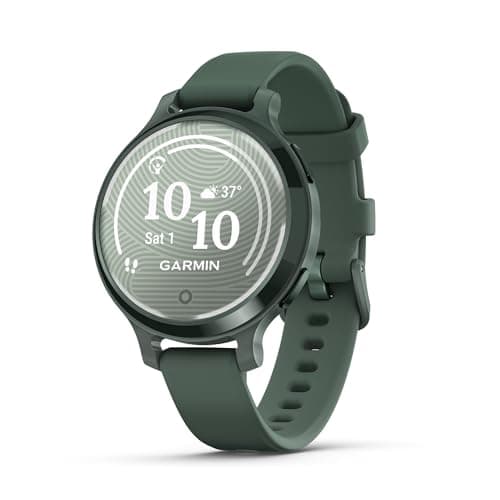
An honest Garmin Lily 2 Active review: built-in GPS on a 38mm, 29g case, 9 day battery, Garmin Pay, and the greyscale screen and missing music storage to weigh against the price.
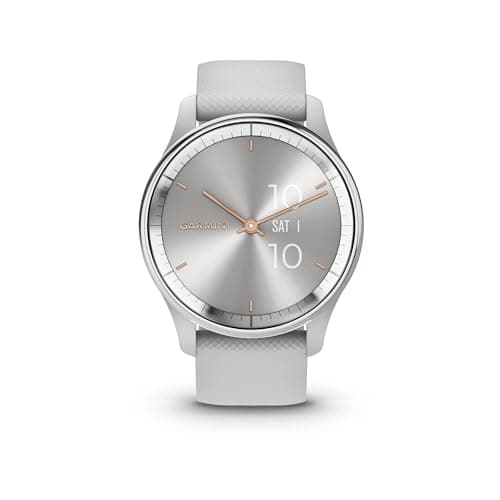
Garmin vivomove Trend review for UK buyers: analogue hands over a hidden touchscreen, Body Battery, Garmin Pay, Qi charging, and the 5 day battery and missing GPS to weigh up at £232.
How much does a Smith machine bar weigh? It varies by machine, commonly about 6kg to 20kg effective, and counterbalanced bars can be close to zero. Here's how to check yours.
Best Exercise is a participant in the Amazon EU Associates Programme, an affiliate advertising programme designed to provide a means for sites to earn advertising fees by advertising and linking to Amazon.co.uk. As an Amazon Associate we earn from qualifying purchases. This comes at no extra cost to you and never influences our independent reviews or rankings.