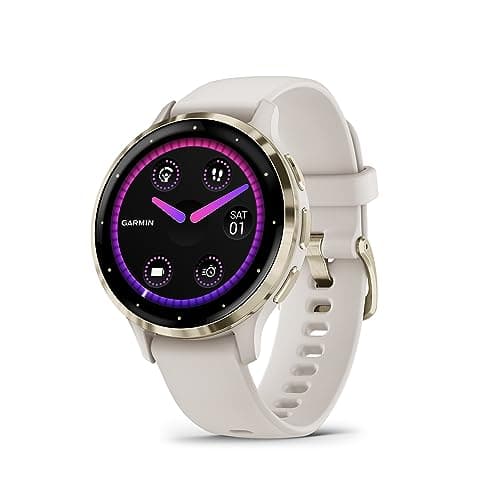
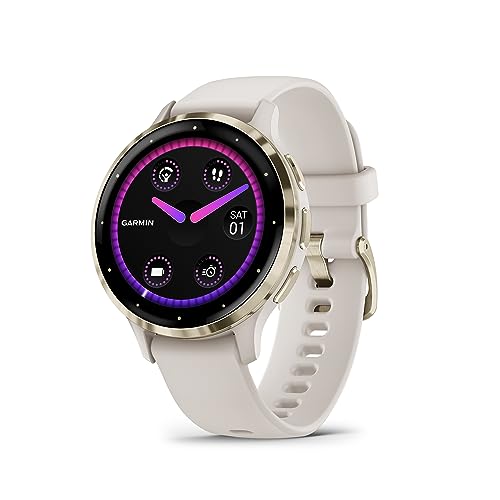
The Venu 4 arrived and, by the usual logic, that should be the end of the Venu 3S. What actually happened is that Garmin left the 3S on sale, Amazon settled it around £284, and it quietly became one of the better-value watches in the whole range. Nothing about it stopped working when its replacement shipped.
It matters more than usual here because the 3S exists for a specific reason: a 41mm case for people whose wrists are not fence posts. That group gets ignored constantly, and the alternatives are mostly compromised in ways this watch is not.
How we review
This review draws on Garmin's published specifications and support documentation, the consistent findings across long-term reviews from established fitness and wearables outlets, and recurring themes in verified owner feedback. We have not run our own six month endurance test of this exact unit, so we report what shows up repeatedly rather than one reviewer's impression. Specs and prices were correct at the time of writing.
What you get for £284
A 1.2 inch AMOLED that is bright enough to read outdoors, a stainless steel bezel over a fibre-reinforced polymer case, 5 ATM water resistance and 8GB of storage for offline Spotify, Amazon Music or Deezer playlists. There is a speaker and a microphone, so calls happen on the wrist rather than on a screen that tells you someone is calling.
The health suite is the real product. Body Battery, stress tracking, morning report, fitness age, menstrual cycle and pregnancy tracking, HRV status, plus a sleep score with actual coaching attached rather than a number and a shrug. Nap detection was new to the Venu 3 series and remains oddly rare elsewhere: doze for forty minutes on a Sunday and the watch logs it, then adjusts your Body Battery accordingly.
Over thirty sports apps cover walking, running, cycling, HIIT, pool swimming, golf and strength work with animated exercise demonstrations. Wheelchair users get push counting and wheelchair-specific activity profiles, which Garmin built into this generation and which almost nobody else offers at all.
Garmin Venu 3S key specifications
Case
41mm, stainless steel bezel, fibre-reinforced polymer case
Display
1.2in AMOLED touchscreen
Battery, smartwatch mode
Up to 10 days
Battery, always-on display
Up to 5 days
Battery, battery saver
Up to 20 days
Battery, GPS only
Up to 21 hours
Battery, GPS with music
Up to 8 hours
Health
ECG app, wrist heart rate, Pulse Ox, HRV status, Body Battery, sleep coaching with nap detection
Audio
Built-in speaker and microphone, 8GB music storage
Small watch, small battery, and Garmin still gets ten days out of it in smartwatch mode against fourteen for the 45mm Venu 3. Battery saver doubles that to twenty days. GPS-only tracking runs to about 21 hours, and playing music from the watch to Bluetooth headphones cuts that to roughly 8 (Garmin).
That music figure is the one that catches people out. Eight hours sounds plentiful until you realise it covers a fortnight of hour-long runs and nothing more, so a long weekend of tracked activity with music will want a charge partway through.
Leave the always-on display enabled and you are down to five days, which is still respectable and roughly what an Apple Watch manages in two. Gesture wake is fast enough that I would leave always-on off and take the extra week.
Sleep tracking is why you buy it
Garmin's sleep coaching went from decorative to useful with this generation. You get a sleep score, a breakdown of stages, HRV overnight, skin temperature variation, and a recommendation for how much sleep you need tomorrow given what you did today. Naps count. Body Battery updates in response rather than treating a 3pm nap as a period of sedentary shame.
None of this is medical monitoring, and Garmin does not pretend otherwise. What it does well is make patterns visible over weeks: the late finish that costs you two days of recovery, the drinks that flatten your HRV. Set against the NHS advice on why sleep matters, the value is in nudging a habit you already know you should fix.
The ECG app records a single-lead trace and looks for signs of atrial fibrillation, and it works in the UK on software 7.07 or later. It is an on-demand check that cannot see an episode at 4am. If you have palpitations or dizziness, the NHS page on atrial fibrillation is the right next step rather than a watch screenshot.
What it cannot do
No maps, and no multi-band GNSS. Positioning is single-band GPS with breadcrumb navigation, which is accurate enough on open roads and drifts in city canyons in the way every single-band watch does. If your running takes you somewhere unfamiliar or wooded, this is the wrong watch and no amount of sleep coaching compensates.
Training analysis is also mid-tier. Workout benefit and recovery time are here, but the deeper Garmin machinery, race predictions, training status, running dynamics from the wrist, sits in the Forerunner range and now in the Venu 4. The 1.2 inch display is small for reading a workout screen mid-effort, which is the honest cost of a 41mm case.
Pros
41mm case genuinely suits a smaller wrist without feeling like a compromise
Ten days of battery, twenty in battery saver, on a watch this size
Best-in-class sleep coaching with nap detection and HRV status
Speaker and microphone mean calls actually work from the wrist
ECG app supported in the UK on software 7.07 or newer
Wheelchair profiles and push counting, which most rivals ignore entirely
Around £284 now that the Venu 4 has taken over the top of the line
Cons
No onboard maps at all
Single-band GPS drifts between tall buildings
1.2in screen is cramped for mid-workout data
GPS with music lasts only about 8 hours
Training metrics stop well short of the Forerunner range
A 2023 design, so expect software support to wind down before a Venu 4 does
Who should buy it
Buy the Venu 3S if you want a health-first Garmin on a small wrist, you train indoors or on familiar routes, and you would rather spend £284 than £345. For that person the case for the Venu 4 is thin, and the sleep and recovery tracking here is the same.
Skip it if you run trails, navigate anywhere new, or want the deeper training metrics. The Garmin Venu 4 adds multi-band GNSS and a metal case; the Forerunner 265S is the better small running watch; and the Garmin Vivoactive 6 undercuts both if the health basics are all you need.
Garmin quotes up to 10 days in smartwatch mode, up to 20 days in battery saver, up to 21 hours of GPS-only tracking and about 8 hours of GPS with music playing. Turn the always-on display on and it drops to roughly 5 days. Most owners with the display set to gesture wake and a few GPS hours a week charge it weekly.
What is the difference between the Venu 3 and Venu 3S?
Case size and battery, nothing else. The 3S is 41mm with a 1.2in display and up to 10 days of battery; the Venu 3 is 45mm with a larger screen and up to 14 days. Sensors, software, sports apps and features are identical, so pick on wrist size.
Does the Garmin Venu 3S have ECG?
Yes, with software version 7.07 or newer, and the feature is available in the UK. It records a single-lead trace and checks for signs of atrial fibrillation, which is a spot check rather than continuous monitoring and no substitute for a clinical assessment.
Does the Venu 3S have maps?
No. There is no onboard mapping and no multi-band GNSS. You get GPS with breadcrumb-style navigation, which is fine for city running and useless on an unfamiliar hillside. If you need maps, look at the Forerunner range or a Suunto.
Is the Venu 3S still worth buying now the Venu 4 exists?
At around £284 against roughly £345 for the Venu 4, yes, for most people. The Venu 4 adds a full metal case, multi-band GNSS, running dynamics and a brighter screen. If none of those change your week, the 3S does the same health and sleep tracking for less.
Can you take calls on the Garmin Venu 3S?
Yes. It has a speaker and microphone, so calls work from the wrist when your phone is nearby, and you can use your phone's voice assistant. Android users can also dictate and send texts; iPhone users can respond only in the more limited ways Apple permits.
What an air rowing machine is, how fan resistance and the damper really work, why gyms use them, the downsides (noise, size) and what to look for before you buy.
Average bicep curl weight in kg by training level, for dumbbell and barbell curls, men and women. Plus is 10kg, 12kg or 20kg good, and how to pick your weight.
Average deadlift weight in kg for men and women at 60 to 100kg bodyweight, from untrained to advanced, plus how to estimate your 1RM safely from a rep set.
What a curved treadmill is, how the self-powered slat belt works, what research says about calorie burn vs motorised treadmills, and whether one suits you.
Best Exercise is a participant in the Amazon EU Associates Programme, an affiliate advertising programme designed to provide a means for sites to earn advertising fees by advertising and linking to Amazon.co.uk. As an Amazon Associate we earn from qualifying purchases. This comes at no extra cost to you and never influences our independent reviews or rankings.