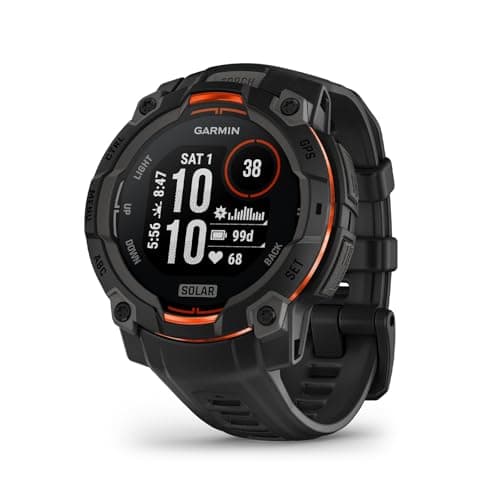
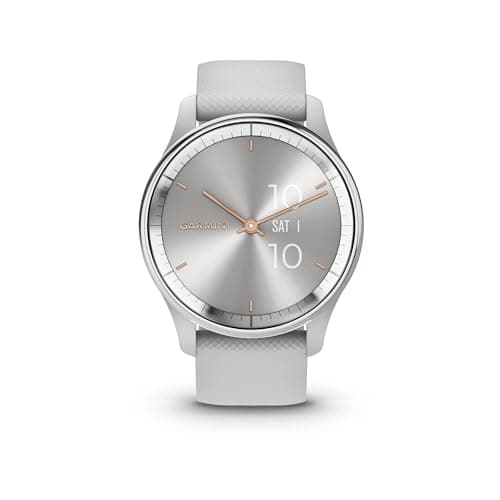
Garmin's Instinct line has always been the odd one out: chunky, plasticky, monochrome, and stubbornly focused on lasting longer than anything else on your wrist. The Instinct 3 Solar continues that, and after Garmin's recent obsession with putting AMOLED screens on everything, the case for a watch that trades pixels for weeks of battery is stronger than it's been in years. At around £234 for the 45mm, it undercuts most of the Forerunner range while outlasting all of it.
The headline is the battery. Garmin quotes up to 28 days in smartwatch mode with zero solar input, and unlimited runtime under what it defines as optimal solar conditions, meaning 50,000 lux for three hours a day (Garmin Instinct 3 Solar specifications). That second figure deserves scepticism in a British context, and we'll come back to it.
How we review
This review draws on Garmin's published specifications, verified owner feedback on Amazon UK, and testing published by independent outlets. We haven't run our own year-long endurance test of this exact unit, so we've stuck to findings that show up consistently across sources rather than one-off impressions. Price was correct at the time of writing.
Who it's for
Hikers, cyclists, outdoor workers, and anyone who has quietly resented plugging a watch in every few days. The Instinct 3 Solar is also a sensible first Garmin for someone who wants training data without a subscription and doesn't need a screen that looks good on a desk.
It's the wrong watch for a runner chasing marathon splits, and it's the wrong watch if you'll be irritated by a display that looks like a calculator indoors.
Pros
28 days of smartwatch battery without any sun, which changes how you use a watch
Multi-band GNSS with SatIQ, so distance holds up in cities and woodland
LED torch with variable brightness, red light and a strobe mode is far more useful than it sounds
Military-grade durability standard and 10 ATM water rating
Full training suite including training readiness, recovery time and suggested workouts
Buttons rather than a touchscreen, which is the right call with wet or gloved hands
Cons
Monochrome MIP display looks dated and needs the backlight indoors
The unlimited solar battery claim needs bright sustained sun that the UK rarely provides
No offline mapping, only breadcrumb navigation
Bulky at 45mm, and the smaller size drops some features
Fewer running-specific metrics than a similarly priced Forerunner
The screen, and why it's the whole argument
Garmin doubled the display contrast over the Instinct 2, and it's a real improvement: the 176 by 176 pixel monochrome panel is sharper and easier to read than the previous generation. In direct sunlight it's outstanding, because a memory-in-pixel display gets more readable as light increases rather than less. Outdoors on a bright day you can glance at pace without shielding the watch.
Indoors it's a different story. The screen is dim, grey and unmistakably last-decade, and you'll use the backlight far more than you expect. Anyone coming from an AMOLED phone will find it a shock for about a week and then stop noticing.
That single choice is why the battery works. There's no compromise here that Garmin has cleverly engineered away; you're buying a worse screen and getting four weeks of runtime as payment.
Garmin Instinct 3 Solar 45mm key specs
Display
Monochrome MIP, 176 x 176 pixels
Case size
45mm (a 50mm version is also available)
Battery, smartwatch mode
Up to 28 days without solar
Battery, solar
Unlimited at 50,000 lux for 3 hours a day
GPS
Multi-band GNSS with SatIQ
Water rating
10 ATM (approx 100m)
Durability
MIL-STD-810 thermal, shock and water
Torch
Built-in LED, variable intensity plus red and strobe
Payments
Garmin Pay
Battery life in practice
The 28 day figure assumes normal smartwatch use with occasional GPS, and owner reports broadly support it. Start using GPS daily for an hour and you'll see something closer to two weeks, which is still comfortably better than any AMOLED watch at this price.
The solar claim is where you should adjust expectations. Fifty thousand lux is bright, unobstructed daylight; a UK winter afternoon under cloud might deliver a tenth of that, and a watch under a jacket sleeve delivers none. Solar in this country is best understood as a modest extension rather than a battery that never ends. Summer hiking with bare arms is the scenario where you'll genuinely see it working.
None of that undermines the watch, because 28 days without any solar at all is already the point.
Training features
Garmin has been generous here. Training readiness, HRV status, recovery time, training load focus and daily suggested workouts all appear, and until recently several of those were reserved for watches costing twice as much. For most people that's a complete training system.
What's absent is depth for runners specifically. Running dynamics like ground contact time and vertical oscillation are limited, and the screen makes reading a lap pace mid-interval more effort than it should be. A Forerunner 265 costs about £60 more and is a considerably better running watch, while lasting a fraction as long between charges.
Heart rate from the wrist is decent for steady efforts. As with every optical sensor, accuracy falls away during rapid changes, so interval sessions are where readings drift (wearable heart rate device validation study). Pairing a strap from our best heart rate monitor UK guide fixes that for the sessions where it matters.
The torch
Small feature, disproportionate usefulness. The LED on the top edge of the case has several brightness levels, a red mode that doesn't destroy your night vision, and a strobe. Double-tapping a button to light up a dark bike shed or find a dropped key turns out to be something you do constantly once it's available. It also drains the battery quickly if you leave it on full, which is the only real caveat.
Build and comfort
Fibre-reinforced polymer case, metal-reinforced bezel, silicone strap. It feels indestructible rather than premium, and it's noticeably lighter than a metal watch of the same size, which matters if you sleep in it for sleep tracking. At 45mm it sits high on a slim wrist and the bezel is chunky. The 50mm version adds battery but drops some of the smaller model's balance.
Five buttons, no touchscreen. Working the menus with wet hands or gloves on is the argument for that, and after a couple of days the muscle memory arrives.
Alternatives worth considering
Garmin Forerunner 265 if running is your main sport and you want an AMOLED screen with full running dynamics.
Garmin Venu 3 if sleep, stress and everyday health tracking matter more than durability.
Garmin fēnix 8 if you need offline topographic mapping and have the budget for it.
If you train or work outdoors and resent charging things, yes. Around £234 buys 28 days of battery without any sun, multi-band GPS, a 100m water rating and a proper LED torch. If you mainly run and want detailed pace and training analysis on a bright screen, the Forerunner 265 is a better watch for similar money.
How long does the Instinct 3 Solar battery actually last?
Garmin quotes up to 28 days in smartwatch mode on the 45mm with no solar input at all, and unlimited battery under optimal solar conditions. In UK conditions, expect the real figure to sit between those numbers and closer to the 28 day end for most of the year. Heavy GPS use is what drains it, not daily wear.
What is the difference between the Instinct 3 Solar and the Instinct 3 AMOLED?
The screen, and everything that follows from it. Solar uses a monochrome memory-in-pixel display that sips power and reads brilliantly in sunlight; AMOLED is colourful, sharp and far easier indoors, but battery drops to a couple of weeks and there's no solar charging. Pick based on whether battery or screen quality matters more to you.
Does the Instinct 3 have maps?
No. There's breadcrumb navigation, TracBack and route following, which will get you home along the way you came, but no topographic mapping on the watch. If you need real maps offline, you're looking at the fenix range instead.
Is the Instinct 3 Solar good for running?
It's competent rather than specialised. Multi-band GPS gives accurate distance, and you get training status, recovery time and daily suggested workouts. What's missing is the deeper running dynamics and the screen clarity that makes mid-run data easy to read, which is where the Forerunner range earns its place.
Is the Instinct 3 Solar waterproof?
Rated to 10 ATM, or roughly 100 metres, so swimming and showering are fine and it meets a military durability standard for shock and temperature too. It is not a diving watch, but nothing short of deliberate abuse will bother it.
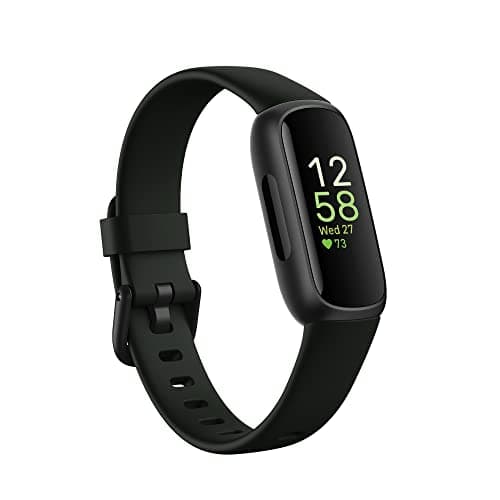
An honest Fitbit Inspire 3 review covering its AMOLED screen, 10-day battery, sleep and heart rate tracking, connected GPS, the Premium paywall and who should buy it.
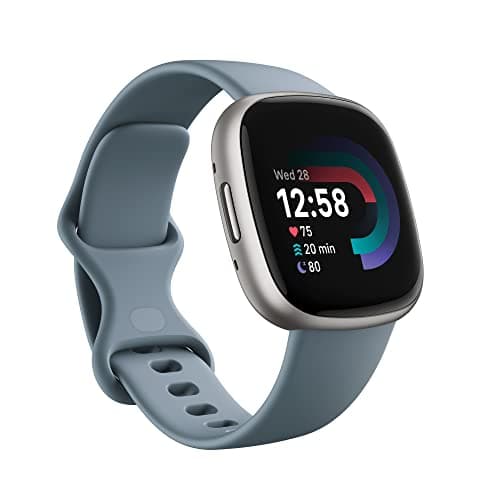
Our Fitbit Versa 4 review covers built-in GPS, 6+ day battery, Google Maps and Wallet, the lost third-party apps and Wi-Fi, and who should buy it at £179.
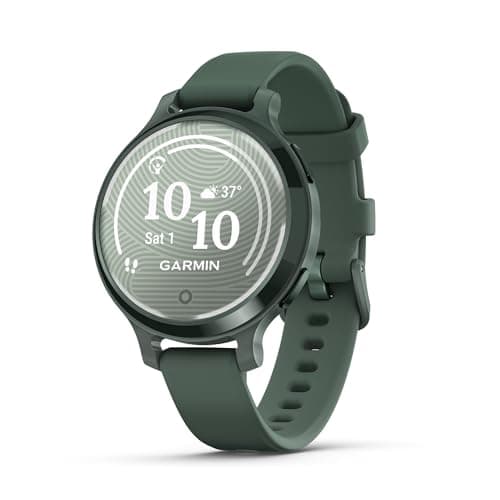
An honest Garmin Lily 2 Active review: built-in GPS on a 38mm, 29g case, 9 day battery, Garmin Pay, and the greyscale screen and missing music storage to weigh against the price.
Garmin vivomove Trend review for UK buyers: analogue hands over a hidden touchscreen, Body Battery, Garmin Pay, Qi charging, and the 5 day battery and missing GPS to weigh up at £232.
Best Exercise is a participant in the Amazon EU Associates Programme, an affiliate advertising programme designed to provide a means for sites to earn advertising fees by advertising and linking to Amazon.co.uk. As an Amazon Associate we earn from qualifying purchases. This comes at no extra cost to you and never influences our independent reviews or rankings.