Exercise Bikes
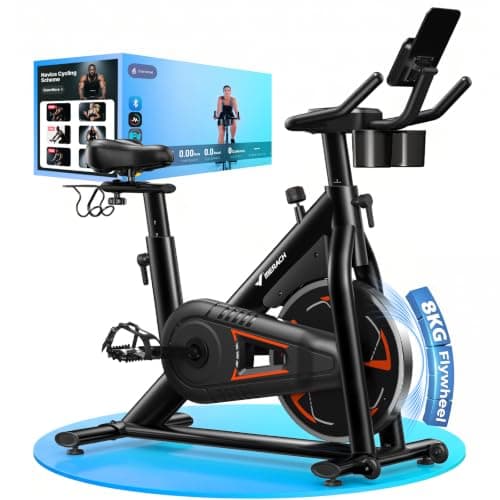
MERACH H-Frame Exercise Bike Review: Stable, Quiet, Modest Resistance
Our MERACH H-Frame exercise bike review: 8kg flywheel, 8 magnetic levels, 150kg limit, apps and Zwift support, and who should buy it at around £260.

By Paul Kendrick, Cardio & Endurance Editor · Updated 28 August 2026
We may earn a commission from qualifying purchases made through links on this page, at no extra cost to you. This never affects our ratings.
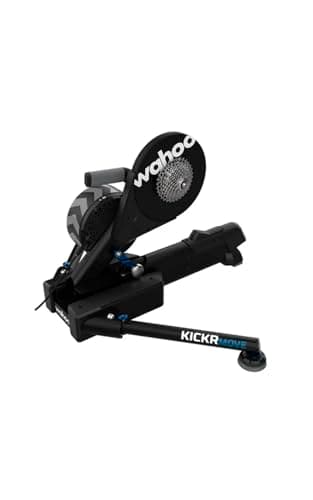
Wahoo built the KICKR MOVE for one specific complaint: after 90 minutes locked rigidly in place, your backside hurts. The fix is a base that lets the whole trainer slide roughly 20cm forwards and backwards as you shift your weight, so your saddle contact point keeps changing instead of grinding into the same square centimetre for the entire ride. Everything else is familiar KICKR hardware, and that is not a criticism.
The question worth asking before you spend over a thousand pounds is whether movement is the problem you actually have. If your indoor rides are 45 minutes of intervals, you will barely register the travel. If you are grinding out winter base miles or riding four-hour Zwift events, the difference between this and a bolted-down trainer is the difference between finishing and giving up at hour two.
How we review
This review draws on Wahoo's published specifications, verified owner feedback and the findings of independent test outlets that have measured the trainer's power accuracy against reference power meters. We have not run our own multi-season durability test on this exact unit, so we report only the patterns that show up repeatedly rather than isolated opinions.
Long-session riders, first and foremost. The MOVE earns its price for anyone whose indoor training runs past the hour mark regularly, and for riders with a history of saddle sores or numbness who have already tried a different saddle and better shorts. Triathletes doing long steady efforts are the obvious fit.
If you mostly ride short and hard, buy a cheaper direct-drive trainer and put the saving towards a fan and a decent mat. Our best turbo trainer UK guide covers the sensible alternatives, and the KICKR CORE 2 does most of what this does for considerably less.
Check the KICKR MOVE price on AmazonClimb on for the first time and it feels wrong. Push hard and the bike surges forward under you; ease off and it settles back. Within about ten minutes your brain stops flagging it and the sensation turns into something you only notice by its absence when you go back to a fixed trainer.
What the MOVE does not do is replicate riding outside. Reviewers who have spent proper time on it are consistent on this point: standing up produces more swinging than a real bike does, and because side-to-side movement is limited compared with the fore-aft travel, the balance of motion feels off. You also will not use the full range of travel. Even during hard intervals the base rarely reaches its end stops, so treat 20cm as headroom rather than a number you will exercise.
The genuine benefit is unglamorous and physical. Your sit bones spend the ride shifting across a few centimetres of saddle rather than pressing on one spot, and numbness that would normally arrive at 70 minutes gets pushed well back. That is the whole pitch, and for the right rider it is enough.
| Maximum power | 2,200 W |
|---|---|
| Maximum simulated grade | 20% (down to -10% descent) |
| Claimed power accuracy | Plus or minus 1% |
| Fore-aft travel | Approx 20 cm / 8 in |
| Flywheel | Approx 7.25 kg / 16 lb |
| Resistance | Electromagnetic, belt drive |
| Connectivity | WiFi 2.4GHz, up to 3 Bluetooth, ANT+ FE-C, Direct Connect |
| Cassette supplied | 11-speed, 11-28 |
| Axle compatibility | 130/135mm QR, 12x142, 12x148 thru-axle |
| Unit weight | 29 kg / 64 lb |
| Maximum rider weight | 113 kg / 250 lb |
Those figures come from Wahoo's own product specification, which now carries a discontinued label.
The plus or minus 1% claim holds up well enough that you can train to zones without cross-checking against a separate meter, which is the only thing most riders need from a trainer's numbers. Automatic calibration removes the spindown ritual that older trainers demanded every time the room temperature shifted.
WiFi is the underrated upgrade here. Bluetooth trainers drop connections, and anyone who has lost a race position because their trainer disconnected at kilometre 30 will understand why a 2.4GHz WiFi link matters more than another decimal place of accuracy. Firmware updates run over the air without pairing your phone. Direct Connect ethernet is there too if your WiFi is patchy.
Setup takes about fifteen minutes if your bike is a standard 11-speed road setup. The cassette is already on, the adapters are labelled, and Wahoo's app walks through pairing. Twelve-speed riders need to buy and fit their own cassette, which is a chain whip and a lockring tool if you have them.
A trainer this precise is wasted if you only spin aimlessly. Structured intervals are where the power accuracy pays back, and the research on interval work is strong: a meta-analysis of 37 studies covering 334 participants found mean VO2max gains of 0.51 litres per minute from high-intensity interval protocols, exceeding what continuous training typically produces (VO2max trainability and HIIT meta-analysis, PLoS One 2013). Two hard sessions a week on this thing, plus a longer easy ride, sits comfortably inside the NHS guidance of 150 minutes of moderate or 75 minutes of vigorous activity weekly (NHS physical activity guidelines for adults).
Noise is a non-issue from the trainer itself. Electromagnetic resistance and a belt drive mean the loudest component in the room is your own chain, so a clean drivetrain does more for household peace than anything Wahoo could engineer. The one addition worth budgeting for is a dense rubber mat, because the sliding base transmits a low rumble into a hard floor and a soft rug will bind the rollers.
Wahoo has retired the MOVE from its own catalogue, and that changes the calculation in both directions. Retail stock is now selling below the launch RRP, which makes it far better value than it was; the flip side is that once the remaining spares are gone, an out-of-warranty fault could turn an expensive trainer into an expensive doorstop. Wahoo has supported older KICKR models for years, so this is a risk rather than a likelihood.
Against current rivals, the Tacx NEO 3M offers multidirectional movement and needs no mains power, while the Elite Justo 2 matches the accuracy for less and stays bolted down. Pick on whether movement matters to you, then on price. More options sit in our exercise bike and trainer section.
See today's KICKR MOVE priceOnly if saddle comfort is what stops you riding indoors. The power numbers, the flywheel feel and the app support are broadly comparable, so you are paying several hundred pounds for 20cm of fore-aft travel and a WiFi chip. Riders who regularly sit through two-hour sessions tend to say yes; riders doing three 45-minute workouts a week rarely notice enough to justify it.
Wahoo claims plus or minus 1%, which is the same figure as the flagship KICKR and better than most wheel-on trainers. It self-calibrates, so there is no spindown routine to remember. In practice the numbers track closely enough against a separate power meter that you can train to zones without second-guessing the screen.
Yes, more than a static trainer does. The base slides fore and aft on rollers, so a hard floor amplifies the noise and a rug will foul the movement. A dense rubber mat kills the rumble and gives the feet something consistent to sit on.
Wahoo has marked it discontinued on its own site, but remaining stock is still selling through Amazon UK and other retailers, often below the original RRP. That makes it better value now than at launch, with the usual caveat that spares and accessories get harder to find once a model is retired.
It ships with an 11-speed 11-28 cassette already fitted, so most road bikes bolt straight on. Twelve-speed drivetrains need a cassette swap, and the box includes adapters for 130mm and 135mm quick release plus 12x142 and 12x148 thru-axles.
The trainer itself is close to silent because resistance is electromagnetic and the drive is a belt. What you hear is your own drivetrain, plus a low rolling sound as the base shifts under you. In a flat or a shared house it is the chain noise, not the trainer, that will annoy anyone downstairs.
Our MERACH H-Frame exercise bike review: 8kg flywheel, 8 magnetic levels, 150kg limit, apps and Zwift support, and who should buy it at around £260.
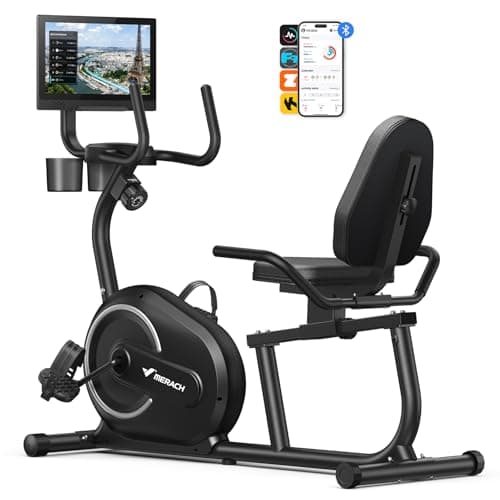
An honest review of the MERACH recumbent exercise bike with a 15.6in HD rotating screen: screen mirroring caveats, 8 resistance levels, fit range and how it compares with cheaper recumbents.
The real benefits of a recumbent bike, from back support and low joint load to easy mounting, plus honest trade-offs, calorie estimates and how to set one up.
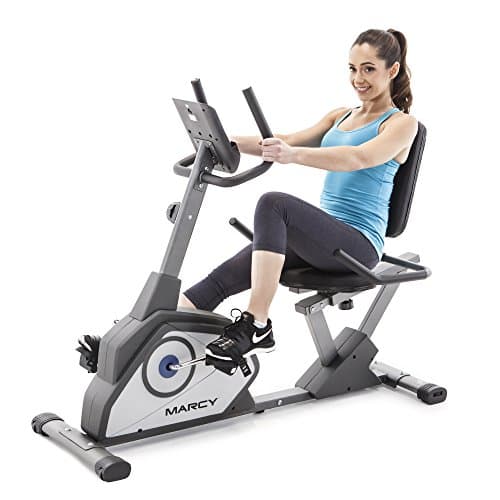
The best recumbent exercise bikes in the UK for 2026, from a £183 starter bike to a £1,399 Sole. Honest picks for sore knees, dodgy backs and long TV sessions.
Best Exercise is a participant in the Amazon EU Associates Programme, an affiliate advertising programme designed to provide a means for sites to earn advertising fees by advertising and linking to Amazon.co.uk. As an Amazon Associate we earn from qualifying purchases. This comes at no extra cost to you and never influences our independent reviews or rankings.