Cycling mainly works the muscles of your legs: your quadriceps (front of the thigh), glutes, hamstrings (back of the thigh) and calves. Your hip flexors and the muscle at the front of your shin help bring the pedal back up, and your core, lower back, shoulders and arms work to keep you stable. It's a lower-body exercise with a quiet supporting cast above the waist. Below is what each muscle does during a pedal stroke, how the type of bike and your position change things, whether cycling builds muscle, and what to add if you want more than endurance.
The pedal stroke, phase by phase
One full turn of the pedals is a loop, and different muscles lead at different points. The classic way to describe it is by clock position, with the top of the stroke at 12 o'clock. A review of the electromyography research on pedalling by Hug and Dorel looked at how these activation patterns shift with power output, pedalling rate, body position and training status (Hug and Dorel, 2009, PubMed), so treat the clock positions below as typical rather than fixed. Riders differ.
- Top to the downstroke (roughly 12 to 3 o'clock). This is the power phase. Your glutes and quads fire together: the glutes extend the hip, the quads extend the knee, and the pedal drops. It's where most of the work happens.
- Bottom of the stroke (roughly 3 to 6 o'clock). Your calves and the back of the thigh take over. Your calves push through the ankle, and your hamstrings begin to flex the knee and pull the pedal backwards.
- Back and up (roughly 6 to 9 o'clock). Hamstrings and calves keep pulling the pedal through the bottom and rearward. If you're clipped in or using straps, the muscle at the front of your shin (tibialis anterior) works to lift your foot.
- Over the top (roughly 9 to 12 o'clock). Your hip flexors and the front of the thigh lift the knee towards the top again, and the cycle restarts.
You won't feel it as four neat stages. At 90 rpm you're running that loop 1.5 times every second, and the muscles overlap heavily. The practical takeaway is that cycling gives your whole leg a balanced, repetitive workout, with the quads and glutes carrying the heaviest load.
Muscle by muscle
Quadriceps. The main engine. Four muscles on the front of your thigh straighten your knee, and they get busiest on hills, high resistance and sprints. Sore thighs after a hard spin class? That's the quads.
Glutes. Your glute max extends the hip on the downstroke. It works harder when you stand, when you push big gears, and when your saddle is set at a good height. Too low and the quads take over; too high and your hips rock. Our guide to exercise bike seat height covers the setup.
Hamstrings. They flex your knee and help pull the pedal through the bottom and back. They're a supporting muscle in a seated ride, though you'll feel them more if you pedal with a smooth circular motion rather than just stamping down.
Calves. The gastrocnemius and soleus push through the ankle at the bottom of the stroke and transmit force to the pedal. They're active but rarely get sore, because the work is steady and low-load.
Tibialis anterior and hip flexors. These are the small lifters. They bring your foot and knee back up. You won't notice them much, but they're why the pedal stroke feels like a loop and not just a push.
Core, back and upper body. Your abs and lower back keep your torso steady, and your arms and shoulders hold your weight on the handlebars. On a road bike you also steer and balance, so upper-body involvement is higher. On an exercise bike with moving handles, or on an air bike, your arms do real work as well.
Indoor versus outdoor cycling
The legs do the same job in both, so the muscle list barely changes. The differences are in the extras.
Outdoors you balance, steer, brake and absorb bumps, so your core, arms and shoulders get more of a workout. You also meet hills, headwinds and traffic stops that vary the load. Indoors, the bike holds you upright and the resistance dial controls the effort, so the work lands more squarely on your legs. A good spin class can feel harder than a casual ride for exactly that reason: no coasting.
Neither is better for muscle. Indoor wins on consistency and weather, and outdoor wins on variety and fresh air. The NHS lists riding a bike as a moderate-intensity activity, and riding fast or on hills counts as vigorous, which applies whichever way you do it (NHS physical activity guidelines for adults).
Standing versus seated
When you stand on the pedals, your glutes and upper body pick up more of the load, and you can push harder at high power. The interesting part is how much that matters. In a study of 17 untrained volunteers cycling from around 100 to 700 watts, the same four muscle synergies showed up in both positions, and standing only gave an advantage in muscle activation at roughly 500 to 600 watts or above (Turpin et al., 2017, PubMed).
Most of us ride well below that. So standing is a good way to change the feel, give your saddle area a break and recruit a bit more glute and arm work, but it isn't a magic switch for bigger legs. Use it for short climbs and intervals, and stay seated for the rest.
Spin bike, upright bike or recumbent bike
The bike you choose shifts the emphasis a little.
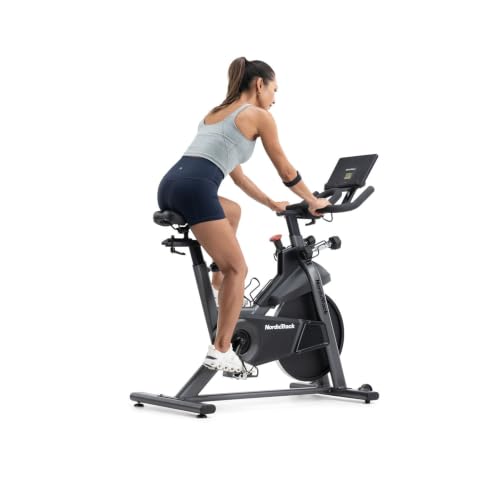
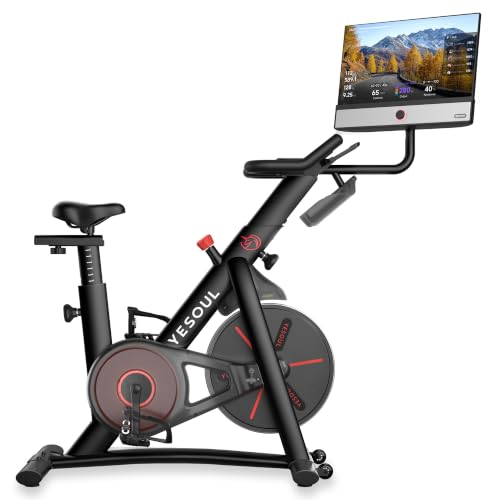
- Spin bike. Forward-leaning, weighted flywheel, and you can stand. This puts the most load on your quads and glutes and the most demand on your core. See our picks of the best spin bikes in the UK.
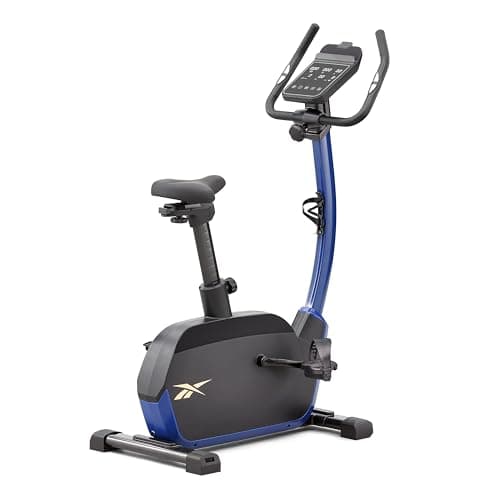
- Upright bike. A more relaxed, seated position closer to an ordinary bicycle. Similar leg work to a spin bike at lower intensity and easier on your wrists and back. Our upright exercise bike guide covers who it suits.
- Recumbent bike. You sit back in a seat with back support and your legs out in front. The glutes and hamstrings get a bit more of a role, your back and shoulders do very little, and joint strain is low. It's a strong choice for rehab, bad backs or anyone who wants comfort. Browse the best recumbent exercise bikes.
Every one of them works the same core group of leg muscles. You're choosing between comfort, intensity and how much your upper body joins in. Our exercise bikes hub has them all in one place.
Does cycling build muscle?
Honestly, not much, and not for long. Cycling is endurance work: thousands of repetitions against light to moderate resistance. That trains your muscles to keep going and improves your heart and lungs, but it doesn't give them the heavy load they need to keep growing. A beginner or someone returning after a long break will notice firmer thighs and glutes in the first couple of months. After that, the gains flatten unless you ride at high resistance or in hard sprint intervals.
Cycling does very little for your upper body, and it isn't a substitute for lifting. The NHS recommends strength work for all the major muscle groups, legs and core included, on at least two days a week, on top of your aerobic exercise (NHS guidelines). Cycling covers the aerobic side nicely and gives your legs some of the muscular side, but you'll still want to train the rest of your body.
What to add in the gym
Cycling leaves a few gaps, and they're easy to fill with two short sessions a week.
- Squats or leg press. Heavier loads for your quads and glutes than any bike will give you. A goblet squat is a simple place to start.
- Romanian deadlifts or hip thrusts. Cycling works your hamstrings and glutes through a short range, so these add a longer stretch under load.
- Rows and presses. Your upper back, chest and shoulders get almost nothing from a seated ride. Rows are a sensible fix, and our rowing machine muscles guide shows how a rower fills the upper-body gap.
- Planks and carries. Direct core work to support the stabilising job your trunk already does on the bike.
- Hip and calf mobility. Cyclists tend to have tight hip flexors and quads. A few minutes of stretching after each ride helps.
If you want a lower-body cardio machine that also trains your arms, our comparison of cross trainer muscles worked is a good next read.
Recommended reads
- Best exercise bikes in the UK
- Best spin bikes in the UK
- Exercise bike seat height: how to set it
- Rowing machine muscles worked
- Cross trainer muscles worked