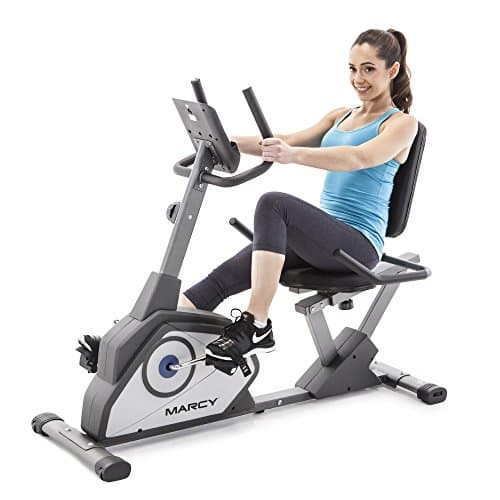
Exercise Bikes
Best Recumbent Exercise Bikes UK 2026: 5 Picks for Bad Knees and Backs
The best recumbent exercise bikes in the UK for 2026, from a £183 starter bike to a £1,399 Sole. Honest picks for sore knees, dodgy backs and long TV sessions.

By Jack Atkins, Home Gym Equipment Specialist · Updated 24 August 2026
We may earn a commission from qualifying purchases made through links on this page, at no extra cost to you. This never affects our ratings.
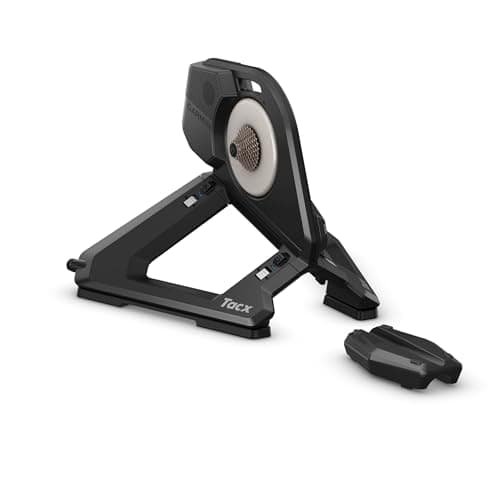
Very few pieces of home training kit are as good at their core job as the Tacx NEO 3M. Feed it a structured session and it holds the target wattage with a precision that makes cheaper trainers feel like they are guessing, the ride feel through the pedals is convincing enough that you stop thinking about the machine, and the power data is clean enough to plan a season around. Garmin's engineers clearly know what they are doing.
Then you set the spec sheet next to the price and start subtracting. There is no built-in Wi-Fi, the 11 speed cassette comes with no alternative option, and the motion plates carry a manual warning telling you to switch them off before you sprint. Garmin now lists the 3M at £1,599.99 in the UK and the Amazon listing has been running above that, so those omissions land harder than they would on a £700 trainer.
How we review
This review combines Garmin's published specifications and owner's manual figures, measurement-led findings that recur across independent cycling media testing, and repeated themes in verified owner feedback. We have not run our own instrumented power or decibel testing on this unit, so every number below is attributed to Garmin or to reviewers who measured it.
Start with accuracy, because it is the reason serious riders buy a NEO. The electromagnetic resistance unit needs no spindown, no warm-up ritual and no calibration, so drift simply is not part of the conversation. Testing of the closely related NEO 2T against Garmin Vector 3 pedals found coefficients of variation between 0.03% and 0.15% with no significant differences across power stages, and the 3M carries that measurement system forward. If you train to power targets, this consistency is worth more than any feature on the box.
ERG mode is the second reason. Resistance ramps over a couple of seconds rather than slamming into place, and it holds the number without the overshoot that makes intervals on lesser trainers feel like a fight. Reviewers who spend their working lives on turbos regularly call it the best ERG implementation available, and after a session of 30 second on, 30 second off work you understand why.
Road feel is the third. The virtual flywheel can reproduce cobbles, gravel and other surfaces through the pedals when the app supports it, descent simulation actually drives the flywheel downhill so you freewheel rather than stall, and the whole thing tops out at 2,200 watts with 25% simulated gradient. You will run out of legs long before it runs out of resistance.
The headline change over the NEO 2T is movement. The 3M sits on integrated plates giving about 5cm of total fore and aft travel, 2.5cm in each direction, which sounds trivial until you have ridden two hours on a rigid trainer and compared the state of your backside afterwards. Seated tempo, standing climbs, gentle out-of-saddle efforts: all of it feels less locked down and more like riding outdoors.
Sprinting is where it falls over. Push a genuine maximal effort and the movement turns from subtle to jerky, and Garmin's own manual advises disabling it first. There is a lever to do exactly that, so this is an inconvenience rather than a fault, but a £1,600 trainer telling you to switch off its flagship feature for hard efforts is a strange sentence to type. Rivals with wider lateral travel handle sprints better.
| Maximum power | 2,200 W |
|---|---|
| Maximum simulated gradient | 25% |
| Stated accuracy | Within 1% |
| Maximum torque | 88 Nm |
| Motion travel | Approx 5 cm fore and aft, switchable |
| Weight | 23.6 kg |
| Rider weight capacity | 125 kg |
| Cassette | 11 speed, pre-installed |
| Connectivity | ANT+ FE-C and dual Bluetooth (Wi-Fi via optional adapter) |
| Calibration | None required |
| Power supply | 100 to 240 V, 50/60 Hz |
| UK RRP | £1,599.99 |
Figures come from Garmin's UK Tacx NEO 3M page and the owner's manual specifications.
Setup takes minutes because the cassette is already fitted, and the box includes a dual-sided front wheel block plus the axle adapters most bikes need. Pair it to Zwift, TrainerRoad or the Tacx Training app over Bluetooth or ANT+ and you are riding. The LED strip that changes colour with your effort is a gimmick, though a surprisingly readable one when you are cross-eyed in the last minute of a threshold block.
Two practical irritations show up in week one. The power cable is short, roughly a metre and a half, so unless the socket is right beside the bike you need an extension. And connectivity runs over Bluetooth or ANT+ only, which is fine for one rider in a quiet flat but gets flaky in a house full of devices. The fix is Garmin's Smart Network Adapter, sold separately at a price that feels like a joke when the trainer already costs this much.
Noise sits in an odd place between the two things you will read online. On easy and moderate power it is genuinely near-silent, and the internal cooling fan is quieter than your room fan. One independent measurement put it around 63 to 65 decibels at 150 watts and above 70 during hard efforts, so it is not the quietest trainer ever built, just a very quiet one. Pair it with a proper cooling setup like the Wahoo KICKR Headwind and the fan will dominate anyway.
See today's Tacx NEO 3M priceBuy the NEO 3M if data quality is the thing you care about most: if you race indoors, follow a structured plan, or have been burned by a trainer whose numbers wandered between calibrations. The combination of no-calibration accuracy and the best ERG mode on the market is a genuinely strong argument, and the motion plates make three hour winter sessions more bearable.
Think twice if you want the most trainer for the money. The Tacx NEO 2T delivers almost the same accuracy and ride feel for meaningfully less, and the Wahoo KICKR CORE 2 covers most riders' needs for a third of the price. Our best turbo trainer UK guide sets the field out properly, and the exercise bike section is worth a look if a standalone smart bike suits your space better.
The 3M adds built-in motion plates that let the trainer rock roughly 5cm fore and aft, a redesigned frame, an LED effort indicator and a pre-installed 11 speed cassette out of the box. Power measurement, the electromagnetic resistance system and the no-calibration design are carried over from the 2T largely unchanged, which is why the older trainer still holds up so well.
Garmin claims within 1%, and independent testing against dual-sided power meter pedals has repeatedly matched that in both ERG and simulation modes. Because resistance comes from electromagnets rather than a belt and brake, there is no spindown calibration to run, so the numbers you see in week one are the numbers you get in month six.
For everything that makes it special, yes. The flywheel generates enough energy for a basic resistance and data mode unplugged, but descent simulation, road feel vibration and the full 2,200W ceiling all need the mains supply. The supplied cable is only about 1.5 metres, so most people end up buying an extension.
Quiet, though not silent. Nothing touches the flywheel, so at easy and moderate power the loudest thing in the room is your drivetrain and your fan. One independent test measured roughly 63 to 65 decibels at 150 watts, rising past 70 during hard efforts as the internal cooling fan spins up. For a flat or a shared house it is still one of the better options.
No, and Garmin says as much in the manual. The 5cm of movement feels natural during seated and standing climbing, but it turns jerky under a full sprint. Switch the motion off with the lever before doing hard neuromuscular work, then switch it back on for the long steady rides where it actually reduces saddle soreness.
Not built in, which is the single most annoying thing about it. The Tacx Smart Network Adapter that adds Ethernet or Wi-Fi is a separate purchase costing well over £100. At £1,600 a wireless connection should have been included, and cheaper rivals from Wahoo do include one.
The best recumbent exercise bikes in the UK for 2026, from a £183 starter bike to a £1,399 Sole. Honest picks for sore knees, dodgy backs and long TV sessions.
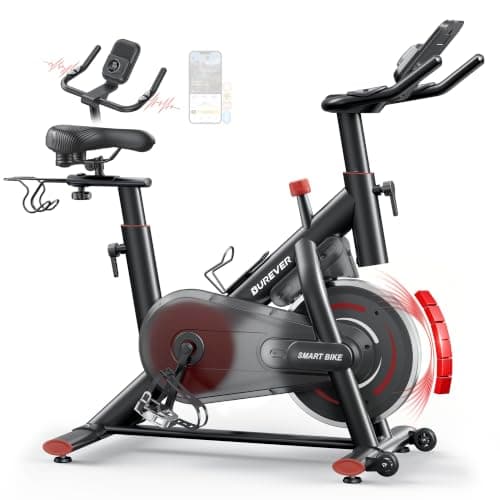
Our Burever exercise bike review: the touchscreen goal console, 0-100% magnetic resistance, 170kg limit, Zwift support without a power meter, and who should buy it.
Spin bike vs exercise bike compared on riding position, flywheel, resistance, comfort, noise and price, with a clear verdict on which suits your training.
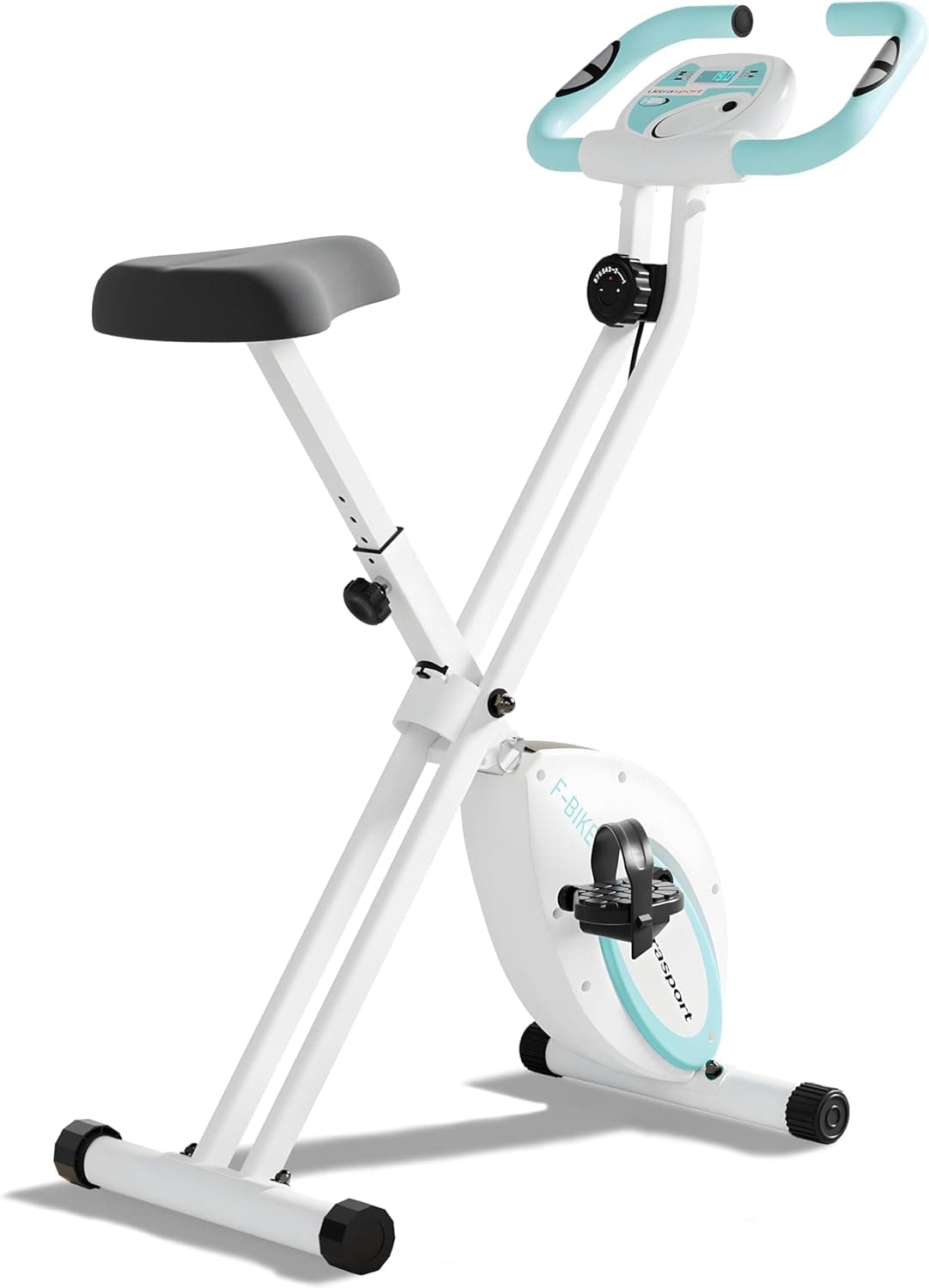
The best foldable exercise bike for UK homes, from budget mini pedallers to a 140kg-rated smart bike and a comfy recumbent. Folded sizes, weight limits and honest downsides.
Best Exercise is a participant in the Amazon EU Associates Programme, an affiliate advertising programme designed to provide a means for sites to earn advertising fees by advertising and linking to Amazon.co.uk. As an Amazon Associate we earn from qualifying purchases. This comes at no extra cost to you and never influences our independent reviews or rankings.