Workouts
Archer Push Up: How to Do It, Muscles Worked and Progressions
How to do an archer push up with clean form. Muscles worked, why it's the best bridge to a one-arm push up, common mistakes, easier and harder variations, and a weekly plan.

By Paul Kendrick, Cardio & Endurance Editor · Updated 19 November 2026
We may earn a commission from qualifying purchases made through links on this page, at no extra cost to you. This never affects our ratings.
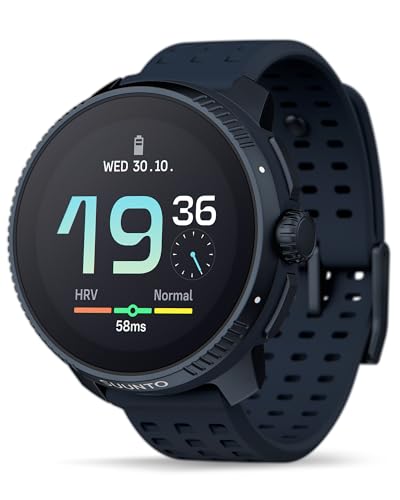
The original Suunto Race arrived in late 2023 as the watch that made Garmin's pricing look awkward: a sapphire-fronted AMOLED, a digital crown, dual-band GPS and offline topographic maps for less than a Forerunner 965. The Race 2 has since replaced it at the top of the range. That has done the first Race a favour, because it now sells for around £259 at the time of writing on Amazon UK, which puts a 49mm steel map watch at the same price as the smaller Race S and £40 under a Garmin Forerunner 265 that has no maps at all.
So the question for this Suunto Race review isn't whether it's good. It was good in 2023. The question is whether you should buy a three year old flagship over the newer, smaller and more expensive alternatives, and for a lot of runners and hill walkers the answer is yes.
How we review
This review draws on Suunto's published specifications and user guide, the consistent findings of long-term reviews from established running and outdoor outlets, and recurring themes in verified owner feedback since 2023. We haven't run our own multi-month test of this exact unit, so we report what shows up repeatedly rather than one person's impressions. Specs and prices were correct at the time of writing.
On paper, almost everything Suunto still charges £400-plus for. The display is a 1.43in AMOLED touchscreen under sapphire crystal, the case is 49 x 49 x 13.3mm and the steel version weighs 83g. A crown on the right-hand side scrolls menus and maps, which is far easier with gloves on than swiping a wet screen. Suunto rates it waterproof to 100m and lists more than 115 sport modes on its product page, well up on the "95+" the Amazon listing still shows from launch.
Underneath sit dual-band GNSS, 24/7 heart rate, HRV and sleep tracking, a barometric altimeter, and free offline maps with route navigation and breadcrumb trails.
| Display | 1.43in AMOLED touchscreen, sapphire crystal |
|---|---|
| Controls | Digital crown plus two buttons |
| Case | 49 x 49 x 13.3 mm, stainless steel or titanium bezel |
| Weight | 83 g steel; titanium version is lighter |
| Water resistance | 100 m (ISO 22810) |
| Battery, performance mode | Up to 50 hours with multi-band GPS (Amazon lists 40 hours) |
| Battery, tour mode | Up to 200 hours, lower GPS accuracy, heart rate off |
| Battery, daily use | Up to 16 days with 24/7 heart rate, up to 26 days without |
| Positioning | Dual-band GNSS |
| Mapping | Free offline maps, route navigation, breadcrumb |
| Sport modes | 115 plus |
| Amazon UK price | Around £259 at the time of writing |
Suunto's own page now quotes up to 50 hours of training in performance mode with the best multi-band accuracy. The Amazon listing says 40 hours, which is what the watch was sold with in 2023, so treat 40 as the floor and 50 as the current claim after firmware updates. Tour mode, with lower GPS accuracy and heart rate off, stretches to 200 hours.
Daily use is quoted at 16 days with 24/7 heart rate and 26 without. Owners who leave the AMOLED on raise-to-wake and log a handful of runs a week tend to land somewhere around ten to twelve days, and switching on the always-on display cuts that hard; the same is true of every AMOLED watch, Garmin's included. Even at the conservative 40 hours it's more GPS time than a Forerunner 965, and nobody running a 100km race needs to think about charging.
This is still the reason to buy a Suunto. You pick an area in the Suunto app, the watch pulls it down over Wi-Fi, and before a GPS activity you choose a map style or switch it off for breadcrumb only (Suunto support). There's no map store, no subscription, and the crown makes panning and zooming genuinely usable on the move.
Garmin's equivalent costs around £478 in the Forerunner 965. Garmin's maps are richer, with turn-by-turn directions and round-trip routing, and its route planning on the watch is better. But the 965 costs over £200 more, and if what you actually want is to see the contour lines and the footpath you're meant to be on, the Race does that job.
Downloads are chunky and the first setup isn't obvious. Small complaint, mentioned by enough owners to be worth knowing.
The heart rate sensor is the biggest gap. Suunto redesigned the optical sensor for the Race 2 precisely because the original wandered, especially at the start of runs and on intervals. Steady easy running is fine; hard reps are where it lags or locks onto cadence. That's not unique to Suunto. A study in Medicine & Science in Sports & Exercise comparing wrist and chest monitors against ECG found accuracy varied widely by device and exercise type, with chest straps remaining the most reliable. If you train by heart rate zones, budget for a strap.
Size is the other one. At 49mm and 83g in steel it's a big watch, and on a slim wrist it slides around and catches on jacket cuffs. The Race S exists for exactly this reason.
There's also no music storage and no contactless payments. Garmin offers music on the 265 and 965, and if you run with Spotify playlists and leave your phone at home, the Suunto simply can't do it.
Within Suunto's own range the choice comes down to wrist size and how much you trust wrist heart rate.
The Race S shrinks the case to 45mm and around 60g in steel, with a 1.32in screen. It also drops to 50m water resistance and 30 hours of GPS, and it loses the sapphire. When it costs roughly the same as the original Race, as it does now, it only makes sense if the bigger watch doesn't fit.
The Race 2 is the better watch, with a 1.5in screen, a slimmer case, the redesigned sensor and up to 55 hours of dual-band GPS. At around £413 it costs about £150 more. I'd pay that if I wanted reliable wrist heart rate. Paired with a chest strap, the gap shrinks to screen size and processor speed, and that's not worth £150 to me.
Garmin's Forerunner 265 is around £299, so a little more than the Race, and it has no maps. What it has is Garmin's training software: training readiness, HRV status, race predictions, structured workouts that sync from almost any coaching platform, plus onboard music. Its polymer case looks cheap beside the Race's steel and sapphire, but the software is genuinely better.
The 965 matches the Race on maps and beats it on software, and costs nearly twice as much. For the wider picture on the two brands, see our Suunto vs Garmin comparison.
My position is simple: if you want to be coached by your watch, buy the 265. If you want maps, a tougher build and long battery life and you're happy to read your own training data, the Race is the better buy for less money.
Buy the Suunto Race if you run trails, walk hills or ride somewhere you need a map, your wrist can take a 49mm watch and you'd rather spend £259 than £478. It's especially good value for ultra runners, who get more battery than most Garmins for a fraction of the money.
Skip it if you have small wrists (get the Race S), rely on wrist heart rate for intervals (get the Race 2), or live inside Garmin Connect with years of history and a coach on TrainingPeaks (get a Forerunner).
Check the latest price on AmazonSuunto currently quotes up to 50 hours of training in performance mode with multi-band GPS, up to 200 hours in tour mode with lower accuracy and heart rate off, up to 16 days of daily use with 24/7 heart rate on and up to 26 days with it off. The Amazon listing still prints 40 hours of GPS, which was the figure at launch in 2023. Either way, it comfortably covers an ultra or a long weekend in the hills.
The Race 2 has a bigger 1.5in screen, a redesigned optical heart rate sensor, a quicker processor and up to 55 hours of dual-band GPS. It also costs around £413 against roughly £259 for the original. If you train by heart rate from the wrist, the Race 2's sensor is the main reason to pay more. If you'd pair a chest strap anyway, the original does the same core job for about £150 less.
At the time of writing they sell for roughly the same price on Amazon UK, which makes the original Race the better deal for most people. It adds sapphire glass, a steel bezel, 100m water resistance instead of 50m and much longer battery life. Buy the Race S only if you have a small wrist, because the 45mm case is far easier to wear than the 49mm Race.
Yes, and they're free. You download a map area to the watch over Wi-Fi from the Suunto app, then pick a map style before you start a GPS activity. There's no subscription or map store. Garmin only adds onboard mapping at Forerunner 965 level and above.
Suunto rates it waterproof to 100m under ISO 22810. Its depth gauge only reads to 10m and Suunto says it isn't for scuba diving, but pool swimming, open water and snorkelling are all fine.
Only if weight bothers you. The titanium Race is lighter than the 83g steel model, which you'll notice overnight and on long runs, but the screen, GPS, battery, maps and software are identical. Most people should save the money.
How to do an archer push up with clean form. Muscles worked, why it's the best bridge to a one-arm push up, common mistakes, easier and harder variations, and a weekly plan.
Garmin Forerunner 165 vs 265 compared on multi-band GPS, Training Readiness, Training Status, battery, screen size, triathlon mode and UK price, with a clear verdict.
What Garmin Body Battery actually measures, how it charges and drains, what a good number is, why yours stays low, how far to trust it and which Garmin watches have it.
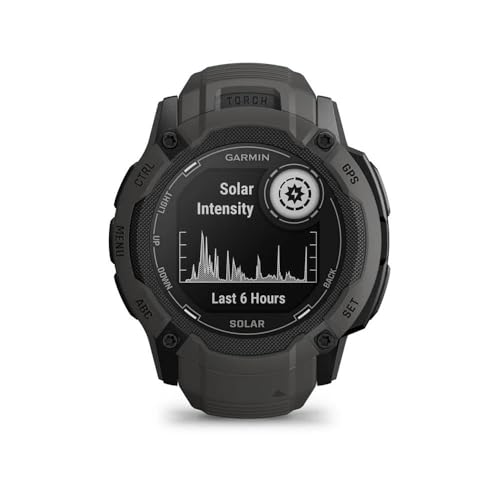
An honest Garmin Instinct 2X Solar review covering the 40 day battery, the unlimited solar claim, the LED torch, multi-band GPS and whether to buy it over the Instinct 3 Solar.
Best Exercise is a participant in the Amazon EU Associates Programme, an affiliate advertising programme designed to provide a means for sites to earn advertising fees by advertising and linking to Amazon.co.uk. As an Amazon Associate we earn from qualifying purchases. This comes at no extra cost to you and never influences our independent reviews or rankings.