Home Gym
Best Reformer Pilates Machine UK 2026: 6 Foldable Home Picks
The best reformer pilates machines for home use in the UK in 2026, from a £259 foldable to a £788 wooden frame. Honest picks, real specs and how to choose a pilates machine.

By Jack Atkins, Home Gym Equipment Specialist · Updated 4 October 2026
We may earn a commission from qualifying purchases made through links on this page, at no extra cost to you. This never affects our ratings.
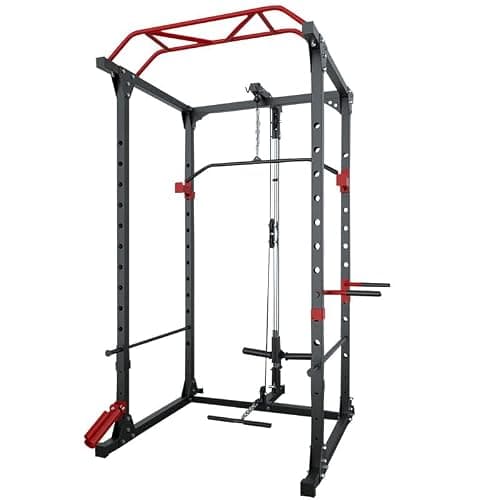
Most home gym racks make you choose: a solid cage with nowhere to attach a cable, or a flimsy multi-gym with a pulley bolted onto something that wobbles. The Strongway MultiGym Power Cage sits in the gap, offering a walk-in cage rated to 400kg with a dual pulley system, landmine and dip handles thrown in, all for a shade under £350 at the time of writing.
That combination is unusual at this price. It's also, inevitably, a set of compromises: the steel is thinner than a specialist rack, the pulleys have more friction than a gym cable station, and putting the thing together will occupy most of a Saturday. What matters is whether those compromises land in places you care about.
How we review
This review draws on Strongway's published specifications, verified owner reviews across UK retailers and comparisons with racks in the same price bracket. We have not stress-tested this exact unit over years of use, so the durability comments reflect consistent patterns in owner feedback rather than our own long-term testing. Prices and included attachments change, so check the current listing.
This is a rack for someone building a first proper home gym in a garage or spare room, who wants to squat and bench safely without a spotter and would also like lat pulldowns and cable work without buying a second machine. On that brief it does extremely well.
It's the wrong purchase if you already own a decent rack and want to add cables, since a wall-mounted pulley from our best cable machine UK guide will be smoother for less money. It's also wrong if you lift genuinely heavy, past 200kg on the bar, where the step up to 11-gauge steel and Westside hole spacing is worth paying for.
At 209cm high, 110cm wide and 140cm deep, this is a real cage rather than a squat stand with pretensions. You step inside it to lift, which is the entire point: safety bars sit either side of you, so a failed squat gets caught by steel rather than by hope. Strongway rates the whole structure to 400kg.
The uprights use standard round hole spacing rather than the tighter Westside pattern found on pricier racks. In practice that means squat J-cup height is easy to get right and bench press safety pin height is sometimes a centimetre or two off ideal. Annoying, not dangerous.
Two pull-up bars of different diameters run across the top, which is a nicer touch than it sounds. The thicker bar makes grip work harder; the thinner one is more comfortable for volume. Both are welded rather than bolted.
The honest limitation is steel thickness. Under a heavy squat you'll feel a small amount of give that you wouldn't in a commercial rack. It's not alarming and it's well within the rating, but people coming from a gym with Rogue or Eleiko racks will notice.
| Dimensions | 209cm H x 110cm W x 140cm D |
|---|---|
| Maximum capacity | 400 kg |
| Pulley system | Dual cable, two anchor points, plate loaded |
| Included attachments | Lat pulldown bar, straight bar, landmine with row holder, dip handles |
| Safety | Steel J-cups with safety locks, safety pins |
| Pull-up bars | Two, dual thickness |
| Hole spacing | Standard round hole |
| Weights included | No, barbell and plates sold separately |
| Assembly | Three to five hours, two people recommended |
This is the feature that justifies the purchase and also the one to set expectations about. Two anchor points let you run high and low cable work: lat pulldowns, seated rows, tricep pushdowns, cable curls, face pulls, wood chops. The included straight bar and lat bar cover most of it.
The system is plate loaded, meaning you hang your own weight plates rather than selecting from a stack. Cheaper, more flexible, and fiddlier between exercises. There's also a ratio to be aware of: like most home pulley setups, the load you feel is not identical to the plate weight, so don't compare numbers with the gym cable machine.
Cable smoothness is the weak point. Owners consistently describe the action as functional but slightly notchy, particularly in the first few weeks before the cables settle. Better than nothing by an enormous margin, worse than a dedicated station. If cable work is the main reason you're buying, look at a proper unit instead.
The reason to own a cage rather than a stand is that it lets you train hard on your own. Set the safety pins just below your bottom position and a failed rep costs you nothing but pride. That safety net changes what you're willing to attempt, and it's the difference between training near your limits and always leaving a couple of reps spare.
Depth is where the safeties earn their keep. Squatting through a full range rather than cutting reps short produces better results, and a scoping review on the deep squat and the knee joint found that deep squatting with good technique is safe for healthy knees. Set your pins to allow the depth you actually want, not the depth you're nervous about.
Two strength sessions a week hitting all the major muscle groups is the NHS baseline, and a cage plus a barbell covers every one of them without a second piece of equipment. That's the argument for a rack over a machine.
Set aside an afternoon and find a second pair of hands. The frame goes together straightforwardly; the pulley routing does not, and the diagrams leave a couple of steps to interpretation. Owners who've built one recommend laying out and labelling every bolt type before starting, which sounds fussy and saves an hour.
You'll also need to budget beyond the cage itself. A barbell worth using, at least 100kg of plates, a bench if you plan to press, and rubber flooring underneath unless your garage floor is expendable. Realistically that's another £300 to £500 on top, which is worth knowing before you convince yourself the rack is the whole cost.
For alternatives at both ends of the budget, our best power cage UK guide covers cheaper stands and heavier commercial racks, and the Strongway 177kg Multi Gym review looks at the brand's stack-loaded machine if you'd rather have weights included. To compare stack machines across brands, our best multi gyms guide ranks five of them by stack weight and footprint.
For the money, yes. You get a full walk-in cage rated to 400kg, a dual cable pulley system with two anchor points, a landmine, dip handles, J-cups and safety pins, all for under £400. The frame is not the 11-gauge steel of a specialist brand and the pulleys are functional rather than smooth, but no other rack at this price includes the cable station.
The cage stands 209cm tall, so you need at least 215cm of ceiling to get it upright, and realistically 230cm or more if you want to use the pull-up bar without folding your knees. Measure before ordering. Garage and loft conversions with sloped or low ceilings are the most common source of disappointed returns on racks this size.
Strongway rates it at 400kg maximum capacity across the frame. That is well beyond what almost any home lifter will put on it, and in practice the limiting factor is the J-cups and safety pins rather than the uprights. Treat 400kg as a structural rating, not an invitation.
No. The cage, pulley system and attachments are included but you supply your own barbell and plates, and the pulley system is plate-loaded rather than using a weight stack. Budget for a barbell and at least 100kg of plates on top of the purchase price.
Plan for three to five hours with two people, longer alone. The frame itself goes together reasonably quickly; the pulley system, cable routing and attachment brackets are where the time disappears. Owner reports consistently mention that the instructions are diagram-heavy and occasionally ambiguous about cable threading.
A full cage is safer for solo lifting because the safety bars catch a failed squat or bench from inside the frame, and it gives you more attachment points. A half rack takes less space and is easier to move. If you train alone with heavy weight and have the room, buy the cage.
The best reformer pilates machines for home use in the UK in 2026, from a £259 foldable to a £788 wooden frame. Honest picks, real specs and how to choose a pilates machine.

The best adult weighted blankets in the UK for 2026, with honest picks for hot sleepers, heavier users and daytime use, plus how to choose the right weight and what the research shows.
Are vibration plates worth it? Yes for balance, bone health support and low-impact warm-ups; no for weight loss or replacing strength training. The evidence.
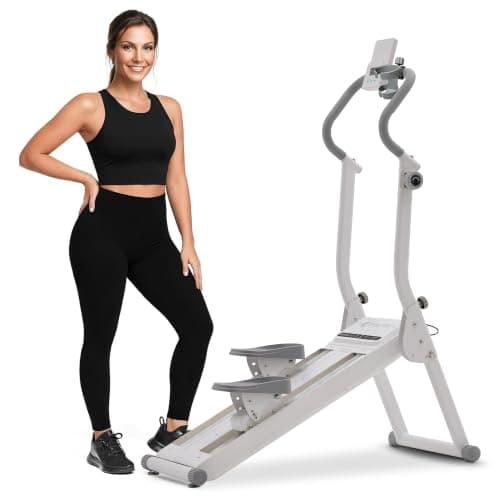
Our ExacMe magnetic stair climber review covers its 16 magnetic resistance levels, 48cm stride, 158kg user limit, app and noise claims, and who should buy it.
Best Exercise is a participant in the Amazon EU Associates Programme, an affiliate advertising programme designed to provide a means for sites to earn advertising fees by advertising and linking to Amazon.co.uk. As an Amazon Associate we earn from qualifying purchases. This comes at no extra cost to you and never influences our independent reviews or rankings.