Barbell vs Dumbbell: Which Is Better for a UK Home Gym?
By Jack Atkins, Home Gym Equipment Specialist · Updated 8 November 2026
If you've got the space, the budget and safety arms, a barbell is the better tool for getting as strong as possible on squats, deadlifts and presses. For most UK home gyms, though, dumbbells are the smarter first buy: they cost less to get started, fit in a spare corner, let you train safely alone and build just as much muscle for most people.
That's the quick version. Below, I'll go through what the research shows on strength and muscle, why stabilising and one-sided training matter, how each one progresses, and what each setup costs in a British spare room or garage.
The short comparison
Barbell
Dumbbells
Load you can lift
Highest; one bar, two hands, fixed path
Lower; around 17% less on a chest press in one study
Stabiliser demand
Moderate
Higher; each arm controls its own weight
Unilateral work
Limited (split squats, lunges with the bar on your back)
Excellent; rows, presses, lunges, step-ups one side at a time
Smallest load jump
2.5kg total with 1.25kg plates (less with fractional plates)
Usually 2kg to 2.5kg per dumbbell on adjustable sets
Safety training alone
Needs a rack or stands with safeties
Drop them to the sides
Floor space
About 2.5 to 3m width for a 7ft bar
Roughly 1m x 1m for a pair and a bench
Starting cost (at the time of writing)
Around £390 for bar, 100kg plates and stands
Around £230 for a 2kg to 20kg adjustable pair
Strength: the barbell lets you move more weight
A barbell locks both hands to one rigid bar, so neither arm has to steady its own load. That stability lets you lift more, and it's why powerlifting tests strength with barbell squats, bench presses and deadlifts.
The best direct comparison comes from Norwegian researchers who tested 12 trained men on a Smith machine, barbell and dumbbell chest press. The dumbbell 1RM was 17% lower than the barbell 1RM, and 14% lower than the Smith machine (Saeterbakken et al., 2011). If your goal is a bigger barbell bench, a squat or a deadlift total, you have to train with a barbell, because strength is quite specific to the movement you practise.
That specificity showed up in a follow-up training study. Thirty-six trained men did 10 weeks of chest pressing on dumbbells, a Smith machine or a Swiss ball. The dumbbell and Swiss ball groups improved most on the exercise they'd trained, and that effect appeared within the first seven sessions (Saeterbakken et al., 2016). The plain reading: you get best at what you practise, so choose the tool that matches the lift you care about.
Muscle: closer than most people think
Here's where the gap shrinks. In that 2011 study, pec and front shoulder activity didn't differ between the barbell and dumbbell press, even though the dumbbell load was much lighter. Biceps activity rose with the dumbbells (they're working to steady the weight), while triceps activity dropped compared with the barbell.
Muscle activity during a single lift isn't the same as long-term growth, so treat that as a clue, not proof. What drives hypertrophy is taking enough hard sets close to failure each week and adding load or reps over time. Both tools do that. Dumbbells give you a slightly longer range of motion on presses and flyes because the bar isn't stopping at your chest, and they let each side work on its own, so a weaker arm can't hide behind the stronger one.
For pure muscle building at home, I'd call this a draw that tilts towards dumbbells on practical grounds: you'll push closer to failure more often when a failed rep just means lowering the weights to the floor.
Stabilisers and unilateral training
Because each dumbbell moves on its own, your rotator cuff, forearms and trunk do more work keeping the weights level. That's useful for shoulder health and for spotting imbalances; if your left arm wobbles at 16kg while your right doesn't, a barbell would have masked it.
Dumbbells also make one-sided training simple. Single-arm rows, single-arm presses, Bulgarian split squats, step-ups and reverse lunges are all easier to load and set up with a dumbbell in each hand. Does training one leg at a time cost you strength? In a five-week study of 18 academy rugby players, one group only did rear-foot-elevated split squats and the other only back squats. Both groups improved back squat 1RM, split squat 1RM, 40m sprint and agility, with no meaningful difference between them (Speirs et al., 2016). It was a small study in young athletes, but it suggests that dumbbell-led leg work isn't a big compromise for general strength.
Where the barbell still wins is heavy hip and leg loading. Holding two 40kg dumbbells for a split squat is a grip test before it's a leg test, and a 140kg deadlift with dumbbells simply isn't possible. Once your legs outgrow what you can hold, the bar becomes the only sensible way to keep loading them.
Progression and loading
A barbell is the easiest thing in the gym to progress. A standard Olympic bar weighs 20kg (our guide to how much a barbell weighs covers the 15kg women's bar and lighter technique bars), and with a pair of 1.25kg plates you can add 2.5kg at a time. Fractional plates take that down to 1kg or less, which matters on presses where 2.5kg is a big jump. There's no realistic upper limit; you just buy more weight plates.
Adjustable dumbbells move in fixed steps, usually 2kg to 2.5kg per hand, and stop at their maximum. A 20kg-per-hand set is plenty for presses, rows and arm work for most people, but your legs and back will outgrow it. Our explainer on how adjustable dumbbells work compares the dial, pin and spinlock designs, and their limits. Heavier sets exist (40kg-per-hand pairs are on sale), but the price climbs quickly, which is part of the reason dumbbells are so expensive per kilo compared with plates.
Safety when you train alone
This is the point that decides it for a lot of home lifters. A barbell bench press without safeties is the most dangerous thing you can do in a home gym, because a failed rep leaves the bar on your chest or throat. Squats have the same problem in a different spot. If you go the barbell route, you need a squat rack or stands with spotter arms set just below the bottom of each lift, and you need to actually use them.
With dumbbells, a missed rep on the bench means lowering the weights to your sides and letting them drop to the floor (onto mats, ideally). That makes it much easier to train close to failure, which is what builds muscle, without a training partner.
Using a barbell alone
Set the safety arms 2cm to 5cm below your lowest point on the bench and squat, don't use collars on the bench press when there are no safeties, and practise dumping a squat backwards onto the arms with an empty bar before you need to.
Space and cost in a UK home gym
Prices below are from Amazon UK at the time of writing.
Barbell setup. A 7ft 20kg Olympic bar runs from about £80 to £120 (the Chase Fitness bar we list was £79.95; the PhysKcal bar, £119.99). A 100kg set of cast iron plates was around £217 to £230. Basic squat stands with spotter arms started around £90 to £125, and a full power cage costs more. That's roughly £390 before you add a bench, and you'll want flooring for deadlifts. The bar is about 2.2m long, so you need 2.5m to 3m of clear width and enough ceiling height for overhead presses, which rules out plenty of box rooms. Our home gym cost guide breaks the full budget down.
Dumbbell setup. The EnterSports 2kg to 20kg adjustable pair we review was £229.99, the 27kg-per-hand version £246.95, and the 40kg-per-hand BRAINGAIN set £369. A pair plus a bench fits in a space about a metre square, stores under a desk and doesn't need a garage.
So dumbbells are cheaper to start with and much smaller, while a barbell becomes cheaper per kilo once you need more than about 40kg per hand, because plates cost far less than adjustable dumbbell mechanisms.
Which should you buy?
You want general strength and muscle in a small space: adjustable dumbbells and a bench. This covers almost every upper-body exercise plus solid leg work, and it's safe to train hard alone.
You want to get strong on squats, deadlifts and bench: a barbell, plates and a rack with safeties. Nothing else loads your legs and back as heavily, and the specificity research says you have to train the barbell lifts to get good at them.
You're a beginner with no particular sport: start with dumbbells. Add a barbell when your goblet squats and dumbbell deadlifts feel easy at the heaviest setting.
You've got a garage and a bigger budget: own both. Use the barbell for your main heavy lift each session, then dumbbells for single-arm and single-leg accessory work. That's how most well-run strength programmes are set out.
The EnterSports pair is the one I'd point most people to first: 10 weight settings in 2kg steps from 2kg to 20kg, a quick dial change, and a price that leaves room for a bench. Our full EnterSports review covers the build and its limits, and our best adjustable dumbbells list has heavier options.
If you're going the barbell route, the Chase Fitness 7ft bar is an affordable 20kg Olympic bar with spring collars included. For better knurling and sleeves, compare it with the other bars in our best barbell guide.
Common mistakes
Comparing dumbbell and barbell numbers directly. Expect to press roughly 15% to 20% less in total with dumbbells. That's the stability cost, not weakness.
Benching a barbell without safeties. If you don't have spotter arms, press with dumbbells.
Buying a barbell for a room that can't fit it. Measure the width and ceiling height before you order.
Swinging or dropping adjustable dumbbells from height. Dial mechanisms aren't built for it; lower them under control.
Stopping at the dumbbells' maximum. When 20kg per hand gets easy on leg exercises, switch to slower tempos and single-leg work, or add a barbell.
Is a barbell or dumbbells better for building muscle?
Both build muscle well, because growth comes mainly from training hard enough with enough weekly sets. In a chest press study, dumbbells and a barbell produced similar pec and front delt activity, even though lifters handled about 17% less weight with dumbbells. Pick the tool you can train with consistently and load progressively.
Why can I lift less with dumbbells than a barbell?
Each dumbbell moves independently, so your shoulders and arms have to stabilise two loads instead of one fixed bar. Trained lifters in one study managed about 17% less on a dumbbell chest press than on a barbell bench press. That drop is normal and doesn't mean dumbbells are a weaker training tool.
Is it safe to bench press with a barbell at home alone?
Only with safeties. A rack or squat stand with spotter arms set just below your chest at the bottom of the rep lets you fail a rep without the bar pinning you. Without them, stick to dumbbells for pressing, since you can simply drop them to the sides if a rep stalls.
Should a beginner buy a barbell or dumbbells first?
Most beginners training at home should start with a pair of adjustable dumbbells. They cost less than a barbell, plates and rack together, take up a fraction of the floor space and are safer to push hard alone. Add a barbell later if heavy squats and deadlifts become your main goal.
How much space does a barbell setup need?
A standard 7ft Olympic bar is about 2.2 metres long, so you need roughly 2.5 to 3 metres of width to load plates and move safely, plus ceiling height for overhead pressing. A pair of adjustable dumbbells fits in a space about the size of a doormat.
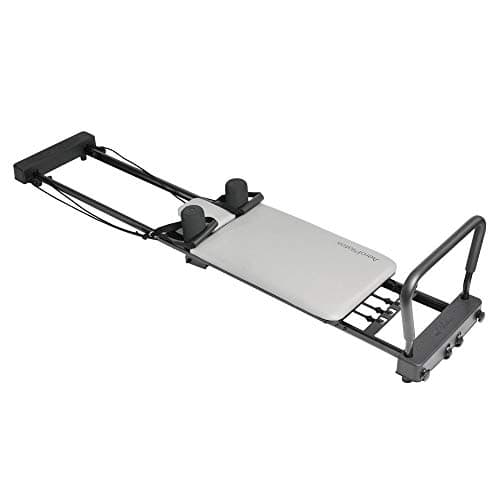
An honest AeroPilates Reformer 287 review: how this Aero Pilates reformer's three bungee cords, 300lb capacity and 216cm frame compare with spring reformers at a third of the price, and who should still buy one.
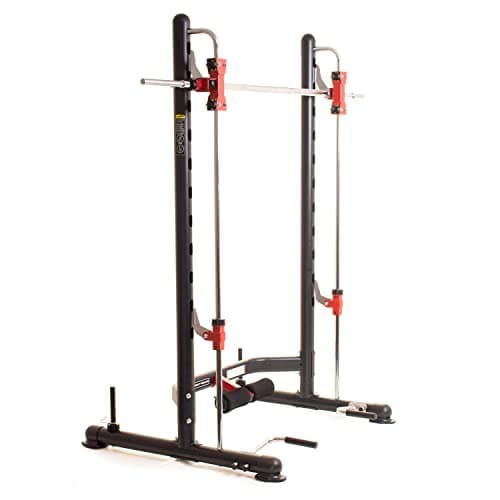
The best Smith machines for a UK home gym in 2026, from a compact Smith machine that fits a box room to full stations with cable stacks. Real dimensions, prices and who each one suits.
How to use the ab crunch machine properly: seat height, pad position, tempo and load. Muscles worked, how it compares to cable crunches, and home options.
What a leg raise machine (captain's chair or power tower) is, how to use it with good form, the muscles it works, and what to check before buying one for home.
Best Exercise is a participant in the Amazon EU Associates Programme, an affiliate advertising programme designed to provide a means for sites to earn advertising fees by advertising and linking to Amazon.co.uk. As an Amazon Associate we earn from qualifying purchases. This comes at no extra cost to you and never influences our independent reviews or rankings.