Home Gym
Fitbit vs Apple Watch: Which Should You Buy in 2026?
Fitbit vs Apple Watch for UK buyers: battery, price, Google Health Premium, GPS, accuracy research and apps compared, with a straight answer on which to buy.

By Jack Atkins, Home Gym Equipment Specialist · Updated 27 June 2026
We may earn a commission from qualifying purchases made through links on this page, at no extra cost to you. This never affects our ratings.
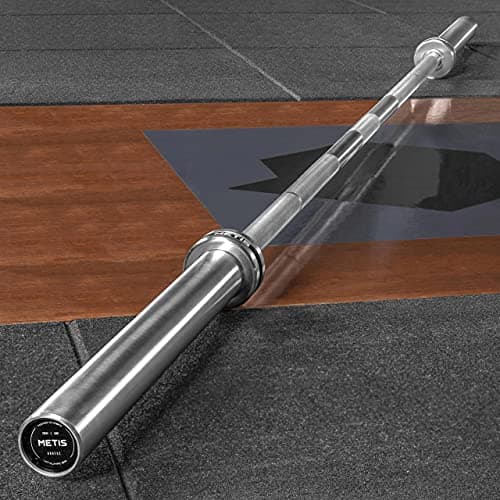
A barbell is the single most useful bit of kit in any home gym. One bar, a rack (see our best squat racks if you haven't got one yet) and a stack of plates covers squats, deadlifts, presses, rows and more, which is most of what builds real strength. The catch is that "barbell" covers everything from a 30 quid lump of steel to a precision Olympic bar, and the differences (knurling, tensile strength, sleeve spin, whip) actually matter once you start loading real weight. This guide picks the best Olympic barbells on Amazon UK for home lifting, across every budget, plus a shorter option for tight spaces.
Resistance training with free weights is one of the most evidence-backed things you can do for your health. The NHS recommends muscle-strengthening work on two or more days a week, and a barbell is the most efficient tool for hitting every major muscle group with a handful of compound lifts.
How we chose
We researched the most popular and best-reviewed Olympic barbells on Amazon UK rather than long-term testing every bar ourselves. We weighed up shaft diameter, knurling, weight rating and tensile strength, sleeve spin and finish against owner reviews, manufacturer specs and expert round-ups, then picked five that suit different budgets and spaces. Prices and specs are correct at the time of writing and change often, so always check the current listing before you buy.
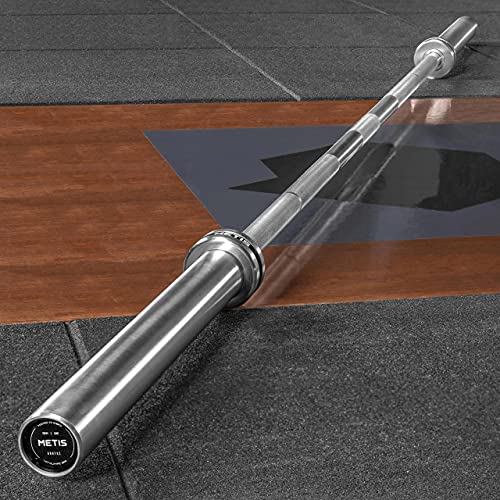
The METIS 20kg Olympic Barbell is the bar we would point most home lifters towards first. It is a proper 7ft, 28mm Olympic bar with 2 inch rotating sleeves, so it fits every standard rack, bench and plate set you are likely to own. The clever bit is that METIS sells it in three load tiers: a beginner spec around 320kg max load, a mid tier, and a pro version rated to a hefty 910kg. That lets you match the bar (and the price) to how heavy you actually train.
It suits anyone building a first home gym who wants one bar to grow into rather than out of. The knurling is medium, grippy enough for deadlifts without shredding your palms on higher-rep work, and the sleeves spin cleanly for cleans and snatches. Honest cons: the cheapest tier has lower tensile strength so it will whip a touch more under heavy load, there is no centre knurl (fine for most, a slight grip loss on heavy back squats), and you pay more for the higher-rated versions.
| Length | 7ft (approx 2.2m) |
|---|---|
| Weight | 20kg |
| Shaft diameter | 28mm |
| Max load | 320kg to 910kg (by tier) |
| Sleeves | 2 inch rotating |
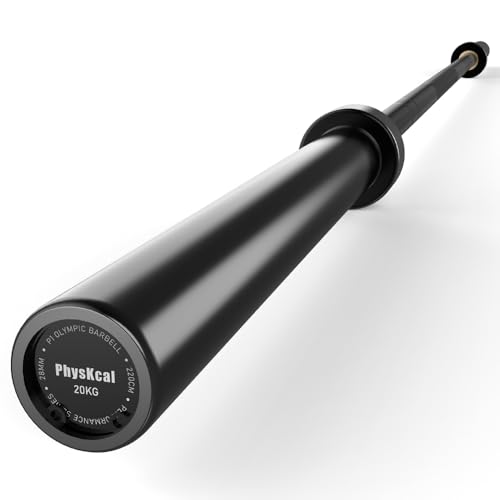
If you care most about clean, fast-rotating sleeves, this bar is the standout. PhysKcal build the sleeves around a hybrid bearing system that blends inner-race bearings with standard needle bearings, where most bars at this money make do with plain bushings. That matters because good spin lets the plates rotate independently of the shaft, which keeps your wrists out of trouble on dynamic lifts. It is rated to 750lb (about 340kg), which is plenty for almost any home lifter.
It suits anyone who lifts with any speed or technique, not just slow grinds. The shaft is the standard 28mm on a 2.2m, 20kg bar, cold-rolled from No. 45 steel with a 150,000 PSI tensile strength, so it stays stiff under a squat without feeling dead on fast lifts. It carries IWF knurl markings so you can set a repeatable hand position, and the 1.2mm medium-depth knurl rings grip firmly without shredding your palms. There is no centre knurling, so it will not chafe your back on squats. The E-coat black finish resists corrosion and impact better than bare steel. The trade-offs: at this spec it costs more than the budget bars below, a bearing bar rewards the occasional wipe down and re-oil to stay fast, and skipping the centre knurl does cost you a little bar grip on a heavy back squat.
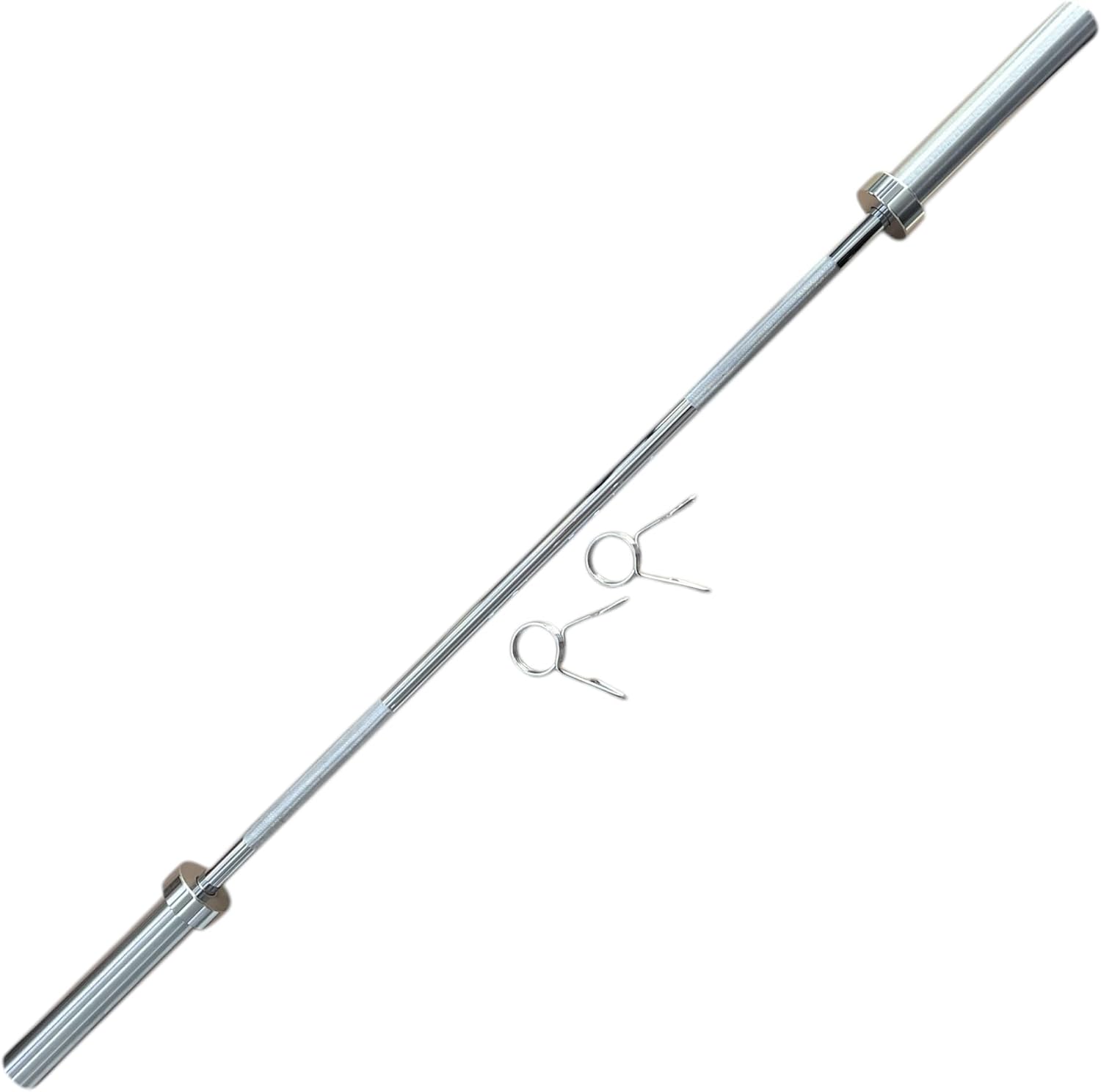
When you want a full-size Olympic bar without spending much, the Chase Fitness 20kg is the value pick. It is a heavy-duty steel 7ft bar rated to 700lb (around 320kg), takes standard 2 inch plates, and ships with a pair of spring collars so you can start lifting straight away. For a beginner setting up a first rack and plate set, that bundled, ready-to-go package keeps the total cost down.
It suits new lifters and anyone after a do-everything bar for squats, presses, rows and moderate deadlifts. The knurling gives a firm, secure grip whether you use straps or not, and the sleeves rotate well enough for general training. The honest cons are what you would expect at this price: the 320kg rating and lower tensile strength mean it is not built for heavy Olympic-lift drops or 250kg-plus pulls, the spring collars are basic (a set of lockjaw collars is a cheap upgrade), and the finish is more prone to surface rust if you store it somewhere damp, so wipe it down now and then.
| Length | 7ft (approx 2.2m) |
|---|---|
| Weight | 20kg |
| Max load | 700lb (approx 320kg) |
| Sleeves | 2 inch rotating |
| Included | Pair of spring collars |
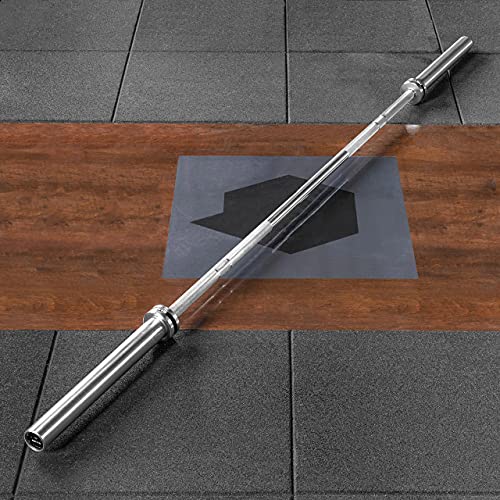
Not everyone has the room (or the rack width) for a full 7ft bar, and the METIS 15kg 6ft Olympic Barbell is the answer. At roughly 1.8m long and 15kg, it is shorter and lighter than a standard 20kg bar, so it fits tighter spaces, narrower racks and lighter lifters more comfortably. It still takes standard 2 inch Olympic plates, so it slots straight into an existing setup.
It suits smaller lifters, beginners who find a 20kg bar heavy to start with, and anyone training in a spare room or garage corner where a 2.2m bar simply will not swing. The lighter starting weight is genuinely useful for learning press and squat technique before you add plates. The catch is the shorter shaft: there is less room between the sleeves, so it can be a tight fit on wider racks, and you cannot load as many plates per side. Check the bar spans your J-hooks before buying, and treat it as a lighter, space-saving bar rather than a heavy-pulling powerlifting tool.
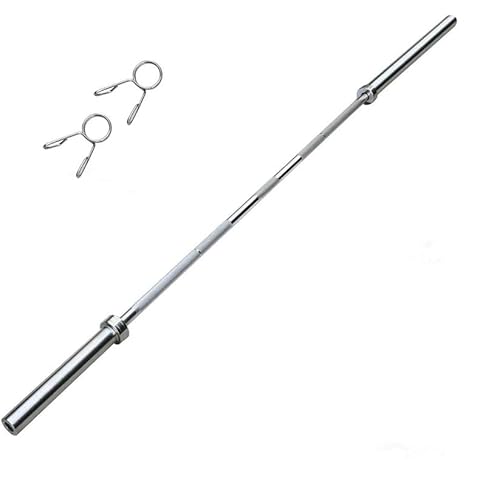
The Peak Supps chrome bar is the tidy, no-fuss daily driver. The hard chrome finish looks the part and resists rust better than a bare-steel budget bar, which is handy if your gym is a garage that gets a bit damp. It is a standard 7ft, 20kg Olympic bar that takes any 2 inch plate you already own, the grips are knurled and the sleeves are hardened, and Peak Supps rate it to 680kg (1,500lb), which is far beyond what almost any home lifter will ever load. Two quick-release spring collars come in the box, so you can load up the day it arrives.
It suits the lifter who wants a smart-looking, capable general-purpose bar for the usual compound lifts without overthinking the spec sheet, and that 680kg rating means you are unlikely to outgrow it. Be realistic about what the listing does not tell you, though. Peak Supps do not publish a tensile strength figure or a shaft diameter, so you cannot compare its stiffness and whip against the bars that do, and they do not say whether the sleeves run on bushings or bearings, so do not count on bearing-bar spin for cleans and snatches. It also costs more than the budget bars here. As a rust-resistant, well-rated daily driver with collars thrown in, it does the job well.
| Length | 7ft (approx 2.2m) |
|---|---|
| Weight | 20kg |
| Max load | 680kg (1,500lb) |
| Finish | Hard chrome (rust-resistant) |
| Included | 2 quick-release spring collars |
A few specs separate a good home gym barbell from a frustrating one. Worth knowing before you spend:
A barbell on its own is only half a setup. To actually train you also need weight plates to load it, a power cage or rack to squat and press safely out of, and ideally some gym flooring to protect both the bar and your floor. Resistance training is also the most reliable way to build and keep muscle as you age, with even minimal-dose programmes shown to improve strength and function, so the bar earns its keep.
The right barbell comes down to your budget, your space and how heavy you train. Here is the quick version:
A quick safety note: always fit your collars, set the safety pins on your rack at the right height, and use the NHS strength exercise guidance on sets and reps as a starting point. Build the weight up gradually and keep your technique honest before you chase numbers.
For most home lifters the METIS 20kg Olympic Barbell is the best barbell in the UK. It is a standard 7ft, 28mm Olympic bar, comes in three load ratings (from a beginner spec up to a 910kg pro version), takes all standard 2 inch Olympic plates and pairs with most racks and benches. It hits the sweet spot of price, build quality and versatility for squats, deadlifts, presses and rows.
An Olympic barbell has 2 inch (50mm) rotating sleeves at each end and a 28 to 29mm shaft, and it usually weighs 20kg (15kg for the women's bar). A standard barbell has thin 1 inch (25mm) ends that do not rotate and takes smaller standard plates. Olympic is the format used in almost every home and commercial gym, so unless you already own 1 inch plates, an Olympic bar is the one to buy.
It depends on the bar. Budget Olympic bars are typically rated to around 300 to 320kg, mid-range bars to 450 to 680kg, and stronger bars to 700kg or more. The METIS 20kg is sold in tiers up to 910kg max load. For almost all home lifters the load rating is not the limiting factor, since you are unlikely to ever load 300kg, but a higher tensile strength bar will whip and bend less under heavy weight.
Knurling is the cross-hatched pattern cut into the shaft where your hands grip. It bites into your skin to stop the bar sliding, which matters most on heavy deadlifts and pulls. Aggressive knurling grips harder but can feel sharp on high-rep sets, while smoother knurling is kinder to the hands but slips more when sweaty. Centre knurling helps the bar grip your back when squatting, though it can chafe, so many home bars leave it off.
A full Olympic 7ft bar is around 2.2m long and needs a rack or stands roughly 1.1 to 1.3m wide to sit in. If you train in a tight space or a power cage with narrow uprights, measure the gap first. A 5ft or 6ft bar like the METIS 15kg is shorter and lighter, which suits small rooms and lighter lifters, but check it spans your J-hooks before you buy.
Most budget and mid-range Olympic bars are not designed to be dropped from overhead, especially with iron plates, as it can bend the shaft or damage the sleeves over time. If you plan to do Olympic lifts or deadlift drops, pair a higher tensile strength bar with bumper plates and a platform or rubber gym flooring to protect the bar, your plates and your floor.
Fitbit vs Apple Watch for UK buyers: battery, price, Google Health Premium, GPS, accuracy research and apps compared, with a straight answer on which to buy.
Every common leg machine at the gym named and explained: what each one trains, a beginner leg machine workout, and which leg machines make sense for a home gym.
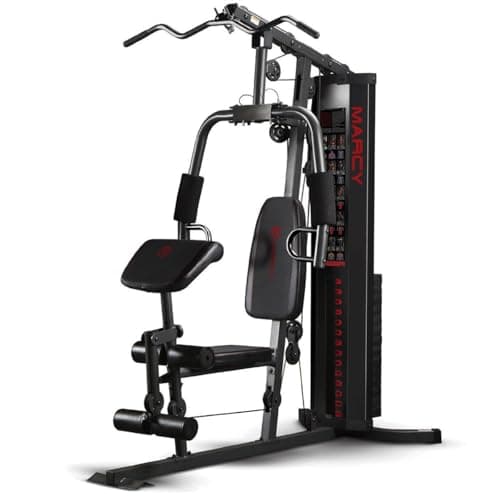
Our Marcy HG3000 multi gym review: the 68kg stack versus the 90kg claim, pec dec, preacher pad, leg extension, 210cm height, £599 price and who it suits.
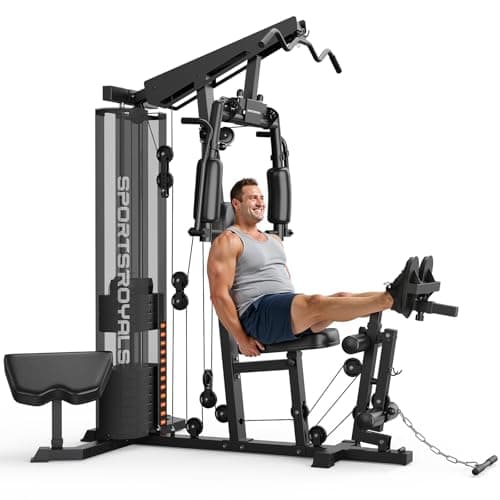
SPORTSROYALS home gym review: the 68kg stack, leg press and chest fly stations, 191 x 131cm footprint, 142kg build, £759.99 price and who it suits in the UK.
Best Exercise is a participant in the Amazon EU Associates Programme, an affiliate advertising programme designed to provide a means for sites to earn advertising fees by advertising and linking to Amazon.co.uk. As an Amazon Associate we earn from qualifying purchases. This comes at no extra cost to you and never influences our independent reviews or rankings.