Recovery
Compression Boots Benefits: What the Research Actually Shows
The real benefits of compression boots, judged against the research: what helps (soreness, feeling recovered), what doesn't hold up, and who should avoid them.

By Mike Shilling, Recovery & Training Editor · Updated 5 September 2026
We may earn a commission from qualifying purchases made through links on this page, at no extra cost to you. This never affects our ratings.
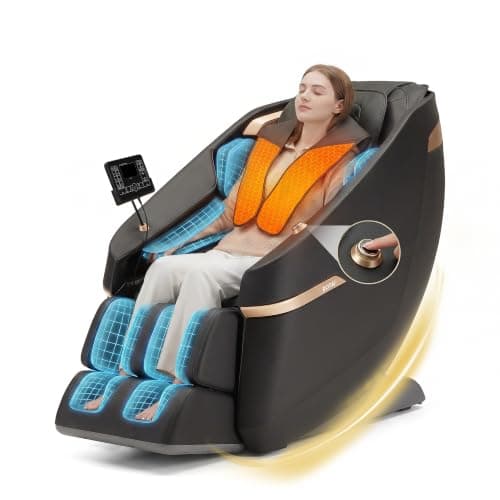
Massage chairs split cleanly into two groups. Above roughly £2,000 you get an SL-track, a body scan and 3D rollers that adjust how far they push into you. Below it you get fixed rollers on a fixed path, and the honest question is whether that still feels good. The ROTAI A37 sits at £645.98, and the answer is yes, provided you want a soft massage rather than a deep one.
How we review
This review is based on ROTAI's published specifications, consistent themes across verified UK owner reviews, and the published research on massage and recovery. We have not lived with this chair for six months, so long-term reliability is the one thing we cannot speak to directly.
ROTAI splits the massage into three independently driven roller groups running 24 balls across the shoulders, neck, back and hips. Fixed means the rollers travel a set path at a set depth: no body scan measures your shoulder height, and no 3D mechanism pushes deeper into a knot when you ask it to. What you can change is intensity, across five levels, and which of the 15 automatic programmes or 7 manual settings you run.
The result is broad, warm and mild. Owners who want to be pinned to the chair by a thumb roller between the shoulder blades will be disappointed, and ROTAI does not pretend otherwise; the listing openly targets people who prefer a gentle massage and older users. Judged on that brief it does well, because the wider ball spread covers more back than a narrow SL-track does at this money.
Check the ROTAI A37 price on AmazonThree zero gravity positions recline you until your knees sit above your heart. It is the feature most owners describe using every day, and it does more for a tired lower back than the rollers do. The chair also rocks, which sounds like a gimmick and turns out to be the thing people fall asleep in.
Two carbon fibre heating pads run to 45C under independent control, and they detach so you can put them on your front instead. Local heat has better evidence behind it than most recovery gadgets: applied after exercise-induced muscle damage, it has been shown to help restore strength and reduce soreness (local heat therapy after exercise-induced muscle damage). Underneath, six-speed foot rollers work the soles, which is either the best part of the chair or the part you turn off, depending on your tolerance for having your arches pressed.
Bluetooth connects your phone to the chair's speaker. It works. Nobody buys a massage chair for its audio.
| Roller system | 24 fixed massage balls, 3 independent magnetic core groups |
|---|---|
| Auto programmes | 15 |
| Manual settings | 7 |
| Intensity levels | 5 |
| Zero gravity | 3 positions |
| Heat | Independent carbon fibre pads, up to 45C, detachable |
| Foot rollers | Yes, 6 speeds |
| Extras | Rocking function, Bluetooth speaker |
| Assembly | None, ships in one piece |
| Chair size | 0.74 m wide x 0.72 m deep x 1.04 m tall |
| Weight | Approx 65 kg |
| Doorway clearance needed | 78 cm minimum |
| Warranty | 2 years manufacturer |
| Price at review | £645.98 |
Massage does two things well. It reduces delayed onset muscle soreness, which a meta-analysis of controlled trials found to a consistent degree across studies (massage and delayed onset muscle soreness), and it improves flexibility and perceived fatigue, which a systematic review of sports massage confirmed while finding no meaningful effect on performance itself (sports massage, performance and recovery).
The wider picture is more sobering, and worth knowing before you spend £646. A 2026 network meta-analysis of recovery methods in endurance athletes found limited evidence that any of them beat simply resting (recovery modalities compared with passive recovery). Buy this chair because sitting in it after a long day is a pleasure and it makes you stretch out for twenty minutes you would otherwise spend hunched at a desk. Do not buy it expecting to train harder next week because of it.
It suits a household where more than one person will use it, where a soft daily massage in front of the television is the goal, and where an armchair-shaped object in the lounge is acceptable. Older users and anyone with a stiff lower back get the most from the zero gravity recline.
It does not suit a lifter chasing pressure into specific tight spots. For that, £646 buys a very good massage gun with change for compression boots, and both let you target one muscle properly. If your problem is specific trigger points rather than general tightness, read our guide to muscle knots first, because a fixed-roller chair will roll straight past them.
See today's ROTAI A37 priceNo. It ships as one piece, so you unbox it, plug it in and use it. The catch is getting it through the house: ROTAI asks for at least 78cm of doorway clearance, and the chair weighs around 65kg.
It is deliberately gentle. ROTAI markets the 24 fixed rollers as suiting people who want a soft massage and older users, and owner reviews match that. If you want deep tissue pressure between the shoulder blades, this is the wrong chair.
The chair reclines and lifts your knees above your heart, which takes load off the lower spine and hips. The A37 has three of these positions, and it is the setting most owners end up living in.
There is no arm or calf airbag compression on this model. You get back and hip rollers, heated pads and six-speed foot rollers, which is the usual specification at this price.
Roughly 0.74m wide and 1.04m tall upright, but you need clearance behind it to recline. Measure at least 40cm of wall gap before you commit, and remember it also rocks.
For feeling less sore and more relaxed, massage has decent evidence behind it. For actually recovering performance faster than simply resting, the evidence across recovery devices is much weaker, so buy it for comfort rather than for adaptation.
The real benefits of compression boots, judged against the research: what helps (soreness, feeling recovered), what doesn't hold up, and who should avoid them.
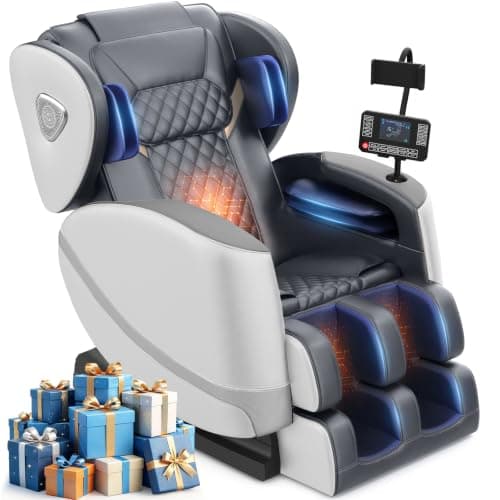
Our FURNIMAT massage chair review of the £470 zero gravity model: 14 fixed nodes, 8 airbags, heat and 165 degree recline, plus a footrest that suits shorter users.
Infrared sauna vs traditional sauna compared: heat, sweat, session length, what the research supports, home costs and safety, plus which one to pick and why.
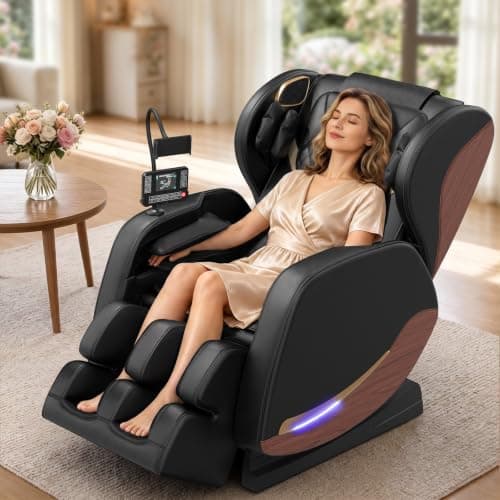
Our yewglen massage chair review: 14 fixed rollers, 8 airbags, back and leg heat, 165 degree recline and a 175cm height cap, compared with rival budget chairs.
Best Exercise is a participant in the Amazon EU Associates Programme, an affiliate advertising programme designed to provide a means for sites to earn advertising fees by advertising and linking to Amazon.co.uk. As an Amazon Associate we earn from qualifying purchases. This comes at no extra cost to you and never influences our independent reviews or rankings.