Home Gym
Best Adjustable Dumbbells UK: 6 Top Picks for 2026
The best adjustable dumbbells in the UK for 2026, from quick-dial sets to heavy 40kg and 50kg options. Budget to premium picks researched and ranked.

By Jack Atkins, Home Gym Equipment Specialist · Updated 25 October 2026
A half rack is a barbell rack with two tall uprights at the front and a shorter, lighter frame behind them, and you lift standing in front of it rather than inside it. Long spotter arms reach forwards to catch a failed squat or bench, the back frame usually carries plate storage, and most have a pull-up bar across the top. It's the middle ground between a set of squat stands and a full four-post power cage: more open and usually cheaper than a cage, but far safer than stands. If you're short on space and want to train the big lifts on your own, it's often the best fit. Here's how it compares, who it suits and what to check before you spend any money.
Picture a power rack with the front pair of uprights kept full height and the back pair pulled in close, sometimes only 30cm to 60cm behind. That shorter back section stiffens the frame and holds your plates. Your J-hooks (the cups that hold the bar) sit on the front uprights, and the spotter arms slot in at whatever height you need.
When you squat, you walk the bar out and stand in front of the uprights. When you bench, the bench goes in front too. Miss a rep, and you lower the bar onto the arms instead of getting pinned. The whole system works only if those arms are long enough and set a couple of centimetres below the lowest point of your rep.
The three options trade safety against space and money. Here's how they line up for a typical home gym.
| Lifting position | Squat stands: between the posts. Half rack: in front of the uprights. Power rack: inside the cage |
|---|---|
| Safety catches | Squat stands: short or none. Half rack: long arms out the front. Power rack: pins or straps on both sides |
| Footprint | Squat stands: smallest. Half rack: shallow frame, but arms add depth. Power rack: largest closed box |
| Stability | Squat stands: lightest. Half rack: usually needs bolting or loaded pegs. Power rack: most stable free-standing |
| Typical extras | Squat stands: few. Half rack: plate pegs, pull-up bar. Power rack: pull-up bar, attachments, sometimes cables |
| Rough UK price | Squat stands: £80 to £250. Half rack: £200 to £700. Power rack: £300 to £1,500+ |
Safety. A power rack wins, and it isn't close for the heaviest lifting. Inside a cage, a bar that drifts forwards or backwards still lands on a pin. A half rack only protects you in front, so if your bench path wanders towards your face or a squat tips you forwards past the end of the arms, you're on your own. That's why arm length matters so much (more on that below). Squat stands come last: many have tiny catches or none at all, which is fine for a lifter who knows how to dump a bar but risky for anyone training to failure.
Footprint. A half rack's frame is shallower than a cage, but don't be fooled by the listing photos. Once you add spotter arms, a barbell and room to step back, you need roughly the same floor depth as a power rack. Where it does save space is visually: the open front makes a garage or spare room feel less crowded, and you can load and unload plates without reaching through a cage.
Ceiling height. This catches out a lot of UK buyers. Most racks stand roughly 200cm to 230cm tall, and a standard UK ceiling is about 240cm. A half rack will fit in a typical room, but you may find you can't do a strict pull-up on the top bar without your head hitting plaster. Some half racks come in shorter versions for this reason; if your ceiling is low, squat stands or a short rack can be the sensible call.
Bolting. A full cage has four posts and a wide base, so most are stable free-standing. A half rack puts its weight at the front, which makes it more likely to tip or walk, especially under kipping pull-ups or a hard re-rack. Check whether the model you're looking at expects to be bolted down, counterweighted with plates on the rear pegs, or both. If you're renting or training on a suspended timber floor, that matters a lot.
A half rack makes most sense for:
It's a weaker choice if you train to absolute failure on heavy squats with nobody watching, because a cage simply catches more bad reps. And if floor space is the real constraint, a wall-mounted folding squat rack can fold away when you're done, which no half rack can do.
Listings often bury the numbers that matter. These are the ones we'd look for first.
This is the single biggest safety spec on a half rack. Short arms, say 40cm to 50cm, only cover you if the bar comes straight down. Longer arms, around 60cm to 90cm, are much more forgiving on a bench press or a squat where you tip forwards. If the listing doesn't give arm length, ask the seller or pick a different rack.
Budget racks often use 50mm x 50mm uprights in thinner steel; heavier racks move to 60mm x 60mm or 75mm x 75mm with steel around 3mm thick (often listed as 11 gauge). Bigger, thicker uprights flex less when you re-rack and they open up a wider range of attachments. Check which size your rack attachments need, because a dip bar or landmine made for 50mm uprights won't fit a 75mm frame.
Holes every 5cm to 7cm are common on cheaper racks. That sounds small, but on a bench press the difference between a safety arm set too high and one set too low can be a couple of centimetres. Tighter spacing through the bench and squat zone, sometimes called Westside spacing, lets you set the arms and J-hooks exactly where you need them.
Treat a rated load as a ceiling, not a target. Budget half racks are often rated somewhere between 200kg and 350kg, while heavier models claim far more. A sensible rule is to pick a rack rated well above anything you'll ever lift, because the arms take a shock load when you dump a bar, not a gentle placement.
Check the pull-up bar's height against your ceiling, and see whether it's a straight bar or a multi-grip one. Count the storage pegs and check their length too: two short pegs at the back won't hold a full set of plates, and loaded pegs often double as counterweight, so their position affects how stable the rack feels.
The GYM MASTER GM1 Half Power Rack is one of the cheaper half racks currently in stock on Amazon UK, and it comes with a dual cable pulley built in, with safety spotters as an option. That's a lot of kit for the price, though the listing describes the spotters as optional, so check exactly what's included before you order. Budget racks at this level tend to use lighter steel than commercial models, which suits sensible home loads rather than heavy powerlifting.
Check price on AmazonIf you'd rather have the full cage, the four-post version of the same rack is covered in our GYM MASTER GM1 power rack review, and our best squat rack guide compares stands and half racks across a range of budgets.
Prices move around, but in the UK they broadly fall like this:
Remember to budget for the rest of the setup. A bar, plates and a bench can easily cost as much as the rack itself, and you'll want rubber flooring under it too.
Buying on rated load alone. A high number on the listing means little if the spotter arms are 40cm long. Arm length and hole spacing decide how safe the rack is in practice.
Ignoring the ceiling. Measure first. Rack height plus 30cm to 40cm of headroom is what you need for pull-ups, and a standing overhead press with a long bar needs room too.
Skipping the bolts. Half racks are front-heavy by design. If the instructions say bolt it down or load the rear pegs, do it before your first heavy set.
Setting the arms too low. Arms that sit 10cm below your bottom position won't save you; they'll just mean the bar lands on your chest or back first. Set them a couple of centimetres below the lowest point of the lift and test with an empty bar.
You can run a full strength programme around one. Squats, bench, overhead press, rack pulls and pull-ups cover the major muscle groups, which lines up with the NHS advice to do muscle-strengthening activity on at least two days a week. Two or three full-body sessions a week, each built around one squat or hinge, one press and one pull, will take most people a long way.
The spotter arms are what make solo training realistic. They let you squat to full depth with confidence, and done with good technique and sensible loads, a deep squat is safe for healthy knees (scoping review on the deep squat and the knee joint). Regular resistance training also brings wider health benefits beyond strength, from bone density to metabolic health, as one widely cited review on resistance training as medicine sets out. For more kit to build around the rack, browse our home gym section.
A half rack is a barbell rack with two main uprights at the front and a shorter frame behind them, usually carrying plate storage pegs. You lift standing in front of the uprights rather than inside a cage, and long spotter arms stick out forwards to catch the bar if you fail a rep. It sits between a set of squat stands and a full four-post power rack.
It can be close, as long as it has properly long spotter arms and you set them at the right height. A power rack is still a little safer because you lift inside a closed box with catches on both sides, so a bar that drifts forwards or backwards has nowhere to go. With a half rack, the arms need to reach well past where the bar travels on a squat or bench, so check their length before you buy.
Many do. Because the main uprights sit at the front and the back frame is shorter and lighter, a half rack can tip or walk if it isn't anchored or counterweighted. Some designs rely on loaded plate pegs at the back to add stability, while others need bolting to a concrete floor. Read the manufacturer's instructions and don't do kipping pull-ups on an unbolted half rack.
Most half racks stand somewhere around 200cm to 230cm tall, and a typical UK room has a ceiling of roughly 240cm. That fits the rack, but it may not leave enough headroom for pull-ups on the top bar or for a standing overhead press. Measure the ceiling and compare it with the rack height plus about 30cm to 40cm if you want to use the pull-up bar.
For most people training alone, yes. Squat stands are cheaper and take up almost no room, but their safety catches are usually short or missing and many models are light enough to move under a heavy bar. A half rack gives you longer spotter arms, a heavier frame, plate storage and usually a pull-up bar, which makes it a better long-term base for a home gym.
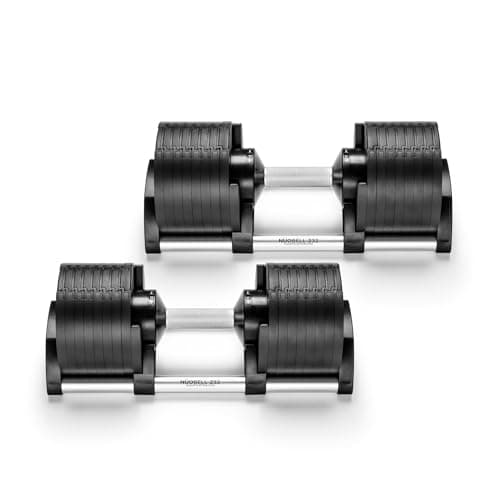
The best adjustable dumbbells in the UK for 2026, from quick-dial sets to heavy 40kg and 50kg options. Budget to premium picks researched and ranked.
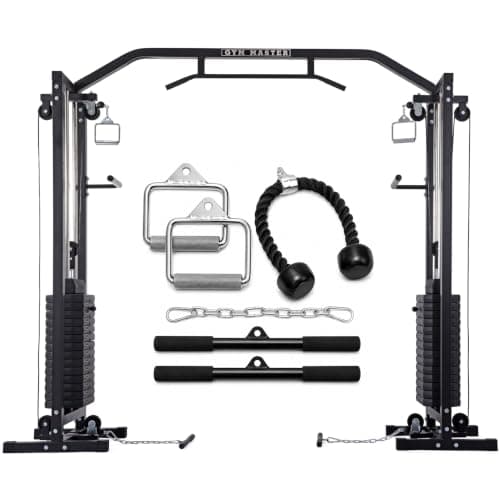
The best cable machines in the UK for 2026, from dual cable machines and functional trainers to wall-mounted and folding designs. Honest picks for any home gym and budget.
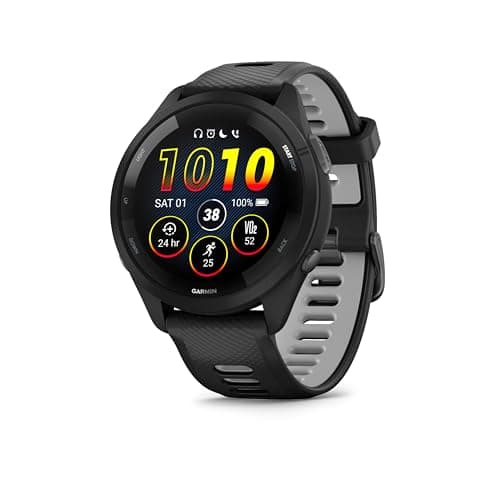
The best Garmin watch for most UK buyers in 2026 is the Forerunner 265, but not for everyone. Five models compared honestly, from the £162 Forerunner 165 to the fēnix 8.
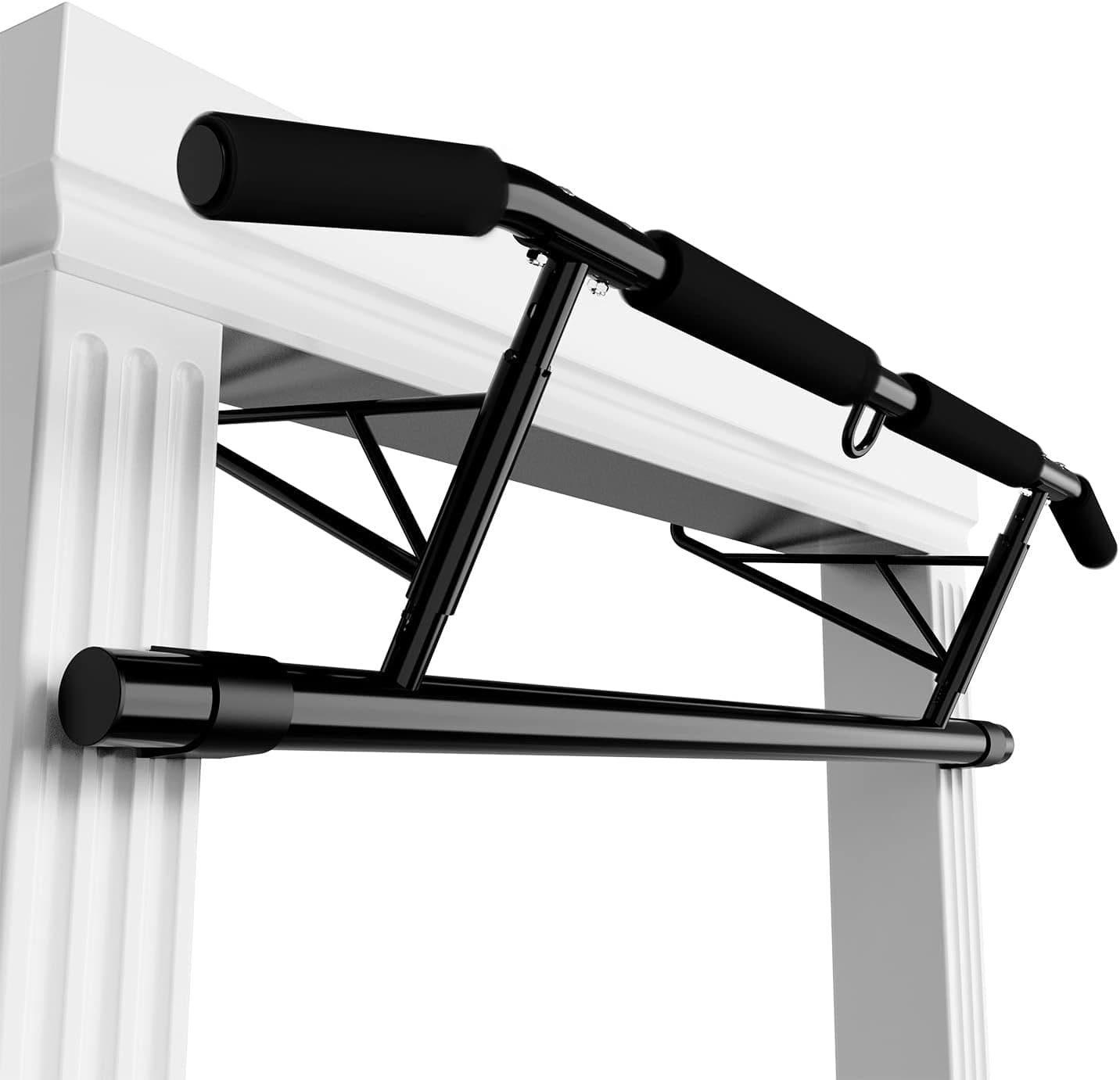
The best pull up bars in the UK for 2026: no-drill doorway bars, wall mounted pull-up bars and free standing power towers, with frame sizes, weight ratings and honest picks for every budget.
Best Exercise is a participant in the Amazon EU Associates Programme, an affiliate advertising programme designed to provide a means for sites to earn advertising fees by advertising and linking to Amazon.co.uk. As an Amazon Associate we earn from qualifying purchases. This comes at no extra cost to you and never influences our independent reviews or rankings.