Home Gym
Best Adjustable Dumbbells UK: 6 Top Picks for 2026
The best adjustable dumbbells in the UK for 2026, from quick-dial sets to heavy 40kg and 50kg options. Budget to premium picks researched and ranked.

By Jack Atkins, Home Gym Equipment Specialist · Updated 25 October 2026
The best rack attachments to buy first are safety spotter arms (if your rack lacks them), then dip bars, then a landmine, then a lat pulldown or low row unit; everything else is a nice extra. Before you buy any of them, though, you need to know three numbers about your rack: the upright size, the hole diameter and the hole spacing. Get those wrong and the attachment simply won't fit. UK search results for "rack attachments" are almost entirely shop pages trying to sell you everything at once, so this guide ranks the common add-ons by how much they actually change your training, and flags the ones that aren't worth the money for most home gyms.
How we put this together
This guide is research-based. We worked from manufacturer spec sheets, product listings and the recurring patterns in owner feedback, plus our own power rack coverage on this site. We haven't run a hands-on test of every attachment named here, and we say where your rack's specs decide whether something is a good buy.
Every rack attachment in the UK is sold against a specific rack standard, and those standards are not interchangeable. Measure your rack before you browse, not after.
The upright is the vertical steel tube. You'll mostly see three sizes in UK home gyms:
Some racks also use rectangular tubes such as 50x75mm. If yours does, check whether an attachment mounts on the narrow face or the wide face, because the listing won't always say.
Measure the outside of the tube with a tape or calipers. Don't trust the product name of your rack; a "heavy duty" rack can still use 50mm steel.
This is where most mistakes happen. Attachments hang on pins or hooks that pass through the holes in your uprights, and the pin has to match the hole. Common sizes are around 25mm (1 inch) on heavier racks and around 16mm (5/8 inch) on lighter ones, but plenty of budget racks use something in between. A pin that's too thick won't go in at all. A pin that's much thinner than the hole will rattle and sit at an angle, which is fine for a band peg and not fine for a spotter arm.
Spacing is the distance between hole centres down the upright. A typical rack uses around 50mm (2 inch) spacing, which is fine for squats and most attachments. Westside spacing tightens that to around 25mm (1 inch) through the bench press zone, so you can set J-cups and safeties at precisely the right height for your arch and arm length. If you bench heavy inside the rack, Westside spacing is genuinely useful; if you mainly squat and do accessories, it barely matters.
Spacing also affects attachments that use two pins, like some dip bars and spotter arms. If their pins are fixed at 50mm apart and your rack's holes are 60mm apart, they won't seat.
Write these four numbers down
Upright width, upright depth, hole diameter and hole spacing. Keep them in your phone. Every attachment listing worth buying from states at least the first three, and if one doesn't, ask the seller or move on.
Here's the order we'd buy in for a typical home gym built around a power cage or squat rack. If you're still choosing the rack itself, our best power cage guide covers which models come with what, and the WINNOW power cage review shows how much a mid-price cage bundles in.
If your rack didn't come with safeties, buy them before anything else. Training alone means nobody's there to take the bar when a rep stalls, and a study of weight training injuries presenting to US emergency departments found the single most common mechanism was a weight dropping on the person, at 65.5% of cases (Kerr et al., American Journal of Sports Medicine, 2010). Safeties exist to stop exactly that.
There are three main styles:
Don't save money here. Look for a stated load rating, a solid pin rather than a thin hook, and a lip or upturned end that stops a dropped bar rolling off.
Dip bars are the attachment most people end up using every week. Bodyweight dips work chest, triceps and front shoulders, and once you can do 15 clean reps you can add a belt and plates. Most rack-mounted dip bars also double up for knee raises and inverted rows.
Two designs dominate. Y-shaped or V-shaped bars give you a range of grip widths in one unit; parallel handle pairs (one on each upright) let you set the width to your shoulders. The Y-shape is quicker to fit, while the paired handles are usually more stable on wider racks.
A dip bar that grips several upright sizes is handy if you might upgrade your rack later. The AmStaff Fitness unit below is listed for 2x2, 2.5x2.5 and 3x3 inch uprights with 1 inch holes, so check your hole diameter before ordering; a 50mm rack with smaller holes won't take its pins.
Check AmStaff Fitness dip bar attachment on Amazon£52.66If you own a GYM MASTER rack, the brand's own Y-shaped dip handle is the safer bet for fit, since it's built for that rack's dimensions.
Check GYM MASTER GM3 Y dip bar on Amazon£54.99A landmine anchors one end of a barbell so the other end moves in an arc. It's cheap, it takes up almost no space, and it opens up presses, rows, rotational work and goblet-style squats that are easier on the shoulders than straight overhead pressing. Rack-mounted landmines slot into an upright hole or sleeve over a pin, so the same compatibility rules apply. Our full landmine attachment guide compares rack-mounted, plate-post and floor versions in detail, and explains why the plate-post type is a reasonable alternative if nothing fits your rack.
This is the biggest upgrade on the list in both price and capability. A rack-mounted pulldown turns your cage into a cable station for pulldowns, seated rows, tricep pushdowns and face pulls. Most are plate-loaded and bolt to the top crossmember and rear uprights.
Honest notes: the cable action on a bolt-on unit is usually rougher than a commercial machine, and it adds force to the top of your rack, so a light 50mm rack that isn't bolted down or weighted can rock. Check the attachment's rack-depth range too, since a pulldown designed for a 120cm-deep cage won't suit a shallow one. If you can already do pull-ups and chin-ups, this can wait. If you can't, it's the most useful way to build up to them. Our lat pulldown attachment guide covers both the rack-mounted units and the handles you'll want with them.
Plate pegs or horns bolt to the uprights or rear base and keep your plates off the floor. They're a small buy that does more than tidy up: plates loaded on the back of a rack add weight to the frame, which reduces walking and tipping during pull-ups and band work. Load storage symmetrically so one side isn't carrying 80kg more than the other. This is one place where cheap pegs are usually fine, as long as the bolt or pin size matches your holes.
Band pegs sit at the base of the rack so you can anchor resistance bands for banded squats, bench and band-assisted pull-ups. They're inexpensive and occasionally useful. Most people who aren't running a powerlifting programme with accommodating resistance use them rarely, so buy them when you need them, not as part of a bundle.
The J-cups that come with budget racks are often bare steel, which chews up your bar's knurling and makes a racking clang every set. Upgrading to cups with a plastic or UHMW lining protects the bar and makes re-racking quieter. Fit is critical here: J-cups are sized precisely to upright and hole specs, so stick to the rack maker's own cups or ones that list your exact upright size. A J-cup that sits at an angle is a safety problem, not a cosmetic one.
Jammer arms are lever arms that pivot from the base or front of a heavy rack, letting you do explosive standing presses, rows and squats along a fixed arc. They're good fun and genuinely different from barbell work. They're also expensive, mostly made for 75mm racks, and need a rack that's bolted down or very heavy, because they put a lot of leverage through the frame. For most home gyms, a landmine gives you much of the same arc-pressing feel for a fraction of the cost.
A monolift lets you walk the bar straight off the hooks into your squat stance with no backward walkout. Serious powerlifters training very heavy squats like it; almost nobody else needs it. It's a specialist, high-cost purchase that only makes sense on a 75mm commercial-grade rack.
Pull-up bar upgrades with multiple grips, rack-mounted dip-and-row combos, weight horns for barbell storage, cable pulley wheels that hook onto the top crossmember, and phone or water bottle holders all exist. The pulley wheel kits are the most useful of these if you want a basic cable setup without paying for a full pulldown unit, though most rely on a hand-loaded loading pin rather than a proper weight stack.
Be wary of big "accessory bundle" listings that throw in ten pieces for one price. You'll usually pay for band pegs, holders and hooks you won't use, and the parts that matter (spotters and J-cups) are often the weakest in the box.
Jammer arms and monolifts sit at the other extreme: well made, very expensive, and built for a narrow set of lifters. If you're training for general strength at home, money is better spent on a decent bench or more plates. Our home gym hub covers the core kit that should come before specialist rack add-ons, and if you're still deciding between rack styles, see our new guide to the half rack, which handles attachments differently because it only has two main uprights.
Buying by brand instead of by measurement. Two racks from the same brand can use different upright sizes. Always check the spec of your specific model.
Ignoring hole diameter. Upright size gets all the attention, but the pin-to-hole fit decides whether an attachment sits square and secure.
Overloading a light rack. A 50mm rack carrying a pulldown unit, a jammer and someone doing kipping pull-ups will move. Bolt it down where you can, or weight the base with plate storage.
Skipping safeties because you "don't go to failure". Everyone misses a rep eventually, and the miss you didn't plan for is the dangerous one.
Mixing attachments from different rack standards. Adaptor sleeves exist, but each adaptor adds play. Use them for low-stakes add-ons, not for anything holding a loaded barbell.
A sensible order for most UK home gyms, roughly in step with budget:
The NHS recommends muscle-strengthening activity working all major muscle groups on at least two days a week. A rack, a bar, safeties, dip bars and a landmine cover that comfortably for upper body, lower body and core, without adding anything else.
Safety spotter arms or straps, if your rack didn't come with them. They let you fail a bench press or squat on your own without getting pinned, and that matters more than any exercise you could add. After safeties, dip bars and a landmine give you the most new exercises per pound spent.
No. An attachment has to match three things on your rack: the upright tube size (commonly 50x50mm, 60x60mm or 75x75mm), the diameter of the holes, and the hole spacing. Measure all three on your own rack before ordering, because a 75mm attachment won't slide onto a 50mm upright and a 25mm pin won't pass through a 16mm hole.
Westside spacing puts the holes closer together (usually around 25mm, or 1 inch, centre to centre) through the bench press zone, with wider spacing (usually around 50mm, or 2 inches) above and below. The tighter spacing lets you set J-cups and safeties at exactly the right height for benching.
Some are and some aren't. A dip bar or plate peg that slightly wobbles is an annoyance; a spotter arm that bends under a dropped bar is a real hazard. Spend your money on the safety-critical parts (spotters and J-cups) and save on accessories like band pegs and plate storage.
It's worth it if your rack is solid and bolted or loaded with plates, and you want pulldowns and low rows without a separate machine. Plate-loaded rack pulldowns tend to feel rougher than a gym cable stack, so if you can already do pull-ups, you can skip it for a while and add it later.
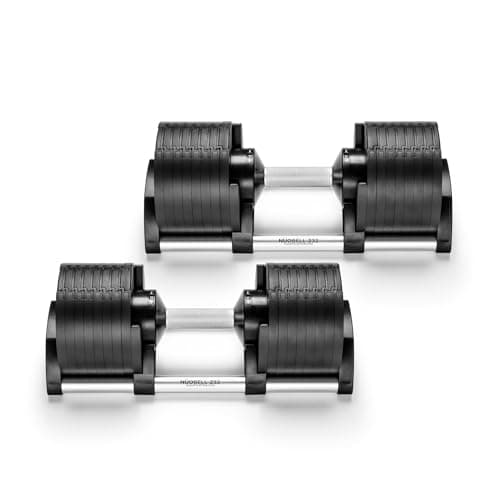
The best adjustable dumbbells in the UK for 2026, from quick-dial sets to heavy 40kg and 50kg options. Budget to premium picks researched and ranked.
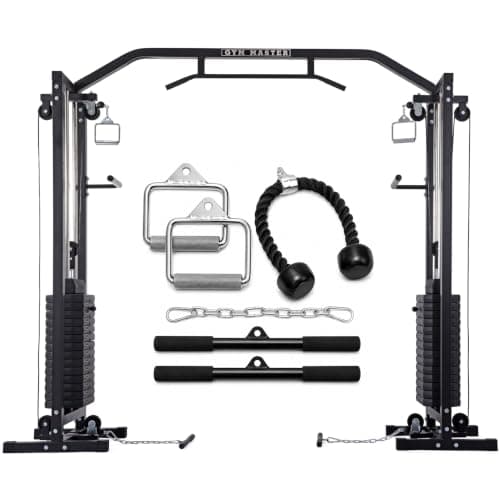
The best cable machines in the UK for 2026, from dual cable machines and functional trainers to wall-mounted and folding designs. Honest picks for any home gym and budget.

The best Garmin watch for most UK buyers in 2026 is the Forerunner 265, but not for everyone. Five models compared honestly, from the £162 Forerunner 165 to the fēnix 8.
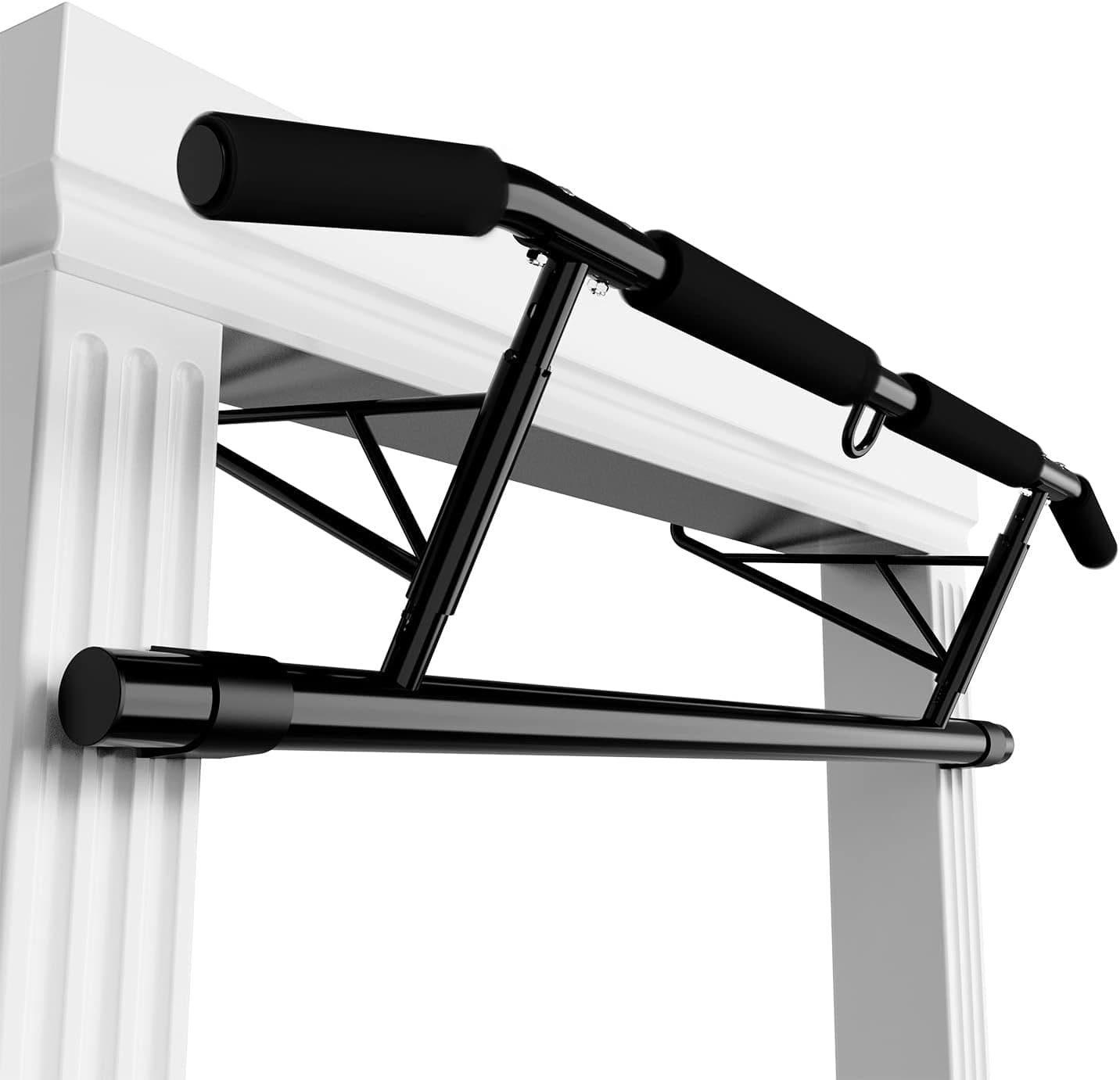
The best pull up bars in the UK for 2026: no-drill doorway bars, wall mounted pull-up bars and free standing power towers, with frame sizes, weight ratings and honest picks for every budget.
Best Exercise is a participant in the Amazon EU Associates Programme, an affiliate advertising programme designed to provide a means for sites to earn advertising fees by advertising and linking to Amazon.co.uk. As an Amazon Associate we earn from qualifying purchases. This comes at no extra cost to you and never influences our independent reviews or rankings.