Home Gym
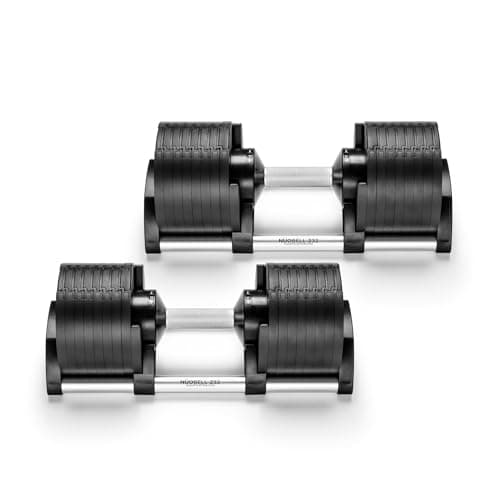
Best Adjustable Dumbbells UK: 6 Top Picks for 2026
The best adjustable dumbbells in the UK for 2026, from quick-dial sets to heavy 40kg and 50kg options. Budget to premium picks researched and ranked.

By Jack Atkins, Home Gym Equipment Specialist · Updated 25 October 2026
A folding squat rack is a power rack that bolts to a wall and swings flat against it when you're not training. The two front uprights sit on hinged arms (or slide on brackets) mounted to the wall, so you pull the rack out to around 50 to 60cm deep for squats and bench, then fold it back to a few centimetres when you need the space for the car, the kids or the washing. It's the best fix for a single garage or a spare room that has to do two jobs. The catch is that the wall becomes part of the rack, so the type of wall you have matters more than which rack you buy.
There are two main designs, and you'll see both sold as a "folding power rack" or "wall mounted folding rack".
Hinged swing-out racks. Two horizontal mounting rails (or a set of wall plates) bolt to the wall. Each upright is attached to these by a hinged arm, so the uprights swing out from the wall in an arc and then lock open with pins or a stabiliser bar across the top. This is the most common type at the budget end of Amazon UK.
Fold-in racks. The uprights stay attached to wall brackets and each side folds inward towards the middle, then flat to the wall. These tend to be the premium designs, and they often lock with a pull-up bar or crossmember that doubles as the brace.
Either way, three things hold the rack still when it's open: the wall fixings, the locking pins or crossmember, and the floor under the uprights. Some models also have the option of bolting the feet of the uprights to the floor. If yours does, and you're on a concrete garage floor, it's worth doing. A rack that can't walk on the floor is a rack that can't lever on the wall fixings.
Most folding racks ship with J-hooks and a pull-up bar. Many do not ship with safety arms, which is the single most important thing to check before you buy (more on that below).
This is the part that most product pages skip. A folding rack is a cantilever: when the rack is open and you rack a loaded bar, the weight sits half a metre out from the wall and tries to pull the top fixings out and push the bottom ones in. The wall has to resist that every single time you rerack, and much harder if you ever drop a bar into the J-hooks.
The best case. A solid brick or dense block wall in good condition takes a folding rack well, using heavy-duty masonry fixings such as sleeve anchors, concrete screws or chemical (resin) anchors, sized to whatever the rack manufacturer specifies. Drill into the brick or block, not the mortar joints, and keep fixings away from the edges of the wall and from openings like doors and windows.
Two UK-specific traps:
Possible, but only into the timber. UK stud walls usually have vertical studs at 400mm or 600mm centres, and the chance of a rack's mounting holes lining up with both studs is low. The standard fix is a backer board: a sheet of structural plywood (18mm is a common choice) cut to span at least three studs, fixed into each stud with long structural or coach screws, and then the rack bolts into the plywood with through-bolts or the screws the rack maker recommends. The plywood spreads the load across more timber than the rack's own brackets could reach.
Find the studs properly with a stud finder and confirm with a small pilot hole. Then check the studs themselves: an internal partition built from thin timber is not the same as a structural external stud wall, and if you're not sure what you've got, ask someone who does.
Don't. Plasterboard on its own, with any kind of cavity fixing, isn't a mounting surface for a squat rack. Metal stud partitions (common in newer flats and loft conversions) are thin-gauge steel and aren't designed for this kind of load either. If plasterboard is fixed over a solid wall ("dot and dab"), you can still mount the rack, but your fixings need to be long enough to get well into the masonry behind the gap.
Before you drill
Run a cable and pipe detector over the area first. In UK homes, cables are allowed to run vertically and horizontally in line with sockets and switches, so stay well clear of the zones directly above, below and to the sides of any accessory. Then follow the rack maker's fixing instructions to the letter: the specified anchor type, size, depth and torque. If the instructions don't cover your wall type, ask them in writing before you buy.
We're not going to give you a "this wall holds X kg" figure, because nobody can do that honestly without knowing your exact wall, fixings and rack. A rack listed at a high capacity tells you about the steel. It tells you nothing about the wall it's bolted to.
Width of clear wall. Fold-away racks are usually somewhere around 1.1m to 1.3m wide at the uprights, and a 7ft (2.2m) Olympic bar sticks out past them on both sides. You need roughly 2.2m of clear width, plus space either side to load plates, so check the wall run and any doors or shelving nearby.
Ceiling height. Look at the rack's listed height, then measure to the lowest obstruction above it: beams, lights, a garage door track or the up-and-over door mechanism when it's open. The Garvee rack below is listed at 89 inches tall, which is about 2.26m. That fits under a typical 2.4m ceiling, but leaves very little room for kipping pull-ups or a standing overhead press inside the rack.
Depth, folded and unfolded. Folded depth is the headline figure (often 5 to 15cm), but unfolded depth decides whether you can actually bench. A rack that's 55cm deep with a bench in front of it, plus you lying on that bench, takes up well over 2m from the wall. Mark out the full footprint with tape before you commit.
A folding rack without safeties is a fancy pair of squat stands. The most common way people get hurt in the weights room is the weight landing on them: in a large US study of emergency department visits, weights dropping on the person accounted for about two thirds of weight training injuries (Kerr et al., 2010). Safeties are what turn a missed squat or a failed bench rep into a non-event.
A folding rack is a space-saving answer, not the strongest one, and the alternatives deserve a fair look.
| Folding wall rack | Half rack | Squat stands | |
|---|---|---|---|
| Floor space when stored | A few cm from the wall | Full footprint, always | Can be moved or stacked |
| Needs a suitable wall | Yes | No | No |
| Stability | Good if well fixed | Good, more with plates on storage pegs | Lowest, can tip if you rerack unevenly |
| Safeties | Often sold separately | Usually included | Rarely, or basic |
| Install work | Drilling and fixings | Bolt-together only | None |
| Moving house | Leaves holes, needs re-fixing | Easy to take with you | Easiest |
A half rack is the better choice if you have the floor space but the room doesn't have to be cleared every day, and especially if your walls are aircrete, metal stud or rented. Squat stands are cheaper still, and some are easy to store, but most lack proper safeties and the narrow footprint makes them less stable. If you want to keep things freestanding but small, look at a compact squat rack.
Folding racks win on one thing: they give you a near-full rack setup that disappears when you're done. If your car needs to go back in the garage every night, nothing else does that.
Genuine wall-mounted folding racks are thin on the ground on Amazon UK, and most search results for "folding squat rack" are actually freestanding stands or power towers. The one we found in stock in our price range was the Garvee Folding Squat Rack (around £567 at the time of writing).
From the listing: 60x60mm steel uprights, J-hooks, a pull-up bar and a landmine attachment, 23 J-hook positions, five wall-mount height options and four pull-up bar heights. Garvee lists it at roughly 119cm wide and 226cm tall, folding to about 6cm deep and opening to about 56cm. It claims a 1,000lb capacity. The listing doesn't mention safety arms, so plan on buying compatible 60x60mm spotter arms or straps. We haven't tested it in person; this is based on the spec sheet and listing.
Check Garvee folding rack price on AmazonIf you'd rather go freestanding, our best squat rack roundup and the best power cage guide cover racks that don't need a wall at all.
These are rough bands, and prices move a lot, so treat them as a starting point:
Add the extras to your sums: safety arms (if not included), quality anchors or resin, a plywood backer for a stud wall, floor mats or a lifting platform, and possibly a builder's hour if your wall needs a second opinion. Those can add £100 or more before you've bought a bar.
Choosing the rack before checking the wall. Find out what the wall is made of first. A great rack on the wrong wall is a hazard.
Hitting mortar joints or aircrete with the wrong anchors. Expansion anchors in soft block or crumbly mortar can feel tight on day one and loosen within weeks.
Skipping safeties because they cost extra. Training alone in a garage without safeties is exactly when you'll need them.
Forgetting the bar's length. The rack fits, but a 2.2m barbell doesn't clear the side wall, the freezer or the door frame.
Not re-checking bolts. Folding hardware works loose. Check it regularly, and stop using the rack if anything moves that shouldn't.
Nothing about a folding rack changes how you train, though the setup time does change habits. Because you're opening and locking the rack each session, it pays to group your rack work together: squats, bench and overhead press in one block, then fold the rack away and finish with dumbbell or floor work. The NHS recommends strength work for all major muscle groups on at least two days a week, and two or three rack sessions a week is plenty for most home lifters. A simple plan is 3 to 5 sets of 5 to 8 reps on squats and bench, adding a small amount of weight when every rep is clean.
Only if the rack bolts into the timber studs themselves, or into a plywood backer board that is screwed across several studs. UK studs usually sit at 400mm or 600mm centres, which rarely lines up with a rack's mounting holes, so a backer board is the common fix. Never fix a rack to plasterboard alone, and treat metal stud partitions as unsuitable unless the rack maker says otherwise.
Most folded racks stick out only a few centimetres from the wall. The Garvee rack on Amazon UK, for example, lists a folded depth of about 6cm against roughly 56cm unfolded. You still need a clear lifting area in front of it when it's open, so the saving is in the room you get back between sessions, not during them.
It can be, if it's fixed properly and you use safety arms or straps set just below the bottom of your squat or bench. A full power cage is more forgiving because the safeties are built in on all four posts and nothing depends on the wall. A folding rack is only as strong as the weakest of the rack, the fixings and the wall.
Check the rack's listed height first, then add clearance. Many fold-away racks are around 2.2m to 2.3m tall, which suits a standard 2.4m UK ceiling for squats and bench. Pull-ups and standing overhead presses need far more headroom, so measure from the floor to the lowest point above the rack, including beams, lights and garage door tracks.
Budget for at least £400 to £600 for a basic imported fold-away rack, and more for UK specialist brands with spotter arms included. On top of that, allow for safety arms if they aren't in the box, quality wall fixings, a plywood backer for stud walls and possibly floor mats. The cheapest freestanding squat stands cost far less, which is why folding racks only make sense when space really is the problem.
The best adjustable dumbbells in the UK for 2026, from quick-dial sets to heavy 40kg and 50kg options. Budget to premium picks researched and ranked.
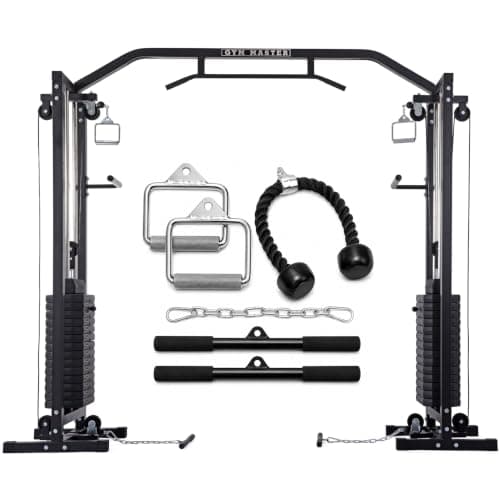
The best cable machines in the UK for 2026, from dual cable machines and functional trainers to wall-mounted and folding designs. Honest picks for any home gym and budget.

The best Garmin watch for most UK buyers in 2026 is the Forerunner 265, but not for everyone. Five models compared honestly, from the £162 Forerunner 165 to the fēnix 8.
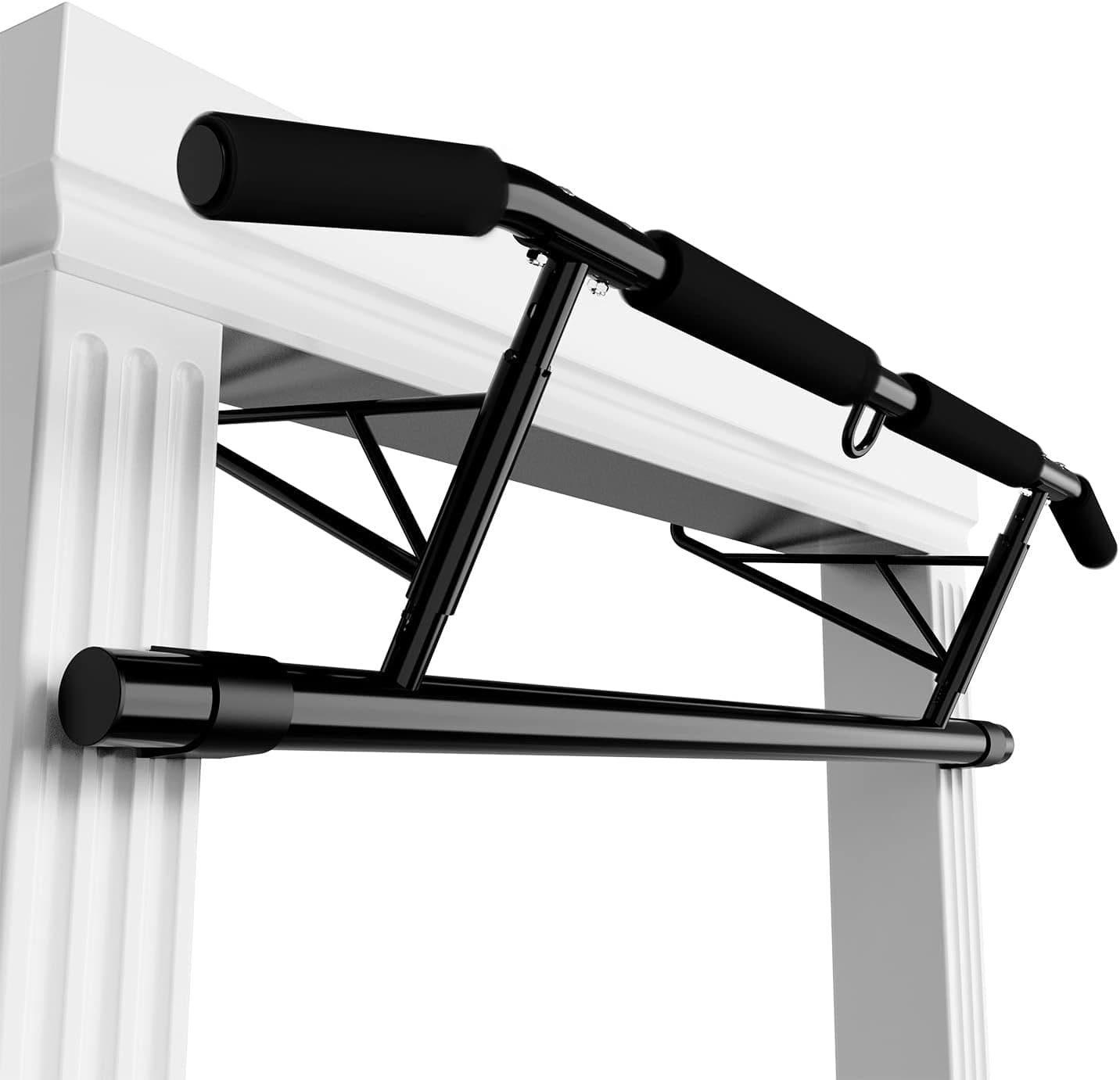
The best pull up bars in the UK for 2026: no-drill doorway bars, wall mounted pull-up bars and free standing power towers, with frame sizes, weight ratings and honest picks for every budget.
Best Exercise is a participant in the Amazon EU Associates Programme, an affiliate advertising programme designed to provide a means for sites to earn advertising fees by advertising and linking to Amazon.co.uk. As an Amazon Associate we earn from qualifying purchases. This comes at no extra cost to you and never influences our independent reviews or rankings.