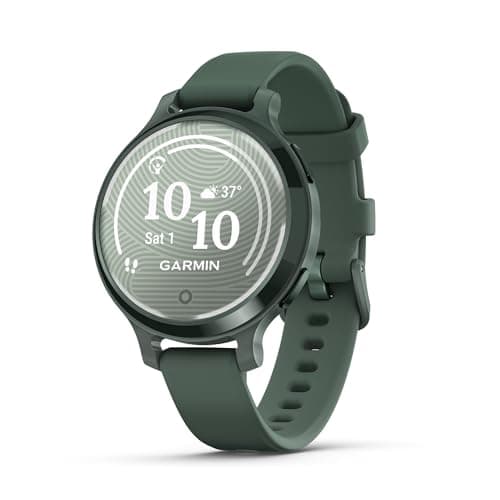
The Garmin Lily 2 Active is what happens when Garmin takes its small, fashion-first Lily and bolts on the one thing owners kept asking for: built-in GPS. At £299 on Amazon UK it's a 38mm, 29g watch that tracks runs, walks and rides without your phone, lasts up to 9 days between charges, and handles payments, sleep and women's health tracking well. My verdict is that it's a good watch at a slightly cheeky price. If you want the smallest, most discreet Garmin that can still map a run, buy it; if you mostly want the best fitness watch for around £300, the vivoactive 6 does more for less.
It's worth being clear about the trade. The patterned lens that makes the Lily look like a dress watch hides a greyscale LCD, not a colour screen, and there's no music storage at all.
How we review
This review is based on Garmin's published UK specifications for the Lily 2 Active, the Amazon UK listing, and consistent patterns in verified owner feedback. We haven't run our own long-term test of this unit, so we stick to repeated findings and say when a figure comes from Garmin rather than from owners.
These come from Garmin's own UK product page, which lists the same specs for all three UK colourways: Silver with Purple Jasmine, Lunar Gold with Bone, and Jasper Green.
Garmin Lily 2 Active key specs
Case size
38 x 38 x 11 mm, anodised aluminium
Weight
29 g
Fits wrists
110 to 175 mm circumference
Display
Liquid crystal touchscreen, 240 x 201 pixels, 16 level greyscale
Small wrists are badly served by most GPS watches. A 38mm case that weighs 29g sits flat on a wrist as narrow as 110mm, and it's light enough that people forget to take it off for bed, which matters because sleep tracking only works if you wear the thing. Garmin's patterned lens shows a simple watch face, then lights up into a touchscreen when you raise your wrist or tap it.
The two physical buttons earn their place. Starting, pausing and lapping a run with damp fingers on a tiny touchscreen is miserable; with buttons, it's one press. That alone makes it a better exercise companion than a purely touch-controlled fashion watch.
Here's the compromise you can't design around. The 25.4 x 21.3mm display is small and greyscale, and there's only room for a couple of data fields during a workout. Pace and heart rate are fine, but squinting at a third metric mid-interval isn't.
Tracking: better than it looks
Underneath the styling it's a proper Garmin. You get all-day heart rate, HRV status, sleep score with sleep coaching, Body Battery, stress, respiration, Pulse Ox spot checks, hydration logging, and menstrual and pregnancy tracking. Health Snapshot records a two minute burst of heart rate, Pulse Ox and respiration, and the morning report rolls your overnight data into a single screen when you wake.
Sport profiles go further than you'd expect from a Lily. Garmin lists running (outdoor, treadmill and indoor track), cycling and indoor cycling, pool swimming, strength, HIIT, yoga, Pilates, dance fitness, rowing, skiing, tennis, padel, pickleball and golf with front, middle and back yardages. There are on-screen workouts for cardio, strength, HIIT, yoga and Pilates, and Garmin Coach running plans that adjust to how your runs go. VO2 max estimates and cadence are included for running.
A word on accuracy. Wrist heart rate is generally reliable for steady activity, but calorie figures from any wrist device are rough: in a Stanford study of seven wrist-worn devices, most measured heart rate adequately, yet none estimated energy expenditure to within 20%. Treat the calorie number as a trend, not a target for your diet.
The GPS itself is single-band, which is normal at this price. Owners report sensible distances on open roads and in parks; tall buildings and dense woodland are where any single-band watch drifts.
Battery
Garmin claims up to 9 days in smartwatch mode and 9 hours of GPS. Expect to charge roughly weekly if you log a handful of outdoor sessions, and that is roughly double what the Lily 2 Classic manages (Garmin rates that at 5 days). Nine hours of GPS covers a marathon and plenty of long walks. It won't cover a long day in the hills plus the following week, so hikers should look elsewhere.
App and smart features
Everything syncs to Garmin Connect, which is free with no subscription needed to see your data. Smart notifications come through from iPhone and Android; on Android you can reject a call with a canned text reply. There's no speaker or microphone, so no calls from the wrist.
Garmin Pay is listed for every Lily 2 Active colourway on Garmin's UK spec sheet. Check that your bank is on Garmin Pay's supported list first, because not every UK bank supports it. Incident detection and LiveTrack round things off, though both need your phone nearby to send anything.
Genuine cons
The screen. Greyscale, small and low resolution. It's elegant until you need to read it mid-run in bright sun.
No music. Phone controls only, so phone-free runs are silent runs.
No barometric altimeter. Floors climbed and accurate elevation are missing; climbs come from GPS instead.
Price. At £299 it costs more than the vivoactive 6 has sold for on Amazon UK, and that watch has a colour AMOLED screen, 8GB of music and an 11 day battery.
Lily 2 Active vs the alternatives
Garmin vivoactive 6. On paper the vivoactive wins nearly everything: a bigger AMOLED screen, 8GB of offline music, longer battery and more sport profiles. Our Garmin vivoactive 6 review found it at around £252, which undercuts the Lily. The Lily's only real advantages are size (38mm against 42mm) and the fact that it doesn't look like a sports watch. For many buyers, those two things are reason enough.
Garmin Venu 3S. At around £284 when we reviewed it, the Venu 3S gives you a 41mm AMOLED case, calls from the wrist, ECG and up to 10 days of battery. If you have slim wrists but want a full-colour smartwatch, it's the better buy. If 41mm still feels chunky on you, the Lily is the alternative.
Fitbit Charge 6. Our Fitbit Charge 6 review puts it at roughly £85 with built-in GPS, a colour AMOLED screen and Google Wallet. It's a band, not a watch, and some of Fitbit's best insights sit behind a Premium subscription. If you want GPS tracking on a budget and don't care how it looks, it costs less than a third of the Lily.
Pros
Smallest Garmin with built-in GPS: 38mm case, 29g
Up to 9 days of battery, nearly double the Lily 2 Classic
Two physical buttons make starting and pausing workouts easy
Garmin Pay on every UK colourway
Full Garmin health suite including HRV status, sleep coaching, Body Battery and women's health
Golf, tennis, padel and pickleball profiles plus Garmin Coach running plans
Buy the Lily 2 Active if your wrist is small, you want a watch that works with a dress or a work shirt, and you'd like to track runs, walks, classes and the odd round of golf properly without carrying your phone. It's also a good fit if your main aim is hitting the NHS guideline of 150 minutes of moderate activity a week, because intensity minutes, move alerts and sleep data are exactly what it does best.
Skip it if you train seriously, want music on your wrist or care about screen quality. Our best Garmin watch UK guide covers the wider range, and the Forerunner 165 Music is the obvious pick for runners who want a colour screen and offline playlists.
Yes, and that's the whole reason the Active exists. The standard Lily 2 relies on your phone's GPS, while the Active has its own receiver supporting GPS, GLONASS, Galileo and BeiDou. You can leave your phone at home on a run or walk and still get distance, pace and a route map in Garmin Connect afterwards.
How long does the Lily 2 Active battery last?
Garmin quotes up to 9 days in smartwatch mode and up to 9 hours with GPS running. Owners doing a few GPS walks or runs a week tend to charge it roughly once a week. Nine hours of GPS is fine for parkruns and long walks but rules out anything like an ultra.
Does the Lily 2 Active have Garmin Pay?
Yes. Garmin's UK spec sheet lists Garmin Pay on all three Lily 2 Active colourways sold here, so you can tap to pay in shops and on contactless transport. Whether it works for you depends on your bank supporting Garmin Pay, so check Garmin's list before you buy.
Is the Lily 2 Active screen in colour?
No. It's a 240 x 201 pixel liquid crystal touchscreen with 16 levels of greyscale, hidden under a patterned Gorilla Glass 3 lens until you tap it or lift your wrist. It looks elegant on the wrist but is far less readable at a glance than the AMOLED screens on the vivoactive 6 or Venu 3S.
Can you store music on the Lily 2 Active?
No. It can control music playing on your phone, but there's no onboard storage and no Spotify or Amazon Music sync. If you want to run with headphones and no phone, the vivoactive 6 is the cheaper and better choice.
Is the Lily 2 Active waterproof?
It's rated to 5 ATM and has a pool swimming profile, so showers, swimming lengths and rain are all fine. It isn't designed for diving or high-speed water sports.
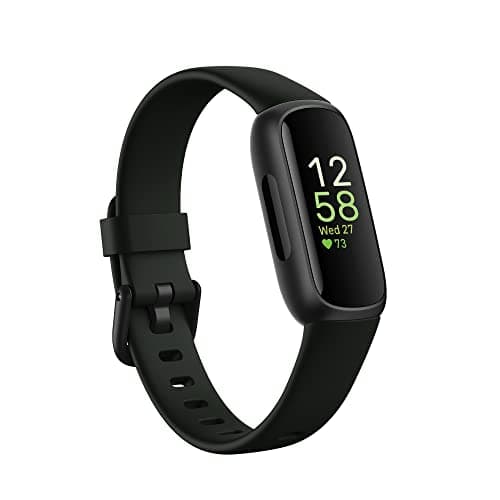
An honest Fitbit Inspire 3 review covering its AMOLED screen, 10-day battery, sleep and heart rate tracking, connected GPS, the Premium paywall and who should buy it.
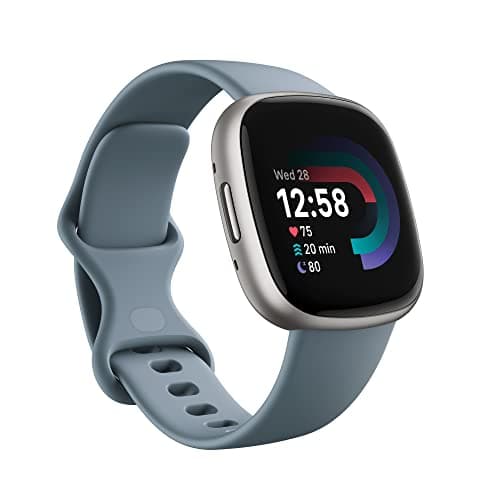
Our Fitbit Versa 4 review covers built-in GPS, 6+ day battery, Google Maps and Wallet, the lost third-party apps and Wi-Fi, and who should buy it at £179.
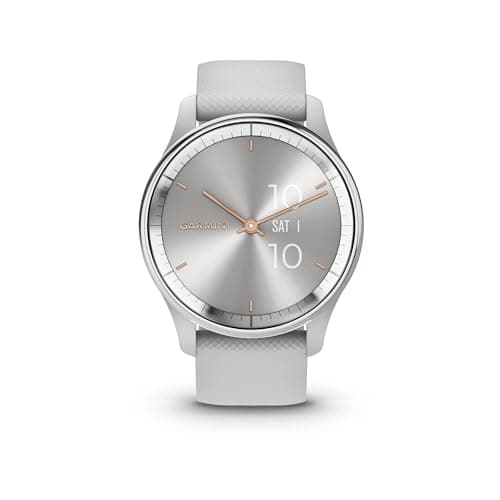
Garmin vivomove Trend review for UK buyers: analogue hands over a hidden touchscreen, Body Battery, Garmin Pay, Qi charging, and the 5 day battery and missing GPS to weigh up at £232.
How much does a Smith machine bar weigh? It varies by machine, commonly about 6kg to 20kg effective, and counterbalanced bars can be close to zero. Here's how to check yours.
Best Exercise is a participant in the Amazon EU Associates Programme, an affiliate advertising programme designed to provide a means for sites to earn advertising fees by advertising and linking to Amazon.co.uk. As an Amazon Associate we earn from qualifying purchases. This comes at no extra cost to you and never influences our independent reviews or rankings.