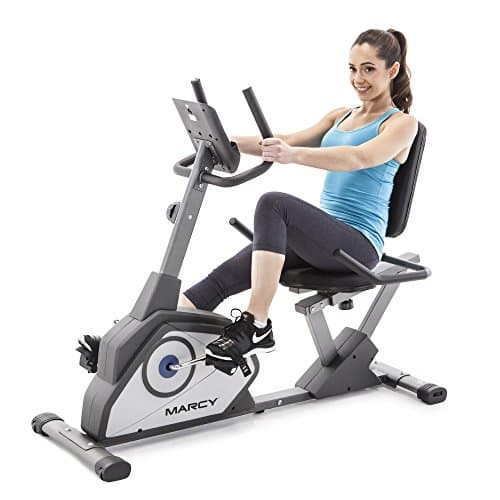
Exercise Bikes
Best Recumbent Exercise Bikes UK 2026: 5 Picks for Bad Knees and Backs
The best recumbent exercise bikes in the UK for 2026, from a £183 starter bike to a £1,399 Sole. Honest picks for sore knees, dodgy backs and long TV sessions.

By Paul Kendrick, Cardio & Endurance Editor · Updated 4 August 2026
We may earn a commission from qualifying purchases made through links on this page, at no extra cost to you. This never affects our ratings.
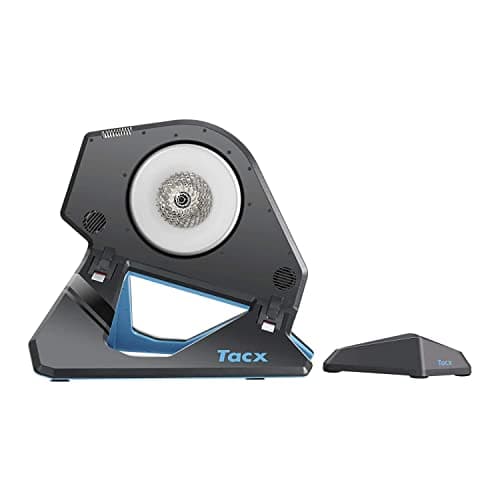
Garmin's Tacx NEO 2T arrived in 2019 as the most sophisticated indoor trainer money could buy, and seven years later it is still on sale at close to full price. That is unusual in a market where cycling tech gets superseded every eighteen months, and it says something about the design: the NEO 2T does two or three things that its rivals structurally cannot, because it is built around a motor rather than a belt and a brake.
At roughly £1,488 on Amazon UK it is also the most expensive way to ride a bike indoors short of buying a smart bike outright. Here is what that money actually buys, and where it does not stack up.
How we review
This review draws on Garmin's published specifications, the technical detail in its own launch material, and the consistent themes in verified owner feedback and long-term reports from cycling coaches. We have not run our own power-meter comparison against this specific unit over a season, so we report repeated, corroborated findings rather than single opinions, and we flag where a claim is the manufacturer's rather than an independent measurement.
Most direct drive trainers slow a flywheel with a belt and an electromagnetic brake. The NEO 2T has no belt at all. Thirty-two neodymium magnets act directly on a virtual flywheel, which means there is no contact, no wear surface and nothing to stretch or slip over time.
Three consequences follow. It needs no spindown calibration, ever, and Garmin states it measures accurately within 1%. It can drive the flywheel as well as resist it, which is how descent simulation works: point downhill in Zwift and the trainer actively spins your legs faster instead of just going slack. And it can vibrate deliberately, so cobbles and gravel in supported apps come through the pedals. That last feature is a novelty for about a week and then quietly becomes something you miss on other trainers.
The thing that surprises people first is the silence. With no belt and no contact, the only noise in the room is your chain and whatever fan you are running, which is why the NEO 2T has a reputation among flat dwellers and parents of small children. You can genuinely train at 6am in a room next to a bedroom.
Ride feel is the second surprise. Dynamic inertia adjusts the perceived mass of the rider and bike according to speed and gradient, so climbing at 8% feels heavier and slower to spin up than a flat sprint does, in a way that belt-driven trainers approximate rather than reproduce. Sprints load up immediately with no lag, and the resistance ceiling is high enough that nobody outside a track sprint programme will find its limit.
| Type | Direct drive, motor-based resistance |
|---|---|
| Maximum resistance | 2,200 W (Garmin published figure) |
| Maximum simulated gradient | 25% |
| Stated accuracy | Within 1%, no calibration required |
| Weight | Approx 21.5 kg |
| Freehub supplied | Shimano / SRAM 9 to 11 speed |
| Cassette | Not included |
| Connectivity | ANT+ FE-C and Bluetooth |
| Power required | Mains for full features, limited standalone mode without |
| Compatible apps | Zwift, TrainerRoad, Tacx and other FE-C platforms |
Setup takes about twenty minutes if you already own a cassette and the tools, and considerably longer if you discover mid-build that you own neither. The legs fold, which helps in a small room, but 21.5kg is 21.5kg and this is not a trainer you tuck behind the sofa between sessions. Give it a permanent corner, a mat and a fan.
Connection is unremarkable in the best sense: it broadcasts over ANT+ FE-C and Bluetooth, pairs with Zwift and TrainerRoad without ceremony, and holds the connection. The one ongoing cost worth planning for is software, since the trainer is a lump of magnets without a subscription to something, and Zwift's monthly fee adds up over a winter.
Where it starts to look expensive is against the competition. The Wahoo Kickr Core does 80% of this for well under half the money, and if you are training to power rather than chasing fidelity, that 80% is enough for most people. Our best turbo trainer guide sets out the whole range, and if the £1,488 makes you flinch, a smart exercise bike is a different route to structured indoor training without the bike-fitting faff.
Buy the NEO 2T if you train seriously indoors through a British winter, if your training is built around power targets that need to stay honest across months, or if noise is the constraint that decides whether you can train at home at all. Regular structured indoor riding is a straightforward way to hit the NHS target of 75 minutes of vigorous activity a week, and a trainer you actually enjoy using is worth more than one that saves you £600 and sits unused.
Skip it if you ride indoors twice a month, if you want the cheapest route into Zwift, or if you would rather not think about cassettes and freehub bodies at all.
If accuracy and ride feel matter more to you than price, yes. The NEO 2T launched in 2019 and newer trainers have caught up on the spec sheet, but almost none match its combination of no calibration, motor-driven descent simulation and near-silent running. At around £1,488 it is a lot of money for a seven-year-old design, so buy it for what it does rather than because it is the newest thing.
Not always. The NEO series generates its own power from the flywheel, so it will hold resistance and transmit data in a basic mode without mains power. You do need it plugged in for the features that make the trainer special, including descent simulation, road feel vibration and the highest resistance levels.
Garmin quotes a maximum deviation of 1%, and unlike most direct drive trainers it needs no spindown calibration because the resistance comes from electromagnets rather than a belt and brake. In practice that means the numbers you see in week one are the numbers you see in month six, which matters if you train to power targets.
It is one of the quietest trainers ever made, because nothing touches the flywheel. The loudest thing in the room will be your drivetrain and your fan, not the trainer, which is why it suits flats and shared houses better than a belt-driven unit.
Yes. The NEO 2T ships with a Shimano and SRAM 9 to 11 speed freehub body but no cassette, so budget another £40 to £70 for one that matches your groupset, plus fitting if you do not own a chain whip and lockring tool. Campagnolo and SRAM XDR freehubs are sold separately.
The Kickr is easier to live with and cheaper, with a built-in cassette option and a slightly smaller footprint. The NEO 2T wins on accuracy without calibration, on quietness, and on the motor-driven features like descent simulation and road feel that no belt-driven trainer can replicate. Pick the Kickr for value, the NEO for fidelity.
The best recumbent exercise bikes in the UK for 2026, from a £183 starter bike to a £1,399 Sole. Honest picks for sore knees, dodgy backs and long TV sessions.
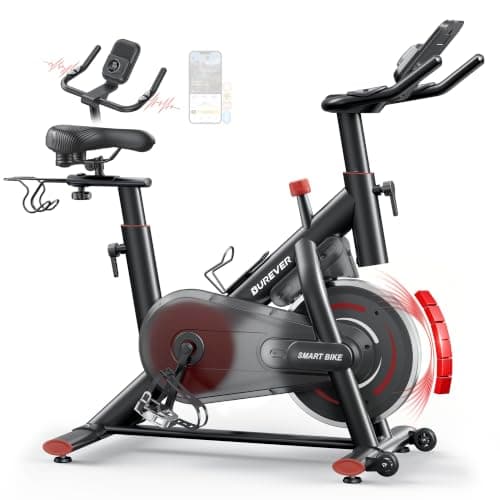
Our Burever exercise bike review: the touchscreen goal console, 0-100% magnetic resistance, 170kg limit, Zwift support without a power meter, and who should buy it.
Spin bike vs exercise bike compared on riding position, flywheel, resistance, comfort, noise and price, with a clear verdict on which suits your training.
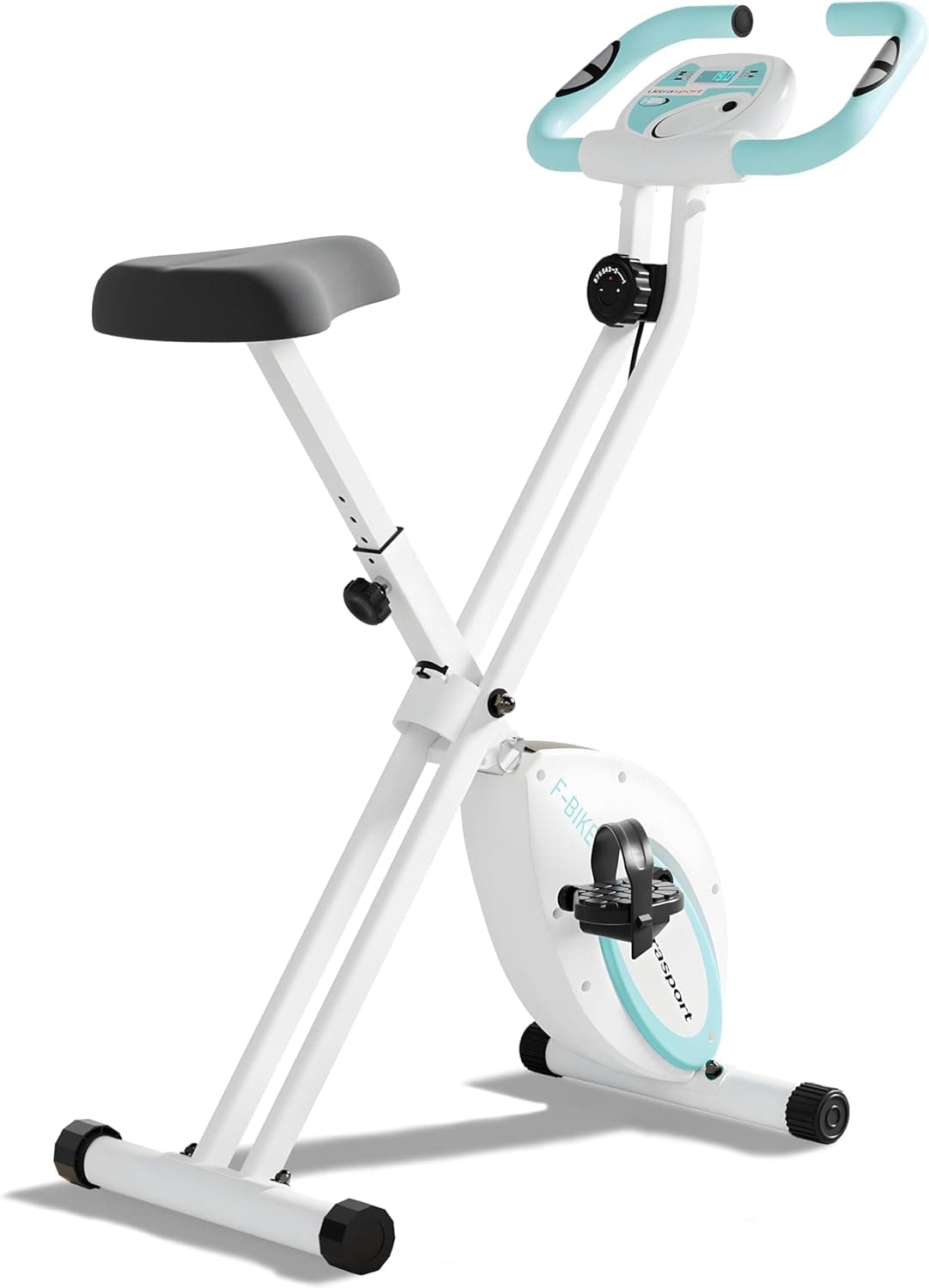
The best foldable exercise bike for UK homes, from budget mini pedallers to a 140kg-rated smart bike and a comfy recumbent. Folded sizes, weight limits and honest downsides.
Best Exercise is a participant in the Amazon EU Associates Programme, an affiliate advertising programme designed to provide a means for sites to earn advertising fees by advertising and linking to Amazon.co.uk. As an Amazon Associate we earn from qualifying purchases. This comes at no extra cost to you and never influences our independent reviews or rankings.