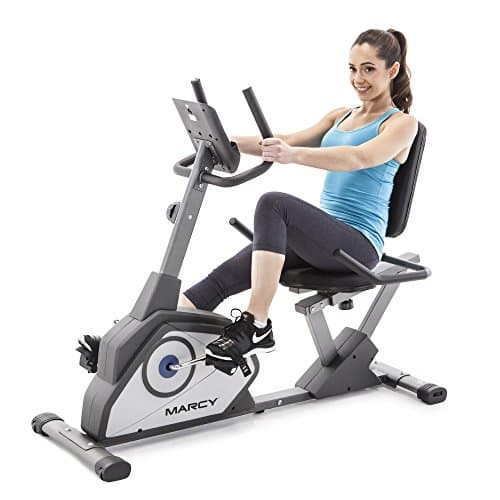
Exercise Bikes
Best Recumbent Exercise Bikes UK 2026: 5 Picks for Bad Knees and Backs
The best recumbent exercise bikes in the UK for 2026, from a £183 starter bike to a £1,399 Sole. Honest picks for sore knees, dodgy backs and long TV sessions.

By Jack Atkins, Home Gym Equipment Specialist · Updated 22 August 2026
We may earn a commission from qualifying purchases made through links on this page, at no extra cost to you. This never affects our ratings.
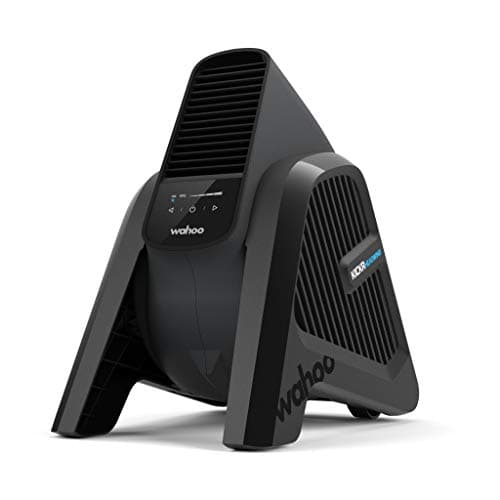
Spending £230 on a fan sounds absurd until you have sweated through a two hour Zwift session in a garage with a £30 pedestal fan wobbling on a stool. Indoor riding removes the one thing outdoor riding gives you for free, which is moving air, and without it your core temperature climbs, your heart rate drifts and a session that should feel like tempo starts feeling like threshold. Wahoo's KICKR Headwind exists to fix that, and it fixes it well.
The pitch is simple enough. It pushes air in a tall column shaped roughly like a rider on a bike, it tops out at a claimed 30 mph, and it can raise its own speed as your heart rate or wheel speed climbs. That last part is the bit that justifies the price, or fails to, depending entirely on how much you ride indoors.
How we review
This review pulls together Wahoo's published UK specifications, findings that recur across independent cycling media testing, and repeated themes in verified owner feedback. We have not run our own instrumented airflow or decibel measurements on this unit, so where numbers appear we attribute them to the manufacturer or to reviewers who measured them, and we say so.
Cooling is not a comfort feature, it is a performance one. A 2023 study in Research Quarterly for Exercise and Sport found that fan cooling improved submaximal exercise capacity even in a thermoneutral indoor environment, with riders reporting lower thermal strain and lower perceived exertion at the same workload. Anyone who has ridden with and without a fan already knows this in their legs; the research just puts numbers on it.
Where the Headwind separates itself from a supermarket fan is the shape of the air it moves and the fact it thinks for itself. The airflow pattern is deliberately tall and narrow, matching a rider hunched over the bars instead of scattering air across the room. Pair it with an ANT+ heart rate strap and the fan ramps as you climb, then eases off when you recover, which means one less thing to reach for during an interval.
Positioning matters more than any setting. Airspeed drops off sharply as you move back, so the fan wants to sit roughly a metre ahead of the bars, angled up at your chest and face. Get that right and the top two settings are genuinely bracing; get it wrong and you have bought an expensive draught. The adjustable rear leg gives two tilt positions, which is enough for most bike and turbo combinations but not all.
On noise, expect honesty rather than marketing. Setting four is loud in the way that any fan shifting serious air is loud, and reviewers who spend hours on turbos tend to describe it as acceptable rather than quiet. The useful detail is that most riders sit on settings two and three for the bulk of a session and only reach for four during hard efforts, when you are breathing too hard to care.
| Maximum wind speed | 30 mph / 48 kph (claimed) |
|---|---|
| Manual speeds | 4 preset settings |
| Automatic control | Heart rate, speed sensor, or KICKR trainer |
| Connectivity | Bluetooth and ANT+ |
| App control | Wahoo app over Bluetooth |
| Dimensions (leg tucked) | 41 x 31 x 48 cm |
| Dimensions (leg extended) | 46 x 31 x 48 cm |
| Weight | 5.5 kg |
| Firmware | Updates over the air |
| UK price | £229.99 |
Figures come from Wahoo's UK product page.
The automatic mode is the feature that turns a nice fan into a piece of training kit. Pair a chest strap, start a session, and the fan tracks your effort without a single button press; sprint and it howls, spin easy and it settles. After a month you stop noticing it, which is exactly the point. A good heart rate monitor is more or less a prerequisite for getting the full benefit, so factor that in if you do not already own one.
The build is unglamorous. Sturdy plastic, functional buttons, no attempt at design flourish, and at £230 you might reasonably expect a little more presence. It has held up well in long-term owner reports though, and the firmware updates mean the feature list has grown since launch rather than stagnated.
One practical limitation: there is no oscillation. For a solo rider that is correct behaviour, since you want the air pointed at you and nowhere else. For a couple riding side by side on two turbos, you need two fans.
See today's KICKR Headwind priceBuy it if the turbo is a genuine part of your winter, if you already run a smart trainer and heart rate strap, and if you have found yourself reaching for a fan switch mid-interval and losing your rhythm. Riders pairing it with a Wahoo KICKR CORE 2 get the tidiest setup, since the trainer itself can drive the fan speed with nothing else in the chain.
Skip it if your indoor riding is occasional, if two people train in the same space, or if £230 would be better spent upgrading the trainer itself. Plenty of riders get 80% of the benefit from a £40 fan on a box, and there is no shame in that. Our exercise bike section covers the rest of the indoor setup, and the best smart exercise bike guide is worth a look if you are still choosing a platform.
It depends on how many hours you ride indoors. The Headwind moves air in a tall, narrow column shaped to a rider's body rather than spraying it across the room, and it ramps automatically with your heart rate or speed so you are not reaching for a switch mid-effort. If you ride two or three times a week through winter, that is a real quality-of-life gain. If you use the turbo six times a year, buy the box fan.
Four ways. Press the buttons on the unit for four fixed speeds, use the Wahoo app over Bluetooth, or pair an ANT+ heart rate monitor or speed sensor so the fan ramps as your effort rises. It also links directly to KICKR smart trainers, and Wahoo has added speed integration for the KICKR RUN treadmill.
Quieter than you would expect for the airflow it produces, and quieter than most cheap pedestal fans at equivalent output, but it is not silent at maximum. On the top setting you will hear it clearly over music. Reviewers consistently rate the noise as reasonable rather than remarkable, and in practice the two middle settings cover most riding anyway.
Not directly through Zwift itself. You pair the fan to a heart rate monitor, speed sensor or KICKR trainer, and it responds to that signal while Zwift runs separately. In practice the effect is the same: the fan speeds up when you push harder up a climb.
Close and slightly low, aimed at your chest and face, roughly a metre in front of the bike. Airflow drops off quickly with distance, so pushing it to the far side of the room wastes most of the benefit. The adjustable rear leg gives you two angles to work with.
Yes, more than most people realise. Without airflow your body cannot shed heat the way it does outdoors, so your heart rate drifts upwards and sessions feel harder than the power numbers suggest. Any fan helps; this one just helps more conveniently.
The best recumbent exercise bikes in the UK for 2026, from a £183 starter bike to a £1,399 Sole. Honest picks for sore knees, dodgy backs and long TV sessions.
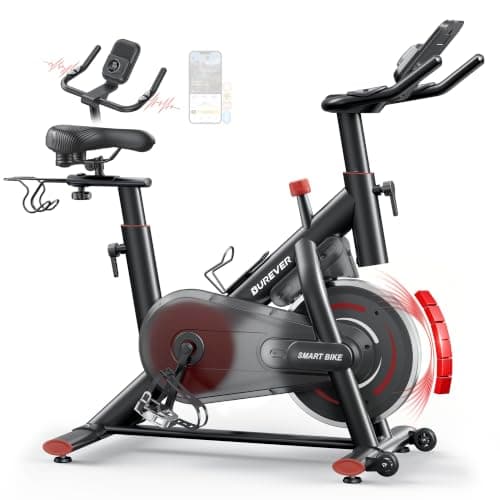
Our Burever exercise bike review: the touchscreen goal console, 0-100% magnetic resistance, 170kg limit, Zwift support without a power meter, and who should buy it.
Spin bike vs exercise bike compared on riding position, flywheel, resistance, comfort, noise and price, with a clear verdict on which suits your training.
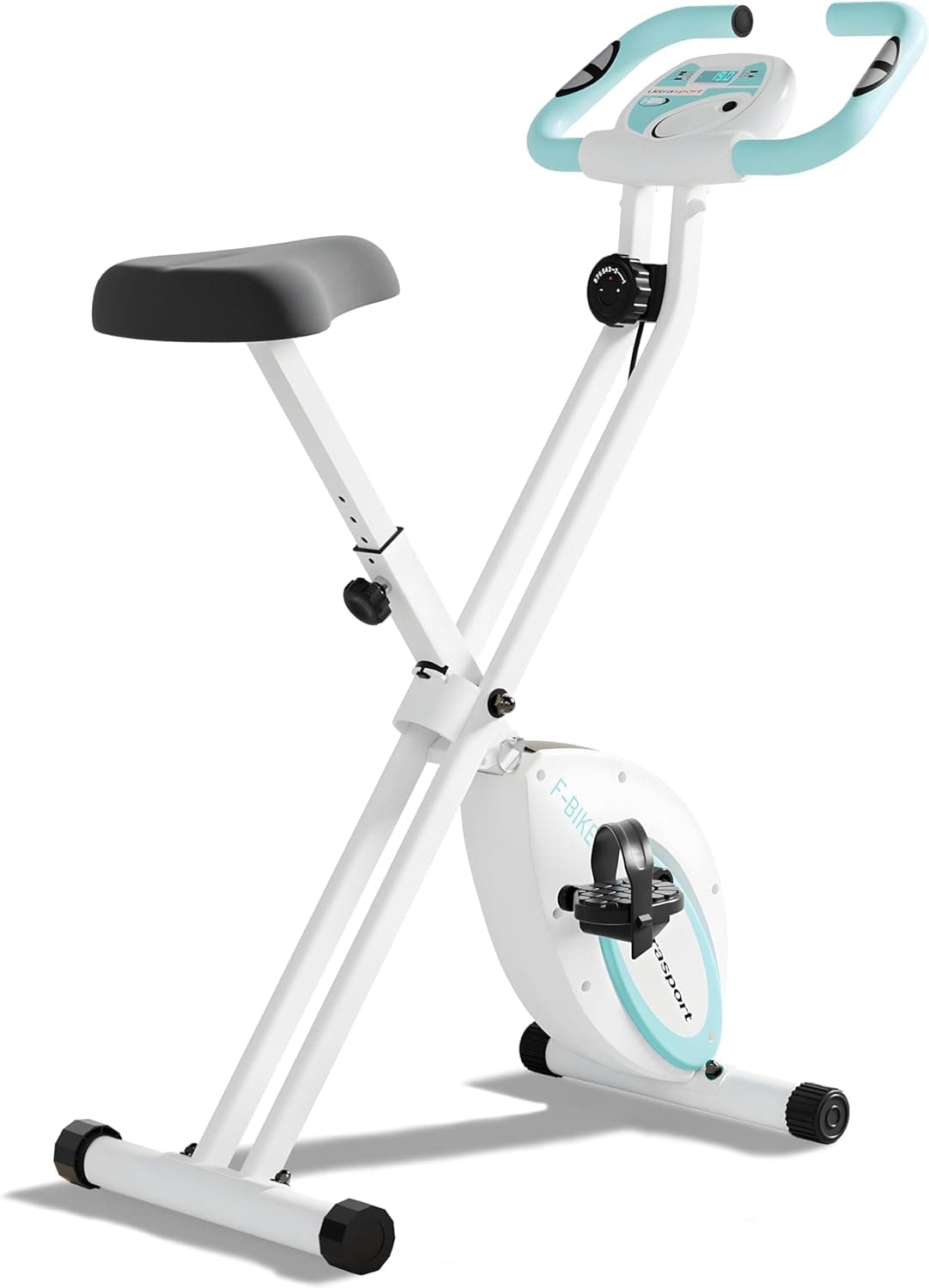
The best foldable exercise bike for UK homes, from budget mini pedallers to a 140kg-rated smart bike and a comfy recumbent. Folded sizes, weight limits and honest downsides.
Best Exercise is a participant in the Amazon EU Associates Programme, an affiliate advertising programme designed to provide a means for sites to earn advertising fees by advertising and linking to Amazon.co.uk. As an Amazon Associate we earn from qualifying purchases. This comes at no extra cost to you and never influences our independent reviews or rankings.