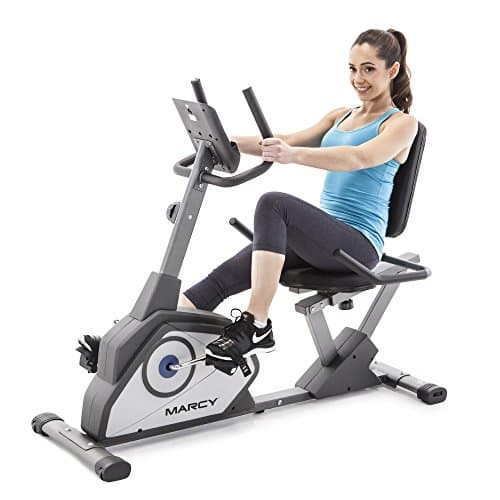
Exercise Bikes
Best Recumbent Exercise Bikes UK 2026: 5 Picks for Bad Knees and Backs
The best recumbent exercise bikes in the UK for 2026, from a £183 starter bike to a £1,399 Sole. Honest picks for sore knees, dodgy backs and long TV sessions.

By Paul Kendrick, Cardio & Endurance Editor · Updated 19 August 2026
We may earn a commission from qualifying purchases made through links on this page, at no extra cost to you. This never affects our ratings.
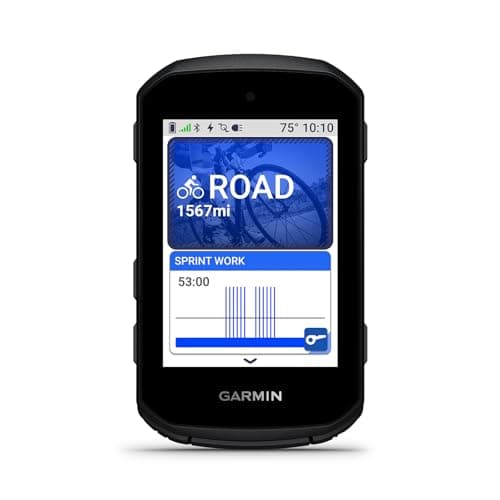
Garmin launched the Edge 850 on 9 September 2025 alongside the cheaper, button-only Edge 550, and the pitch is simple: take the features that used to live in the big 1040 and 1050 units, and squeeze them into a compact head unit you can mount on a stem without it looking like a satnav. Two things make it work. The 2.7 inch screen is bright and redraws maps fast, and the mix of buttons and touchscreen means you can pan a map with a gloved finger or hammer a lap button in the rain without praying the screen registers it.
We rate it 4.4 out of 5. The reasons to hesitate are the price, which drifts close to the far bigger 1040 when the 1040 goes on offer, and a 12 hour battery that is fine for the vast majority of rides but modest against Garmin's own long-distance units.
How we review
This review draws on Garmin's published specifications, the launch technical detail, and the consistent themes in verified owner feedback and expert testing. We have not run our own year-long test of this exact unit, so we report repeated, corroborated findings rather than one-off impressions, and we say plainly where a claim comes from the manufacturer.
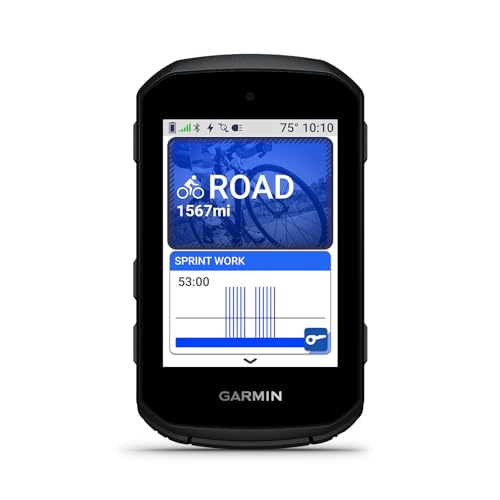
Riders who want maps, structured training and race-day tools without a 3.5 inch slab on the bars. The Edge 850 suits sportive riders, gravel riders who value the Trailforks data, and anyone who already trains with power and wants the fuelling and course tools that used to be reserved for the flagship. If you only ride familiar loops and want speed, distance and a heart rate figure, this is far too much computer; the cheaper Edge Explore 2 does that job for less than half the money.
Check the Garmin Edge 850 price on AmazonThe compact body measures roughly 91 x 53 x 18 mm and weighs about 110 g, so it disappears on an out-front mount in a way the 1040 never does. Garmin's own material makes a lot of the display brightness, and it holds up: in flat autumn light and in direct sun the map stays readable without you shading it with a hand.
The control scheme is the quiet win. Buttons handle lap, start and stop, which are the things you press when your hands are cold and wet, while the touchscreen handles panning, zooming and swiping between screens. Garmin also lets you drop a road hazard report with one tap, and those reports show up for other riders nearby.
| Display | 2.7 in colour, touchscreen plus buttons |
|---|---|
| Battery life | Up to 12 hr demanding use, up to 36 hr battery saver |
| Weight | Approx 110 g |
| Positioning | Multi-band GNSS, 5 Hz recording in enduro and downhill profiles |
| Maps | Preloaded road, gravel and Trailforks with Forksight |
| Audio | Built-in speaker, digital bike bell and turn prompts |
| Payments | Garmin Pay contactless |
| Sensors | ANT+ and Bluetooth, power meters, HR, radar, lights, Di2 and eTap |
| Part number | 010-03023-00 |
| Released | September 2025 |
Navigation is the part most people buy an Edge for, and this one behaves. Pan the map and it keeps up rather than tiling in slowly, which was the main annoyance with older compact Edges. Turn prompts arrive early enough to change lane, and the speaker means you hear them instead of glancing down mid-junction. The on-device course creator is a small feature with a big payoff on holiday: you can plot a route point by point on the screen without pulling out a phone.
Training tools are where the 850 pulls away from the Explore 2. Garmin Cycling Coach plans adapt to your training and recovery, and the newer cycling ability score gives you a read on where you sit against the demands of a course you have loaded. Smart fuelling alerts prompt you to drink and eat based on your current fitness, the course, and heat and humidity, which sounds like a gimmick until you get one at hour three of a hot ride and realise you had forgotten to eat since the last village.
Off-road riders get real value too. Enduro and downhill profiles bump GPS recording to 5 Hz so descents record with proper detail, and the timing gates feature shows splits in real time for each run. Garmin's launch announcement covers the full feature list, including gear ratio analysis when paired with electronic shifting (Garmin press release, September 2025).
Twelve hours of demanding use covers a very long day. It does not cover a 24 hour event, an unsupported bikepacking stretch, or a week of touring without a plug, and if that is your riding then the Edge 1040 Solar exists precisely for you with up to 45 hours. Battery saver mode stretches the 850 to a claimed 36 hours by dimming the screen and cutting some recording, so it is a genuine reserve rather than a marketing figure, but you lose the features you paid for while it is on.
The second catch is pricing. The 850 lands in the same neighbourhood as discounted 1040s and sometimes the 1050. If screen size is not a problem for you, look at both before you commit. Our Edge 1050 review covers what the extra money buys, and the Edge 540 Solar review covers the button-only route.
See current Garmin Edge 850 stock and priceFull specifications live on the official Garmin Edge 850 product page.
They share the same 2.7 inch screen, the same maps and almost all of the same training features. The 850 adds a touchscreen on top of the buttons, a built-in speaker that works as a digital bike bell and reads out turn prompts, Garmin Pay for contactless payments, and an on-device course creator you can drive point by point with your finger. The 550 is button-only and cheaper.
Garmin quotes up to 12 hours in demanding use and up to 36 hours in battery saver mode. In practice a normal ride with the screen on, maps loaded and a couple of sensors paired lands nearer the 12 hour figure than the 36. That covers almost any sportive or long weekend ride, but riders doing back-to-back 200km days will want to carry a cache battery.
If you want a touchscreen, yes. The 540 is button-only with a smaller 2.6 inch screen, and the 850 is noticeably quicker at redrawing maps when you pan or zoom. If you already own a 540 and ride mostly on routes you know, the upgrade is hard to justify at this price.
It ships with preloaded cycling maps for road, gravel and trails, including Trailforks data with Forksight, which shows you what a trail junction leads to before you commit. You can build a course on the device itself and it will show road surface type on the map, which is genuinely useful if you want to avoid gravel on skinny tyres.
Yes, over both ANT+ and Bluetooth. Pair a power meter and a chest strap and you unlock the smart fuelling alerts, which prompt you to eat and drink based on your fitness, the course, and the heat and humidity on the day. Without those sensors you lose some of the more interesting features.
More than we expected. Audible turn prompts mean you stop staring at the screen in unfamiliar towns, and the digital bike bell is loud enough to warn walkers on shared paths without you fumbling for a thumb bell. It is not a replacement for a proper bell where the law expects one.
The best recumbent exercise bikes in the UK for 2026, from a £183 starter bike to a £1,399 Sole. Honest picks for sore knees, dodgy backs and long TV sessions.
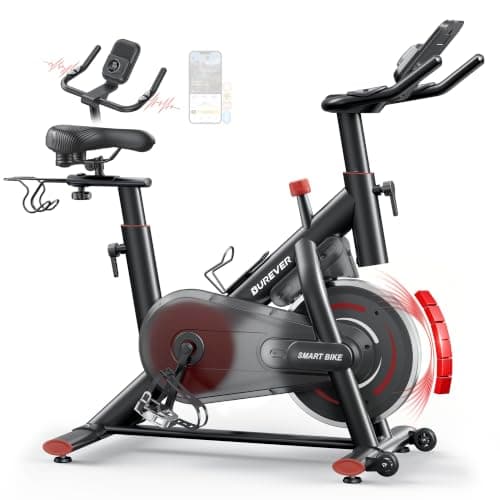
Our Burever exercise bike review: the touchscreen goal console, 0-100% magnetic resistance, 170kg limit, Zwift support without a power meter, and who should buy it.
Spin bike vs exercise bike compared on riding position, flywheel, resistance, comfort, noise and price, with a clear verdict on which suits your training.
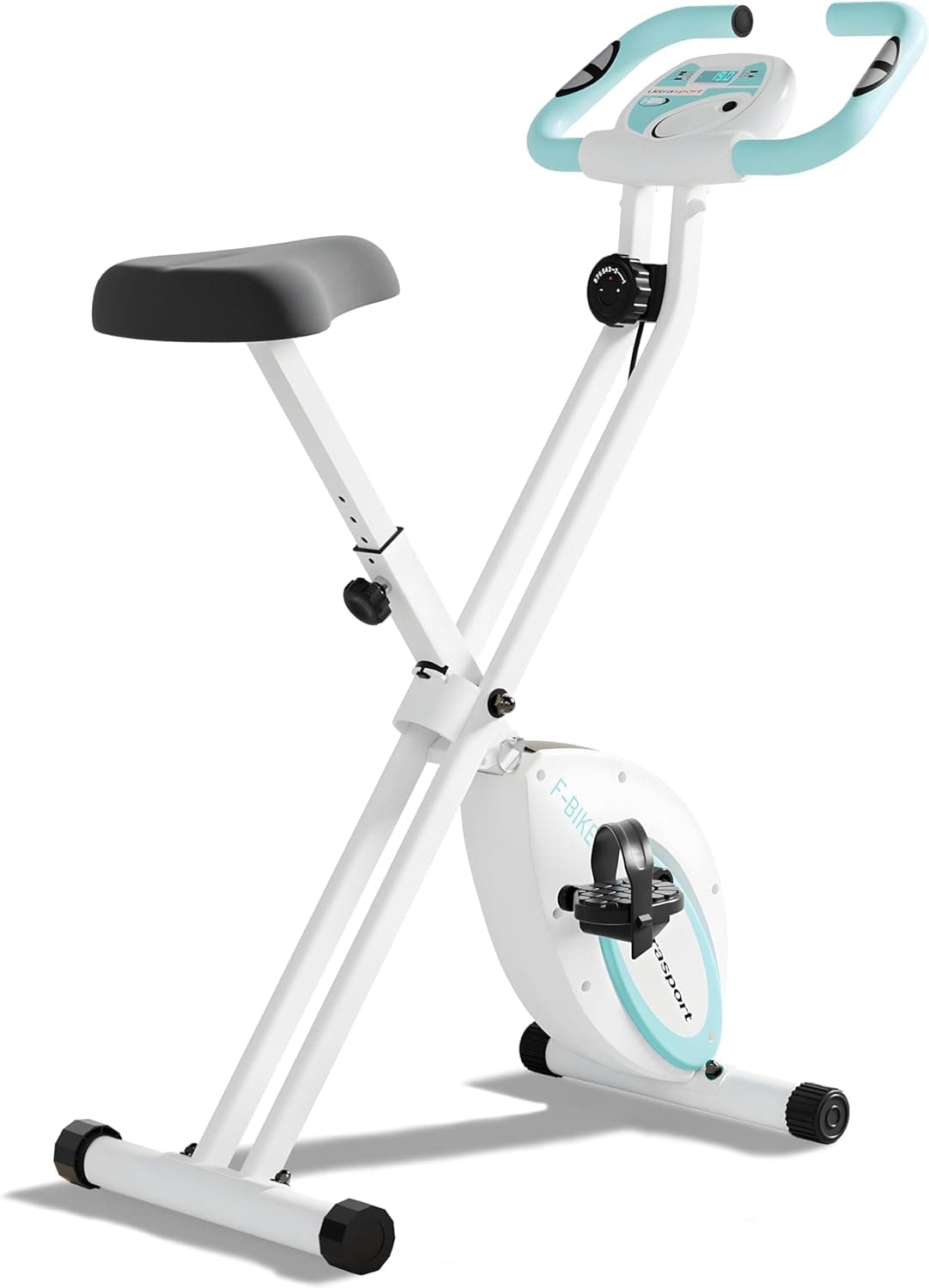
The best foldable exercise bike for UK homes, from budget mini pedallers to a 140kg-rated smart bike and a comfy recumbent. Folded sizes, weight limits and honest downsides.
Best Exercise is a participant in the Amazon EU Associates Programme, an affiliate advertising programme designed to provide a means for sites to earn advertising fees by advertising and linking to Amazon.co.uk. As an Amazon Associate we earn from qualifying purchases. This comes at no extra cost to you and never influences our independent reviews or rankings.