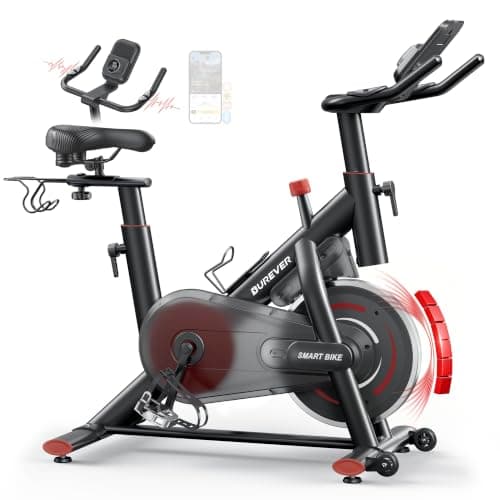
Exercise Bikes
Burever Exercise Bike Review: Touchscreen, 170kg Limit, Big Claims
Our Burever exercise bike review: the touchscreen goal console, 0-100% magnetic resistance, 170kg limit, Zwift support without a power meter, and who should buy it.

By Paul Kendrick, Cardio & Endurance Editor · Updated 19 August 2026
We may earn a commission from qualifying purchases made through links on this page, at no extra cost to you. This never affects our ratings.
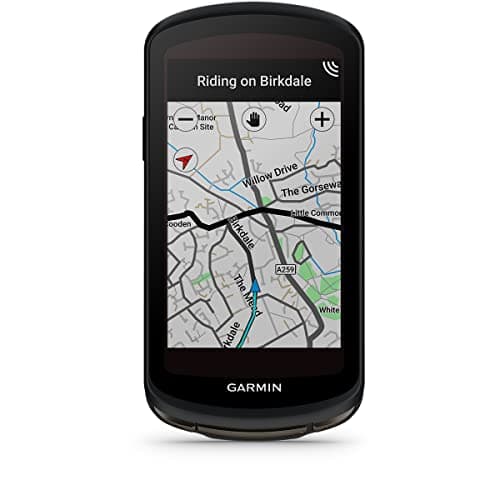
Garmin's Edge 1040 Solar answers one question and answers it well: how do you stop worrying about the head unit dying before the ride does? Up to 45 hours in demanding use, up to 100 hours if you dial it back, and a Power Glass lens that harvests light while you ride. That is the pitch, and for audax riders, tourers and anyone who has watched an Edge blink out at hour 14 of an event, it is a compelling one.
The rest of the story is more complicated. It launched in 2022, the 1050 has since taken the crown for screen quality and features, and solar gain in British light is a bonus rather than a plan. We rate it 4.3 out of 5, with almost all of that score earned by stamina and accuracy rather than novelty.
How we review
This review is built on Garmin's published specifications and owner's manual figures, plus the recurring themes in verified owner reviews and independent long-term testing. We have not personally run this unit down from full to flat over a season, so the battery numbers here are Garmin's own and we flag them as such rather than presenting them as our measurements.
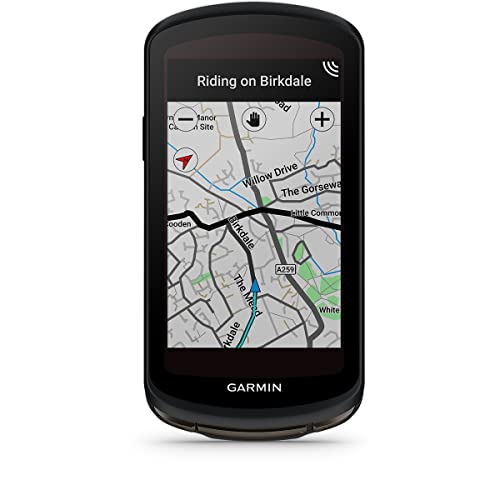
Long-distance riders, mostly. If your riding involves 300km days, unsupported touring, multi-day bikepacking or 24 hour events, the 1040 Solar removes an entire category of anxiety. It also suits riders who train with power and want every metric Garmin produces, since the 1040 series still carries the full training load, recovery and stamina suite.
Anyone riding two to four hours at a time is buying capacity they will never touch. Look at the Edge 850 for a smaller, cheaper unit with the newer software, or the Edge 1050 if you want the best screen Garmin makes.
Check the Garmin Edge 1040 Solar priceGarmin's own manual puts the standard Edge 1040 at up to 35 hours and the Solar version at up to 45 hours, with the solar figure earned in 75,000 lux conditions (Edge 1040 owner's manual specifications). That lux figure is the bit worth reading twice. It describes strong direct sunlight, the sort you get on an alpine col in July rather than a Yorkshire lane in November.
So the honest way to think about it: you are buying a 35 hour computer that becomes a 45 hour computer when the sun cooperates, and that stretches towards 100 hours if you accept battery saver mode with its dimmed screen and reduced recording. For a rider crossing France in summer, that is transformative. For a commuter, it is a spec sheet line.
| Display | 3.5 in colour touchscreen |
|---|---|
| Battery life | Up to 45 hr demanding use with solar, up to 100 hr battery saver |
| Non-solar equivalent | Edge 1040, up to 35 hr |
| Solar gain | Up to 42 min extra per hour at 75,000 lux |
| Weight | 133 g |
| Dimensions | 117.6 x 59.3 x 20 mm |
| Positioning | Multi-band GNSS |
| Water rating | IPX7 |
| Battery type | Rechargeable built-in lithium-ion |
| Part number | 010-02503-21 |
Multi-band GNSS is the underrated headline. Older Edges wander in city centres and lose the plot under dense canopy; the 1040 series holds a line through both. Ride a wooded loop you know the length of, compare the recorded distance to an older unit, and the difference is usually obvious.
Mapping is Garmin's usual strength, with turn-by-turn on preloaded cycling maps, ClimbPro showing what is left of the climb you are grinding up, and rerouting that recovers sensibly when you miss a turn. The 3.5 inch screen makes a real difference here compared with the compact units; it is the reason plenty of riders stick with the big Edge despite the bulk.
Where it now shows its age is polish. There is no speaker for audible prompts, no contactless payments, and the display, while good, is not as bright or as sharp as what the 1050 delivers. Garmin lists the full spec on the official Edge 1040 Solar page.
Buy this unit for the battery or do not buy it at all. On Amazon UK it has recently sat above £500, which is more than a discounted 1050 and well over double the price of an Edge Explore 2. Check the listing price against Garmin's own store before ordering, because third-party stock on an older flagship can drift upwards when supply thins out.
If it is close to the newer units on price and you are not riding ultra distance, buy something newer. If you have a 400km day in the diary and no interest in strapping a battery pack to the bars, this is still the sensible pick.
See current Edge 1040 Solar stock and priceGarmin quotes up to 45 hours with solar in demanding use, against 35 hours for the non-solar Edge 1040, and up to 100 hours in battery saver mode. Riders in northern Europe should treat 45 as a summer figure. On a grey British winter ride you are getting the standard 35 hour unit with a slightly nicer lens.
Yes, but the conditions matter enormously. Garmin's own figure is up to 42 extra minutes of runtime per hour of riding, measured in 75,000 lux, which is bright summer sunshine. Under cloud the gain falls to something you would struggle to notice on a two hour ride. It quietly extends multi-day trips rather than replacing the charger.
Not on features. The 1050 has a brighter, higher-resolution screen, a speaker and Garmin Pay, and it is the nicer unit to use day to day. The 1040 Solar wins on stamina: 45 hours against roughly 20 on the 1050. Bikepackers and audax riders should still choose the 1040 Solar; almost everyone else will prefer the 1050.
It means the Edge listens on two satellite frequencies at once, which sharply improves position accuracy in cities with tall buildings and under heavy tree cover. If your ride files usually look clean, you will not notice. If you ride wooded singletrack or dense urban routes, the difference in recorded distance and pace is real.
It carries an IPX7 rating, which covers incidental immersion in up to 1 m of water for up to 30 minutes. British winter rain and road spray are not a problem. It is not a device to take swimming, and the USB-C port cover is worth checking is seated after charging.
Only for the battery. It launched in 2022 and has been superseded twice at the top of the range, so buy it if you ride ultra distance, tour unsupported or hate charging things, and buy the newer 1050 or the compact Edge 850 if you do not. Check the price carefully: third-party sellers sometimes list it well above what the newer units cost.
Our Burever exercise bike review: the touchscreen goal console, 0-100% magnetic resistance, 170kg limit, Zwift support without a power meter, and who should buy it.
Spin bike vs exercise bike compared on riding position, flywheel, resistance, comfort, noise and price, with a clear verdict on which suits your training.
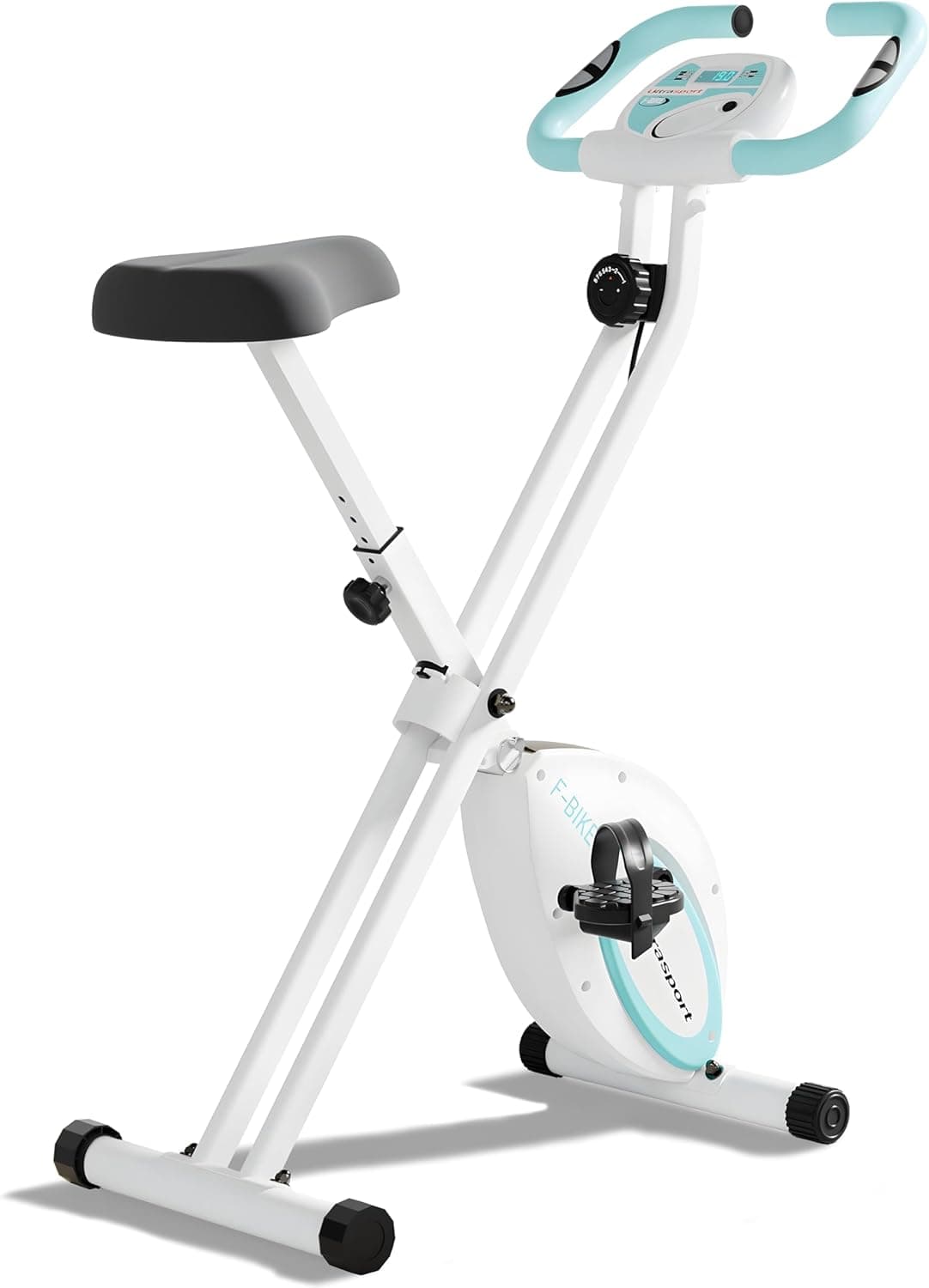
The best foldable exercise bike for UK homes, from budget mini pedallers to a 140kg-rated smart bike and a comfy recumbent. Folded sizes, weight limits and honest downsides.
Is Peloton worth it in the UK? We do the 1-year and 3-year maths on the Bike, Bike+, refurbished and rental options against a £400 bike with the app or Zwift.
Best Exercise is a participant in the Amazon EU Associates Programme, an affiliate advertising programme designed to provide a means for sites to earn advertising fees by advertising and linking to Amazon.co.uk. As an Amazon Associate we earn from qualifying purchases. This comes at no extra cost to you and never influences our independent reviews or rankings.