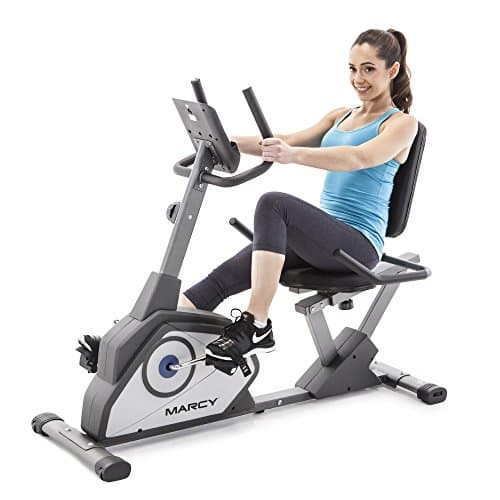
Exercise Bikes
Best Recumbent Exercise Bikes UK 2026: 5 Picks for Bad Knees and Backs
The best recumbent exercise bikes in the UK for 2026, from a £183 starter bike to a £1,399 Sole. Honest picks for sore knees, dodgy backs and long TV sessions.

By Paul Kendrick, Cardio & Endurance Editor · Updated 19 August 2026
We may earn a commission from qualifying purchases made through links on this page, at no extra cost to you. This never affects our ratings.
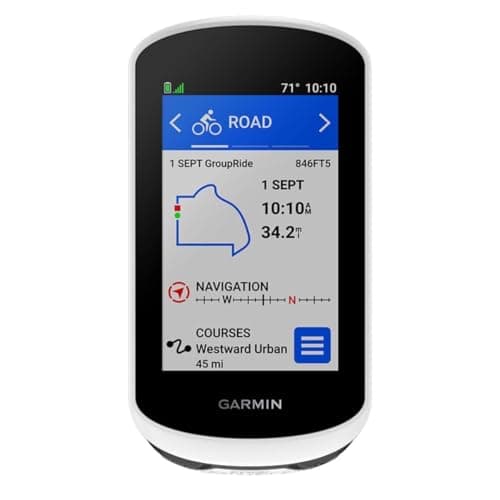
Most bike computers are sold on numbers you will never act on. The Edge Explore 2 skips almost all of that and sells you the useful half: a 3 inch touchscreen, Garmin's full cycling maps, turn-by-turn navigation, and enough battery to ride all day. At roughly £230 it costs about half what a training-focused Edge does, and for touring riders, commuters and eBike owners that is exactly the right trade.
We rate it 4.2 out of 5. It is not the Edge for anyone chasing FTP tests and training load, and the touchscreen-only control scheme is a genuine irritation in January rain, but as a navigation device on a bike it is hard to beat for the money.
How we review
This review draws on Garmin's published specifications, the owner's manual, and the consistent patterns in verified owner feedback and independent testing since the device launched in July 2022. We have not run our own long-term test of this unit, so where a figure comes from Garmin we say so rather than presenting it as measured.
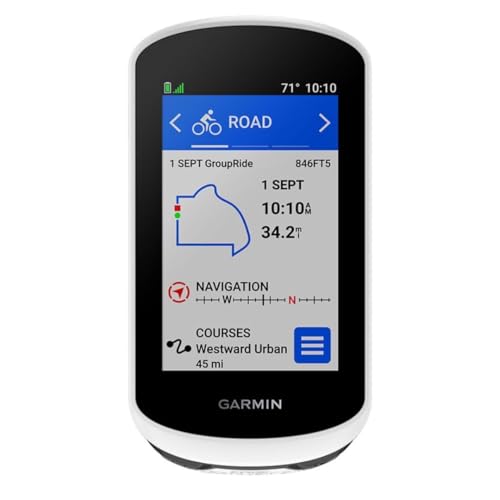
Riders whose question is "where does this road go?" rather than "what was my normalised power?". Tourers, weekend explorers, bike commuters learning new routes, and eBike riders who want assist level and range on the same screen as the map. It also works surprisingly well as a first Garmin: the setup is short, the activity profiles come preloaded, and nothing about it demands a subscription or a training plan.
If you want structured workouts, ClimbPro plus training status, or the fuelling tools, look at the Edge 850 instead. If you ride ultra distance, the Edge 1040 Solar is the stamina option.
Check the Garmin Edge Explore 2 priceThe 3 inch panel is the reason to buy this over a cheap third-party computer. It is high resolution, holds up in direct sunlight, and shows enough map that you can read an upcoming junction without zooming. Garmin describes it as glove and rain resistant, and in practice that means it works with thin autumn gloves and gets fussy with thick winter ones.
Weight is 104 g, which is lighter than a phone and light enough that a cheap out-front mount will not sag. Battery runs to a claimed 16 hours in demanding use and 24 in battery saver, which comfortably covers a long touring day with navigation active.
| Display | 3 in colour touchscreen, high resolution |
|---|---|
| Controls | Touchscreen only |
| Battery life | Up to 16 hr demanding use, up to 24 hr battery saver |
| Weight | 104 g |
| Maps | Preloaded cycling maps with popular routing and points of interest |
| eBike support | Battery status, assist level and range on compatible eBikes |
| Sensors | ANT+ and Bluetooth, HR, speed, cadence, power, Varia radar |
| Safety | Incident detection, LiveTrack, group messaging |
| Released | July 2022 |
Load a route from Garmin Connect or Komoot and the Explore 2 handles it the way an expensive Edge does, with clear turn arrows, street names and a course overview you can scroll through before setting off. The maps highlight popular roads and trails, which is Garmin's way of saying "other cyclists ride here", and that alone saves you from the occasional dual carriageway suggestion.
Rerouting is the weak point. Miss a turn in town and it recovers quickly enough; ride 5 km the wrong way down a valley and you will wait while it thinks. Riders who freestyle rather than follow a plotted course will notice this more than tourers following a loaded GPX.
The safety suite is the same one the expensive units carry: incident detection that messages your contacts, LiveTrack so someone at home can follow your dot, and group messaging on club rides. Full specifications sit on the official Garmin Edge Explore 2 page.
No training status, no training load, no recovery time, no VO2 max estimate. The Explore 2 records heart rate and power if you pair the sensors, and it shows them live, but the analysis stops at the ride file. For a lot of riders that is a feature, since it removes the daily nag of a readiness score.
The other omission is multi-band GNSS. Under dense tree cover or between tall buildings, position wanders more than it does on an Edge 850 or a 1040. On open roads the difference is negligible.
See current Edge Explore 2 stock and priceThe Explore 2 is built for getting somewhere; the 850 is built for training. Both map and navigate well, but the 850 adds structured workouts, training load and recovery analysis, VO2 max estimates, a speaker and Garmin Pay. If you never look at a training metric, the Explore 2 saves you a lot of money and a lot of menu diving.
Garmin quotes up to 16 hours in demanding use and up to 24 hours in battery saver mode. With the screen at a sensible brightness and navigation running, a full day of touring is comfortable. Charge it overnight on a multi-day trip and you will never think about it.
That is one of its best features. Paired with a compatible eBike it shows battery status, assist level and estimated range on screen, and it will factor the remaining range into navigation prompts. If you ride an eBike and want one screen for everything, this is the obvious Garmin.
Yes, it takes both ANT+ and Bluetooth sensors, so heart rate straps, speed and cadence sensors, power meters and Varia radar all connect. It records the data and shows it live, it just does not run the deeper training analysis a 540 or 850 would.
Mostly. Garmin designed it as glove and rain resistant, and it holds up better than a phone would, but heavy rain and thick winter gloves still cause the occasional missed tap. There are no physical buttons to fall back on, which is the main reason winter riders sometimes choose a button-equipped Edge instead.
For touring, commuting and eBike riding, yes. It came out in 2022 and Garmin has not replaced it, the maps are the same ones the expensive units use, and it typically sells for around half the price of a training Edge. Riders chasing power numbers should spend more; everyone else is well served.
The best recumbent exercise bikes in the UK for 2026, from a £183 starter bike to a £1,399 Sole. Honest picks for sore knees, dodgy backs and long TV sessions.
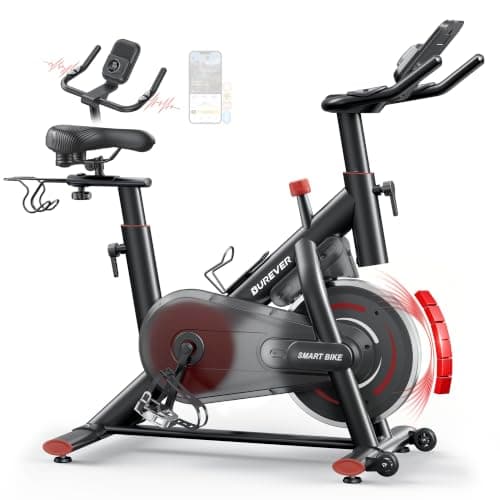
Our Burever exercise bike review: the touchscreen goal console, 0-100% magnetic resistance, 170kg limit, Zwift support without a power meter, and who should buy it.
Spin bike vs exercise bike compared on riding position, flywheel, resistance, comfort, noise and price, with a clear verdict on which suits your training.
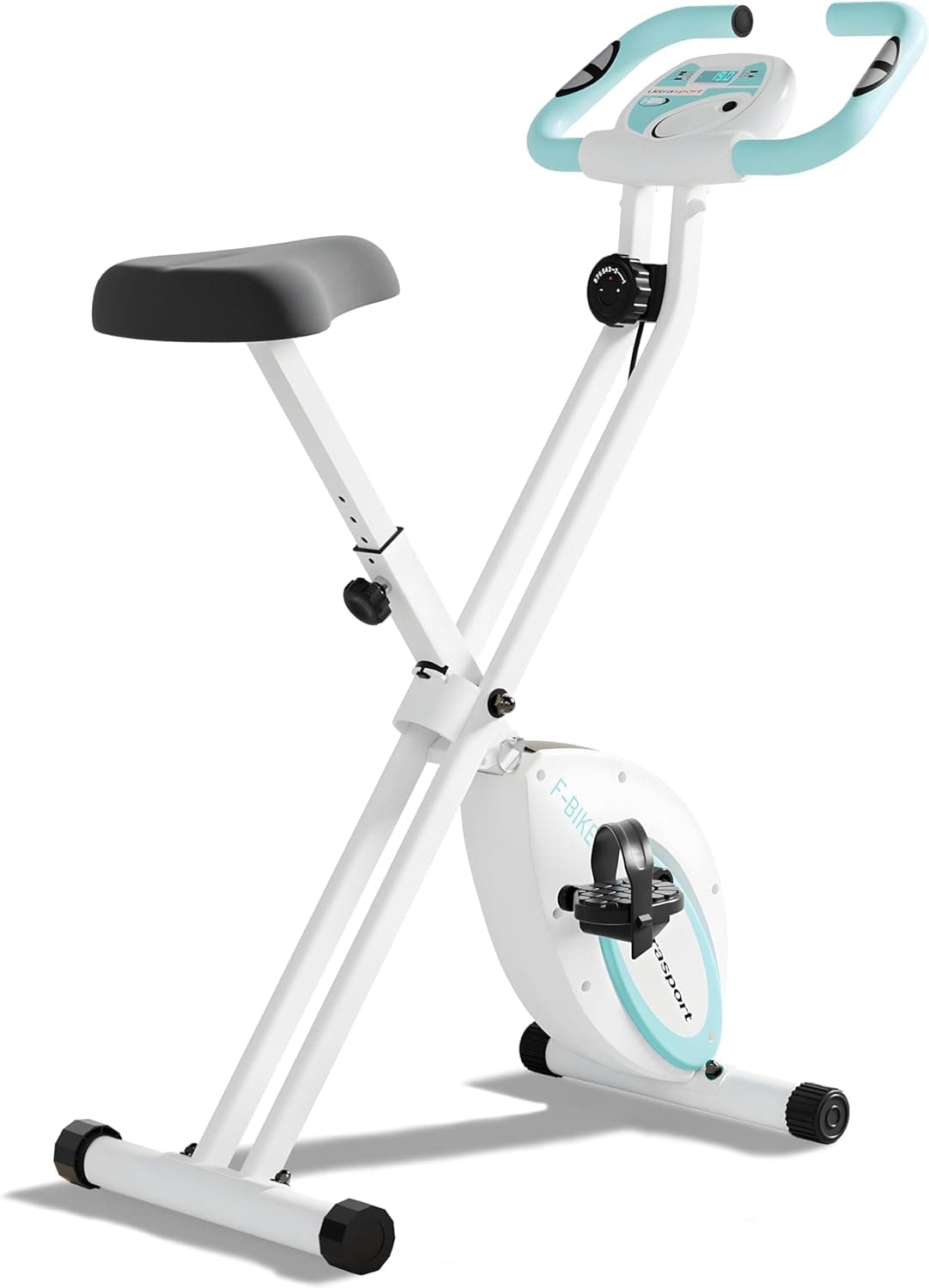
The best foldable exercise bike for UK homes, from budget mini pedallers to a 140kg-rated smart bike and a comfy recumbent. Folded sizes, weight limits and honest downsides.
Best Exercise is a participant in the Amazon EU Associates Programme, an affiliate advertising programme designed to provide a means for sites to earn advertising fees by advertising and linking to Amazon.co.uk. As an Amazon Associate we earn from qualifying purchases. This comes at no extra cost to you and never influences our independent reviews or rankings.