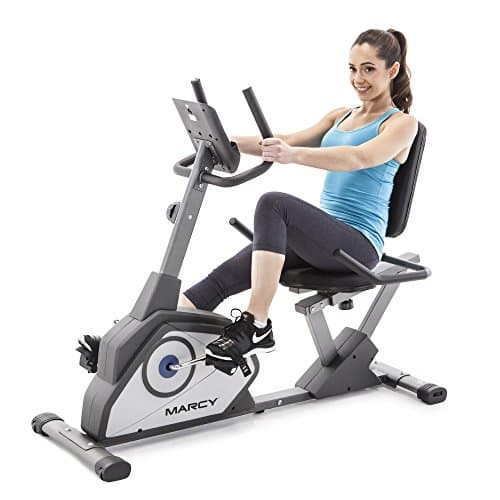
Exercise Bikes
Best Recumbent Exercise Bikes UK 2026: 5 Picks for Bad Knees and Backs
The best recumbent exercise bikes in the UK for 2026, from a £183 starter bike to a £1,399 Sole. Honest picks for sore knees, dodgy backs and long TV sessions.

By Paul Kendrick, Cardio & Endurance Editor · Updated 23 August 2026
We may earn a commission from qualifying purchases made through links on this page, at no extra cost to you. This never affects our ratings.
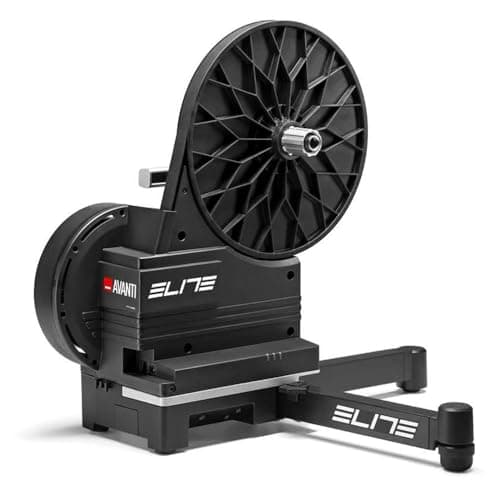
Elite has been making turbo trainers in Italy since long before anyone thought to gamify them, and the Avanti is the company's answer to a specific question: how cheaply can you sell a trainer that measures power to within 1 percent? The answer is £548.99 on Amazon UK, which is less than a Wahoo KICKR CORE 2 and roughly half of what a top-end unit costs. What Elite has done to hit that number is interesting, and one of the compromises will bother some riders more than others.
The headline specs read like a much more expensive machine. There's a 2100W ceiling at 40km/h, 18 percent gradient simulation, WiFi as well as Bluetooth and ANT+, automatic calibration, and Flex Feet that let the frame sway about 7 degrees side to side so the bike moves under you rather than sitting rigid (Elite's published Avanti specification). The compromise is the flywheel, at 4kg against the 5.5kg or more that rivals advertise.
How we review
We build these reviews from Elite's published specifications, the Amazon UK listing, and repeated findings in owner feedback and independent testing. We have not run our own winter-long test of this exact unit, so nothing here is presented as a hands-on measurement. Where Elite makes a claim we cannot verify, we say so.
Riders who train to power and care about the number being right. If you own a power meter on your outdoor bike, or you race on Zwift where 10W of optimism decides a sprint, the 1 percent claim is the reason to look at the Avanti before anything else at this money. It also suits anyone setting up in a garage or shed, because it will run at 16 fixed resistance levels with no mains socket anywhere near it.
It's less obviously the right buy if you ride purely for fitness in ERG mode three times a week and never look at your FTP. That rider is well served by cheaper wheel-off trainers, and our best turbo trainer UK guide covers those.
Check the Elite Avanti price on AmazonEvery direct drive trainer above £400 will hold a target wattage in ERG mode and tell you a number. The question is whether that number is the same one your bike computer records on the road, and the gap between a 2 percent trainer and a 1 percent trainer at threshold is the difference between a ride that feels honest and one that quietly flatters you. Elite uses its OTS power measurement, the same approach it has fitted to the pricier Direto and Justo, and the company has enough history supplying WorldTour teams that the claim is credible even if we cannot measure it ourselves.
Automatic calibration matters more than it sounds. Trainers drift as they warm up, and older units expected you to ride for ten minutes then run a spindown. The Avanti handles it in the background, which removes the single most common cause of "my numbers went weird" complaints on forums.
| Type | Direct drive, electromagnetic resistance |
|---|---|
| Power accuracy | ±1% (Elite claimed) |
| Max power | 2100W at 40km/h |
| Max gradient | 18% |
| Flywheel | 4 kg |
| Connectivity | WiFi, Ethernet, Bluetooth (dual channel), ANT+ FE-C |
| Freehub fitted | Shimano/SRAM 9/10/11sp, Shimano 12sp road, SRAM SX/NX 12sp |
| Other freehubs | Micro Spline, Campagnolo, SRAM XD/XDR (sold separately) |
| Axle adapters | QR 5x130-135, thru-axle 12x142 supplied |
| Standalone modes | Preset gradient to 18% (powered), 16 levels (unpowered) |
| Weight | 13 kg |
| Dimensions | 58 x 70 x 52 cm, folds to 58 x 21 x 52 cm |
| Extras | Di2 shifter pairing, power smoothing, Easy Start, 12 months My E-Training |
Here is the compromise Elite made to hit the price. A 4kg flywheel stores less kinetic energy than the 5.5kg to 8kg units in rival trainers, and the physical consequence is that resistance builds faster when you stop pedalling and the freewheel spins down sooner. Elite compensates electronically, adjusting the magnetic braking to imitate a heavier wheel, and for steady endurance work and ERG intervals the simulation is convincing enough that most riders never think about it.
Where you might feel it is the standing start and the sprint. Big-flywheel trainers carry you through the dead spot of the pedal stroke; smaller ones ask your legs to do it. Whether that reads as "harsh" or "responsive" seems to depend entirely on what you rode before. Riders coming off a wheel-on trainer tend to be delighted; riders moving down from a Neo or a Justo notice the change.
The Flex Feet help more than the spec sheet suggests. Around 7 degrees of sway is not the full 5cm rock of a proper rocker plate, but it stops your hips being welded in one position for ninety minutes, and that alone reduces the numbness that makes long indoor rides miserable.
WiFi is the quiet upgrade. Bluetooth between a trainer and a laptop across a cold garage is the single most common source of dropouts in indoor training, and moving the connection onto your home network, or a physical Ethernet cable, removes the problem. Firmware updates install themselves. Zwift, TrainerRoad, MyWhoosh and Elite's own My E-Training all see the trainer as a standard FE-C or Bluetooth device, and 12 months of My E-Training comes free with it.
Two Bluetooth channels means the Avanti can bridge a heart rate strap and a cadence sensor into the same app connection, which saves you pairing them separately. Di2 shifters can be paired to control apps directly. None of that is exotic in 2026, but plenty of trainers at this price still make you choose.
The unglamorous part: no cassette. Elite lists the power supply, the adapters and the freehub as what's in the box, so factor in a matching cassette and either the tools to fit it or ten minutes of a shop's time.
See today's Elite Avanti priceThe Wahoo KICKR CORE 2 is the obvious rival and costs a little more, with a bigger flywheel and the Zwift Cog and Click included. Elite's own Direto XR-T sits above the Avanti and adds a heavier flywheel with 24 percent gradients if climbing simulation is your thing, while the Garmin Tacx NEO 2T remains the benchmark for road feel at roughly double the money. Our best turbo trainer UK guide sets out the wider field, and if you would rather have a self-contained bike than a trainer under your own, the exercise bike section covers those.
One thing riders underrate about a good trainer: it can replace gym work as well as outdoor miles. A 2025 study in Biology of Sport found that well-trained cyclists doing high-intensity on-bike efforts gained strength and muscle-tendon adaptations comparable to those from heavy off-bike squats, without the soreness (Biology of Sport, 2025). If the trainer is the only equipment you own, that's not the handicap it sounds.
Elite claims 1 percent, which puts it level with trainers costing several hundred pounds more and a shade tighter than the 1 to 2 percent most mid-range direct drive units quote. Accuracy that tight matters if you race on Zwift or train to power zones set on a different power meter, because a trainer reading 15W high will have you chasing numbers you cannot hold outdoors. Calibration happens automatically, so there is no spindown routine to remember.
Both. Plug it in and you can dial in a fixed gradient up to 18 percent and just ride it like a hill. Unplug it entirely and you still get 16 manual resistance levels, which is handy for a garage with no socket or a hotel room. Most smart trainers turn into a paperweight when the power goes off, so this is a real point in its favour.
It is smaller than the 5.5kg and 6kg flywheels rivals advertise, and on paper that means less stored inertia. In practice the electromagnet does most of the work simulating road feel, and Elite tunes the trainer to behave like a heavier wheel. You will notice the difference least in steady efforts and most when you stamp on the pedals from a standstill, where the resistance builds a touch faster than a big-flywheel unit.
No. Elite lists the power supply, the frame adapters and the pre-installed freehub body in the box, and nothing else. Budget another £40 to £70 for a cassette that matches your groupset, plus a chain whip and lockring tool if you are fitting it yourself, or ask a shop to do it in ten minutes.
The freehub that ships on it takes Shimano and SRAM 9, 10 and 11 speed, Shimano 12 speed road, and SRAM SX or NX 12 speed. Micro Spline, Campagnolo and SRAM XD or XDR bodies are sold separately. Quick release and 12x142 thru-axle adapters are supplied, so road, gravel, cross-country and most city bikes bolt straight on.
On specification, yes. The Avanti undercuts the CORE 2 on price, matches it on climb simulation and beats it on claimed accuracy and standalone modes. Wahoo counters with a bigger flywheel, the Zwift Cog and Click bundled in, and an ecosystem that has been battle-tested for a decade. If you want the tightest numbers for the least money, take the Avanti; if you want the safest, most supported option, the Wahoo is still the default.
The best recumbent exercise bikes in the UK for 2026, from a £183 starter bike to a £1,399 Sole. Honest picks for sore knees, dodgy backs and long TV sessions.
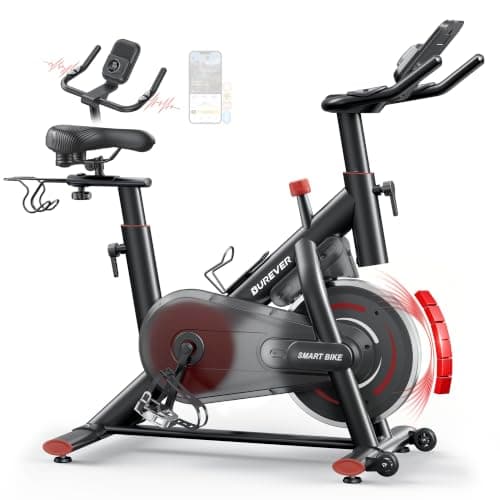
Our Burever exercise bike review: the touchscreen goal console, 0-100% magnetic resistance, 170kg limit, Zwift support without a power meter, and who should buy it.
Spin bike vs exercise bike compared on riding position, flywheel, resistance, comfort, noise and price, with a clear verdict on which suits your training.
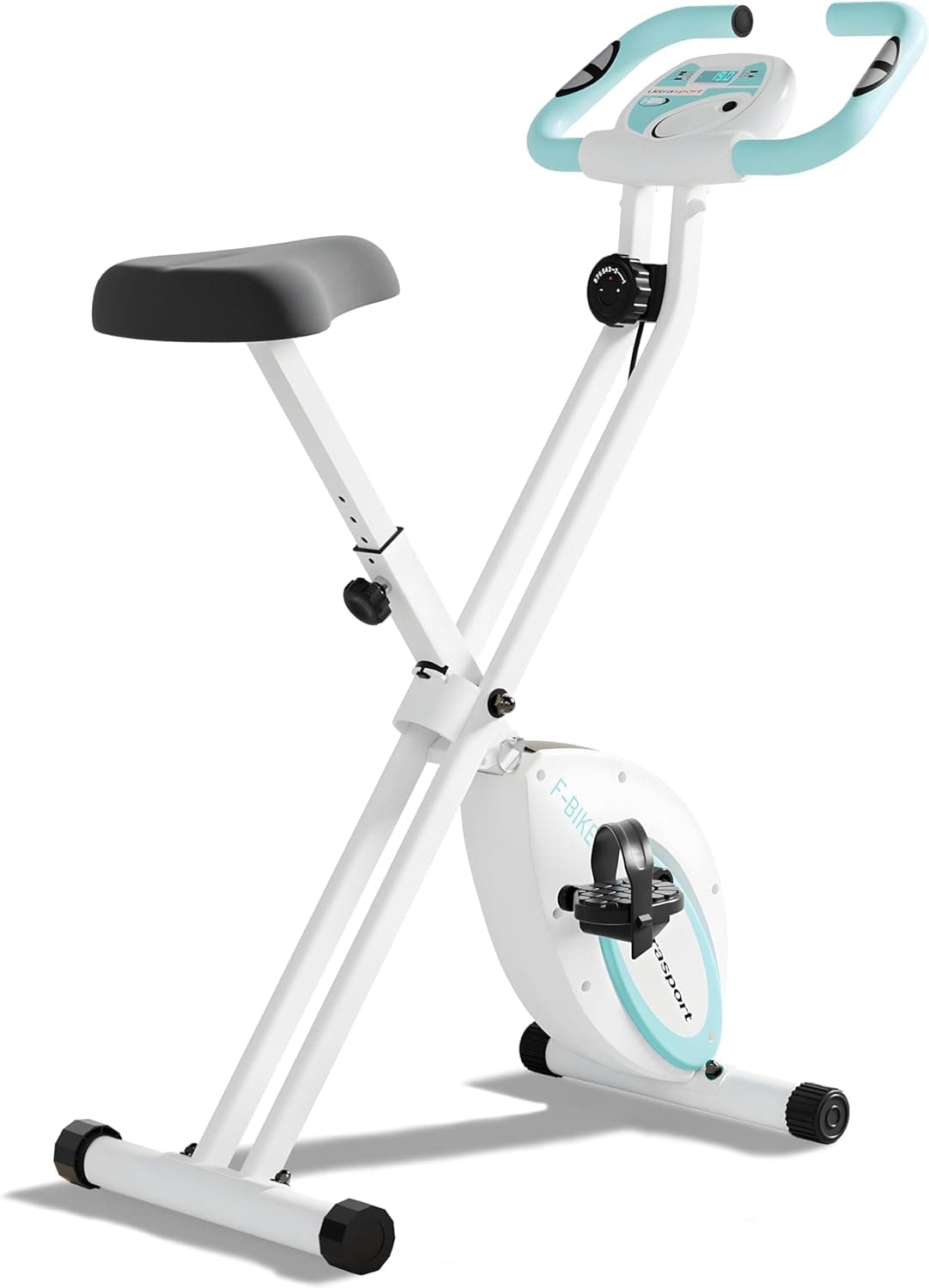
The best foldable exercise bike for UK homes, from budget mini pedallers to a 140kg-rated smart bike and a comfy recumbent. Folded sizes, weight limits and honest downsides.
Best Exercise is a participant in the Amazon EU Associates Programme, an affiliate advertising programme designed to provide a means for sites to earn advertising fees by advertising and linking to Amazon.co.uk. As an Amazon Associate we earn from qualifying purchases. This comes at no extra cost to you and never influences our independent reviews or rankings.