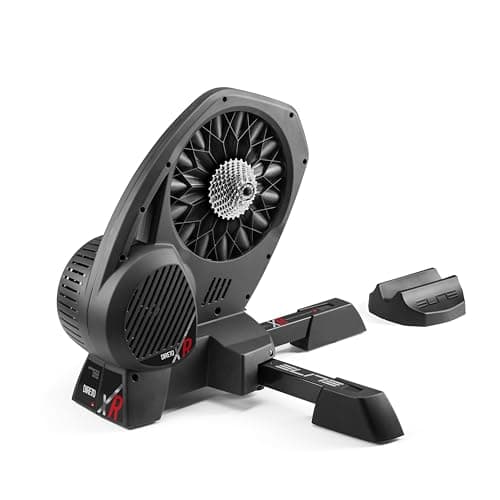
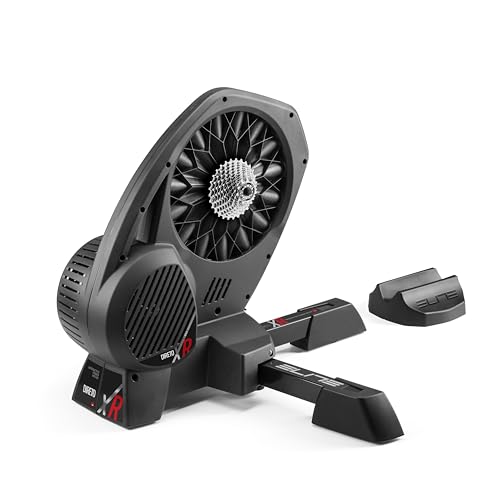
The Direto XR-T sits in an awkward spot. It's a properly capable direct-drive trainer with a real power meter inside it, a 24 percent gradient ceiling that nothing at this price matches, and a cassette already bolted on so you can ride within twenty minutes of opening the box. It also costs around £700 on Amazon UK, which puts it up against trainers that claim tighter accuracy for meaningfully less money.
Whether it makes sense comes down to what you value, and the answer isn't the same for everyone.
How we review
This review draws on Elite's published specifications and product documentation, the consistent findings across independent testing from established cycling and indoor training outlets, and the recurring themes in verified owner feedback. We have not run our own winter-long test of this exact unit, so we report findings that come up repeatedly rather than one tester's numbers. Specs and prices were correct at the time of writing.
What you get
The XR-T is the version supplied with a Shimano 11-speed cassette already fitted, which sounds trivial until you've spent an evening sourcing a lockring tool. The trainer body handles 8 to 12 speed drivetrains, so swapping the cassette to match your bike is straightforward if you're on something else.
Inside is Elite's OTS optical torque sensor, which measures the torsion of the trainer's axle optically and reports power to a claimed plus or minus 1.5 percent. That's a genuine power meter rather than an estimate derived from a resistance curve, and it's the reason the Direto range has held its reputation among people who care about training with numbers.
Resistance tops out at 2,300 watts at 40kph, dropping to around 1,100 watts at 20kph, and the unit will simulate gradients up to 24 percent. Connectivity covers ANT+ FE-C and Bluetooth FTMS, so it talks to Zwift, TrainerRoad, MyWhoosh and anything else that speaks the standard protocols.
Elite Direto XR-T key specifications
Type
Direct drive smart trainer
Power measurement
OTS optical torque sensor, claimed plus or minus 1.5 percent
Maximum resistance
2,300W at 40kph, around 1,100W at 20kph
Maximum gradient
24 percent
Flywheel
5kg
Cassette
Shimano 11-speed fitted as standard
Drivetrain compatibility
8 to 12 speed
Connectivity
ANT+ FE-C and Bluetooth FTMS
Standalone modes
Fixed gradient up to 24 percent, or 16 preset resistance levels
Virtual shifting
Convertible to Zwift Cog and Click
Amazon UK price
Around £700 at the time of writing
Power accuracy, honestly
Plus or minus 1.5 percent is good. It is not the plus or minus 1 percent that Wahoo and Garmin claim on their flagship units, and anyone who tells you the difference is meaningless hasn't tried to compare two power meters that both claim 1 percent and watched them disagree by three.
For the overwhelming majority of riders this is irrelevant. If you use one trainer, train to its numbers, and judge progress against your own previous efforts, absolute accuracy doesn't matter at all; consistency does, and the OTS sensor is consistent. Where 1.5 percent starts to matter is if you're comparing indoor power against an outdoor power meter on the same bike, or if a coach is prescribing zones from an outdoor FTP test.
One thing to watch: Elite's power smoothing has four selectable levels, and higher smoothing makes your power graph look beautifully steady. It also hides the surges and sags that tell you whether you're actually holding a target. Turn it down or off for interval work and you'll get an uglier chart and better training.
Road feel and the flywheel
The flywheel is 5kg, which is on the lighter side for a direct-drive trainer at this money. Heavier flywheels store more inertia and feel more like carrying speed on a real road, which is why a Tacx Neo's simulated inertia and a Kickr's 5.4kg flywheel both feel a touch more natural through surges and over the top of a climb.
The Direto isn't bad here, just noticeably less planted than the best. On steady-state work you won't think about it. On out-of-the-saddle efforts and hard accelerations, the sensation of the trainer wanting to stop the moment you stop pedalling is more present than it is on a heavier unit.
The Zwift Cog conversion
This is the feature that keeps the Direto XR relevant. Elite released a conversion enabling the Direto XR and XR-T to run Zwift's Cog and Click for virtual shifting (Elite), and the version sold with the Cog and Click included is documented on Elite's own product pages (Elite).
Virtual shifting means the bike stays in a single gear and you change resistance electronically from a handlebar controller. Chain wear drops to almost nothing, cross-chaining noise disappears, and shifts happen instantly without the mechanical clunk. For anyone leaving a bike permanently on a trainer through winter, it's a genuine improvement rather than a novelty.
The standalone modes deserve a mention too. You can set a fixed gradient up to 24 percent or pick one of 16 preset resistance levels without any app running, which is useful for a quick warm-up or when your tablet decides to update itself five minutes before a session.
Pros
Genuine built-in power meter rather than an estimated curve
Shimano 11-speed cassette fitted, so it is ridable out of the box
24 percent gradient ceiling, steeper than most rivals manage
Converts to Zwift Cog and Click for virtual shifting and near-silent drivetrain
Works standalone with 16 resistance levels or a fixed gradient, no app needed
ANT+ FE-C and Bluetooth FTMS covers every major training platform
Cons
Claimed 1.5 percent accuracy trails the 1 percent of Wahoo and Tacx flagships
5kg flywheel feels less planted than heavier units on hard accelerations
Around £700 puts it above a Wahoo Kickr Core 2 that does most of the same job
Power smoothing left on a high setting flatters your numbers
The platform dates from 2020, so it is a mature design rather than a new one
Who should buy it
Buy the Direto XR-T if you want a direct-drive trainer with a real power meter that arrives ready to ride, you like the idea of virtual shifting, and you value the standalone modes for days when you cannot be bothered with an app. It's a solid, well-proven unit and the OTS sensor has earned its reputation over several generations.
Look elsewhere if price is the deciding factor. The Wahoo Kickr Core 2 typically undercuts it by around £200 while claiming tighter accuracy and offering a slightly heavier flywheel, and the Tacx Neo 2T is the one to buy if road feel and absolute accuracy are what you're paying for. Our best turbo trainers guide sets out where each sits.
Whatever you buy, a trainer only earns its money if you use it. Two or three structured sessions a week comfortably covers the aerobic side of the UK physical activity guidelines through a winter when riding outdoors stops being appealing.
Elite claims plus or minus 1.5 percent, delivered by its OTS optical torque sensor. That is a real power meter inside the trainer rather than an estimate from a resistance curve, and independent testing has generally found it tracks external power meters closely. It is not the plus or minus 1 percent claimed by a Wahoo Kickr or a Tacx Neo, and if you are chasing precise numbers for structured testing that half a percent is the reason to spend more.
Does the Elite Direto XR-T come with a cassette?
Yes, and that is what the T in the name means. It ships with a Shimano 11-speed cassette already fitted, so you can unbox it, mount your bike and ride. The trainer body is compatible with 8 to 12 speed drivetrains if you want to change the cassette to match your bike.
Can you use the Direto XR-T with Zwift Cog and Click?
You can. Elite released a conversion that lets the Direto XR and XR-T run Zwift's Cog and Click setup for virtual shifting, which means you can leave your bike in one gear and shift electronically in the app. It removes drivetrain wear and most of the chain noise, and it is one of the better reasons to pick this trainer over an older direct-drive unit.
Elite Direto XR-T or Wahoo Kickr Core 2?
The Kickr Core 2 usually wins on value. It claims tighter power accuracy, has a heavier flywheel for better road feel and typically costs around £200 less than the Direto XR-T on Amazon UK. Pick the Direto if you specifically want the higher 24 percent gradient ceiling, the standalone resistance modes that work without an app, or you find it discounted.
How steep a gradient can the Direto XR-T simulate?
Up to 24 percent, which is steeper than almost anything you will meet in a virtual world and considerably steeper than the 20 percent most rivals manage. In practice the gradient ceiling matters far less than people assume, because on a 20 percent virtual climb at realistic power your speed drops so low that the trainer is nowhere near its limit anyway.
Is the Direto XR-T quiet?
Reasonably. Direct-drive trainers move nearly all the noise from the trainer to your drivetrain, so what you hear is mostly chain and cassette rather than the unit itself. Convert it to a Zwift Cog and the drivetrain noise drops further because the chain runs in a single straight line. It is not silent, and it will still carry through a floor to the room below.
Are adjustable dumbbells worth it? We run the UK numbers on cost and floor space against a fixed hex set, then cover dial, twist and spin-lock types, drop risk and who should skip them.
The best barbell row alternatives for a tired lower back, no barbell, no equipment or a cable stack. Chest-supported rows, dumbbell and landmine options, inverted rows and more, with form cues.
How to do the Cuban press step by step, the light dumbbell or bar weights to use, the rotator cuff and shoulder muscles it trains, common mistakes and easy variations.
How to do the kettlebell gorilla row with good form. Muscles worked, step-by-step cues, what weight to use, common mistakes, variations and a simple sets and reps plan.
Best Exercise is a participant in the Amazon EU Associates Programme, an affiliate advertising programme designed to provide a means for sites to earn advertising fees by advertising and linking to Amazon.co.uk. As an Amazon Associate we earn from qualifying purchases. This comes at no extra cost to you and never influences our independent reviews or rankings.