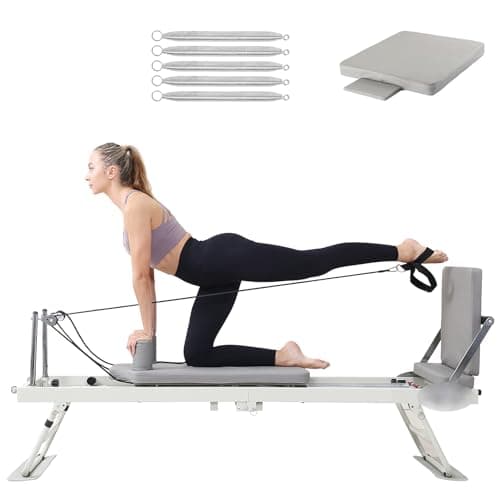
Home Gym
Best Reformer Pilates Machine UK 2026: 6 Foldable Home Picks
The best reformer pilates machines for home use in the UK in 2026, from a £259 foldable to a £788 wooden frame. Honest picks, real specs and how to choose a pilates machine.

By Paul Kendrick, Cardio & Endurance Editor · Updated 21 August 2026
We may earn a commission from qualifying purchases made through links on this page, at no extra cost to you. This never affects our ratings.
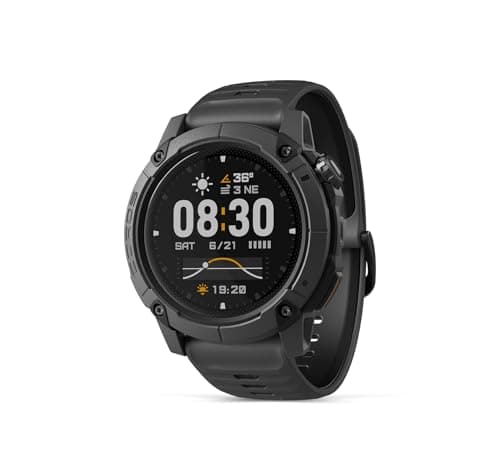
COROS built the NOMAD for people who spend their weekends outdoors rather than chasing personal bests, and it costs about £319 on Amazon UK against a Garmin Instinct 3 Solar at nearly £350 and a Fenix at triple that. What you get for the money is unusual at this price: full offline topographic maps with street names, turn-by-turn navigation, dual-frequency GPS, a touchscreen, 22 days of battery, and a journalling feature that turns a hike into something worth looking at again. What you don't get is a torch, solar charging, or the depth of Garmin's ecosystem.
The design borrows heavily from the Instinct playbook, which reviewers have pointed out and COROS has not really denied. Copying a good shape is not a crime. The interesting question is whether the software underneath earns the switch, and for hikers, anglers and anyone who navigates rather than races, it mostly does.
How we review
This review draws on COROS's published specifications, verified owner feedback and independent testing from outdoor and endurance outlets that have worn the watch for months. We have not run our own long-term test of this exact unit, so we report only what recurs across sources, including the criticisms.
Hikers, hill walkers, bikepackers and anglers. If your idea of a good Saturday involves a map, a route you have not walked before and a possibility of rain, the NOMAD's combination of free offline maps, 50 hour GPS battery and a case that survives being scraped down a rock is exactly the brief.
Runners chasing a marathon PB have better options in COROS's own range, and the PACE Pro gives you a brighter AMOLED screen and a lighter case for less money. Anyone who wants their watch to run apps, take payments and reply to messages should stay with Garmin or Apple; COROS deliberately doesn't play that game.
Check the COROS NOMAD price on AmazonCOROS went with a 1.3 inch memory-in-pixel panel at 260 x 260 rather than the AMOLED everyone else is fitting, and outdoors that decision pays for itself. Direct summer sun makes it more readable, not less, and the always-on display costs almost nothing in battery, which is a large part of how 22 days happens.
Indoors it looks dull. Colours are muted, the contrast is flat next to any modern phone, and the backlight only fires on a wrist raise, which gets irritating on a 5am run when the gesture doesn't always register. COROS improved brightness and contrast over its older MIP watches, and it's still a compromise you accept for the battery rather than one you enjoy. The full spec list sits on the official COROS NOMAD page.
| Display | 1.3 in memory-in-pixel touchscreen, 260 x 260, always on |
|---|---|
| Lens | Hardened mineral glass |
| Case | Dual-layer bezel, aluminium beneath polymer |
| Weight | 49 g nylon band / 61 g silicone band |
| Battery, daily use | Up to 22 days |
| Battery, all-systems GPS | Up to 50 hours |
| Battery, dual-frequency GPS | Up to 34 hours |
| Maps | Global offline topo and landscape maps with street names |
| Navigation | Turn-by-turn, back to start, route import |
| Sport modes | 40+, including 8 fishing profiles |
| Sensors | Optical HR, SpO2, barometric altimeter, compass, thermometer |
| Controls | Touchscreen, stainless steel dial, action button |
| Subscription | None |
This is the reason to buy it. Global topographic and landscape maps come preloaded and free, you can pinch and scroll them in real time, and dropping a pin on the map gives you a route to it. On a hill in poor visibility that's the difference between confidence and guesswork, and it's a feature Garmin reserves for watches costing considerably more.
Where COROS still lags is the fine detail around a route. There's no ClimbPro equivalent, so a long ascent gives you elevation but no sense of how much of the climb remains at what gradient, which matters on an alpine day. Getting a route onto the watch can also involve more manual shuffling than it should, particularly from third-party planners. Once the file is on there, navigation itself is solid.
Press the action button mid-walk, talk at your wrist, and the watch records a voice note, transcribes it and pins it to your location on the map. Later you can attach photos or video from your phone and share the whole thing as a private link, or export a 3D flyover video of the route with music over it.
Written down it reads like a marketing exercise. In use it changes what an activity file is for. Instead of a line on a map and an average pace you get "the stile is broken, went left at the wall" pinned at the exact spot, which is genuinely useful the next time you walk it. The fishing modes work the same way: eight profiles from fly to kayak, tide and moon-phase data, a catch log tied to coordinates.
GPS performance is the strongest COROS has shipped. Testers running it against reference units around Mont Blanc and through Manhattan street canyons found the traces held up in both, which are the two hardest environments a consumer GPS meets.
Optical heart rate is the softer spot. Steady-state work tracks fine and the algorithm is COROS's best yet, but the first minute of a hard interval can wander, which is a limitation of wrist sensors generally rather than a COROS failing. Research testing wrist devices at higher intensities keeps finding the same pattern: reliable when the effort is steady, less so when it spikes (wrist-worn device accuracy during intense exercise, IJERPH 2023). If intervals are your training, pair a strap; our best heart rate monitor guide covers the sensible ones.
See today's COROS NOMAD priceThe obvious rival is the Garmin Instinct 3 Solar, which charges from daylight, has a proper LED torch and plugs into the biggest app ecosystem in the category, but navigates with a breadcrumb rather than a map. If you want COROS's software in a lighter, faster package for running, the APEX 2 Pro is the sibling to look at, and the best Garmin watch guide frames the wider field. Training indoors between adventures is covered in our home gym section.
Walking counts, and the NHS asks for 150 minutes of moderate activity a week plus two strengthening sessions; a watch that logs the hills makes the first half easy to hit (NHS physical activity guidelines for adults).
On features per pound, yes. The NOMAD gives you full offline topographic maps with turn-by-turn navigation and a touchscreen at a price where Garmin's Instinct 3 Solar still makes you navigate with a breadcrumb trail. Garmin wins on the LED torch, solar charging, the size of its app ecosystem and the polish of its climb tools. Choose the NOMAD if maps matter more than an app store.
COROS quotes 22 days of daily use, 50 hours with all satellite systems on and 34 hours in dual-frequency mode. Testers have found those figures hold up, including on long navigating days. In practice a week of hiking with a couple of full-day GPS sessions barely dents it.
No, and it is the omission owners mention most. Anyone who camps, runs before dawn or fishes at night will miss the LED flashlight that Garmin's Instinct 3 and most rivals in this bracket include. A head torch solves it, but you shouldn't need one for finding a tent zip.
It is COROS's attempt at making an activity file into something you would actually revisit. You drop voice pins during an activity, and the watch transcribes them to text, tags the spot on the map and lets you attach photos or video afterwards. There is also a 3D flyover video export. It sounds gimmicky and turns out to be the feature owners keep using.
Good rather than great. It is the strongest COROS optical sensor so far, and steady-state readings track well, but it can stumble at the start of hard intervals like most wrist sensors do. For interval training, pair a chest strap over Bluetooth or ANT+ and the problem disappears.
Yes. It carries more than 40 sport modes, including running, cycling, swimming, strength work and indoor rowing, plus the training-load and recovery tools COROS built for its running watches. The rugged case and the fishing modes are the differences, not a narrower feature set.
The best reformer pilates machines for home use in the UK in 2026, from a £259 foldable to a £788 wooden frame. Honest picks, real specs and how to choose a pilates machine.

The best adult weighted blankets in the UK for 2026, with honest picks for hot sleepers, heavier users and daytime use, plus how to choose the right weight and what the research shows.
Are vibration plates worth it? Yes for balance, bone health support and low-impact warm-ups; no for weight loss or replacing strength training. The evidence.
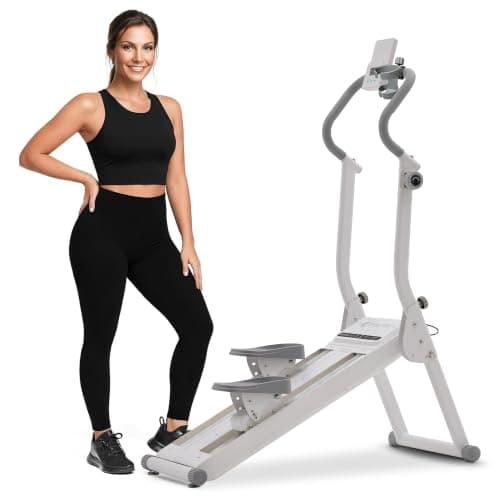
Our ExacMe magnetic stair climber review covers its 16 magnetic resistance levels, 48cm stride, 158kg user limit, app and noise claims, and who should buy it.
Best Exercise is a participant in the Amazon EU Associates Programme, an affiliate advertising programme designed to provide a means for sites to earn advertising fees by advertising and linking to Amazon.co.uk. As an Amazon Associate we earn from qualifying purchases. This comes at no extra cost to you and never influences our independent reviews or rankings.