Home Gym
Best Squat Rack UK 2026: Squat Racks, Stands and Half Racks
The best squat racks in the UK for 2026, compared on weight rating, height range and spotters. Cheap squat stands, half racks and a full cage for home gyms at every budget.

By Paul Kendrick, Cardio & Endurance Editor · Updated 14 August 2026
We may earn a commission from qualifying purchases made through links on this page, at no extra cost to you. This never affects our ratings.

The COROS APEX 2 Pro is what happens when a company decides battery life and durability matter more than app stores and contactless payments. It has a sapphire crystal screen in a titanium bezel, a rotating digital dial you can work with gloves on, free global offline maps, and a battery that COROS rates at 66 hours of full GPS tracking. Around £449 buys you that, which is a lot of money for a watch with no NFC and a modest ecosystem, and remarkably good value if what you actually do is spend eight hours a week on trails.
The honest headline: this is the best watch on sale for ultra runners and hill walkers who want to charge once a fortnight, and a slightly awkward buy for anyone whose training happens on pavement within a mile of home.
How we review
This review is based on COROS published specifications, verified owner reviews on Amazon UK, and hands-on testing published by trusted running and outdoor outlets. We have not run our own multi-month endurance test of this unit, so we report only findings that appear consistently across sources, including the complaints. Price and stock were checked on 14 August 2026.
Trail and ultra runners first. The 66-hour GPS figure is the reason this watch exists, and it turns a hundred-mile race into an event you can track from start to finish without a battery bank in your vest. Long-distance hikers, fastpackers and anyone doing multi-day expeditions get the same benefit.
Road runners chasing parkrun PBs are a harder sell. The training analysis is good, the running metrics are thorough, and none of that needs 66 hours of GPS. If your longest session is 90 minutes, you are paying a premium for stamina you will never use, and our best Garmin watch guide covers cheaper watches that do the road job just as well.
| Display | 1.3in sapphire crystal touchscreen with titanium bezel |
|---|---|
| Battery, regular use | Up to 21 days |
| Battery, full GPS | Up to 66 hours |
| Charge time | Under 2 hours from empty |
| GNSS | Dual frequency, all five major satellite systems |
| Heart rate | Optical sensor with five-LED array |
| Water rating | 5 ATM, equivalent to 50 metres |
| Operating temperature | Minus 20C to 50C |
| Maps | Free global landscape and regional topo maps |
| Controls | Digital rotating dial plus touchscreen |
| Payments | None, no NFC |
| Price | Around £449 at the time of writing |
COROS publishes 21 days of regular use and 66 hours of full GPS for the Pro model, against 13 days and 40 hours for the standard APEX 2. Those numbers hold up better than most manufacturer claims because the always-on display is a transflective memory-in-pixel panel rather than AMOLED, which is also why the screen looks duller than a Garmin Forerunner 970 indoors and better than one in direct sunlight.
What that means in practice: you charge it roughly twice a month, and the charge takes under two hours. Anyone who has arrived at a start line with a watch on 12 percent understands why this matters more than another training metric.
The trade is aesthetic. Put this next to an AMOLED watch in a dim room and the APEX 2 Pro looks like a device from three years ago. Take both outside at midday and the situation reverses completely.
Dual-frequency GNSS with all five satellite systems is the specification you want if you run in wooded valleys, alpine terrain or between tall buildings, and it is the clearest technical upgrade over the standard APEX 2. Tracks come back clean in places where single-band watches wander across rivers.
The optical heart rate sensor is the weaker link, as it is on almost every watch. Validation research in BMJ Open Sport and Exercise Medicine found wrist-based monitors correlate strongly with chest-strap reference measures during steady walking and running, which matches the experience here: steady efforts track fine, hard intervals lag. If your training is built on heart rate zones, budget for a strap. Our heart rate monitor guide covers the options.
COROS has spent the last few years turning its app from a data dump into something genuinely useful. Training load, recovery timing and a 42-day performance overview are all there, structured workouts sync properly, and the free training plans built by COROS coaches are better than most paid apps. Third-party integration covers Strava, TrainingPeaks, Komoot, Apple Health, Stryd and a dozen others, which matters because plenty of runners live in Strava regardless of what is on their wrist.
Where it falls short is depth of ecosystem. Garmin Connect IQ has thousands of watch faces and data fields; COROS has a handful. There are no third-party apps to speak of, no music streaming services, and no contactless payment. Those absences are all deliberate, and they are why the battery lasts.
The obvious comparison is the COROS PACE Pro, which costs roughly £150 less, has a brighter AMOLED screen and gives up sapphire, titanium and most of the battery advantage. For road runners that is the better watch. For anyone spending real time on rough ground, the APEX 2 Pro's build quality is worth the difference.
Against Garmin, the fight is closer on price than it used to be. A Garmin Forerunner 965 offers a better screen, payments and a deeper ecosystem, while a Garmin fenix 8 beats the APEX on features and loses on value by a wide margin. COROS wins on battery per pound and loses on everything ecosystem-shaped. That is a clean choice rather than a difficult one.
If you run long, run off-road, or hate charging things, yes. COROS quotes 21 days of regular use and 66 hours of full GPS tracking, which covers a hundred-mile race and the training block before it without a cable. If you mainly run road 10ks and want contactless payments and a huge app ecosystem, a Garmin makes more sense for the money.
Screen size and stamina, mostly. The Pro has a 1.3 inch sapphire screen against the standard model's 1.2 inch, and COROS rates it at 21 days of regular use and 66 hours of full GPS versus 13 days and 40 hours. The Pro also adds dual-frequency GNSS support, which is the feature that matters in steep valleys and city centres.
It does, and they cost nothing extra. Global landscape maps plus regional topographic maps download over WiFi, and you can follow routes created in the COROS app on the watch. Navigation is breadcrumb and route-following rather than full turn-by-turn routing you can generate on the wrist.
Yes, though the digital dial does most of the work. COROS built the interface around the rotating crown so you can scroll menus and zoom maps with cold, wet or gloved hands, and the touchscreen is there as a shortcut rather than the primary control. That is the right call for a watch aimed at hill days in February.
The optical sensor is a five-LED design and it tracks steady running well, but like every wrist-based sensor it struggles with sudden changes in intensity and cold weather. For interval sessions and threshold work, pair a chest strap over Bluetooth. That advice applies to every watch on the market, not just this one.
It is rated to 5 ATM, which means it withstands pressure equivalent to 50 metres depth. Pool swimming, open water swimming and rain are all fine. It is not a diving watch and the rating does not cover high-pressure jets or hot showers over long periods.
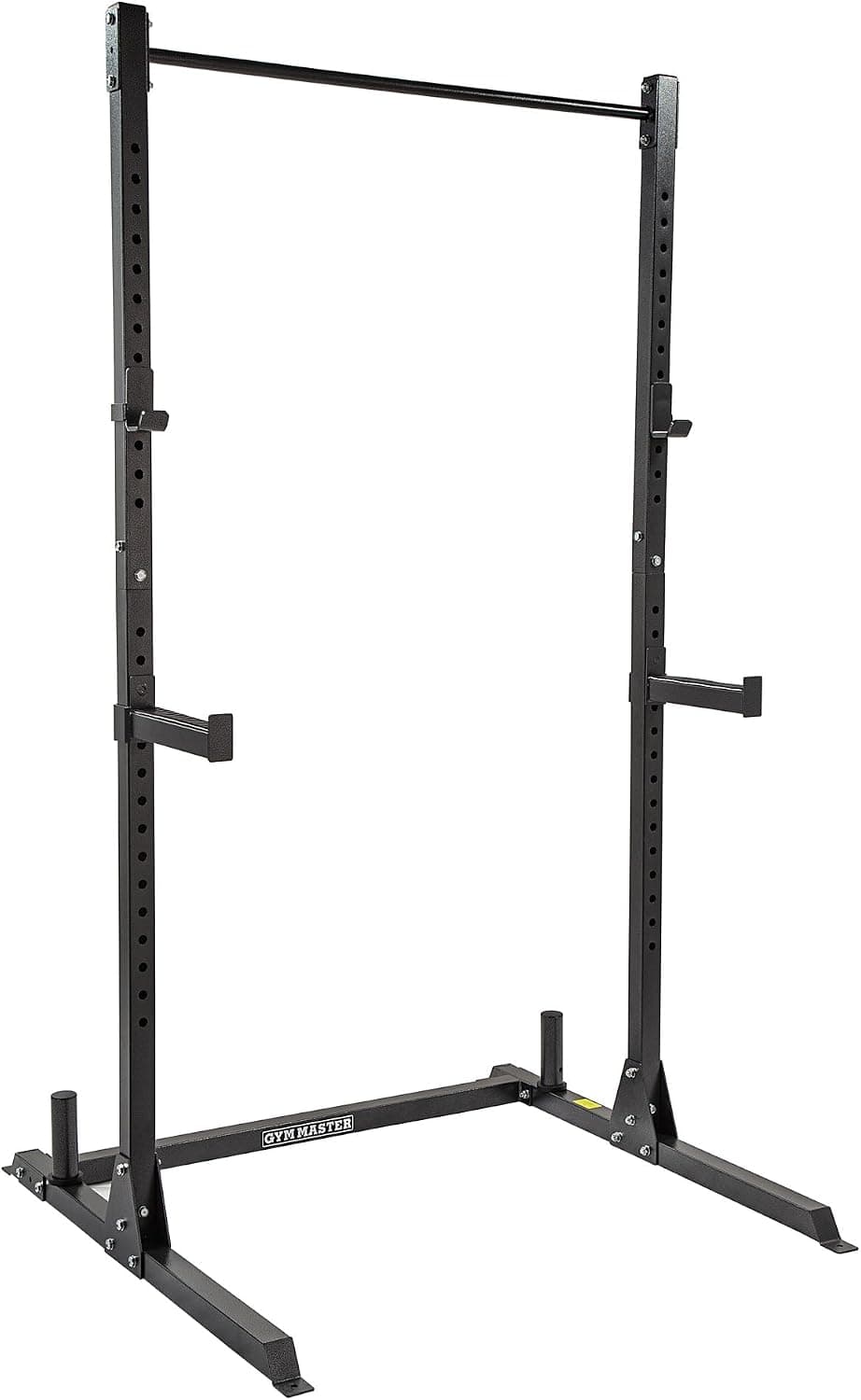
The best squat racks in the UK for 2026, compared on weight rating, height range and spotters. Cheap squat stands, half racks and a full cage for home gyms at every budget.
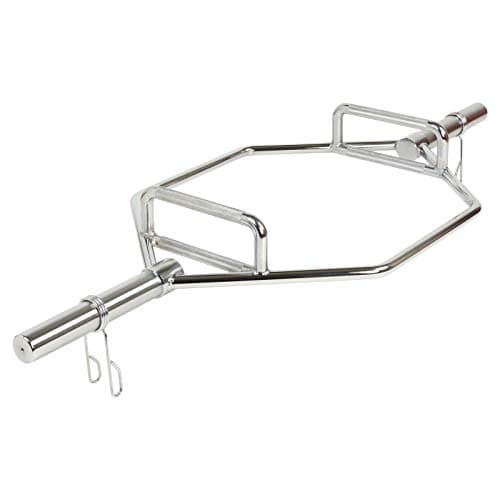
The best trap bars and hex bars in the UK for 2026, for home and garage gyms. Honest picks for deadlifts, shrugs and farmer's carries, from budget 1 inch shrug bars to premium open frames.
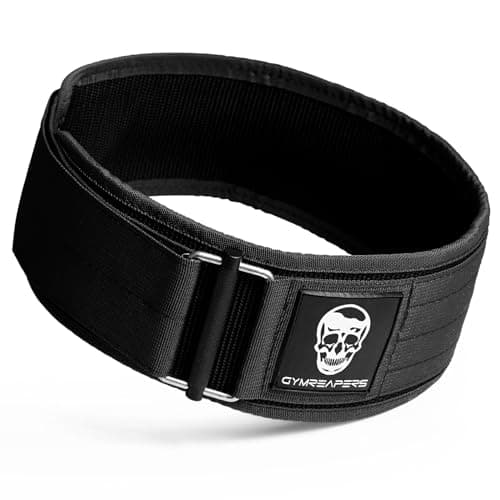
The best weight lifting belt for UK lifters in 2026, from an £18 leather belt to a 13mm lever belt. Thickness, buckle type and sizing compared for squats and deadlifts.
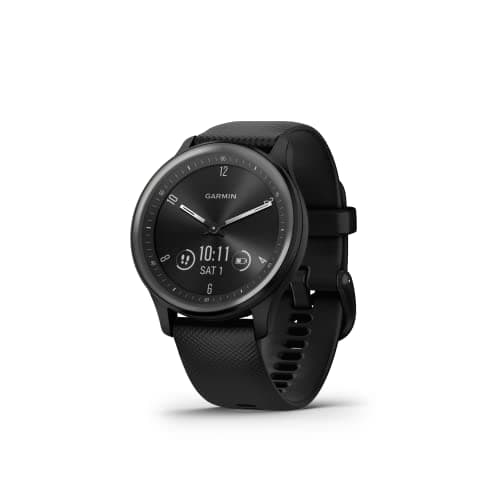
Garmin vivomove Sport review for UK buyers: analogue hands over a hidden OLED, Body Battery and Pulse Ox at £150, but no GPS, no Garmin Pay and a tiny screen.
Best Exercise is a participant in the Amazon EU Associates Programme, an affiliate advertising programme designed to provide a means for sites to earn advertising fees by advertising and linking to Amazon.co.uk. As an Amazon Associate we earn from qualifying purchases. This comes at no extra cost to you and never influences our independent reviews or rankings.