Home Gym
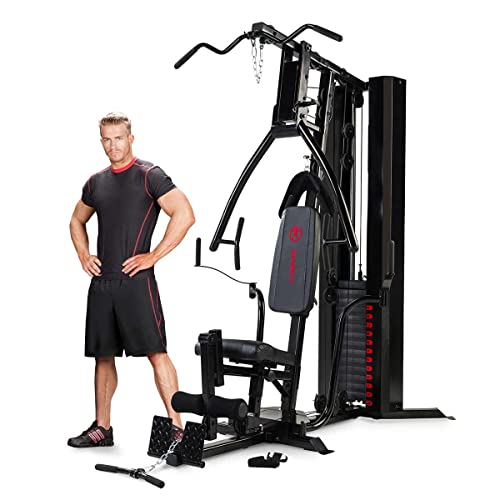
Marcy HG5000 Multi Gym Review: 90kg Stack, Separate Pec Dec and a Lifetime Frame Warranty
Our Marcy HG5000 review: the 90kg stack versus the 106kg claim, independent chest press and pec dec, 211cm height, 135kg user limit and £699 price.

By Jack Atkins, Home Gym Equipment Specialist · Updated 23 November 2026
A weight sled is a weighted frame on flat runners that you push, pull or drag across the floor, and the resistance comes mostly from friction rather than from lifting anything. That one fact explains almost everything about buying and using one: the same 50kg of plates feels completely different on gym turf, a rubber floor, a concrete patio and a wet lawn. Shop pages tend to list posts and finishes. What they rarely tell you is whether the sled will actually slide on your floor, how much the frame weighs before you add a plate, and which type suits the training you want to do. This guide covers all three.
Strip a sled back and you get three parts. There's a base with two runners (sometimes called skids or rails) that contact the ground, one or more vertical posts that take weight plates, and some way to move it: upright handles to push, a ring or hook for a rope or harness, or both.
Because nothing leaves the ground, the load you feel is the sled's total weight multiplied by the friction coefficient of the runners against that surface. A University of Kansas study that winched a loaded sled across a surface at constant speed found the force needed to get it moving was clearly higher than the force needed to keep it moving: a static friction coefficient of about 0.43 against a dynamic one of about 0.33 (Andre et al., Journal of Strength and Conditioning Research). You feel that difference on every rep. The first step off a dead stop is always the hardest, which is why stopping mid-push is such a bad idea.
The push sled, often called a prowler after an early brand name, is the one most people picture. It has two upright poles you push against, and on most designs those poles give you two grip positions: high and low.
High handles let you stand more upright with your arms bent, which suits heavier loads, marching and anyone new to sled work. Low handles put you nearly horizontal with straight arms, closer to a sprint start, and that position is brutally hard on the legs and lungs. If a sled only offers one height, it's usually the high one; if you want sprint-style work or you're training for HYROX, make sure you can grip low as well.
Plenty of push sleds also have a tow point at the front or back. Clip a rope or strap to it and you can turn the same sled into a pulling station, which is the main reason a push sled is the better single purchase for most people.
A drag sled is a flatter, simpler design: a plate post on a base, with a ring or hook for a harness or strap. There are no push handles, or only a token pair too low to use properly. You walk or run forwards with a harness round your waist or shoulders, walk backwards holding straps, or do arm work like rows and chest presses with handles.
Drag sleds are lighter to carry, quicker to set up and easier to tuck in a garage corner. Sprint coaches have used them for decades for resisted sprints, and a systematic review of that research found heavier sled loads tended to improve acceleration in team sport and strength-trained athletes, while whether sled sprints beat ordinary sprints remained an open question (Petrakos, Morin and Egan, Sports Medicine). In plain terms: they work, but they're a tool, not magic.
Nearly every sled you'll find in the UK is plate-loaded, which means you add standard weight plates to its posts. A few cheaper units come as fixed-weight or fillable designs (sand or water inside a plastic shell, or a set block of steel), and they rarely make sense for anyone who'll train with it for more than a few months. You'll outgrow a fixed load quickly, and you can't strip one down for a light sprint day. If you already own plates, plate-loaded is the obvious choice.
Pick the sled to suit your floor rather than the other way round. Researchers at Brunel University measured four common sports surfaces by towing a weighted sled across each, and the friction coefficient ranged from 0.21 on an artificial hockey pitch to 0.58 on the stickiest surface (Linthorne and Cooper, Sports Biomechanics). That's close to a threefold difference in effective load from the floor alone.
Here's how the usual surfaces compare in practice:
| Surface | How it feels | Runner advice |
|---|---|---|
| Gym turf (sled track) | Smooth, predictable, the reference most people train on | Bare steel or plastic both fine |
| Rubber flooring | Grippy and heavy; can feel much harder than turf and may scuff | Use plastic or nylon skids; check your tile maker's guidance |
| Concrete or paving | Very hard going, and bare steel will scrape and wear | Plastic or rubber skid covers, or lay a strip of turf |
| Grass | Workable and forgiving, but changes with rain and length | Wide, smooth runners that won't dig in |
| Carpet | Usually a poor idea; burns the fibres and catches | Avoid, or lay a turf runner |
Many sleds now sell as "floor-friendly", which normally means plastic, nylon or HDPE runners or bolt-on skid covers instead of bare steel. These are kinder to rubber gym floors and paving, and they're replaceable when they wear through. On a sled you plan to use on a patio or garage floor, replaceable skids aren't a nice extra; they're the thing that stops you ruining either the sled or the ground.
If you're building a home setup around a sled, a roll of artificial turf over rubber gym flooring gives you a consistent lane, and our guide on how to build a home gym covers how much floor space to plan for.
Log the surface as well as the weight
A load that moves comfortably on gym turf can be close to immovable on a rubber floor or a dry patio. Write the surface down next to the weight in your training log, or your numbers won't make sense when you switch between gym and garden.
Check the post diameter before anything else. Most sleds take Olympic plates, which have a 50mm centre hole, and if your plates are the older 1 inch (roughly 25 to 30mm hole) standard type they'll either rattle around or not fit at all. Our explainer on Olympic weight plates covers the difference if you're not sure which you own.
Post length decides how much you can load. Short posts look neat but cap you at a few plates each, and thick bumper plates eat post length far faster than slim cast iron ones. A push sled with two posts, or one post per side, keeps the load lower and more stable than a single tall stack, which matters when you're pushing hard and the sled snatches on a rough patch.
Unloaded weight varies a great deal between models, and manufacturers don't always publish it clearly. As a reference point, the research sled in the Kansas friction study weighed 44.8kg before any plates went on. A light drag sled can weigh much less; a heavy commercial prowler can weigh more.
That figure matters for two reasons. First, it's part of every load: a 40kg sled with 60kg of plates is a 100kg push, not a 60kg one. Second, it sets your floor. If the empty sled is already too heavy to move fast on your surface, you can't strip it back for speed work or for a lighter member of the household. If you're training for HYROX, where the rulebook weights include the sled, you need the empty figure to load accurately; our HYROX weights guide lists the push and pull loads for every division.
We haven't reviewed a weight sled yet, so there's no buy link here. Use the checklist above against any listing, and pay most attention to the runners and the unloaded weight, since those are the details sellers leave vague most often.
A garden sled session is perfectly doable, but plan for the space. You need a straight run of at least 10 metres to make a push or drag worth doing, plus room to turn or walk back. A typical garage is fine for pulls with a long rope if the sled stays outside it, and too short for proper pushes unless it's unusually deep.
Grass is the easiest home surface to start on, especially with a drag sled. A patio or driveway works with plastic skids or a turf runner, though expect it to be noticeably harder and louder. Noise is worth thinking about: steel runners on concrete are loud, and your neighbours will hear every rep.
Store the sled somewhere dry. Most frames are powder-coated steel, and chipped coating on runners rusts quickly if the sled lives on wet grass.
Sled push and sled pull are two of the eight HYROX stations, and they're where a lot of first-timers lose time, so sled access is close to essential for anyone serious about racing. Train on a push sled with low handles as well as high, because most racers drop into a low, long-armed position once their legs start to go, and practise pulling hand over hand with a rope from a standing position.
Race floors differ from gym turf, and a load that feels right in training can feel heavier or lighter on the day. Do some sessions slightly heavier than race weight so the real thing feels manageable, and check the official HYROX loads for your division before you set your plates.
The sled is versatile enough to cover a whole leg-and-conditioning day:
The big advantage is how little soreness sled work causes, because there's almost no lowering phase under load. You can push hard one day and still squat well two days later, which makes a sled a useful addition to any home gym rather than a replacement for it.
A weight sled is a low steel frame with flat runners (or skids) underneath and one or more posts to hold weight plates. You push it, pull it with a harness or rope, or drag it backwards, and the friction between the runners and the floor is what makes it hard. Gyms use them for leg strength, conditioning and sprint work, and they are a fixed station in HYROX races.
You can, but bare steel runners will scrape and wear quickly on concrete, and the sled will feel much heavier than on smooth turf. Most people fit plastic or rubber skid covers for patios and garage floors, or lay a strip of artificial turf. Check the maker allows concrete use before you buy, because some sleds are sold for turf only.
It depends entirely on the model, and the range is wide. A light drag sled can be a fraction of the weight of a big commercial prowler, and one sled used in a published friction study weighed 44.8kg on its own. Check the listed unloaded weight before buying, because it counts towards every load you set, and HYROX sled weights include the sled.
Yes, grass is one of the more forgiving outdoor surfaces, and drag sleds in particular are often used on playing fields. The catch is consistency: wet grass, long grass and dry hard ground all feel different, so the same load can change a lot from week to week. Wide, smooth runners cope better than narrow ones that dig in.
If you only buy one and you want HYROX practice or leg strength, get a push sled with both high and low handles and a ring or hook for a rope or harness, because that covers pushing and pulling. A pure drag sled is cheaper, lighter and easier to store, but it cannot do a proper sled push. Garden users with grass often do fine with a drag sled.
Our Marcy HG5000 review: the 90kg stack versus the 106kg claim, independent chest press and pec dec, 211cm height, 135kg user limit and £699 price.
What a power tower is, the four stations explained, who it suits, what to check before buying (ceiling height, footprint, weight rating) and how to stop wobble.
How Apple Watch estimates VO2 max (Cardio Fitness), where to find it in the Health app, how accurate it is against lab tests, how to raise it and how it compares to Garmin.
Fitbit Charge 6 vs Inspire 3 compared: built-in GPS, ECG, Google Wallet, battery, size and price. Our clear verdict on which tracker suits you in the UK.
Best Exercise is a participant in the Amazon EU Associates Programme, an affiliate advertising programme designed to provide a means for sites to earn advertising fees by advertising and linking to Amazon.co.uk. As an Amazon Associate we earn from qualifying purchases. This comes at no extra cost to you and never influences our independent reviews or rankings.