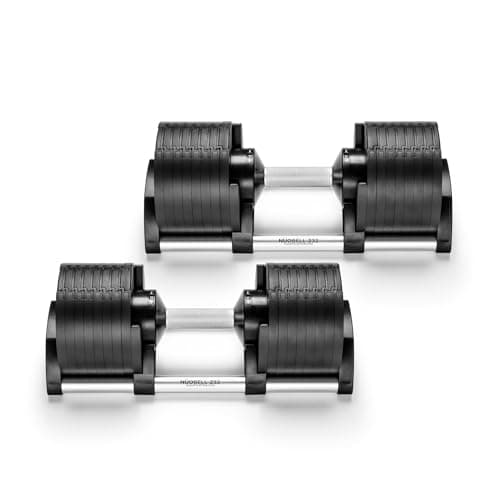
Home Gym
Best Adjustable Dumbbells UK: 6 Top Picks for 2026
The best adjustable dumbbells in the UK for 2026, from quick-dial sets to heavy 40kg and 50kg options. Budget to premium picks researched and ranked.

By Jack Atkins, Home Gym Equipment Specialist · Updated 25 October 2026
A compact squat rack is any rack or pair of stands that lets you squat, bench and press with a barbell in a room that won't take a full-size power cage. The rack itself is rarely the space problem, though. The bar length and your ceiling height decide what fits, so measure those first: you'll need roughly 2.8m to 3m of clear width for a 2.2m Olympic bar, around 2.2m to 2.5m for a shorter 1.5m to 1.8m bar, and a ceiling high enough for whatever you plan to do overhead. This guide walks through the numbers, the compact options and what you give up with each.
People shop for a "small rack" by looking at the frame's footprint, and it's an easy mistake. A typical short half rack or set of squat stands might only cover about 1.2m by 1m of floor. Put a bar on it, though, and the working footprint balloons.
A men's Olympic bar is 2.2m long, and a women's bar is about 2m (full barbell weights and sizes here). Shorter 5ft and 6ft bars come in at around 1.5m and 1.8m. Whichever you use, you then need room to slide plates on and off each end, which means standing beside the sleeve with your arms bent. That's where the space goes.
Take your bar length and add at least 30cm per side for loading, more if you can spare it. That gives you these rough working widths:
| Bar | Bar length | Tight minimum width | Comfortable width |
|---|---|---|---|
| 5ft standard or Olympic | about 1.5m | about 2.1m | about 2.4m |
| 6ft standard or Olympic | about 1.8m | about 2.4m | about 2.7m |
| Women's Olympic | about 2m | about 2.6m | about 2.9m |
| Men's Olympic | 2.2m | about 2.8m | about 3.1m |
At the tight minimum you'll be loading plates with your knuckles close to the wall, and it works, but it's annoying every session. If one side of the bar sits in a doorway or next to a radiator, count that as wall.
Squat stands and half racks have you unrack the bar and step back two or three paces. Allow about 1m of clear floor behind where the bar sits, plus whatever depth the uprights themselves take. A flat bench is usually 110 to 130cm long, and it needs to slide under the bar with your head end inside the rack.
Put together, 2m to 2.5m of depth covers squats and bench for most people. A full power cage lets you squat inside the frame, so you walk out less, but the cage is deeper to begin with, so you rarely gain much.
Ceiling height is the number most people get wrong, and it's the one you can't fix with a tape measure and a bit of furniture shuffling. Plenty of UK spare rooms sit somewhere around 2.3m to 2.4m, while garages, cellars and loft conversions often come in lower. Measure yours at the exact spot the rack will stand, because lofts slope and garages have beams and door runners.
This is the easy one. The rack just has to fit under the ceiling with a few centimetres to spare for assembly (you often need to tilt the uprights into place). Squat stands that top out below 1.8m, and short racks around 1.8m to 2m tall, suit ceilings as low as about 2m to 2.1m.
At lockout the bar sits roughly at your standing overhead reach, which for an average-height adult lands somewhere around 2.1m to 2.3m. Stand where the bar would be, hold a broom handle overhead with straight arms, and look at the gap. If the broom hits the ceiling, so will the bar. A seated press drops that requirement by around 40 to 50cm, so pressing seated (our overhead press guide covers the variations) is the obvious workaround in a low room.
Most racks put the pull-up bar at the very top of the frame. At the top of a pull-up your head ends up well above the bar, so you need roughly 35 to 45cm of clear space above it, more if you kip. A rack that stands 2.1m tall therefore needs a ceiling around 2.45m to 2.55m for full pull-ups. Our Ultrasport power rack review works through this for a 213.5cm frame and lands at about 2.4m.
If the maths doesn't work, skip the rack's pull-up bar and fit a doorway or wall-mounted bar somewhere with more headroom.
Quick ceiling rule
Squats and bench: rack height plus 5cm. Overhead press: your straight-arm reach plus 5cm. Pull-ups: pull-up bar height plus about 40cm.
Two independent uprights with J-hooks, sometimes with spotter arms bolted on. They're the smallest and cheapest way to squat and bench with a barbell, and you can push them against a wall when you finish. Each stand typically takes about 50 to 60cm square of floor, and most top out between 1.6m and 1.8m, so they'll go under almost any ceiling.
What you give up: stability, mostly. Two separate stands can shift if you rack the bar clumsily, and the spotter arms tend to be short. You also lose a pull-up bar. Re-centring the stands every session gets old too, which is why some lifters mark the floor with tape.
The joined-base style splits the difference. The GYM MASTER Squat and Bench Press Rack is a good example of this type: its listing gives a footprint of 72.5cm to 117.5cm wide by 84.5cm deep, an adjustable height of 112cm to 172cm, spotter arms from 72cm to 112cm and a 250kg maximum load. At 172cm tall it'll fit under virtually any ceiling, and the plate holders on the base add ballast.
Check price on AmazonA half rack is basically two uprights at the front joined to a short frame behind, with spotter arms out the front and usually a pull-up bar. The frame is more stable than loose stands, and you get a fixed place to train. We cover the type properly in our half rack guide, so the short version: look for one under 2m tall if your ceiling is low, and check the pull-up clearance maths above before assuming you'll use the bar.
A full four-post cage gives you the best safety, because the spotter bars run front to back on both sides and catch a failed squat or bench wherever the bar lands. Cages built for home use often run around 1.8m to 2.1m tall, and the base can be surprisingly compact. The GYM MASTER Adjustable Power Rack, for instance, lists a 121.5cm by 121.5cm footprint, J-cups and spotters adjustable from 45cm to 197.5cm, a 200kg rating on the J-cups and spotters, and a 120kg pull-up bar.
What you give up: a cage looks small on paper and huge in a box room. It's a fixed lump of steel, and the pull-up bar sits at the top, which pushes the ceiling requirement up. Check the overall height on the listing before you order, because the J-cup range tells you where the bar sits, not how tall the frame is.
Check price on AmazonThese bolt to a wall and the uprights swing flat when you're done, so the floor goes back to being a floor. If your rack has to share a garage with a car, this is the type to look at. They come with their own installation demands (solid masonry, the right fixings, joist or stud positions), and we cover those in the folding squat rack guide rather than repeating them here.
Training alone in a cramped space makes a proper catch system non-negotiable. A US study of emergency department data found that weights dropping on the person accounted for 65.5% of weight-training injuries over 1990 to 2007 (Kerr et al., American Journal of Sports Medicine). That's the exact situation spotter arms exist to prevent.
So whatever compact rack you choose, set the spotters a few centimetres below the bottom of your squat or the bar's lowest point on the bench, and test them with an empty bar first. Don't buy a rack without spotter arms on the basis that you'll "be careful". In a small room you also can't dump a bar backwards off your shoulders the way you might in a gym with space behind you, so the spotters really are your only exit.
Stability matters too. Lighter compact frames rock more, so load the plate storage, bolt the frame down where the instructions allow, or put rubber flooring underneath to stop it walking.
For most home lifters, yes. A barbell, a rack and a bench let you hit every major muscle group, and the NHS recommends strengthening activities on at least two days a week that do exactly that. You don't need a 2.4m commercial cage to meet that target.
Where a compact rack falls short is heavy pressing overhead under a low ceiling and pull-ups on the frame, so plan around those two rather than paying for a bigger rack you can't fit. If you have a bit more room than you thought, our best squat rack UK roundup compares stands, half racks and full cages side by side.
Run through this with a tape measure, a broom handle and the rack listing open:
If the numbers come out tight, go a size down. A rack that fits with room to load plates gets used; one that scrapes the ceiling and leaves your knuckles on the wall tends to become a very expensive clothes horse.
A pair of squat stands with spotter arms is the smallest setup that still lets you squat and bench with a barbell. Each stand takes up roughly 50 to 60cm square of floor. The catch is that stands are less stable than a joined frame, so keep loads sensible and never fail a rep without the spotters set.
For squats and bench press alone, a ceiling just above the rack's height is enough, so 2m to 2.1m works for most short racks and stands. Standing overhead press needs your full reach plus a few centimetres, often 2.2m to 2.4m for an average-height adult. Pull-ups on the rack need the bar height plus around 35 to 45cm of head clearance.
The bar decides the width, not the rack. A 2.2m Olympic bar plus room to load plates on each end needs about 2.8m to 3m of clear width. A 1.5m to 1.8m bar can work in roughly 2.2m to 2.5m. Allow about 2m to 2.5m of depth so you can walk a squat out and fit a bench.
Usually yes, because most compact racks and stands are wide enough for a 2.2m bar. The problem is the room around the rack rather than the rack itself. Measure from wall to wall and check you have the bar's length plus at least 30cm each side before you commit to a full-length bar.
Squat stands win on floor space and price, and you can move them against the wall when you're done. A short half rack is more stable and often has a pull-up bar, but it's a fixed footprint. If you only have a corner of a spare room, stands are the realistic choice.
The best adjustable dumbbells in the UK for 2026, from quick-dial sets to heavy 40kg and 50kg options. Budget to premium picks researched and ranked.
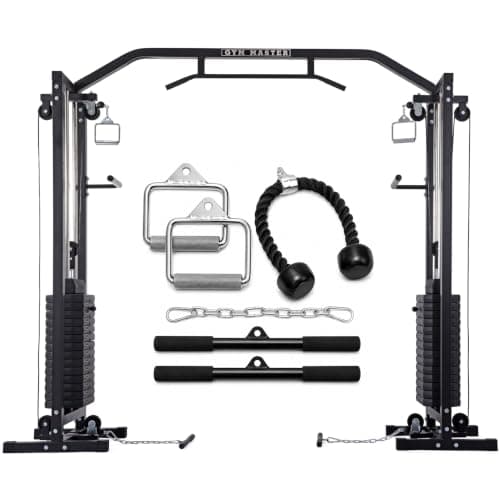
The best cable machines in the UK for 2026, from dual cable machines and functional trainers to wall-mounted and folding designs. Honest picks for any home gym and budget.
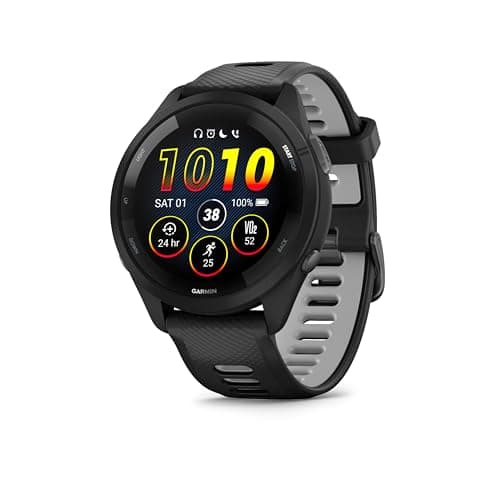
The best Garmin watch for most UK buyers in 2026 is the Forerunner 265, but not for everyone. Five models compared honestly, from the £162 Forerunner 165 to the fēnix 8.
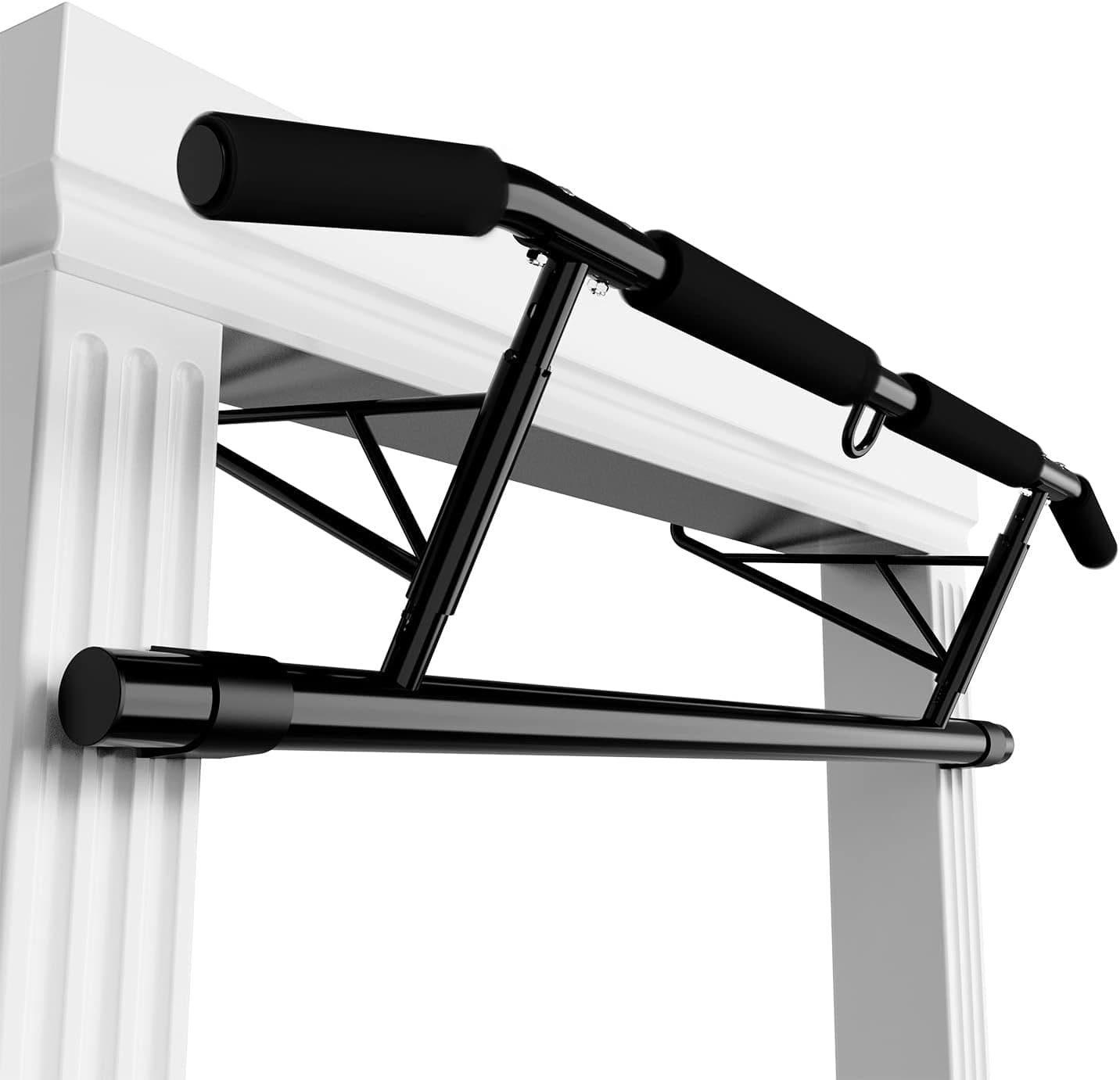
The best pull up bars in the UK for 2026: no-drill doorway bars, wall mounted pull-up bars and free standing power towers, with frame sizes, weight ratings and honest picks for every budget.
Best Exercise is a participant in the Amazon EU Associates Programme, an affiliate advertising programme designed to provide a means for sites to earn advertising fees by advertising and linking to Amazon.co.uk. As an Amazon Associate we earn from qualifying purchases. This comes at no extra cost to you and never influences our independent reviews or rankings.