Home Gym
Fitbit vs Apple Watch: Which Should You Buy in 2026?
Fitbit vs Apple Watch for UK buyers: battery, price, Google Health Premium, GPS, accuracy research and apps compared, with a straight answer on which to buy.

By Jack Atkins, Home Gym Equipment Specialist · Updated 7 October 2026
A men's Olympic barbell weighs 20kg (44lb) and is 2.2m long, and a women's Olympic barbell weighs 15kg (33lb) at roughly 2.01m. That's the short answer for the long bar you'll find in almost any UK gym. Everything else is more variable: standard 1 inch home bars run from about 6kg to 10kg depending on length, technique bars are 5kg to 10kg, EZ bars sit around 7kg to 10kg, and trap bars usually land between 20kg and 30kg. Smith machines are the wild card, so I'll come back to those.
Below you'll find a table of every common bar type, the dimensions that separate a proper Olympic bar from a lookalike, and a quick way to weigh your own bar at home so your training log is honest.
| Bar type | Typical weight | Length | Grip (shaft) diameter | Sleeve diameter |
|---|---|---|---|---|
| Men's Olympic (weightlifting or powerlifting) | 20kg | 2.2m (7ft 2in) | 28 to 29mm | 50mm (2in) |
| Women's Olympic | 15kg | about 2.01m (6ft 7in) | 25mm | 50mm (2in) |
| Technique or junior bar | 5 to 10kg | about 1.5 to 1.95m | 25mm | 50mm (2in) |
| Standard 1 inch bar, 5ft | about 6 to 7kg | 1.5m | about 25mm | 25 to 30mm (1in) |
| Standard 1 inch bar, 6ft | about 7 to 9kg | 1.8m | about 25mm | 25 to 30mm (1in) |
| Standard 1 inch bar, 7ft | about 9 to 10kg | 2.1m | about 25mm | 25 to 30mm (1in) |
| EZ curl bar (Olympic) | about 7 to 10kg | about 1.2m | 28mm-ish | 50mm |
| Trap or hex bar | about 20 to 30kg | varies | 25 to 32mm handles | 50mm |
| Smith machine bar | about 7 to 20kg+ | fixed to frame | varies | 50mm or 1in |
The Olympic rows are fixed by competition rules and manufacturer specs. Every other row is a typical range from UK retailers' listings, so treat those as a starting point and check your own bar.
When people ask what a barbell weighs, they almost always mean this one. The International Weightlifting Federation (IWF) sets the competition standard, and every serious manufacturer builds to it. Eleiko, the Swedish firm that makes IWF-certified bars, lists its men's IWF competition bar at 20kg, 2,200mm long, with a 28mm grip and a weight tolerance of +20g to -10g.
The women's version weighs 15kg, measures 2,010mm and drops to a 25mm grip. It isn't just a lighter bar: the thinner shaft suits smaller hands, and plenty of men with short fingers find it more comfortable for snatches and cleans too. The sleeves stay the same 50mm, so every Olympic plate fits both bars.
Powerlifting bars also weigh 20kg but differ slightly in feel. The International Powerlifting Federation's technical rulebook caps overall length at 2.2m, sets the shaft at 28mm to 29mm and the sleeve at 50mm to 52mm, and specifies that the bar plus its two collars weighs 25kg. Each competition collar weighs 2.5kg, which is why that number is 25kg rather than 20kg. A powerlifting bar is stiffer, with sharper knurling and a centre knurl to grip your back on squats. A weightlifting bar spins more freely and has more whip.
For home use, a general purpose 20kg bar covers both jobs well. Our best barbells in the UK guide compares the bars worth buying at different budgets.
Knowing the measurements helps you spot a genuine Olympic bar in a second-hand listing or a dusty garage. The numbers below come from the IPF rulebook and Eleiko's spec pages.
If a 7ft bar has 50mm sleeves but weighs noticeably less than 20kg, it's probably a cheaper hollow-shaft or "Olympic-style" bar. Nothing wrong with that for light training, but you can't assume 20kg.
Standard bars are the ones that come with a cheap vinyl or cast iron weight set. They have thin sleeves (about 25mm to 30mm, sold as 1 inch) and no rotating sleeve, and their weight scales with length. A 5ft bar commonly weighs about 6kg to 7kg, a 6ft bar about 7kg to 9kg and a 7ft bar somewhere around 9kg to 10kg.
Here's the catch: there's no governing standard for these, so two 6ft bars from different brands can be 2kg apart. Most also have a lower load limit than an Olympic bar, often 100kg to 150kg, so check the rating before loading up for squats. If you've outgrown one, moving to a 2 inch Olympic bar and matching weight plates is the usual upgrade, and you'll need to replace the plates as well because 1 inch plates won't fit a 50mm sleeve.
Technique bars are the lightweight Olympic-style bars coaches give beginners and juniors. They take normal Olympic plates but start at 5kg to 10kg. Eleiko's own technique bar weighs 10kg, measures 1,930mm and has a 25mm grip. Cheaper ones are often aluminium, which is why they can go as light as 5kg.
They're worth having if a 20kg bar is genuinely too heavy for your overhead press or snatch practice. For most adults learning to squat or deadlift, though, the 20kg bar is fine from the first session.
An EZ bar is the short, zigzag bar used for curls and skull crushers. The angled grip takes pressure off your wrists. Olympic EZ bars (2 inch sleeves) usually weigh around 7kg to 10kg, and the 1 inch versions sit a bit lighter. We've broken the brands down in how much does an EZ bar weigh, and if you're shopping, see the best EZ bars in the UK.
Trap bars (also called hex bars) are a different beast. You stand inside the frame and grip handles at your sides, which makes them heavier than you'd guess from their shape. Most home models weigh between about 20kg and 30kg, with open-ended and extra-long-sleeve bars at the top of that range. Our page on how much a trap bar weighs lists typical figures by design, and if you're shopping for one, our best trap bar UK guide gives empty weights for its main picks.
There's no single answer for a Smith machine, and that's the bit people get wrong most often.
A Smith bar runs on guide rods, and some machines attach a counterweight via a cable and pulley. That counterweight cancels out part of the bar's mass, so a counterbalanced bar can feel like 5kg to 10kg even if the steel itself weighs more. Home Smith machines frequently skip the counterweight, and their bars often weigh 15kg to 20kg or more, plus a bit of friction from the linear bearings.
If you're switching between a Smith machine and a free barbell, your numbers won't line up exactly anyway because the machine controls the bar path. Note which machine you used and keep those logs separate. If you're still choosing a machine, our guide to the best Smith machines in the UK compares the home models worth a look, and the manual is the place to find the bar weight.
If your bar has no marking, or you suspect a budget "20kg" bar is light, you can weigh it with a bathroom scale. It takes about two minutes.
A digital luggage scale is a good alternative for EZ bars and short standard bars. Hook it around the middle of the shaft and lift slowly. For a 7ft bar it's awkward, so stick with the bathroom scale method.
Your lift is the bar plus every plate plus the collars. Count one side, double it, then add the bar.
Example: a 20kg Olympic bar with a 20kg plate and a 5kg plate on each side. One side is 25kg, both sides are 50kg, add the bar and you're lifting 70kg. Add a pair of 2.5kg competition collars and it's 75kg.
Spring clips weigh almost nothing, so most people ignore them. Lockjaw-style or competition collars are a different matter, as they range from roughly 0.1kg up to 2.5kg each, so check yours.
Coloured plates help if you're in a gym that uses them. Under IPF rules, 25kg plates are red, 20kg blue and 15kg yellow, with 10kg and under left to the manufacturer. Most bumper plate sets follow a similar scheme with 10kg in green and 5kg in white, but home sets vary, so read the number on the plate rather than trusting the colour.
Kilos vs pounds
UK bars and plates are almost always in kilos, but some imported kit is in pounds. A 45lb bar is about 20.4kg, close enough for training but not identical. Mixing kilo and pound plates on the same bar is the quickest way to end up with a log full of wrong numbers.
Assuming every long bar is 20kg. Hollow, unbranded 7ft bars with 2 inch sleeves sometimes weigh 15kg to 18kg. If the label is missing, weigh it.
Forgetting to count the bar. Beginners often log only the plates. That understates every lift by 20kg and makes your progression look odd when you change gym.
Comparing Smith machine numbers to free bar numbers. A counterbalanced Smith bar and a guided bar path mean a 60kg Smith squat isn't a 60kg back squat. Track them separately.
Ignoring collars at heavier loads. Two 2.5kg collars add 5kg. That's a meaningful jump on a press.
For most adults, the empty 20kg bar is the right starting point for the back squat, the deadlift (with plates or blocks to raise it to mid-shin) and the bench press. Do 3 sets of 8 to 10 reps with the empty bar, adding 2.5kg to 5kg a session while every rep looks clean. If 20kg is too much for an overhead press or a bench, drop to a 15kg women's bar, a technique bar or dumbbells for a few weeks rather than grinding out ugly reps.
The NHS recommends muscle-strengthening activity that works all the major muscle groups on at least two days a week, and a barbell covers most of them with three or four lifts.
If you're buying one bar for a home gym, get a 7ft, 20kg Olympic bar with 50mm sleeves. It fits standard racks, takes every Olympic plate and gives you numbers that match any commercial gym. A 6ft bar can make sense if your room is tight, but check it still clears the uprights of your rack.
Add a trap bar later if you want an easier-on-the-back deadlift option, or an EZ bar for arms. The weight plates matter as much as the bar, so budget for a decent set of Olympic plates at the same time.
The long bar in most UK gyms is a men's Olympic barbell, which weighs 20kg (about 44lb) and is 2.2m long. Some gyms also have 15kg women's bars, which are shorter at around 2.01m and have a thinner 25mm grip. If the bar has 2 inch (50mm) sleeves and is as long as a squat rack is wide, assume 20kg unless it's marked otherwise.
Yes. The bar is part of the load, so your lift is the bar plus every plate and collar on it. A 20kg bar with a 20kg plate on each side is a 60kg lift, not 40kg. Competitions count it this way and so should your training log.
It depends on the sleeve size. A 6ft standard bar with 1 inch sleeves usually weighs somewhere around 7 to 9kg. A 6ft Olympic-style bar with 2 inch sleeves tends to weigh more, often 12 to 15kg. Check the label or weigh it, because these shorter bars vary much more than full-length 7ft Olympic bars do.
Nearly always, but not guaranteed. A 2.2m bar with 50mm sleeves built to the Olympic standard should weigh 20kg, and decent manufacturers state a tolerance of a few grams. Cheap or unbranded 7ft bars can be off by more, so if you're tracking precise numbers, put yours on a scale once.
There's no standard. Many commercial Smith machines use a counterbalance that makes the bar feel like it weighs well under 10kg, while home Smith machines without a counterweight often have a bar of 15kg to 20kg or more. Look for the figure in the manual or on the frame, or measure it with a luggage scale.
Fitbit vs Apple Watch for UK buyers: battery, price, Google Health Premium, GPS, accuracy research and apps compared, with a straight answer on which to buy.
Every common leg machine at the gym named and explained: what each one trains, a beginner leg machine workout, and which leg machines make sense for a home gym.
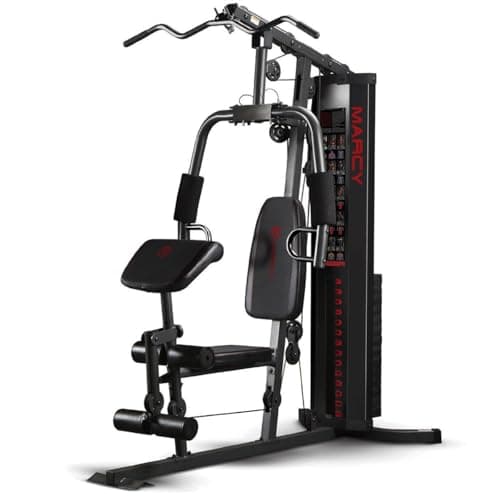
Our Marcy HG3000 multi gym review: the 68kg stack versus the 90kg claim, pec dec, preacher pad, leg extension, 210cm height, £599 price and who it suits.
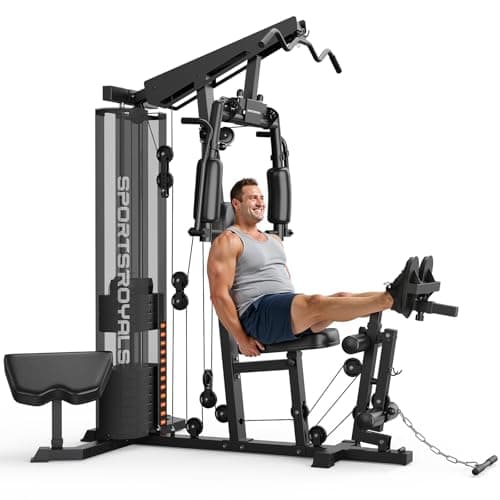
SPORTSROYALS home gym review: the 68kg stack, leg press and chest fly stations, 191 x 131cm footprint, 142kg build, £759.99 price and who it suits in the UK.
Best Exercise is a participant in the Amazon EU Associates Programme, an affiliate advertising programme designed to provide a means for sites to earn advertising fees by advertising and linking to Amazon.co.uk. As an Amazon Associate we earn from qualifying purchases. This comes at no extra cost to you and never influences our independent reviews or rankings.