Home Gym
Landmine Attachment: Types, How to Choose and Best Exercises
What a landmine attachment is, the rack-mounted, plate-post and floor platform types, how to check bar and rack fit, safety tips, and the best exercises to do.

By Jack Atkins, Home Gym Equipment Specialist · Updated 14 October 2026
A cambered bar is any barbell with a bend in it, but that one phrase covers at least three quite different pieces of kit. The cambered squat bar has a deep drop at each end so the plates hang below the bar and swing. The cambered bench bar (and its gentler cousin, the Buffalo bar) bows through the middle to give you more range. And the cambered Swiss or football bar uses angled handles to put your wrists and shoulders in a friendlier position. They do different jobs, so it pays to know which one you actually want before you spend £80 to £300 on one.
| Bar type | What the bend does | Best for | Typical weight |
|---|---|---|---|
| Cambered squat bar (deep drop) | Plates sit well below the bar and swing like a pendulum | Squats and good mornings with more core demand; lifters with cranky shoulders | Roughly 25kg to 30kg+ |
| Buffalo / bowed bar (mild camber) | Gentle bow along the shaft, plates roughly level | Comfortable back squats, slightly deeper bench | Around 20kg to 25kg |
| Cambered bench bar | Pronounced dip in the middle where it touches your chest | Extra bench press range, pec stretch | Around 20kg to 25kg |
| Cambered Swiss / football bar | Angled neutral grips, often with a slight shaft bend | Shoulder-friendly pressing, rows, curls | Around 15kg to 25kg |
Weights vary a lot between makers, which is why we keep saying "roughly". Our guide to how much a barbell weighs covers how to weigh your own bar at home.
This is the one most lifters mean when they say "cambered bar" in a powerlifting gym. The centre section sits on your back like a normal bar, but each side drops away by a good few inches before the sleeve. The handles come forward and down, so your hands end up lower and further in front than they would on a straight bar.
Two things follow from that shape. First, your shoulders don't need to rotate back nearly as far to hold the bar, which is a big deal if you've got a stiff shoulder or an old injury that makes low-bar squats miserable. Second, because the load hangs below its contact point, it wants to swing. Any wobble, any loss of brace, and the plates start oscillating and pulling you off balance. That instability is the training effect: you have to stay rigid through your trunk and upper back to keep it quiet.
It's a different stimulus from a safety squat bar, which also helps bad shoulders but works by pushing the load forward with yoked handles rather than letting it hang. If shoulder comfort is your only goal, the SSB is usually the simpler choice; if you want the bracing challenge as well, the cambered squat bar does something nothing else in a home gym does.
It doesn't suit someone still learning to squat. Fix the pattern on a straight bar (our back squat guide walks through it) before adding a load that fights back.
A Buffalo bar sits between a straight barbell and a full cambered bar. The shaft has a shallow bow, a couple of inches at most, and the sleeves stay close to level with your hands. Plates don't swing in any meaningful way.
The point of the bow is comfort and a slightly better fit on your back during squats, which can reduce how hard you need to crank your shoulders back. On the bench it lets the middle of the bar come a little closer to your chest before the sleeves would normally stop it. For most home lifters with one rack and room for maybe two bars, it's the more practical cambered option because you can use it for nearly everything a straight bar does.
The LOEFT Buffalo Cambered Barbell is an 8ft bar listed at 55lb (about 25kg) and was in stock at £99.99 when we checked. That's cheap for a specialty bar. We haven't used it ourselves, so read recent buyer reviews on sleeve spin and finish before ordering, and note the 8ft length (more on that below).
Check LOEFT Buffalo Bar price on Amazon£99.99A dedicated cambered bench bar has a much deeper bend in the middle than a Buffalo bar. When you lower it, your chest sits inside the curve, so the bar keeps travelling for several centimetres after a straight bar would have touched down. You get a bigger stretch on the pecs and front delts at the bottom.
There's real research on this. A 2020 study of 10 strength-trained men found the cambered bar increased bench press range of motion from an average of 44.9cm to 52.7cm at 50% of 1RM, along with higher power output and bar speed, though the longer time under load may also bring more fatigue (Krzysztofik et al., Frontiers in Physiology). A separate study from the same group compared muscle activity in 12 trained men and found the cambered bar produced more front delt activity at 90% 1RM, while the straight bar actually gave higher pec and long-head triceps activity at heavier loads (Krzysztofik et al., Frontiers in Physiology). So the extra stretch doesn't automatically mean "more chest". It's a variation, not an upgrade.
Go light on the cambered bench
The deep bottom position puts your shoulders under far more stretch than they're used to. Start at about half what you'd normally bench, lower slowly, and stop the descent where your shoulders still feel in control rather than chasing the full camber on day one.
A Swiss bar (also called a football or multi-grip bar) swaps the long straight shaft for a frame with several pairs of handles. Some are straight and parallel; the cambered versions angle the handles and sometimes bow the frame. The neutral grip, palms facing each other, takes a lot of strain off the shoulders during presses, and the camber can give a bit more room at the bottom of a bench.
We cover these in depth in our Swiss bar guide, so here's the short version: if your main problem is shoulder pain on the bench or overhead press, this is the bar to look at, not a cambered squat bar. The GYM MASTER Olympic Cambered Multi Grip Football Bar was in stock at £79.99 when we checked, which is at the budget end for this type.
Check GYM MASTER Swiss Bar price on Amazon£79.99The deep cambered squat bar is the one that needs care. Because the plates hang below the bar, they keep moving after you stop. Walk out slowly, take fewer steps than you would with a straight bar, and pause until the plates settle before you start the first rep.
Cambered squat bar: back squats, box squats, good mornings, and walking lunges for the brave. Paused squats work well because they force you to hold position while the load settles.
Buffalo bar: pretty much anything a straight bar does, though the bow makes it a poor choice for deadlifts and Olympic lifts. Squats and bench are its strengths.
Cambered bench bar: flat and incline bench press, floor press if you want a partial, and light, controlled stretch work.
Swiss bar: bench and incline presses, overhead press, rows, close-grip presses for triceps and hammer-grip curls.
Check your rack width. Measure the inside distance between your rack uprights and compare it with the bar's grip section. A bar that's too narrow for a wide rack won't sit on the J-hooks. Our squat rack buying guide lists widths for the racks we recommend.
Check the length. Many cambered and Buffalo bars are 7ft, like a standard Olympic bar, but some (including the LOEFT) are 8ft. An 8ft bar needs about 30cm more clearance in total, which matters in a garage or spare room.
Look at sleeve length. Short sleeves on cheap specialty bars limit how many plates you can load. If you lift heavy or use thick bumper plates, check the loadable sleeve length on the listing, not just the overall bar length.
Ignore the weight rating hype. Ratings on budget bars are rarely independently tested. Buy for the shape you need and lift within sensible loads, especially with a bar that swings.
Know what you need. Shoulder pain on squats points to a safety squat bar or cambered squat bar; shoulder pain on bench points to a Swiss bar; wanting more pec stretch points to a cambered bench bar. For one versatile extra bar, a Buffalo-style bar covers the most ground. Browse the rest of our home gym guides for racks, benches and plates to go with it.
It depends on the type. A deep cambered squat bar drops the plates well below the bar so they swing slightly, which forces you to stay tight and braced and is easier on stiff shoulders. A bowed bench bar lets the bar sink a few centimetres lower than your chest for extra range of motion. A cambered Swiss bar has angled neutral handles that take pressure off the shoulders for pressing and rows.
There's no standard weight. Most sit somewhere between about 20kg and 30kg, and a few heavy-duty deep camber squat bars go higher. The LOEFT Buffalo bar we link below is listed at 55lb (about 25kg). Always check the listing or weigh the bar yourself on bathroom scales before you count it in your totals.
No. A Buffalo bar has a gentle bow along the shaft so it sits more comfortably across your back and lets you bench a little deeper, but the plates stay roughly in line with the bar. A proper cambered squat bar has a deep drop at each end, so the plates hang well below where your hands are and swing as you move.
A mild camber like a Buffalo bar is fine for a beginner who already squats and benches with a straight bar. A deep camber squat bar is better left until you're confident with the back squat, because the swinging plates punish sloppy bracing. Start light either way.
Most will, but check two things: the distance between your rack uprights compared with the bar's shoulder width, and whether the dropped sleeves clear your safety arms and J-hooks. Deep camber bars can catch on spotter arms set at a normal height, so you'll often need to set the safeties a notch or two lower.
What a landmine attachment is, the rack-mounted, plate-post and floor platform types, how to check bar and rack fit, safety tips, and the best exercises to do.
What a safety squat bar is, how much it weighs, how it changes your squat compared with a straight bar, who it suits and what to check before buying one in the UK.
What a Swiss bar (football or multi-grip bar) is, how much it weighs, why the neutral grip suits sore shoulders, the best exercises and what to check when buying.
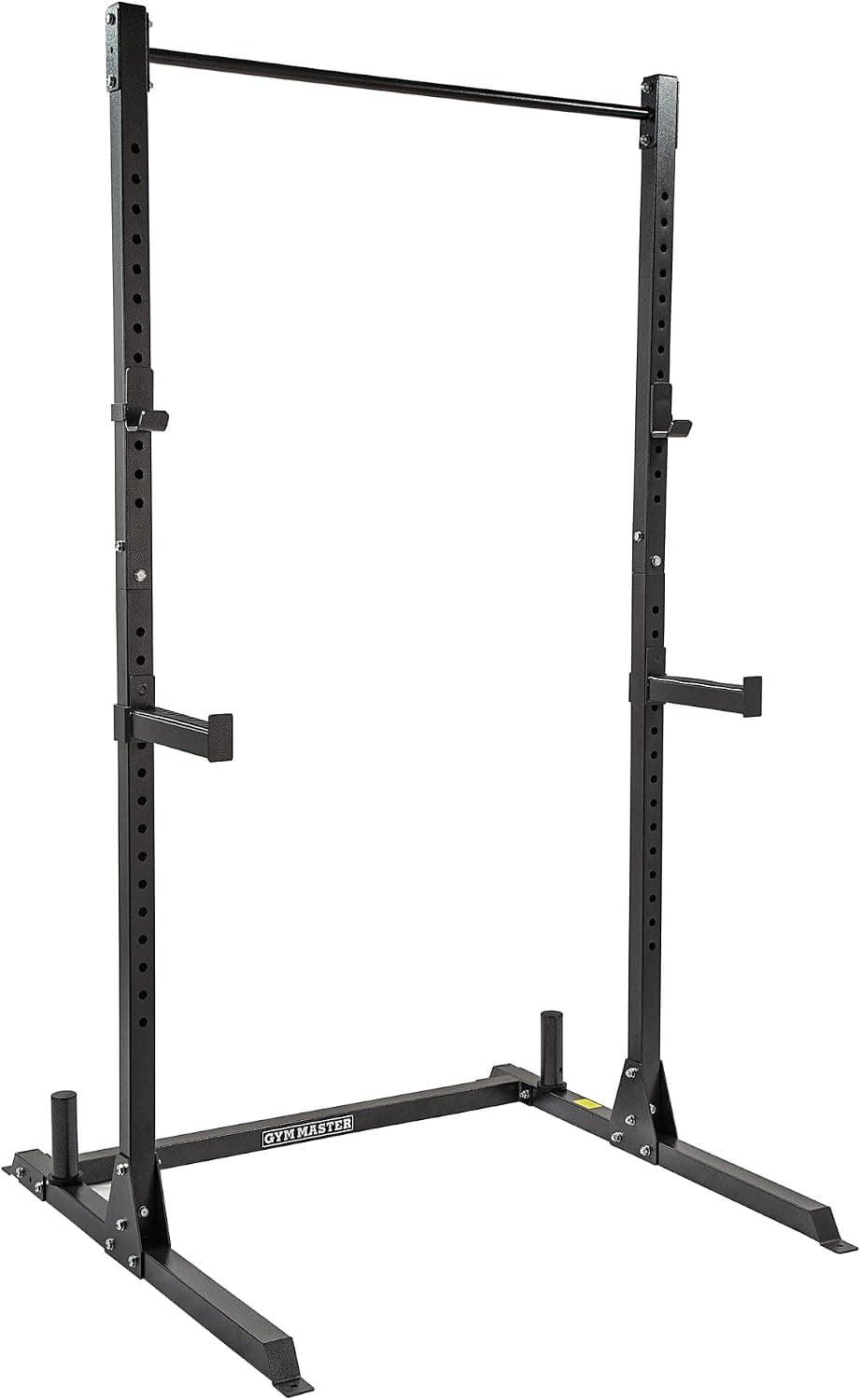
The best squat racks in the UK for 2026, compared on weight rating, height range and spotters. Cheap squat stands, half racks and a full cage for home gyms at every budget.
Best Exercise is a participant in the Amazon EU Associates Programme, an affiliate advertising programme designed to provide a means for sites to earn advertising fees by advertising and linking to Amazon.co.uk. As an Amazon Associate we earn from qualifying purchases. This comes at no extra cost to you and never influences our independent reviews or rankings.