Home Gym
Cambered Bar Explained: Squat, Bench and Swiss Bar Types
What a cambered bar is, the three main types (cambered squat bar, bowed bench bar, cambered Swiss bar), what each one does, how much they weigh and how to buy one.

By Jack Atkins, Home Gym Equipment Specialist · Updated 14 October 2026
A safety squat bar (often shortened to SSB) is a specialty barbell with a padded yoke that sits on your shoulders and two handles that come forward over your chest, so you can squat without reaching back to grip the bar. Most weigh between 20kg and 32kg. It makes you sit more upright, works your upper back harder and takes a lot of strain off stiff or sore shoulders. You'll squat a bit less weight on it, but for many home lifters it's the most useful second bar they can buy after a standard Olympic barbell.
Picture a normal barbell, then add three changes. The middle section is padded, sometimes very thickly, so it rests comfortably across your traps. Two handles extend forward and down from the pad, roughly where your hands would hang if you held your arms out in front. And the sleeves at each end are cambered, which means they drop down and forward rather than running straight out from the centre.
That camber moves the load slightly in front of and below where a straight bar would sit. The result is a bar that wants to tip you forward, which sounds bad until you realise the job of resisting it lands on your upper back and trunk, and you can do the whole thing with your hands in front of you instead of jammed behind your head.
Most bars take standard 50mm Olympic plates. Cheaper models sometimes have shorter sleeves, which limits how much you can load, though for most home gyms that ceiling won't matter.
There isn't a standard. Listings typically run from about 20kg to 32kg, and most home-gym bars land between 22kg and 25kg. Heavier commercial bars tend to have thicker pads, longer handles and longer sleeves.
Because the camber shifts where the weight sits, some manufacturers quote an "effective" weight that differs from the dead weight on a scale. For logging your training it barely matters; just use the stated weight consistently. If you want the full picture on how different bars compare, our guide to how much a barbell weighs covers Olympic, standard and specialty bars.
The SSB isn't just a comfier back squat, and the research backs up what lifters report.
| Straight barbell back squat | Safety squat bar squat | |
|---|---|---|
| Torso angle | More forward lean, especially low-bar | More upright |
| Load you can lift | Higher | Typically lower (about 11% less in one study) |
| Upper back demand | Moderate | Higher, particularly mid and lower traps |
| Shoulder mobility needed | Need to reach back and grip | Hands stay in front |
The best-known study comes from Hecker and colleagues in 2019, who had 12 competitive powerlifters squat with both bars. On the SSB their 3RM dropped by 11.3%, trunk and hip flexion fell by around 7 and 6 degrees, and lower trapezius activity jumped by about 50%. Several leg and core muscles showed lower activity, which the authors put down mostly to the lighter load (Hecker et al., J Strength Cond Res). Their conclusion was blunt: the SSB may not beat a standard bar for building leg strength, but it does challenge the mid back more and places less stress on the lower back.
A Norwegian study comparing safety-bar, high-bar and low-bar squats found something similar on load (lifters handled the least on the safety bar) but also saw greater glute max activity than in the high-bar squat and larger knee extension moments than in the low-bar squat (Kristiansen et al., 2021). So it's not a pure quad exercise or a pure back exercise; the upright torso redistributes the work.
Bar speed is where the evidence gets messy. A 2024 study of 12 recreationally trained men using the same absolute load found similar peak force and effort with either bar, with slightly lower average velocity on the SSB (Staheli et al., 2024). A 2026 study of university athletes reported the opposite: higher velocities on the SSB at percentage-based loads (Alarcón-Rivera et al., 2026). Different methods, different answers. We'd read that as "the bar won't make you slower in any meaningful way".
Lifters with shoulder or elbow problems. This is the main reason people buy one. If getting your hands back to grip a barbell aggravates your shoulders, elbows or wrists, the SSB lets you keep squatting heavy while that settles down.
People coming back from a lower back niggle. A more upright torso and less trunk flexion is generally easier on the lower back, which is what Hecker's group concluded. That's not a medical green light, so if you're injured, get it assessed first.
Home lifters training alone. Holding the handles in front gives you more control, and dumping a failed rep is less awkward than with a straight bar pinned behind your neck. It also opens up lunges and split squats that are clumsy with a regular bar.
Anyone whose back squat has stalled. Plenty of lifters rotate the SSB in for a training block, because the extra upper back work tends to carry over when they return to the straight bar.
It's less useful if your only goal is the biggest possible back squat for a powerlifting meet. You'll still need to train with the competition bar most of the time.
Use safeties every time
The camber means a failed rep tends to pitch you forward. Set your rack's safety arms or spotter pins just below the bottom of your squat, and never train an SSB heavy without them. Our squat rack and power cage guides list models with proper spotter arms.
Start with around 70 to 80% of what you'd use on a straight bar back squat for the same reps, then build from there.
Camber. Deeper camber pushes the load further forward and makes the bar harder to control. A moderate camber suits most home lifters.
Pad quality. This is where cheap bars fall down. A thin pad that compresses under load digs into your neck and traps, and a torn pad is annoying to replace. Look for a thick, stitched or bonded pad with a cover that won't peel.
Sleeve length and plate size. Check the sleeves take 50mm Olympic plates and are long enough for the plates you own. Bumper plates are wide, so short sleeves can cap your load.
Rack fit. Measure the inside width of your uprights and the depth of your J-hooks before you buy. A bar that's too long or sits awkwardly on shallow hooks is a real problem in a small home rack.
Handle angle and length. Longer handles that angle down are easier to hold for taller lifters. Very short handles force your elbows up and back, defeating the point.
Weight. Make sure you know the true weight for logging, and that it's within your rack's rated capacity once loaded.
These three were in stock on Amazon UK at the time of writing. We haven't trained with any of them, so treat this as a shortlist to check against the buying points above rather than a ranking. Prices move, so check the listing.
The BodyMax Olympic Safety Squat Bar is a 22kg bar at around £129, one of the more established names in UK home-gym kit.
Check BodyMax 22kg Safety Squat Bar price on AmazonThe VEVOR Safety Squat Bar is the budget option at around £99.90. VEVOR's kit tends to be good value but the finish can vary, so read recent buyer reviews about the pad.
Check VEVOR Safety Squat Bar price on AmazonThe Exersci Safety Squat Bar costs more at around £169.99. Compare its weight, sleeve length and pad against the other two before paying the extra.
Check Exersci Safety Squat Bar price on AmazonIf you're still choosing a rack to go with it, the home gym hub has our full rack and cage reviews, including the Gym Master GM2 power rack.
Most safety squat bars weigh somewhere between 20kg and 32kg, and a lot of home-gym models sit around 22kg to 25kg. The weight varies with the camber, the thickness of the pad and the length of the sleeves, so check the listing rather than assuming it matches a 20kg Olympic bar. Some brands also quote an effective weight, which can differ from what the bar reads on a scale.
It isn't better, it's different. You'll typically lift less on it: one study of competitive powerlifters found 3RM loads dropped by about 11% on the safety bar. In return you get a more upright torso, less hip and trunk flexion and no need to reach back for the bar, which suits people with cranky shoulders. Most lifters who own one use both.
Yes, in the research we read. Hecker and colleagues found lower trapezius activity rose by roughly 50% on the safety squat bar compared with a standard bar, even though the load was lighter. The cambered yoke tries to tip you forward, so your mid back has to fight to stay upright.
Usually, but check three things: the distance between your uprights, the depth of your J-hooks and the height you'll need to rack it. The handles and pad sit lower and further forward than a straight bar, so it can foul shallow J-cups or sit awkwardly on very narrow stands. Measure the inside width of your rack and compare it with the bar's sleeve-to-sleeve length.
Yes, and many lifters think that's where it shines. Because you hold the handles in front of you, your balance is easier to manage than with a straight bar on your back, and you can even let go with one hand to hold the rack for split squats. Good mornings, box squats and step-ups work well too.
What a cambered bar is, the three main types (cambered squat bar, bowed bench bar, cambered Swiss bar), what each one does, how much they weigh and how to buy one.
What a landmine attachment is, the rack-mounted, plate-post and floor platform types, how to check bar and rack fit, safety tips, and the best exercises to do.
What a Swiss bar (football or multi-grip bar) is, how much it weighs, why the neutral grip suits sore shoulders, the best exercises and what to check when buying.
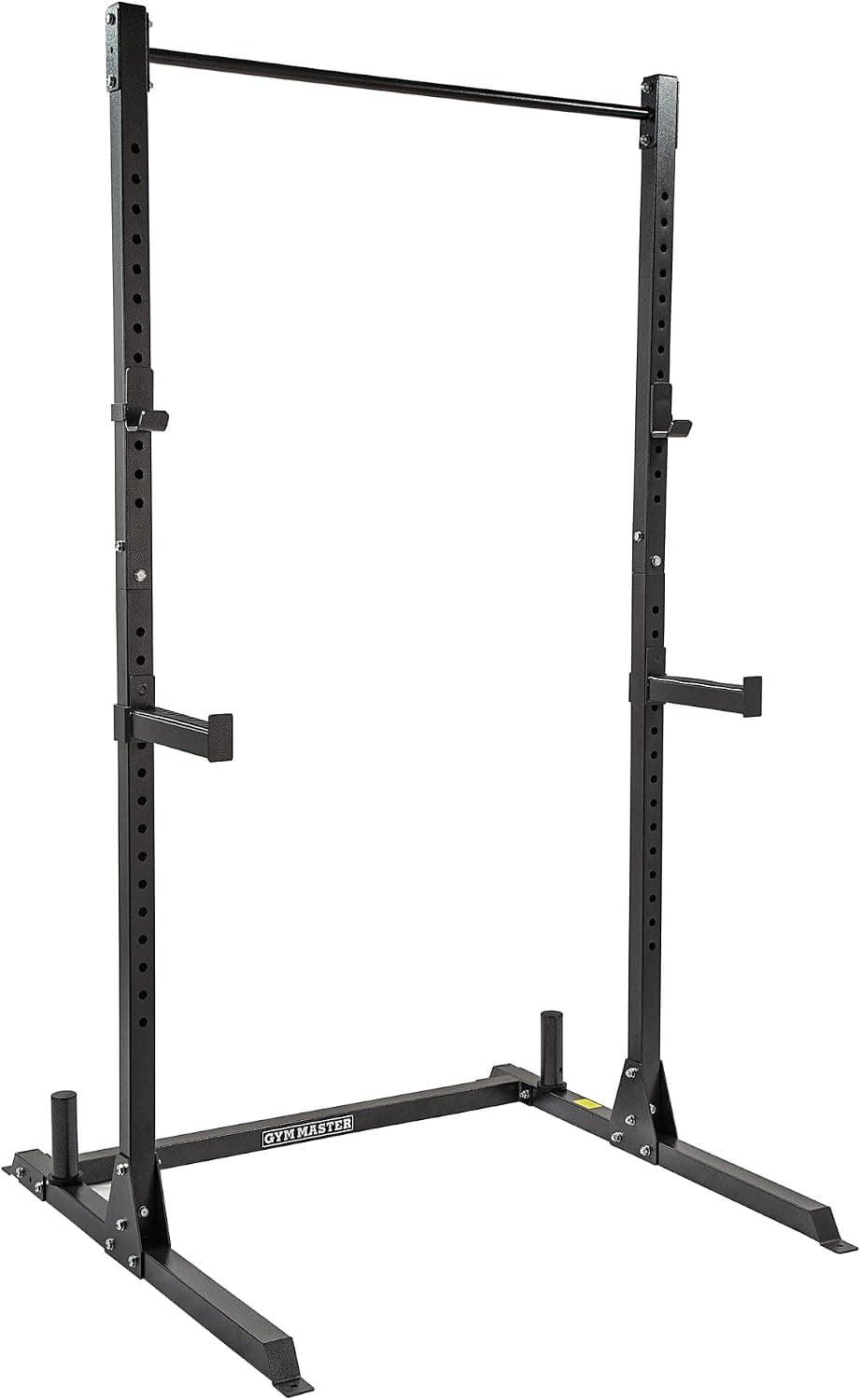
The best squat racks in the UK for 2026, compared on weight rating, height range and spotters. Cheap squat stands, half racks and a full cage for home gyms at every budget.
Best Exercise is a participant in the Amazon EU Associates Programme, an affiliate advertising programme designed to provide a means for sites to earn advertising fees by advertising and linking to Amazon.co.uk. As an Amazon Associate we earn from qualifying purchases. This comes at no extra cost to you and never influences our independent reviews or rankings.