Home Gym
Strongway 265kg Smith Machine Review: The Big-Stack Upgrade, Weighed Up
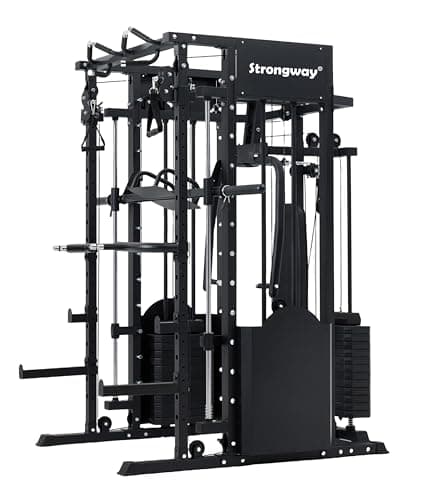
Our Strongway 265kg Smith machine review: three 88.5kg stacks, a plate-loaded butterfly station, a 215cm-wide frame and what the £1,400 price leaves out.

By Jack Atkins, Home Gym Equipment Specialist · Updated 4 November 2026
Adjustable dumbbells work by letting one handle pick up a different number of weight plates. On the simplest kind, spin-lock, you slide iron plates onto a threaded bar and screw a collar down to clamp them. On dial, twist-handle and selector-pin dumbbells, the plates sit in a tray or nest and a selector (a dial at each end, the handle itself, or a pin) decides which plates latch onto the handle when you lift it out; the rest stay put. That's the whole trick. The differences between systems come down to how fast the change is, how fine the steps are and what breaks first.
This is the oldest design and still the cheapest. The bar has a threaded section at each end, you slide on plates with a 1 inch hole, then spin a collar along the thread until it clamps them tight. To change weight you unscrew both collars, swap plates, and screw them back on, which takes roughly a minute per pair if you're quick.
The Mirafit adjustable dumbbells are a typical example: chrome knurled bars, cast iron plates, four collars. The 20kg set works out at 10kg per hand once you split the plates evenly, and because the fittings are standard 1 inch you can buy more plates later. The usual complaint is collars working loose on fast, high-rep sets, which a rubber washer on the thread mostly cures.
Dial dumbbells are what most people mean by "adjustable dumbbells" now. The Bowflex SelectTech 552 is the reference design: a dial at each end of the handle, a stack of plates either side, and a storage tray they all sit in. Bowflex's own product page lists 5 to 52.5lb per dumbbell, a pair that replaces 15 sets of weights, selection dials, a locking mechanism and the storage trays as part of the package.
Here's what happens when you turn the dial. Each plate has a slot or hook, and the dial rotates a selector that engages the inner plates up to the number you've chosen. When you lift the handle, those plates come with it. The outer plates stay clipped into the tray. Turn the dial again with the handle back in the cradle and a different set engages.
The NordicTrack Select-A-Weight (2.5kg to 25kg) and the ATIVAFIT 2 to 25kg set work on the same principle, as does the Strongway 32kg pair, which uses one dial for nine settings.
Twist-handle dumbbells cut out the separate dial. With the dumbbell sitting in its base, you rotate the grip itself to a number, and that rotation turns the selector inside. On the Newpower Fitness 36kg set you release a safety lock first, rotate the handle, then press the ends back in to lock it. The EnterSports 20kg pair has a lock that won't let the dumbbell lift out cleanly if the handle sits between two numbers, which is the feature you want on any of these.
At the premium end, the NÜOBELL 2 to 32kg uses a twist handle with an all-metal build, and it's noticeably shorter than most dial sets. BRAINGAIN's 40kg set is another twist design, with 17 settings.
The PowerBlock Elite EXP looks nothing like a normal dumbbell. It's a rectangular steel cage with the handle inside, sitting in a nest of plates. You slide a magnetic pin into the numbered hole for your weight and it locks that many plates to the handle, a bit like the pin on a gym weight stack. A separate adder weight inside the handle gives smaller 2.5lb jumps.
The base set runs 2.3kg to 22.7kg per hand, and two expansion kits take it to 32kg and then 41kg. Nothing else on this list grows with you like that.
Quick-lock designs sit between spin-lock and selector systems. Plates slide onto a handle and a quick-release collar or locking end piece holds them, so you skip the spinning but still load plates by hand. Some sets use hexagonal plates so the dumbbell won't roll across the floor. They're less common on Amazon UK than the other four types, and none of the sets we've reviewed use one, so treat them as a niche option rather than a default.
On dial and twist-handle dumbbells, the tray isn't storage. It's half the machine. It holds every plate in an exact position so the selector can line up with the right slots, and most designs include a lock that stops the dial turning unless the dumbbell is fully seated. That's why you can't change weight mid-set, and why a warped tray, or a handle put back at an angle, causes so many jams. Bowflex owners who report a seized dial after a few years often trace it to repeatedly misaligning the handle in the cradle.
Spin-lock bars don't need a tray at all. PowerBlocks sit in a nest, but the pin does the locking, so the base is less fussy.
The step size decides how smoothly you can progress, and it varies more than the marketing suggests:
A 2kg jump is a 50% increase going from 4kg to 6kg but barely noticeable at 20kg. If you're not sure where you'll start, our guide to what weight dumbbells you should use has starting loads by exercise.
A dial dumbbell set to 2kg is the same length as one set to its maximum, because the frame must have room for every plate it could carry. The Bowflex 552 is around 43cm at every setting, and the EnterSports 27kg pair is roughly 36cm. On hammer curls the ends can catch your thighs, and on a dumbbell bench press they limit how deep you can lower before the plates hit your chest or shoulders.
Spin-lock bars avoid this completely since they're only as long as the plates you load, while the NÜOBELL is closer to a fixed dumbbell's length than most selector designs.
Dropping them is the big one. Dial and twist-handle sets have selectors, locking tabs and often plastic plate housings that aren't built for impact, and a drop from bench height can crack a moulding or knock the selector out of line. Every dial-set review we've written comes back to the same rule: set them down under control, ideally back in the tray.
Plastic is the weak link
Plastic dials and selector parts wear faster than metal ones. Bowflex has since moved the 552 to metal locking tabs, and its page now says metal components attach the plates to the handle. If you're buying a budget twist set, look for a metal handle and a positive safety lock, and keep a mat under the tray.
The other common failures are plate rattle (some movement is normal, because plates need clearance to slide in and out) and spin-lock collars backing off. Neither is dangerous if you check before each set. A cracked housing or a selector that won't sit on a number is, and that's the point to stop using it.
Tight budget, can't-break-it build: spin-lock. You'll put up with slow changes in exchange for kit that lasts decades.
Supersets, drop sets and fast circuits: a dial or twist-handle system. Changes take a couple of seconds, which matters when you're moving straight from presses to rows.
Getting genuinely strong over years: a selector-pin set like the PowerBlock, because the expansion kits push it past where most dial sets top out, and the steel frame handles knocks.
Limited space, wants it to feel like a normal dumbbell: a premium twist-handle set such as the NÜOBELL.
Whichever you pick, the NHS recommends strengthening activities on at least 2 days a week working all the major muscle groups, and lifting weights counts. One adjustable pair covers that for most people. If you're still deciding whether the cost stacks up against fixed weights, we've done the sums in are adjustable dumbbells worth it, and our best adjustable dumbbells UK list ranks the sets worth buying now.
They let one handle carry a variable number of weight plates. On spin-lock sets you slide plates onto a threaded bar and screw a collar on to hold them. On dial, twist-handle and pin systems the plates live in a tray or nest, and a selector (a dial, the handle itself or a pin) decides which plates latch onto the handle when you lift it out. Anything you didn't select stays behind.
On dial and twist-handle designs the tray is part of the mechanism. It holds every plate in a fixed position so the selector can line up with them, and most designs have a lock that stops the dial turning unless the dumbbell is seated. Change the weight mid-air and the plates would have nothing holding them square.
Not dial or twist-handle ones. The selector, locking tabs and plate housings are often plastic or thin metal, and a drop from bench height can crack a housing or knock the selector out of line so it jams. Spin-lock bars and all-steel pin systems like the PowerBlock tolerate knocks far better, but no adjustable is built for throwing down.
The handle frame has to have room for every plate the dumbbell can carry, so it stays the same length whether you've picked 2kg or 24kg. A Bowflex SelectTech 552 is around 43cm long at every setting. Spin-lock bars are the exception: they're only as long as the plates you load.
Spin-lock sets, because there's nothing to break: a steel bar, iron plates and threaded collars. Selector-pin designs with a steel frame come next. Dial and twist-handle systems are quicker to change but have more small parts that wear or crack.
Our Strongway 265kg Smith machine review: three 88.5kg stacks, a plate-loaded butterfly station, a 215cm-wide frame and what the £1,400 price leaves out.
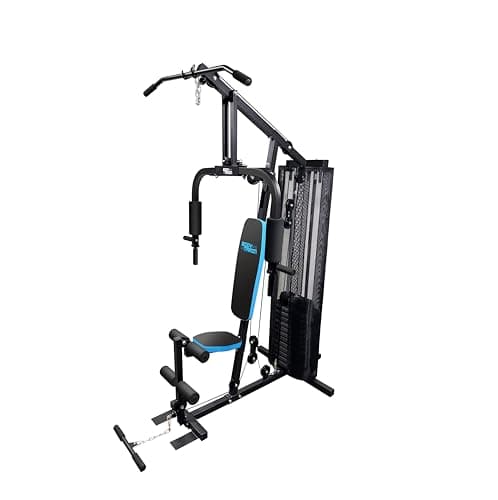
Our BodyTrain multi gym review: the 72kg shrouded stack, 12.5lb jumps, stations, 213cm height, lifetime frame warranty and £283.99 price against rivals.
What a cable crossover machine is, how it differs from a functional trainer, what 177kg stacks really mean, the ceiling height you need and UK price bands.
Every common cable machine attachment explained: D-handles, rope, straight and EZ bars, V-bar, ankle straps and more, with exercises, the 4 to buy first and prices.
Best Exercise is a participant in the Amazon EU Associates Programme, an affiliate advertising programme designed to provide a means for sites to earn advertising fees by advertising and linking to Amazon.co.uk. As an Amazon Associate we earn from qualifying purchases. This comes at no extra cost to you and never influences our independent reviews or rankings.