Home Gym
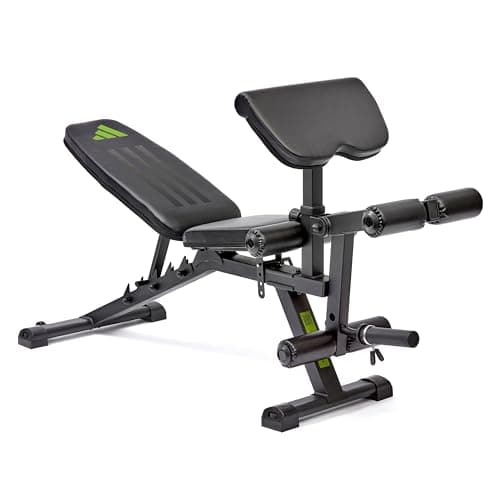
adidas Performance Training Bench Review: Bench, Preacher Pad and Leg Developer
Our adidas Performance Training Bench review: six back positions, preacher pad, plate-loaded leg developer, the 215kg rating, the catches and who should buy it.

By Jack Atkins, Home Gym Equipment Specialist · Updated 5 November 2026
Dumbbells are expensive because you're buying weight, and weight costs money at every step. A pair of 20kg dumbbells is 40kg of cast iron or steel that has to be cast, coated, boxed, shipped halfway round the world (most budget weights are made in China), imported into the UK and then carried to your door by a courier who charges by the kilo. That's why a dumbbell's price scales almost directly with its weight, and why a full rack of them runs into hundreds of pounds. Coatings, handle quality and accuracy add a premium on top, and demand spikes, like the 2020 lockdowns, can push the whole market up overnight.
Below are real UK prices per kilo for each type of dumbbell, checked on Amazon UK in November 2026, followed by the ways to spend less without ending up with weights you'll outgrow in a month.
A dumbbell has no clever electronics or moving parts to justify its price. It's mostly cast iron, sometimes with a steel handle, and the raw material scales with every kilo you add. A 10kg dumbbell needs twice the iron of a 5kg one, so it costs roughly twice as much. There's no economy of scale inside a single dumbbell the way there is with, say, a phone.
This is the part most buyers underestimate. Shipping costs are driven by weight, and dumbbells pack a lot of it into a small box. A container full of iron hits its weight limit long before it runs out of space, so each kilo carries a bigger share of the freight bill than lighter goods would. Once the weights reach the UK, courier networks charge more for heavy parcels, and anything over about 30kg often needs a two-person or pallet delivery. A full dumbbell set with a rack can weigh several hundred kilos, and that's paid for in the price.
Bare cast iron is the cheapest finish, but it chips, rusts and marks floors. Wrapping it in rubber adds cost; urethane adds a lot more. Urethane is tougher, doesn't crack or smell, and is what commercial gyms buy, which is why it sits at the top of the price table below. Our rubber dumbbells guide explains the differences between coatings in detail.
A properly knurled, chrome or stainless handle costs more to make than a smooth painted bar. Tighter weight tolerances cost money too. METIS, for example, quotes a tolerance of plus or minus 1% on its Pro urethane range, and holding a cast lump to that spec takes more machining and checking than cheap budget casting.
When gyms closed in 2020, home weights sold out across the UK and prices climbed sharply for months. The market has calmed since, but dumbbells still behave like a commodity: when demand jumps or freight gets dearer, prices move fast.
These figures come from live Amazon UK listings checked on 5 November 2026. They're approximate, and Amazon prices move daily, so use them as a guide to relative cost rather than a quote. Price per kg is the listed price divided by the total weight in the box.
| Type | Example listing (Nov 2026) | Approx. price | Price per kg |
|---|---|---|---|
| Vinyl / neoprene (light) | Core Balance neoprene, 2 x 1kg | £9.99 | about £5.00 |
| Vinyl / PVC hex | SONGMICS PVC hex, 2 x 5kg | £17.84 | about £1.80 |
| Rubber hex (budget) | SONGMICS rubber, 2 x 8kg | £22.79 | about £1.40 |
| Rubber hex (mid) | Amazon Basics rubber hex, 2 x 10kg | £38.85 | about £1.95 |
| Rubber hex (premium) | PhysKcal poly rubber, 2 x 5kg | £29.99 | about £3.00 |
| Cast iron spinlock set | Kemket 20kg spinlock set | £39.99 | about £2.00 |
| Cast iron spinlock set | Amonax 50kg spinlock set | £129.99 | about £2.60 |
| Urethane | JLL urethane, 2 x 12kg | £129.99 | about £5.40 |
| Urethane (branded, light) | Peloton urethane, 2 x 2.3kg | £45.00 | about £9.80 |
| Selector adjustable | HAKENO 2 x 24kg | £163.98 | about £3.40 |
| Selector adjustable | BRAINGAIN 2 x 24kg | £219.00 | about £4.55 |
A few things jump out. Light weights cost far more per kilo than heavy ones, because packaging and delivery cost about the same whatever's in the box. Urethane runs at roughly three times the price of budget rubber hex. And the cheapest rubber hex pairs actually undercut spinlock sets per kilo; a spinlock set's value comes from turning one box of plates into many different weights.
Adjustables look dear per kilo, but that figure is misleading. A 24kg selector pair replaces a whole rack of fixed pairs, so you're comparing it against the cost of ten or more pairs, not one.
Cast iron spinlock sets are the cheapest way to get a wide range of weights. You thread plates onto a bar and lock them with screw collars, so a 20kg set gives you two dumbbells you can load anywhere from a couple of kilos up to about 10kg each. Changing weight is slow and fiddly, but at around £2 per kg it's hard to beat on price. Our Mirafit adjustable dumbbells review covers a well-known spinlock option.
Check the Kemket 20kg spinlock set on Amazonaround £40If you'd otherwise buy a full fixed set, a selector-style adjustable pair is usually the cheaper route. Ten pairs of rubber hex from 2.5kg to 25kg add up to 275kg of iron. At the budget prices above (about £1.50 to £3 per kg), that's roughly £410 to £825, plus a rack and a metre of wall. A selector pair to 24kg per hand cost £164 to £219 when we checked, and it fits under a bench. We run those sums in full in are adjustable dumbbells worth it, and how adjustable dumbbells work explains which mechanisms hold up. For research-based picks, read our HAKENO adjustable dumbbells review or the NordicTrack Select-A-Weight review, or see the full best adjustable dumbbells UK round-up.
Fixed sets still make sense if several people train at once or you do fast supersets. Our guide to buying a dumbbell set with rack covers what those bundles really cost.
You don't need every pair from 2kg to 30kg. Most people train happily with three or four pairs: a light pair for shoulders and arms, a medium pair for presses and rows, and a heavy pair for squats and deadlifts. Our what weight dumbbells should I use guide gives starting weights by exercise, so you can buy those pairs and stop there.
You also don't need very heavy weights to make progress. A review of the research on loading found similar muscle growth across a wide spectrum of loads, as long as sets are taken close to failure (Schoenfeld et al., Sports, 2021). In practice, a moderate pair you push hard for higher reps will carry you a long way before you need to spend more.
Check Amazon Basics 10kg rubber hex pairaround £39Iron doesn't wear out. Facebook Marketplace, Gumtree and local gym clear-outs regularly turn up cast iron and rubber hex weights well below new prices, especially in January and again in late spring, when unused new-year kit gets sold off. Check rubber heads for splits or loose ends, make sure spinlock collars thread on smoothly, and collect in person. Paying a courier to deliver 40kg of iron can wipe out much of the saving.
Urethane is lovely, but for a spare room or garage, rubber hex does the same job at a third of the price. Pay for urethane if you drop weights a lot, run a shared or commercial space, or can't stand the rubber smell. Otherwise, put the money towards a decent bench or flooring.
The cheapest dumbbells you'll actually use are the right ones. The NHS recommends strengthening activities that work all the major muscle groups on at least 2 days a week, and a single pair of dumbbells can cover the legs, back, chest, shoulders and arms on its own. A £40 spinlock set used twice a week beats a £900 urethane rack gathering dust.
Spend more when it buys something you'll feel: faster weight changes, a handle that doesn't slip, or a finish that protects your floor. Don't spend more for a logo. And if your budget is tight, start small, train consistently and add weight as you outgrow it. That's cheaper than buying a full set on day one, and you'll know exactly which weights you use.
For more on kitting out a room on a budget, see our guide on how to build a home gym or browse the home gym hub.
Because they're sold by weight. A dumbbell is a lump of cast iron or steel, and heavy goods cost more to make, more to ship from the factory (usually in China) and more to deliver to your door. Rubber or urethane coatings, knurled handles and tight weight tolerances add to that, and demand surges like the 2020 lockdowns push prices up further.
In November 2026, on Amazon UK, budget rubber hex pairs started at roughly £1.40 to £2 per kg, cast iron spinlock sets sat around £2 to £2.60 per kg, and urethane dumbbells ran from about £5.40 to nearly £10 per kg. Selector-style adjustables worked out at about £3.40 to £4.60 per kg of maximum load. Prices change often, so treat these as approximate.
Packaging, handling and delivery cost roughly the same whether the box holds 2kg or 16kg, and those fixed costs are spread over fewer kilos. In November 2026 a 1kg neoprene pair worked out at about £5 per kg, while an 8kg rubber hex pair from a budget brand came in under £1.50 per kg.
For most home users, yes. A fixed set from 2.5kg to 25kg in 2.5kg steps is ten pairs and 275kg of iron, which costs roughly £410 to £825 at budget rubber hex prices before you add a rack. A selector-style adjustable pair that goes to 24kg per hand cost about £164 to £219 on Amazon UK in November 2026.
Often, yes. Iron doesn't wear out, so a used cast iron or rubber hex set can be just as useful as a new one. Check rubber heads for splits and loose ends, make sure spinlock collars thread on cleanly, and collect in person, because delivery on heavy items can cancel out the saving.
Our adidas Performance Training Bench review: six back positions, preacher pad, plate-loaded leg developer, the 215kg rating, the catches and who should buy it.
How much does a home gym cost? UK budgets from £150 to £3,000+, itemised with current prices, plus hidden costs and how fast it pays back vs a gym membership.
How do adjustable dumbbells work? Spin-lock, dial, twist-handle, selector-pin and quick-lock systems explained, with UK examples, increments and weak points.
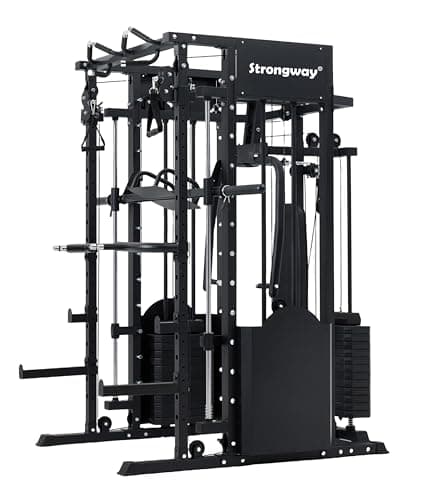
Our Strongway 265kg Smith machine review: three 88.5kg stacks, a plate-loaded butterfly station, a 215cm-wide frame and what the £1,400 price leaves out.
Best Exercise is a participant in the Amazon EU Associates Programme, an affiliate advertising programme designed to provide a means for sites to earn advertising fees by advertising and linking to Amazon.co.uk. As an Amazon Associate we earn from qualifying purchases. This comes at no extra cost to you and never influences our independent reviews or rankings.